Metal Shake Roofing Installation Family-Owned 30+ Years Old Roofing Experts
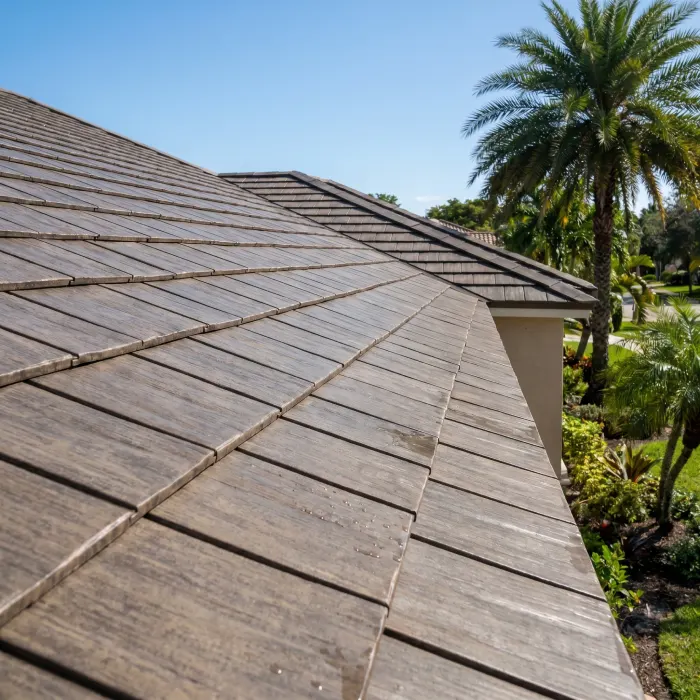
We have installed metal shake roofing in Miami-Dade for over 30 years. Standing seam is our primary specialty, but metal shake has earned its place on Coral Gables, Pinecrest, and Coconut Grove homes where the architectural review board allows it.
30+ Years Combined Roofing Experience
50+ Verified 5-Star Google Reviews
Licensed & Insured — CCC1332078
Financing Available (Fortify, HFS, Homerun Financing)
2025 Nextdoor Neighborhood FAVE Award
Miami Roofing Specialists
30+ Years Combined Roofing Experience
50+ Verified 5-Star Google Reviews
Licensed & Insured — CCC1332078
Financing Available (Fortify, HFS, Homerun Financing)
2025 Nextdoor Neighborhood FAVE Award
Miami Roofing Specialists
About Our Company
Flash Roofing & Sheet Metal LLC
At Flash Roofing & Sheet Metal, we provide expert roof repairing services for homes and businesses throughout Miami. With over 30 years of proven experience, homeowners trust us for quality workmanship, fair pricing, and fast emergency response.
We handle every kind of roofing damage, including leaks, storm and hurricane impact, missing shingles, rusted metal panels, cracked tiles, and aging underlayment. No matter the issue, our certified roofers diagnose the problem accurately and repair it with long-lasting solutions.
Every repair is completed with precision to ensure strong protection, improved energy efficiency, and a safer structure. We don’t patch problems, we restore your roof the right way, so your property stays secure for years to come.
Why Metal Shake on a Miami Roof
Miami’s climate eats traditional cedar shake. Humidity rots the wood from below. UV cracks the surface. Sustained 90+ mph wind events lift loose panels. Insurance underwriters increasingly refuse to cover cedar shake roofs in HVHZ. The market shifted toward metal alternatives that look identical from the curb but carry none of those problems.
Three reasons metal shake roofing installation makes sense in Miami-Dade.
Hurricane wind performance.
Hurricane wind performance.
Fire resistance.
Fire resistance.
Long lifespan with minimal maintenance.
Long lifespan with minimal maintenance.
Materials and Manufacturers We Install
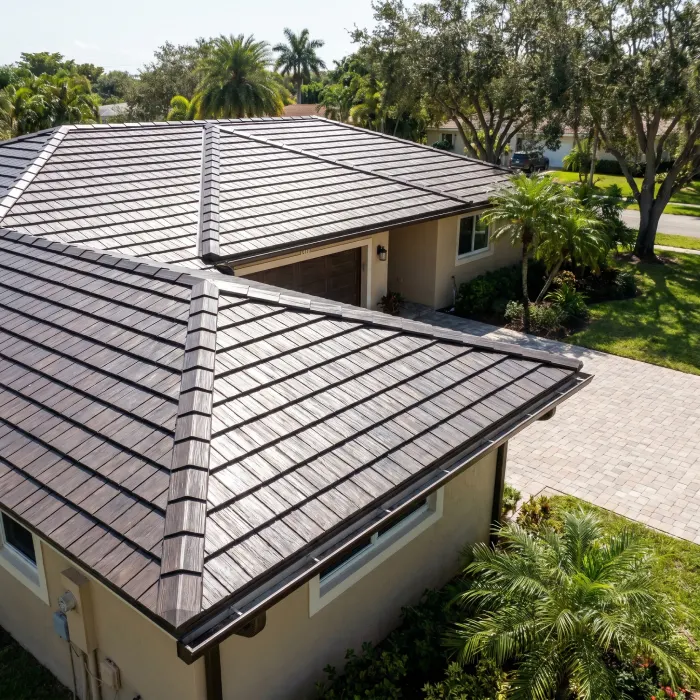
We are a manufacturer-certified roofing installation contractor Miami homeowners trust for the leading metal shake product lines. The two primary materials we recommend are aluminum shake (Country Manor Shake, Permatile, and similar product lines) and stone-coated steel shake (DECRA, Boral Steel, and equivalents).
Each manufacturer publishes a specific Notice of Acceptance for Miami-Dade County. The NOA specifies the fastener type, the fastener pattern, the underlayment requirement, and the maximum exposure rating. Installing outside the NOA voids the wind rating and the warranty. We follow the NOA on every job.
The selection comes down to weight, color profile, and budget. Aluminum is roughly half the weight of stone-coated steel, which matters on older trusses that were not engineered for heavy tile loads. Stone-coated steel offers a wider color and texture range and runs at a more accessible price point. We walk through both options on the consultation visit.
The 7-Step Metal Shake Roofing Installation Process
Every HVHZ metal roof installation we run follows the same seven-step process. The HVHZ permitting and inspection schedule drives most of the sequencing.
01
Inspection and HVHZ permit pull.
We measure the roof, assess the deck condition, and file the HVHZ permit application with the city or county. Permit approval typically takes 5 to 10 business days.
02
Tear-off of existing roof
Existing material comes off down to the deck. Dumpster placement, fall protection, and homeowner property protection (driveway, landscaping, AC units) all happen in this step.
03
Deck inspection and repair.
With the deck exposed, we inspect for rot, delamination, or pest damage. Any failed sheets get replaced with structural plywood or OSB to HVHZ thickness spec.
04
Self-adhered secondary water barrier.
A peel-and-stick underlayment goes down across the entire deck. This is the layer that keeps the home dry if a panel ever fails in a major storm. HVHZ code requires this on every replacement.
05
Underlayment and starter panels.
A second underlayment layer (or batten system, depending on manufacturer spec) installs over the secondary water barrier. Starter panels at the eaves establish the drainage plane.
06
Panel installation.
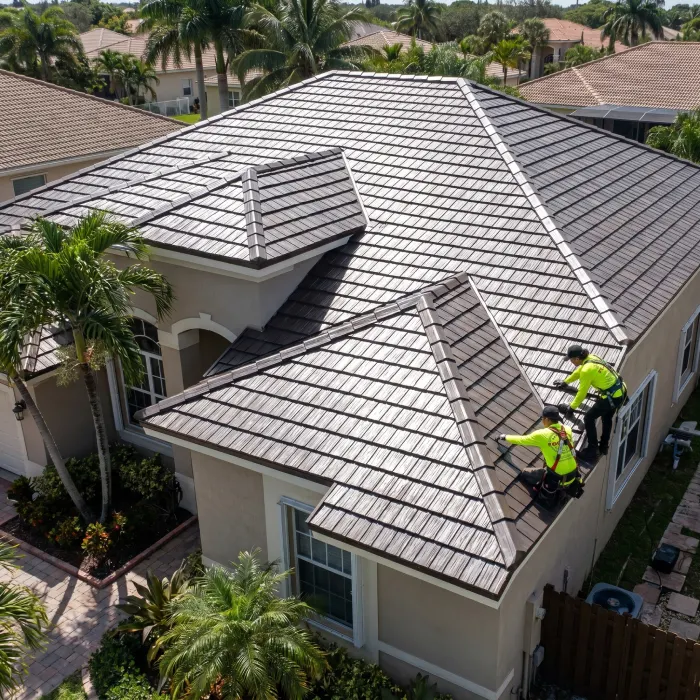
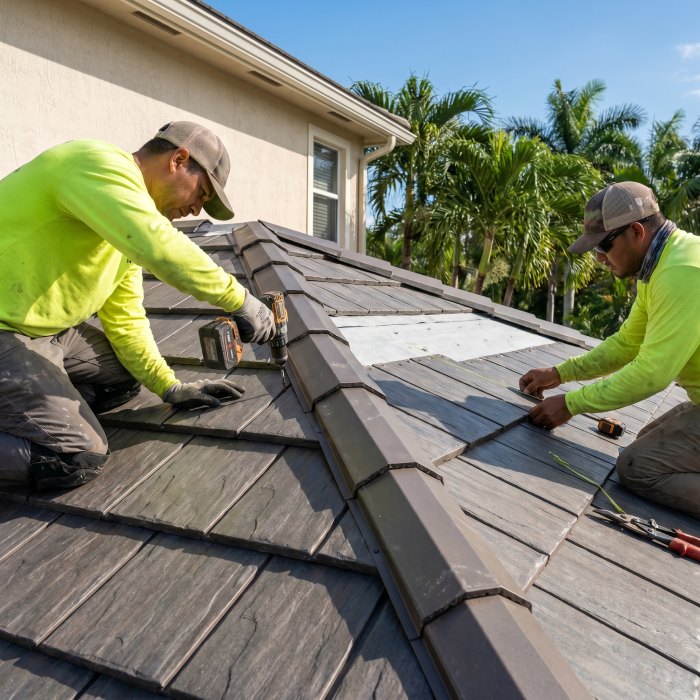
Panels install from eave to ridge, with concealed fasteners and the manufacturer's specified clip system. Ridge caps, hip caps, and valley details follow the NOA-approved patterns.
07
Final inspection and walkthrough.
The city or county inspector reviews the work for code compliance. The homeowner walks the completed job with the crew lead. The warranty documents transfer at closeout.
HVHZ Compliance and Insurance Credits
Miami-Dade High Velocity Hurricane Zone code is the strictest residential roofing standard in the country. An HVHZ metal roof installation earns wind mitigation credits on the Florida OIR-B1-1802 inspection form that most insurance carriers use for premium calculations.
The credits matter. The wind mit form evaluates roof shape, deck attachment, roof-to-wall connection, secondary water resistance, opening protection, gable end bracing, and year of roof. A current-code metal shake install scores strongly on the components we control: deck attachment (ring-shank nails to HVHZ spec), secondary water resistance (self-adhered membrane), and year of roof (post-2010 systems carry the strongest credits).
Cost Factors and What Drives the Price
Stone-coated steel roofing Miami and aluminum shake pricing depends on six factors.
Pricing scales per square (100 square feet of roof area). A typical Miami single-family home runs 18 to 30 squares.
Aluminum shake runs a premium over stone-coated steel. Within each category, manufacturer and color choice shift the price.
Multiple roof planes, valleys, dormers, and skylights add labor time. A simple gable runs faster than a complex hip-and-valley.
Existing deck found in good condition during tear-off keeps the per-sheet decking allowance unused. Significant rot adds to the final bill.
Single-story homes install faster than multi-story. Steep slopes need safety setups. Properties with limited driveway access for dumpsters and trucks add coordination time.
Miami-Dade and individual municipalities charge permit fees based on project value. These pass through at cost.
Why Flash Roofing for Metal Shake in Miami
We have installed metal roofing across Miami-Dade for over 30 years. Standing seam metal is our primary specialty. Metal shake roofing installation sits within the same expertise set: HVHZ permitting, NOA-spec installation, concealed-fastener systems, and the documented track record through Hurricane Andrew, Wilma, and Irma.
Flash Roofing is locally owned. The workshop at 16677 SW 117 Ave in Miami has been the same physical location since before Hurricane Andrew. We carry current Florida CCC or CGC licensing, general liability insurance, and manufacturer certifications for the leading metal shake product lines. The crew that quotes the job is the crew that installs it.
We have 59 five-star Google reviews from your neighbors. The reviews document jobs completed, warranties honored, and follow-up calls answered. We are not going anywhere after the install.
What people says about us !!
Posted on GoogleTrustindex verifies that the original source of the review is Google. Highly recommended! Beautiful job!Posted on GoogleTrustindex verifies that the original source of the review is Google. I was very pleased with the work done by Flash Roofing!Posted on GoogleTrustindex verifies that the original source of the review is Google. Flash Roofing and Sheet Metal replaced our roof and they did an incredible job! Jose Contreras was always on time, very communicative and worked very hard until the job was done. I had 9 different estimates and I was so blessed to choose Flash Roofing and Sheet Metal. Jose is as professional, honest and friendly as they come. I did not expect the roof replacement process to be such an easy, fast and enjoyable process. The quality of the material, choice and workmanship was fantastic and the total price was spot on. I highly recommend Jose Contreras with Flash Roofing and Sheet Metal.Posted on GoogleTrustindex verifies that the original source of the review is Google. My roof was leaking and it was rain season in Cutler Bay. Sadly, the roofing business has a bad reputation for taking advantage of people who know little about roofs and who are facing an unexpected big expense. I used ChatGpt to get a list of local roofers. Some took days to reply to my phone calls. Some sent a high pressure sales rep to my house making promises that were dubious at best. From the moment I called Flash Roofing I got the impression I was dealing with pros. Boni, the owner, came to our home and spent more than a half hour answering our questions, explaining the pros and cons of various roof types, and suggesting that we think things over before making a decision. My wife and I spent half a day driving our neighborhood looking at roofs and taking notes. We called Flash Roofing with questions and got clear answers. Boni made another visit and we worked out a contract. We were surprised when, after all the decisions were made, he suggested that we sit on it for a few days to be sure we were comfortable with this important decision. It was wise advice. Four days later we signed the contract, but with a change in color. Getting a new roof completely takes over your property with materials, machinery, and a crew of workers. The Flash Roofing crew was polite, hard working, as careful as possible, and always on time. Cutler Bay requires a lot of paperwork, permits and inspections. Flash Roofing took care of all of it. Throughout the whole project we got prompt answers to questions. They earned my trust. When the project was done we were impressed by the quality of work, the honest way they had answered our questions, and how they cleaned up when they were finished. Flash Roofing did unexpected little things that showed that they understood the concerns of the home owner. They surprised us by sending a series of drone aerial pictures of the finished roof. A new roof is a big expense. With Flash Roofing we got our money’s worth.Posted on GoogleTrustindex verifies that the original source of the review is Google. Buen precio y trabajo muy atentos el manager José se mantuvo al tanto de todo el proceso recomiendo mucho la compañíaPosted on GoogleTrustindex verifies that the original source of the review is Google. Flash roofing team and the owner Boni are one of the besting roofing companies in Miami. Friendly reliable, on time and extremely fast. Not only that, but Bonnie is a very considerate with his pricing and doesn’t try to rip you off like other companies have. I would recommend him from the moon and back. Thank you, Bonnie and the roofing teamPosted on GoogleTrustindex verifies that the original source of the review is Google. Super fastPosted on GoogleTrustindex verifies that the original source of the review is Google. Great service , communication everything done professionally and timely.Posted on GoogleTrustindex verifies that the original source of the review is Google. I recently had my flat roof redone and hired Flash Roofing and Sheet Metal for the job — and I couldn’t be happier with the results. From start to finish, they went above and beyond my expectations. The owner, Bonifacio, was hands-on throughout the entire process and made sure everything was done exactly the way I wanted. He respected my request to use specific materials that would minimize odors and chemical exposure inside the house, which we really appreciated. The crew showed up on time, worked incredibly hard in the intense heat for many hours, and kept everything extremely clean. Their professionalism, attention to detail, and commitment to quality really stood out. They even took care of some major leaks in our main roof… We strongly recommend Flash Roofing and Sheet Metal to anyone looking for reliable, honest, and high-quality roofing work. They truly exceeded my expectations. Thank you so much BonifacioVerified by TrustindexTrustindex verified badge is the Universal Symbol of Trust. Only the greatest companies can get the verified badge who has a review score above 4.5, based on customer reviews over the past 12 months. Read more
Frequently Asked Questions
How long does a metal shake roofing installation last in Miami?
A current-code roof of this type runs 40 to 60 years before any major work. Aluminum shake on the higher end of that range, stone-coated steel slightly shorter. Both materials outlast cedar shake by a factor of three to five in Miami’s climate.
Does this type of installation require special HVHZ permits?
Yes. Every roofing installation in Miami-Dade requires a HVHZ permit. The manufacturer’s NOA specifies the install pattern, fasteners, and underlayment that earn the wind rating. We pull the permit, follow the NOA, and close out the inspection on every job.
Is metal shake noisier than tile or asphalt shingle during rain?
No. A current-code metal shake roofing installation goes over a peel-and-stick underlayment, a secondary water barrier, and solid decking. The acoustic difference inside a properly built attic is minimal. The bare-metal-shed sound homeowners imagine does not happen on a residential metal shake roof.
Will a metal shake roof Miami install lower my homeowners insurance?
In most cases, yes. The wind mitigation credits on the OIR-B1-1802 form reward current-code systems with documented deck attachment, secondary water resistance, and proper hurricane straps. Specific savings depend on your carrier and policy. Get the wind mit calculation from your agent before signing.
Can metal shake be installed over an existing roof in Miami?
No. HVHZ code requires full tear-off down to the deck for any roof replacement permit. The reason is structural inspection of the deck and the new secondary water barrier installation. A direct overlay would void both the warranty and the wind mit credits.
Need a Comprehensive Roof Inspection in Miami?
Hidden damage can cost you thousands if left unchecked. You deserve a certified inspector who provides honest, detailed reports and helps you catch issues before they become major leaks.
Areas We Serve
in Miami
We provide Roofing services across Miami
- Key West
- Marathon
- Key Largo
- Islamorada
- Big Pine Key
- Homestead
- Florida City
- Miami
- Miami Beach
- Coral Gables
- Hialeah
- Doral
- Aventura
- Sunny Isles Beach
- North Miami
Our Recent Roofing Systems
Free Quote