A ceiling stain after a hard Miami downpour can make roof repair vs replacement feel like an urgent, expensive choice. But the visible leak is only part of the story. The right answer depends on where the water entered, how long it has been happening, the condition beneath the roofing surface, and whether the roof can still stand up to another hurricane season.
A quick patch may be the smart move when the problem is isolated. It can also be wasted money when an aging roof has widespread failure underneath. The goal is not to sell the biggest job. It is to identify the root cause, show you what is happening, and recommend work that gives your home or building a real chance against South Florida weather.
Roof Repair vs Replacement: Start With the Actual Damage
No one can make a responsible recommendation from the driveway alone. A proper inspection should look beyond the obvious missing tile, lifted shingle, or wet ceiling spot. Water can travel along decking, insulation, framing, and ceiling materials before it becomes visible indoors. On flat commercial roofs, it can move beneath a membrane and emerge far from the original opening.
A thorough inspection looks at the roof surface, flashings, penetrations, drains, valleys, edges, underlayment where accessible, and the condition of the decking. It should also consider how the roof performs during wind-driven rain, not just on a clear day. Miami roofs take a beating from UV exposure, intense heat, humidity, salt air, and sudden storm events. Those conditions can turn a small weakness into a larger failure faster than many property owners expect.
Photo documentation matters here. You should be able to see the damaged area and understand why a repair is recommended. Honest roofing work does not require mystery fees or vague explanations.
When a Roof Repair Is the Right Call
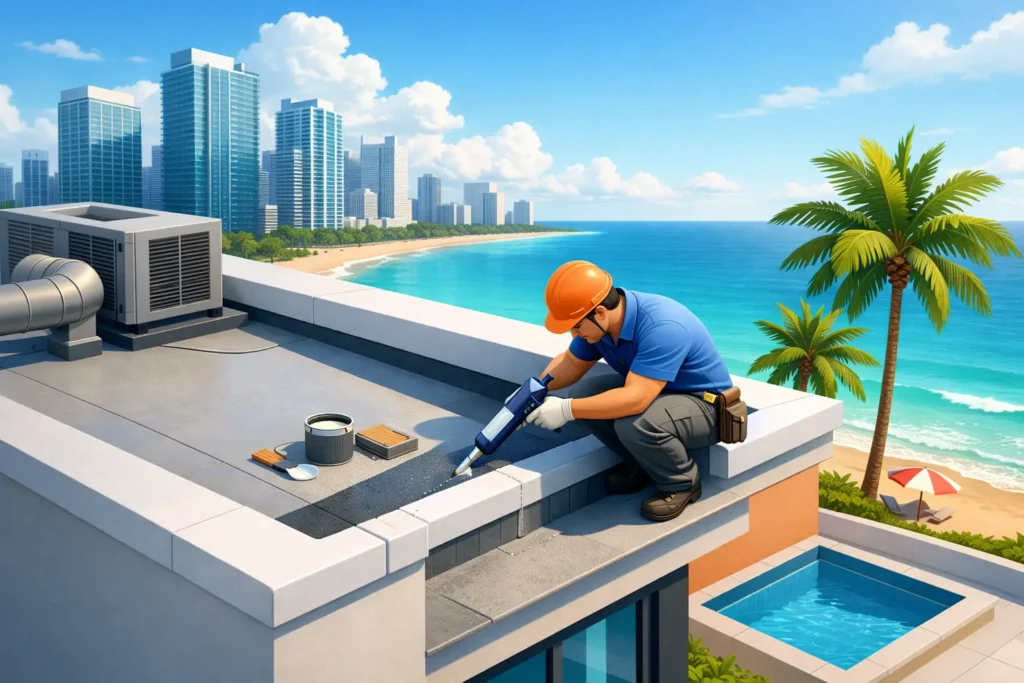
Repair is often the best value when the roof is generally sound and the issue is limited. A damaged pipe boot, cracked flashing, a few displaced tiles, loose fasteners on a metal roof, or a puncture in a membrane may be repaired effectively if the surrounding materials remain in good condition.
A repair also makes sense when the roof is relatively young, has no pattern of recurring leaks, and still has dependable drainage and attachment. For a flat roof, that may mean a localized seam failure or penetration detail rather than widespread blistering, saturated insulation, or ponding water. For a tile roof, it may mean replacing broken tiles and correcting the underlayment or flashing issue beneath them, rather than simply swapping visible pieces.
The key is whether the repair addresses the source of the problem. Covering a leak with sealant without correcting failed flashing, deteriorated underlayment, trapped moisture, or a drainage problem is not a lasting repair. It is a temporary patch that can fail when the next heavy rain arrives.
Signs Replacement May Save You More Money
Replacement becomes the stronger choice when the roof system is near the end of its service life or has failures across multiple areas. Spending repeatedly on isolated repairs can feel less expensive in the moment, but those costs add up while water continues putting the structure, insulation, finishes, and electrical systems at risk.
Replacement should be seriously considered when there are repeated leaks in different locations, widespread cracked or deteriorated materials, soft or damaged decking, chronic ponding on a flat roof, or storm damage that affects a large portion of the system. An older roof with failing underlayment can look acceptable from the street while allowing water beneath tiles or shingles.
For commercial owners and property managers, replacement may also make better operational sense when repairs have become frequent. Unexpected leaks can disrupt tenants, inventory, equipment, and daily business. A planned replacement gives you more control over timing, system selection, access, and budget than emergency work after a major failure.
Age Matters, but It Is Not the Only Factor
Roof age is useful context, not a final verdict. A well-installed, properly maintained roof may perform longer than expected. A roof installed with poor workmanship, incorrect materials, weak drainage, or shortcuts around flashings may fail early.
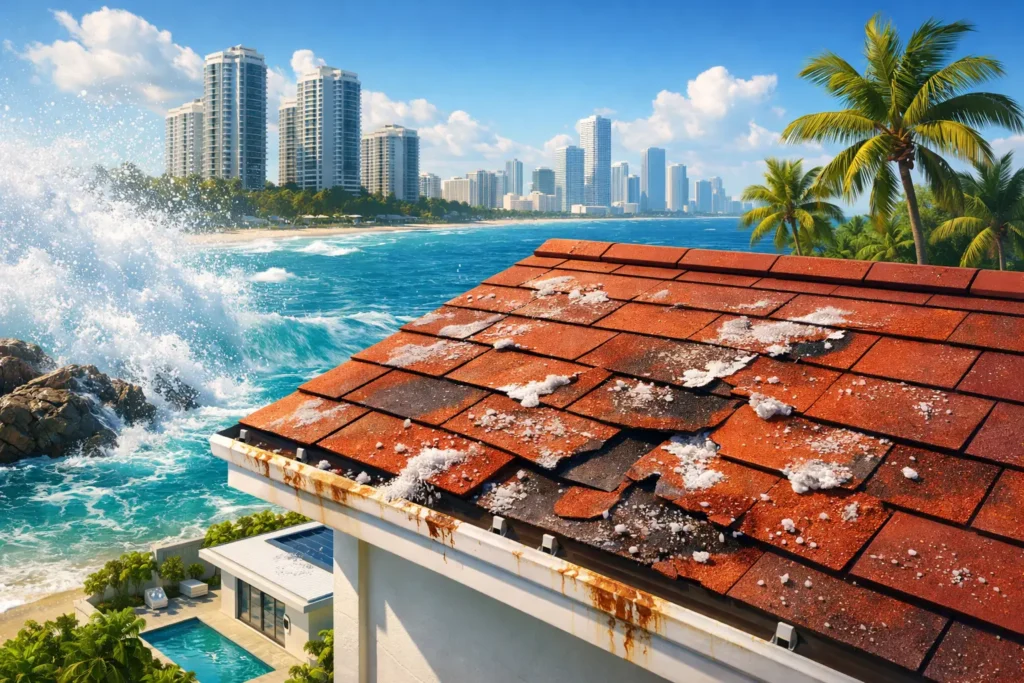
Miami’s climate changes the equation. Constant sun can dry and weaken exposed roofing materials. Heat causes expansion and contraction. Humidity encourages moisture-related deterioration. Salt air can accelerate corrosion on metal components, fasteners, and flashings, particularly closer to the coast. Hurricane-force winds test every edge detail, attachment point, and transition.
That is why a roof nearing the end of its expected life deserves a close inspection before storm season, even if it is not actively leaking. Waiting for visible interior damage often means the problem has already progressed beyond the roofing surface.
The Roof System Changes the Decision
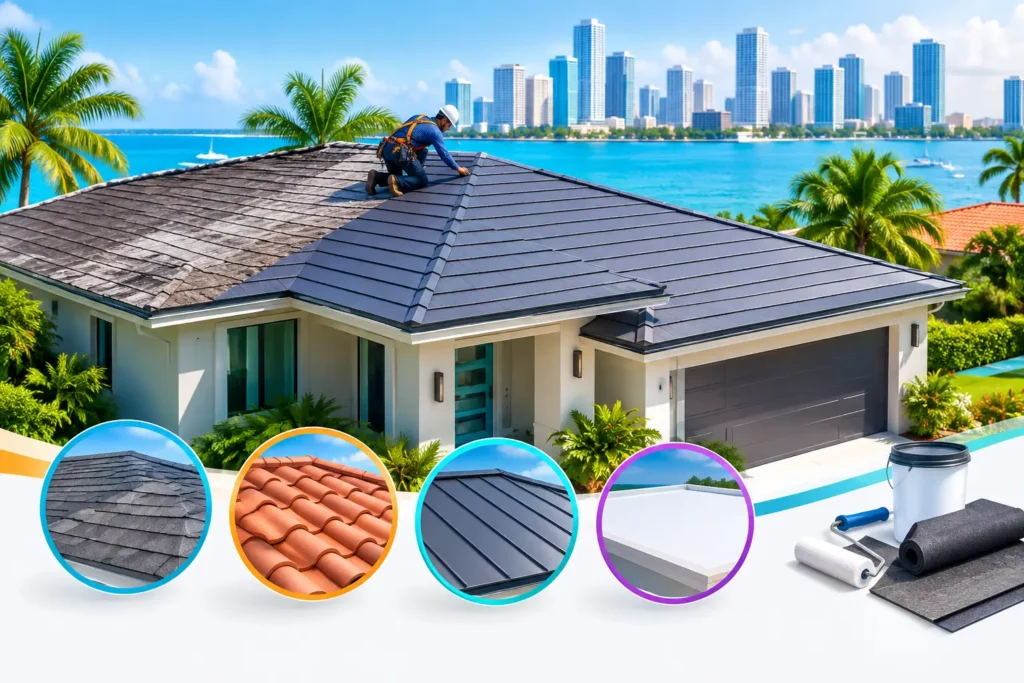
There is no one-size-fits-all answer for Miami properties. Tile, shingle, metal, steel, synthetic, membrane, and other flat roofing systems fail in different ways and require different repair methods.
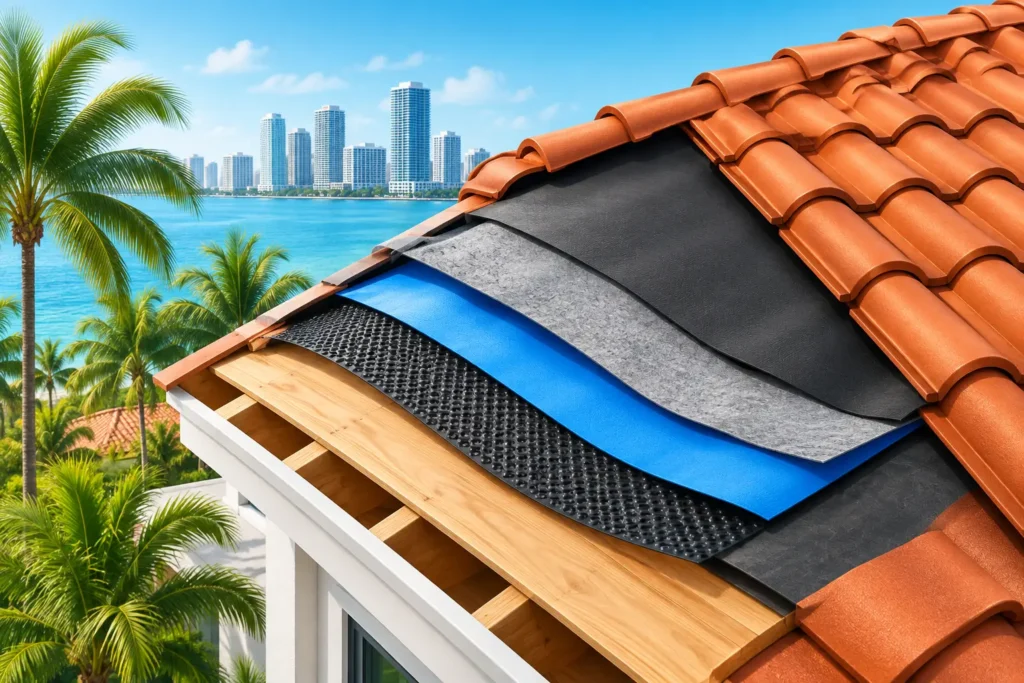
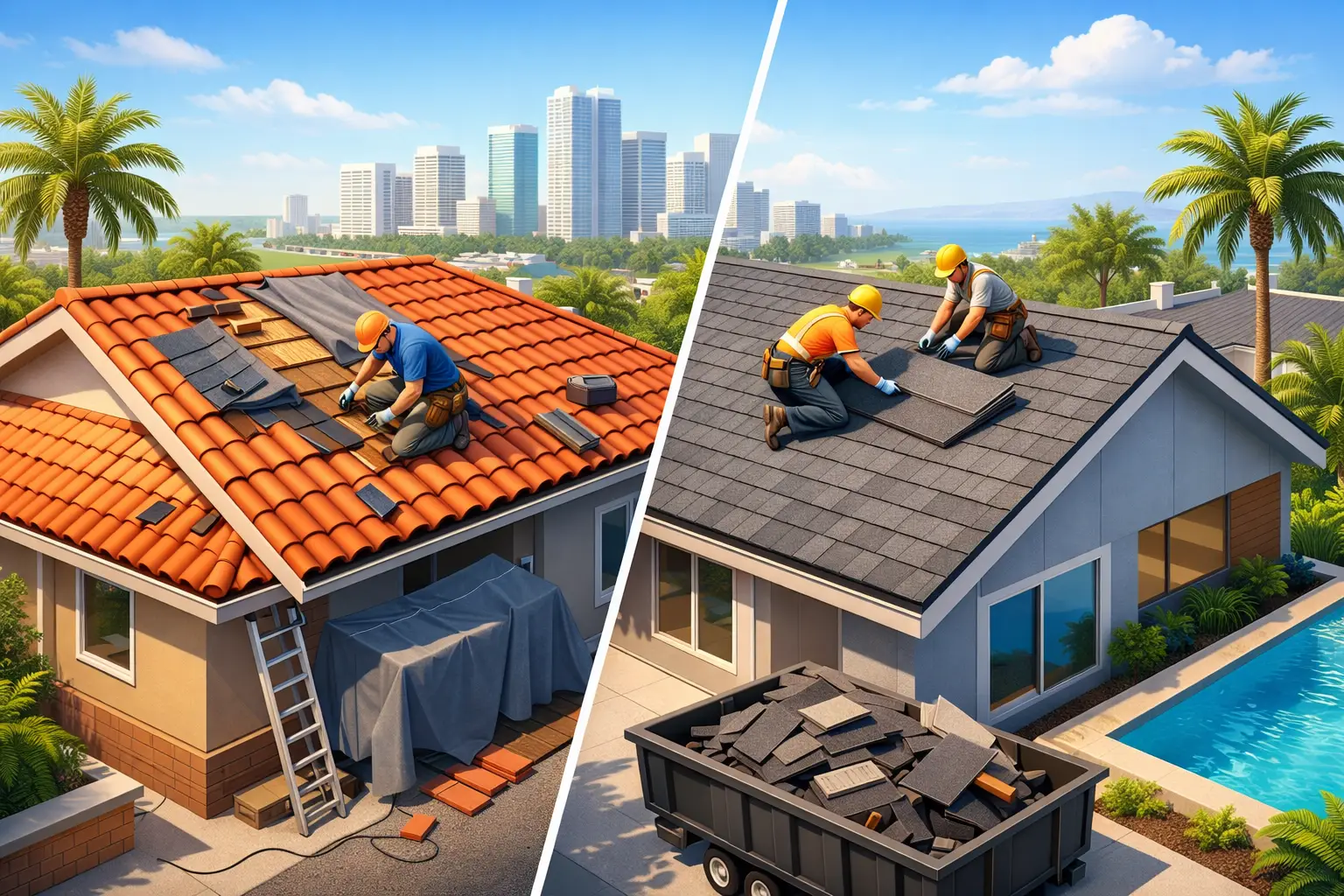
Tile roofs, for example, can have broken or shifted tiles while the real issue is worn underlayment underneath. Replacing a few tiles may restore protection if the underlayment is sound. If underlayment failure is widespread, a more extensive restoration or replacement may be necessary.
On low-slope commercial roofs, membrane seams, drains, curbs, penetrations, and edge details deserve close attention. Ponding water is not simply cosmetic. It can speed up material wear and expose weaknesses around seams and penetrations. In some cases, a coating or restoration system can extend service life. In others, wet materials or major membrane deterioration make replacement the responsible choice.
Metal roofs can be durable in South Florida, but corrosion, loose fasteners, failed sealants, and compromised flashings still need attention. A repair may be effective when the panels and structure remain solid. Widespread corrosion or system-wide attachment issues call for a more comprehensive plan.
Compare the Cost of the Full Decision
The cheapest estimate is not always the lowest-cost outcome. When comparing roof repair and replacement, look beyond the price on the first invoice. Ask what materials are being repaired or replaced, whether damaged decking is included if discovered, how flashings and penetrations will be handled, and what the contractor sees as the likely next point of failure.
A good repair should have a clear scope. You should know what area is being addressed, why it failed, and what the repair can reasonably accomplish. A good replacement proposal should explain the roofing system, removal work, drainage considerations, attachment methods, and code-related requirements for the property.
For insurance-related damage, documentation is equally important. Take photos after a storm if it is safe to do so, keep records of leaks and interior damage, and avoid allowing a small opening to remain exposed. An inspection can help separate recent storm damage from long-term wear, although coverage decisions ultimately belong to the insurance carrier.
Do Not Wait for Hurricane Season to Decide
A roof that barely gets through ordinary rain may not be ready for wind-driven rain and hurricane conditions. Loose edge metal, lifted shingles, broken tiles, deteriorated seals, and clogged drainage can become much bigger problems when wind pressure and water hit the roof at the same time.
The best time to inspect is before there is an emergency. That gives you room to compare options, schedule work properly, and make a decision based on evidence instead of panic. It also allows a roofing professional to identify smaller repairs that may protect a roof for another season or confirm when replacement should be planned now.
What an Honest Recommendation Looks Like
At Flash Roofing & Sheet Metal, the recommendation should match the condition of the roof, not a sales target. That means explaining whether a targeted repair, restoration option, or full replacement gives the property the best long-term value.
Ask for clear photos, a written scope, and direct answers to practical questions: Is the leak isolated? Is there trapped moisture? Are materials failing in more than one area? Will this repair hold up through South Florida’s heat and storms? If a contractor cannot explain the why, get another opinion.
A roof is too important for guesswork. Get the condition documented, fix a repairable problem correctly, and plan replacement before a worn-out roof turns into an avoidable emergency.