
A flat roof can look fine from the ground while water is already working its way beneath the surface. In Miami, flat roof repair is rarely just about the visible leak. Intense UV exposure, daily humidity, wind-driven rain, salt air, and sudden tropical downpours can turn a small split, loose seam, or blocked drain into damaged insulation, stained ceilings, and expensive interior repairs.
The right fix starts with finding where the roofing system failed and why. A patch may be part of the answer, but a patch over wet material, failed flashing, or poor drainage is only a temporary cover. Do it once, do it right.
Why Flat Roofs Fail Faster in South Florida
Flat roofs are not truly flat. They need a controlled slope that directs water toward drains, scuppers, or gutters. When that drainage path is blocked or the roof has low spots, water sits on the surface longer than it should. Standing water puts extra stress on seams, coatings, flashings, and the membrane itself.
Miami weather adds another layer of wear. The sun dries and expands roofing materials during the day. Rain and moisture cool them down, then humidity keeps the roof from fully drying as quickly as it might in a drier climate. That repeated movement can open seams and cracks over time, especially on older modified bitumen, built-up roofing, or single-ply membrane systems.
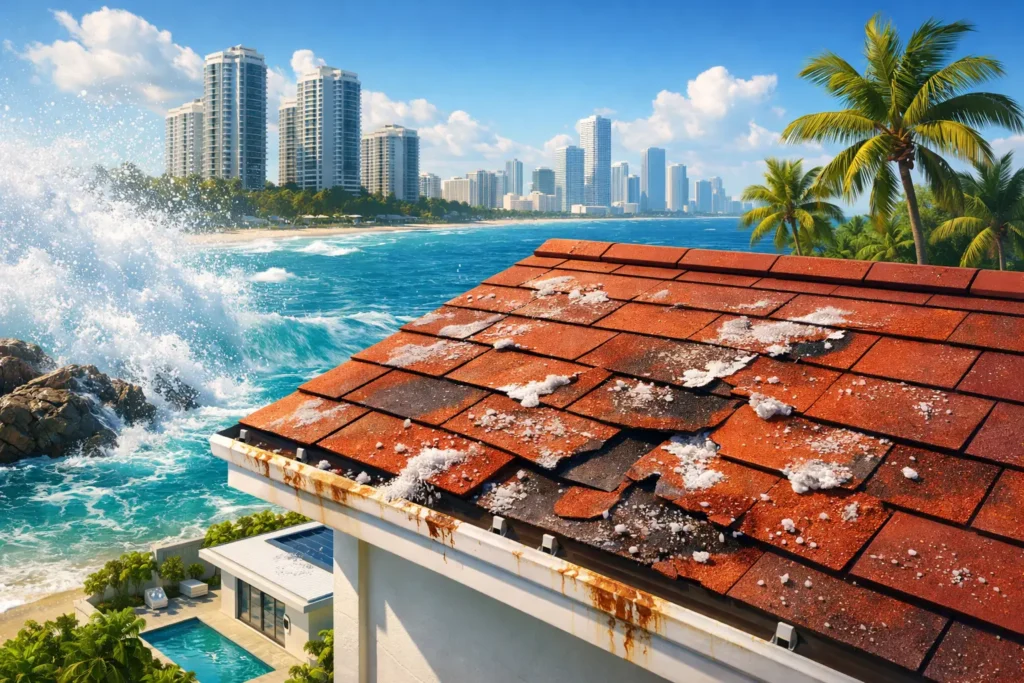
Salt exposure matters, too. Properties near Biscayne Bay, the beach, or other coastal areas can see accelerated corrosion on metal edge details, fasteners, drain components, and rooftop equipment supports. Hurricane-season winds can lift loose edges or drive rain under flashings that looked acceptable before the storm.
That is why generic repair advice often falls short here. A roof that might survive with a basic patch in a mild climate may need a more thorough repair plan in South Florida.
The Warning Signs That Call for Flat Roof Repair
A ceiling stain is an obvious warning sign, but it is usually not the first sign of trouble. Water can travel along the roof deck or through insulation before it appears inside the building. By the time a stain shows up, the actual entry point may be several feet away.
Watch for recurring puddles that remain more than 48 hours after rain, blistering or bubbling on the roof surface, cracked coating, loose membrane seams, exposed fabric reinforcement, deteriorated sealant around pipes, and rust around drains or metal flashing. On commercial buildings, water marks around ceiling tiles, musty odors, and wet insulation near rooftop penetrations also deserve attention.
A leak that only appears during heavy rain or wind is not a minor leak. It often points to a flashing, edge, seam, or penetration issue that is allowing wind-driven water into the system. Those are the details that need careful inspection, not guesswork.
A Real Repair Starts With Diagnosis
The best repair work does not begin with a bucket of sealant. It begins with an inspection of the full roof area, including the membrane, seams, drains, transitions, parapet walls, rooftop units, pipe penetrations, and perimeter edges.
The goal is to determine whether the damage is isolated or whether moisture has spread below the surface. A small puncture in a newer membrane may be a straightforward targeted repair. A leaking seam with saturated insulation beneath it is a different job. Covering wet insulation can trap moisture inside the roofing assembly, where it may contribute to deck deterioration, mold concerns, and future leaks.
Photo documentation is especially useful during this process. It gives property owners a clear view of the condition, the damaged areas, and the recommended scope of work. There should be no mystery fees and no vague explanation that leaves you wondering what was repaired.
Common Flat Roof Repair Solutions
The proper solution depends on the roof material, age, drainage, and extent of moisture damage. Common repairs include resealing or heat-welding open seams, replacing damaged membrane sections, rebuilding deteriorated flashing, repairing penetrations around vents and curbs, and restoring drains or scuppers so water can leave the roof.
For modified bitumen roofs, repairs may involve removing failed material, drying the area, installing compatible membrane, and properly sealing the edges. For TPO or PVC membranes, a trained roofer may use welded patches or seam repairs. For older built-up roofs, the repair may require removing compromised layers and rebuilding the area with compatible materials.
Roof coatings can be valuable when the underlying roof is dry, structurally sound, and nearing the point where surface protection is needed. A coating is not a cure for saturated insulation, open seams, or widespread membrane failure. Applied at the wrong time, it can hide problems while water remains trapped below.
The Difference Between a Patch and a Lasting Repair
Not every flat roof leak requires replacement. That is the honest answer. A relatively new roof with one damaged area can often be repaired and continue performing for years. A well-maintained commercial membrane roof may only need seam work, flashing repairs, or improved drainage.
But there is a point where repeated patches stop making financial sense. If leaks keep returning in different locations, the membrane has widespread cracking, water is trapped below the surface, or the roof has reached the end of its service life, a restoration or replacement assessment may be the more responsible recommendation.
The trade-off is simple. A cheap repair may cost less today, but it can become expensive if it fails during the next heavy storm and damages drywall, inventory, electrical systems, or tenant spaces. A properly scoped repair costs more than a surface patch because it addresses the conditions that caused the leak in the first place.
Drainage Is Part of the Repair
Many flat-roof problems are drainage problems in disguise. Leaves, debris, construction dust, and broken drain covers can slow water flow. On low-slope roofs, even a modest amount of debris around a drain can create ponding water after a Miami downpour.
Drain maintenance should be handled carefully. The drain itself, surrounding membrane, clamping ring, and sealant details all need to remain intact. Aggressive cleaning with sharp tools or pressure equipment can damage the roof surface. If a drain is repeatedly overwhelmed, the roof may need a better drainage design, additional tapered insulation, or repairs to the existing slope.
Property managers should also pay attention to rooftop equipment. HVAC service crews, satellite installers, and other trades can create punctures or disturb flashing without realizing it. After any rooftop work, a quick roof check can prevent a small issue from becoming an interior leak.
When to Schedule an Inspection
Do not wait for water to drip through the ceiling. An inspection is smart after a major storm, when a roof approaches the later years of its expected service life, after a contractor has worked near rooftop penetrations, or when you notice ponding water and surface wear.
For commercial properties, routine inspections help create a record of roof condition and maintenance needs. That can support budgeting, tenant planning, and insurance documentation. For homeowners, it provides a clearer answer than trying to diagnose a leak from inside the house.
Flash Roofing & Sheet Metal approaches flat roofs with the conditions of Miami-Dade in mind: heat, moisture, salt, and hurricane-force weather. The focus is not on selling a bigger job than necessary. It is on identifying the failure, documenting the work, and giving you an honest recommendation for repair, restoration, or replacement.
A flat roof does not need to become an emergency before it gets attention. If you see standing water, worn seams, ceiling stains, or storm-related damage, get the roof checked while the problem is still manageable. A clear diagnosis now can protect the building long after the next rain passes.