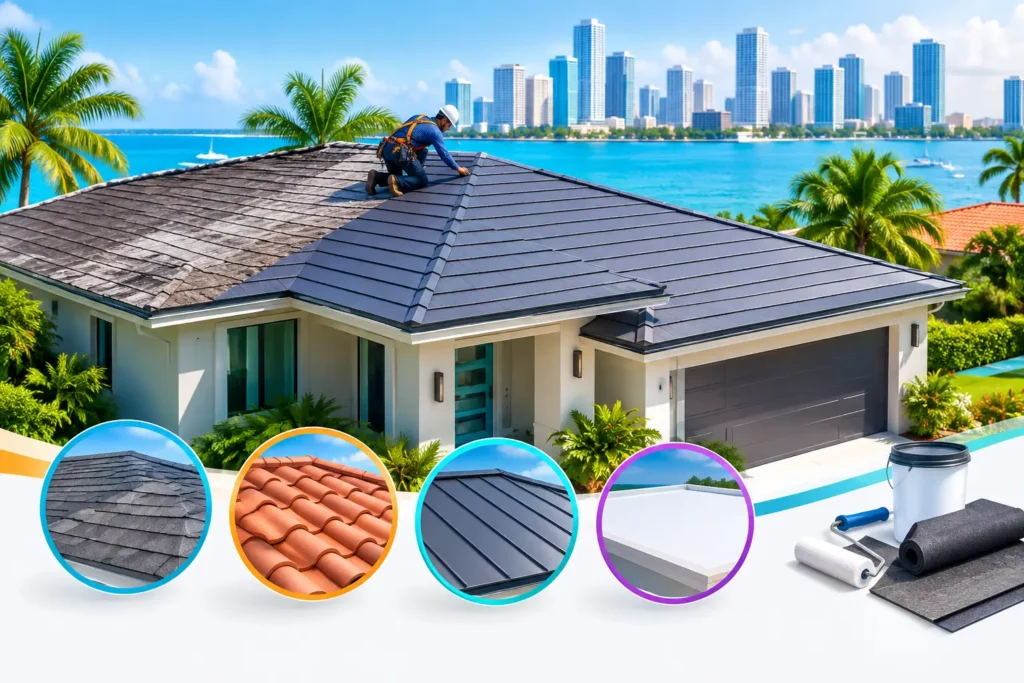
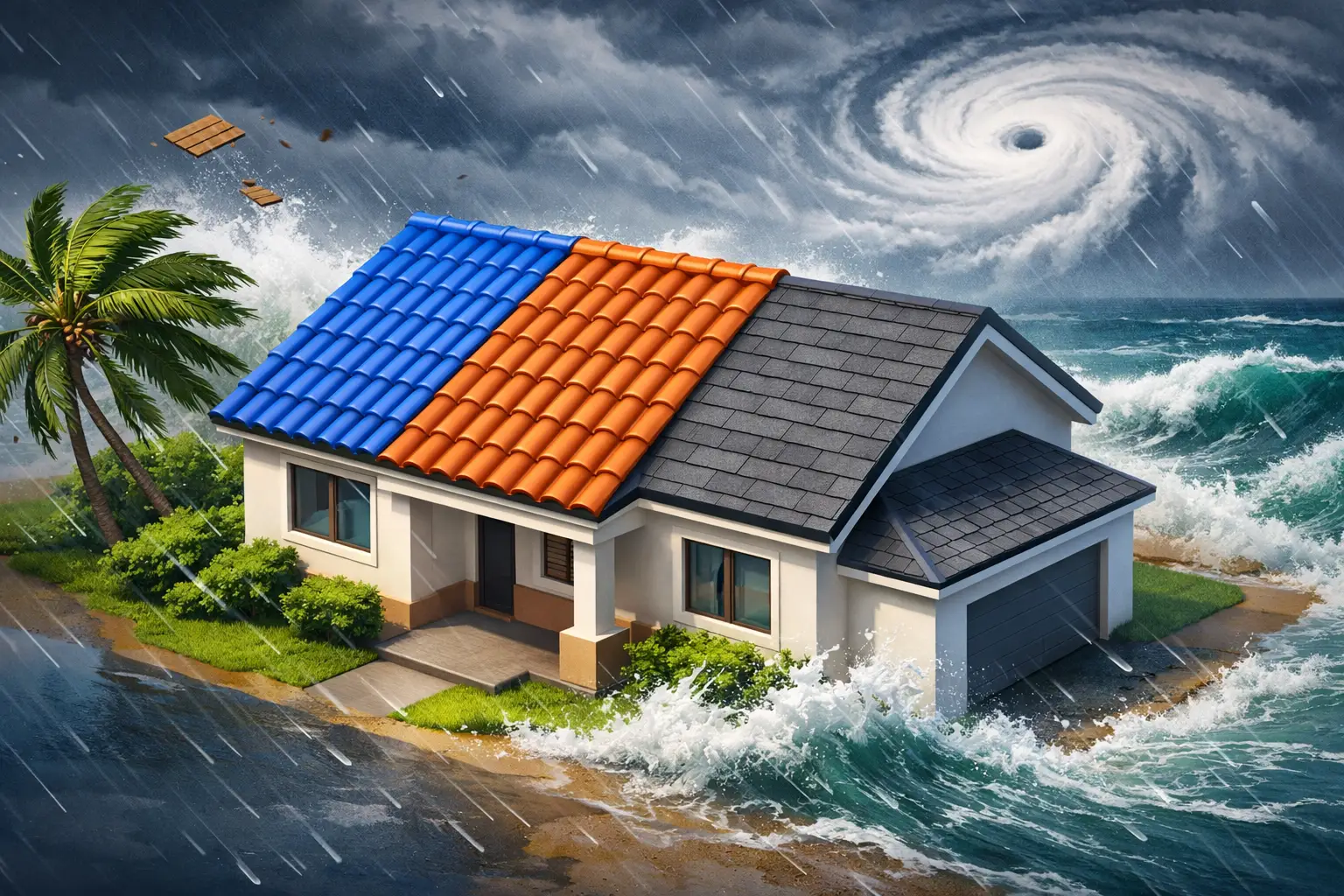
A Miami roof does not get to rest between storms. It takes punishing sun, heavy rain, humid air, wind-driven debris, and salt exposure year after year. That is why choosing the best roofing materials for hurricanes is about more than picking the strongest-looking surface. The roofing system has to be properly engineered, approved for the application, and installed to meet the wind demands of the building.
A good material can still fail if the deck is weak, flashing is poorly detailed, fasteners are wrong, or water gets under the edges. Do it once, do it right means looking at the full system, not just the material you see from the street.
What Makes a Roof Hurricane-Ready?
Hurricane performance starts with wind uplift resistance. As wind moves over a roof, it creates suction that can pull at tiles, shingles, panels, membrane seams, and perimeter metal. Roof corners and edges typically face the highest forces, which is why those details deserve more attention than a quick patch job can provide.
In Miami-Dade, roofing choices also need to account for local code requirements, product approvals, roof slope, drainage, and the structure beneath the roof. A material should be selected with its tested assembly in mind. That includes the underlayment or membrane, attachment method, fasteners, edge metal, flashings, and transitions around penetrations.
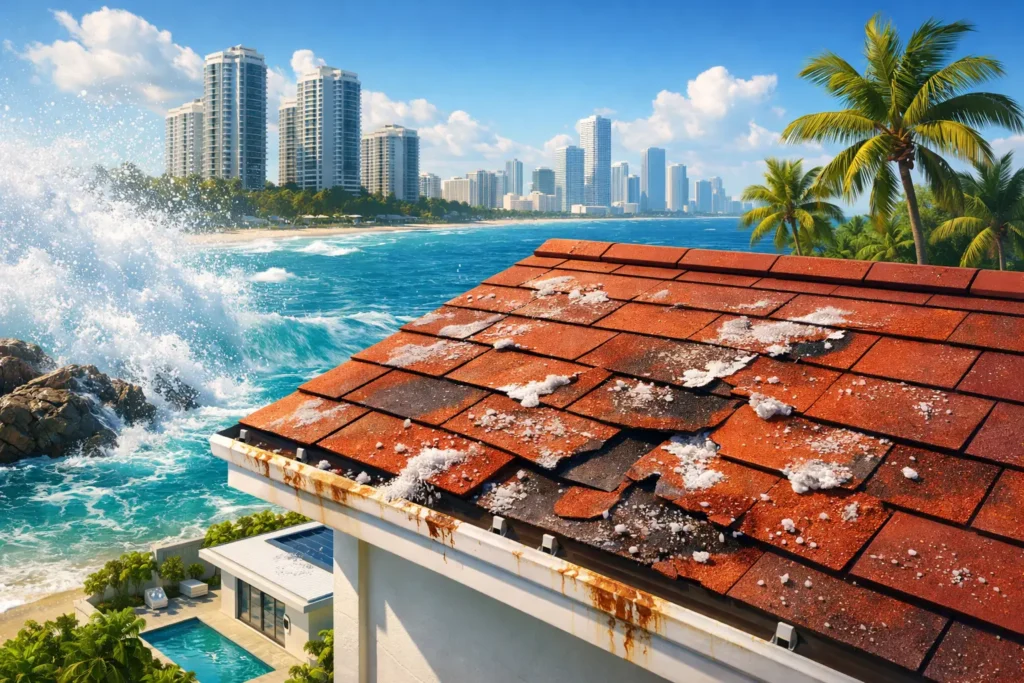
Salt air and UV exposure matter too. A system that handles wind well but corrodes early, dries out under intense sun, or allows ponding water to sit for days is not a long-term answer for South Florida.
Best Roofing Materials for Hurricanes: The Top Options
Standing Seam Metal Roofing
Standing seam metal is one of the strongest residential roofing options when it is designed and installed correctly. Its interlocking panels, concealed fasteners, and continuous appearance reduce the number of exposed points where wind-driven rain can work its way in. Metal is also lightweight compared with tile, placing less weight on the structure.
For coastal Miami properties, aluminum and properly coated metal systems can be especially attractive because they offer better corrosion resistance than unprotected steel. The trade-off is cost. A quality standing seam roof is usually a higher upfront investment, and its performance depends heavily on panel width, clip spacing, substrate, and perimeter detailing.
Not all metal roofs are equal. Exposed-fastener panels may fit certain buildings and budgets, but the exposed screws and washers require careful maintenance over time. For homeowners focused on long-term hurricane performance and a cleaner finish, standing seam is typically the better metal option.
Concrete and Clay Tile Roofing
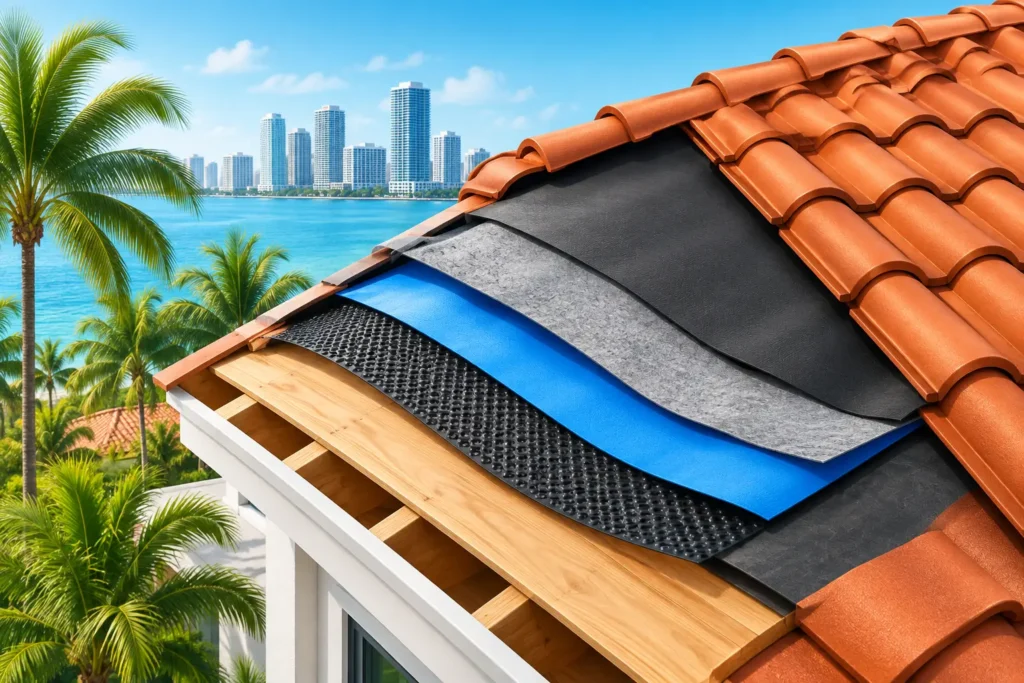
Concrete and clay tile remain common across Miami because they handle heat well, provide a classic South Florida look, and can last for decades when properly maintained. Tile itself is not automatically hurricane-proof, though. The real question is how each tile is attached and whether the system is approved for the roof’s wind zone and slope.
Modern tile installations may use mechanical fasteners, foam adhesive systems, or a combination of methods based on the approved assembly. Loose, cracked, or improperly attached tiles can become dangerous projectiles in a storm. Replacing a few visible broken tiles without checking the attachment pattern underneath can leave the real problem untouched.
Tile is heavy, so the building structure must be able to support it. It also has more individual components than a metal roof, which means more opportunities for maintenance needs after major weather. Still, for the right home, a properly installed and maintained tile roof is a durable hurricane-region choice.
Architectural Shingles
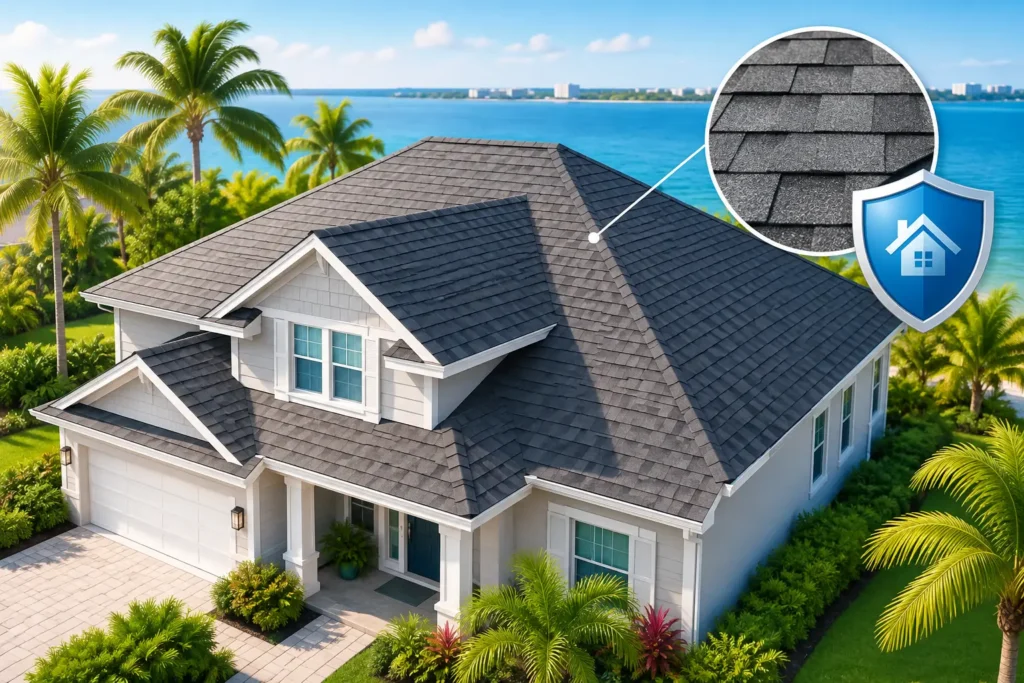
Architectural asphalt shingles are a practical option for homeowners who want a lower initial cost than metal or tile. They are widely available, offer many color choices, and can provide strong wind resistance when paired with the right underlayment, starter strips, nails, and installation pattern.
The limitation is that shingles are more vulnerable to lifting, creasing, and granule loss than premium metal systems. Miami heat can also shorten the service life of lower-quality shingles, especially where attic ventilation and roof drainage are poor. A shingle roof is only as reliable as its installation details. Missing starter strips, incorrect nailing, or weak flashing can lead to wind damage and leaks long before the shingles should wear out.
For a budget-conscious roof replacement, architectural shingles can make sense. Just avoid making the decision based on a wind-rating number alone. Confirm that the complete system is appropriate for the property and installed according to manufacturer and local requirements.
Modified Bitumen for Low-Slope Roofs
Many commercial buildings, multifamily properties, and modern homes in Miami have low-slope or flat roof sections. Modified bitumen is a proven option for these roofs because it creates a layered, durable waterproofing surface. It can be installed in different ways, including self-adhered, cold-applied, or heat-welded assemblies depending on the project.
A properly specified modified bitumen roof can perform well in hurricane conditions, particularly when the perimeter and penetrations are reinforced and drainage is addressed. It is not a one-size-fits-all solution. The roof deck, insulation, existing moisture, and amount of foot traffic all affect what system makes sense.
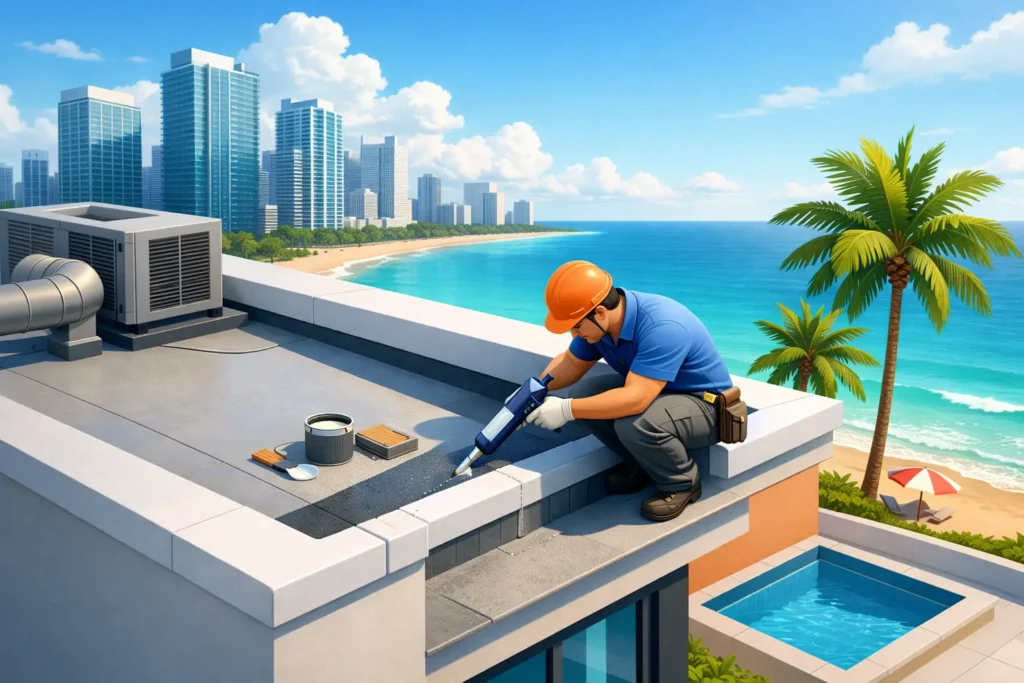
Property owners should be cautious of inexpensive coatings or patches presented as a full solution. A coating can be useful when the existing roof is dry, stable, and a good candidate for restoration. It cannot fix saturated insulation, failed seams, structural issues, or recurring ponding water.
TPO and PVC Membranes
TPO and PVC are single-ply membrane systems often used on commercial and low-slope roofs. Both can be effective in South Florida when installed as a properly engineered assembly with strong seams, secure attachment, and well-designed edge details.
TPO is commonly selected for its reflective surface and cost value. PVC is often valued for chemical resistance and strong welded seams, which may matter for restaurants, industrial facilities, or buildings with rooftop exhaust exposure. Either system can work, but the details determine the result: membrane thickness, attachment pattern, insulation design, termination bars, drains, scuppers, and edge metal all need to be right.
On a large commercial roof, a small seam failure or unsecured perimeter can turn into a major water intrusion problem during a hurricane. Routine inspection is cheaper than discovering that failure during the first hard rain after the storm.
Material Is Only One Part of the System
The strongest roof surface cannot make up for weak decking, worn flashing, poor drainage, or an aging underlayment. On tile and shingle roofs, the underlayment is often the critical water barrier once the outer material is damaged or displaced. On low-slope roofs, drains, scuppers, seams, and parapet walls can be the difference between a roof that sheds water and one that floods.
Before replacing a roof, a thorough inspection should identify existing leaks, soft decking, moisture trapped in the system, loose edge metal, and signs of corrosion. Photo documentation helps property owners see what is actually happening instead of taking a contractor’s word for it.
For older Miami homes, it is also worth checking how the roof connects to the walls and whether attic ventilation, insulation, and drainage need attention. A new roof installed over unresolved problems is still a costly problem.
How to Choose the Right Material for Your Property
Start with the roof shape. Steep-slope homes can often accommodate metal, tile, or shingles. Low-slope sections usually need a membrane or modified bitumen system designed to manage standing water and flashing transitions.
Then consider your priorities. Metal may be the best long-term choice for a homeowner who wants low weight, strong wind performance, and a modern look. Tile may suit a property that needs a traditional Miami style and has the structural capacity for it. Architectural shingles can be a sensible value choice when installed as a complete, code-compliant system. For commercial and flat roofs, TPO, PVC, and modified bitumen should be compared based on drainage, building use, traffic, and long-term maintenance needs.
Finally, look beyond the quote total. Ask what materials are included, how the perimeter will be secured, whether damaged decking is addressed, what approvals apply to the assembly, and how the contractor documents the work. No mystery fees and no vague promises. You should know what is being installed and why it fits your building.
A roof inspection before hurricane season gives you time to make a clear decision instead of rushing after damage occurs. Flash Roofing & Sheet Metal can document the condition of your roof, explain the real options, and help you choose a system built for Miami weather – not a generic fix that only looks good on day one.