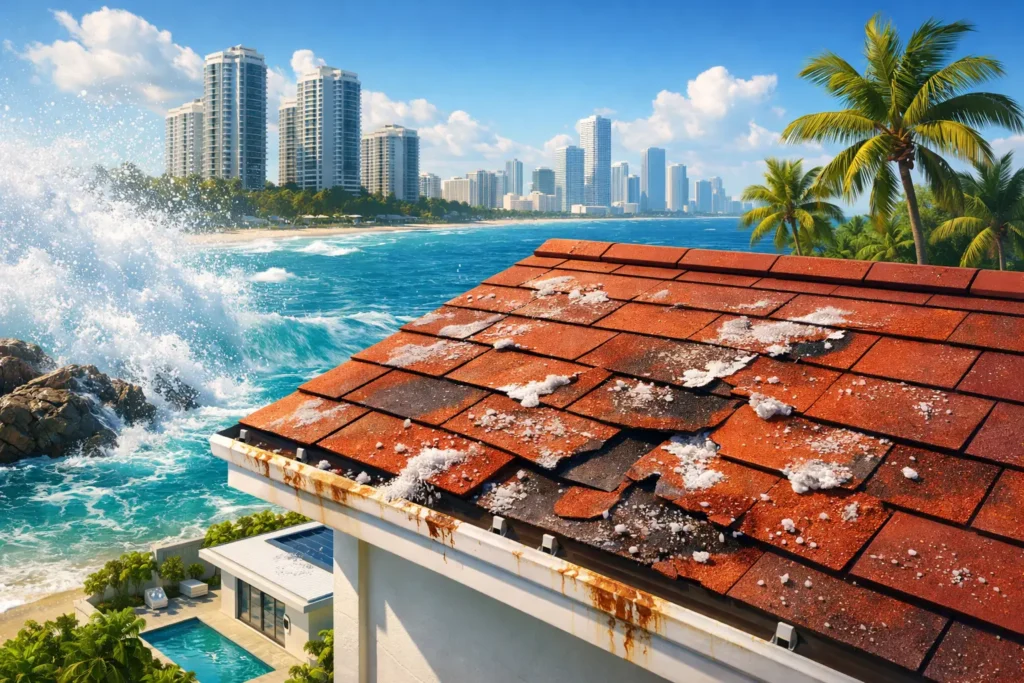

A Miami roof can look fine from the driveway and still be one hard rain away from a leak. When should a roof be inspected? At minimum, schedule a professional inspection once a year, after any major storm, and whenever you notice a change inside or outside the building. In South Florida, waiting for a visible ceiling stain is usually waiting too long.
Heat, UV exposure, wind-driven rain, humidity, standing water, and salt air all work on a roof year-round. A small cracked tile, lifted membrane seam, backed-up drain, or loose flashing can allow moisture into places you cannot see. The goal of an inspection is not to sell work you do not need. It is to find the source of a developing problem while the repair is still manageable.
How Often Should a Roof Be Inspected?
For most Miami-Dade homes and commercial buildings, an annual professional roof inspection is the practical baseline. It gives a qualified roofer a chance to document the roof’s condition, catch normal wear, and recommend maintenance before a leak turns into damaged insulation, framing, drywall, inventory, or electrical work.
That baseline changes depending on the property and roof system. A newer residential tile or shingle roof may need one thorough yearly inspection plus storm checks. An older roof, a low-slope commercial roof, or a building surrounded by trees may need attention twice a year. Flat and membrane roofs deserve especially close monitoring because water can collect around drains, penetrations, seams, and low areas without being obvious from the ground.
Property managers should also build inspections into their maintenance calendar rather than treating roofing as an emergency-only expense. A documented inspection history helps with budgeting, tenant concerns, insurance questions, and planning for repair or replacement before the roof reaches failure.
Schedule an Inspection Before Hurricane Season
Miami’s hurricane season runs from June through November, but preparation should not begin when a storm is already on the forecast. A pre-season inspection in spring gives you time to address loose materials, deteriorated flashing, cracked sealant, unsecured edge metal, clogged drains, and other conditions that can become serious under high winds and heavy rain.
This is not about making a roof hurricane-proof with a quick patch. No inspection can guarantee that a roof will escape every storm. It is about making sure existing weak points are repaired correctly and that the roof is in the best possible condition before it is tested.
For commercial roofs, the pre-season check should include drains and scuppers, rooftop equipment curbs, skylights, HVAC penetrations, parapet walls, coping, membrane seams, and areas where water has ponded before. These details are often where a manageable maintenance issue becomes a business interruption.
Inspect Again After a Major Storm
After a hurricane, tropical storm, or severe thunderstorm with high winds, arrange an inspection even if there is no active leak. Wind can lift shingles or tiles, break fasteners, tear membrane edges, loosen flashing, and push water beneath materials without leaving dramatic damage in plain sight.
You should not climb onto the roof to investigate. Wet surfaces, hidden weak spots, loose debris, and damaged electrical equipment make that risky. From the ground, look for obvious missing materials, fallen branches, displaced metal, or debris around drains. Inside, watch for new water marks, bubbling paint, damp insulation, musty odors, or dripping near vents and light fixtures.
A professional inspection provides photo documentation of conditions found. That matters after a storm, particularly when you need a clear record for an insurance claim or need to distinguish storm damage from pre-existing wear. Honest documentation also helps prevent unnecessary work. Not every roof needs replacement after a storm, but damage should never be guessed at.
When Should a Roof Be Inspected Between Scheduled Visits?
Annual inspections are essential, but certain warning signs call for an earlier appointment. Roof problems rarely improve on their own in Miami’s wet, hot climate. What starts as a small opening can allow repeated moisture intrusion through every rain cycle.
Call for an inspection if you notice:
- Water stains, peeling paint, soft drywall, or a damp smell on ceilings or upper walls.
- Missing, cracked, slipped, or visibly broken shingles, tiles, metal panels, or ridge components.
- Water pooling on a flat roof, overflowing gutters, clogged drains, or water backing up near scuppers.
- Rust on metal roofing, fasteners, flashing, or rooftop equipment supports, especially near the coast.
- Higher indoor humidity, mold growth, or unexplained increases in cooling costs that may point to wet insulation or ventilation issues.
A leak is not always directly above the stain you see indoors. Water can travel along decking, framing, conduits, and insulation before it becomes visible. That is why a proper inspection looks beyond the nearest roof surface and follows the evidence to the likely entry point.
The Right Timing Depends on Your Roof Type
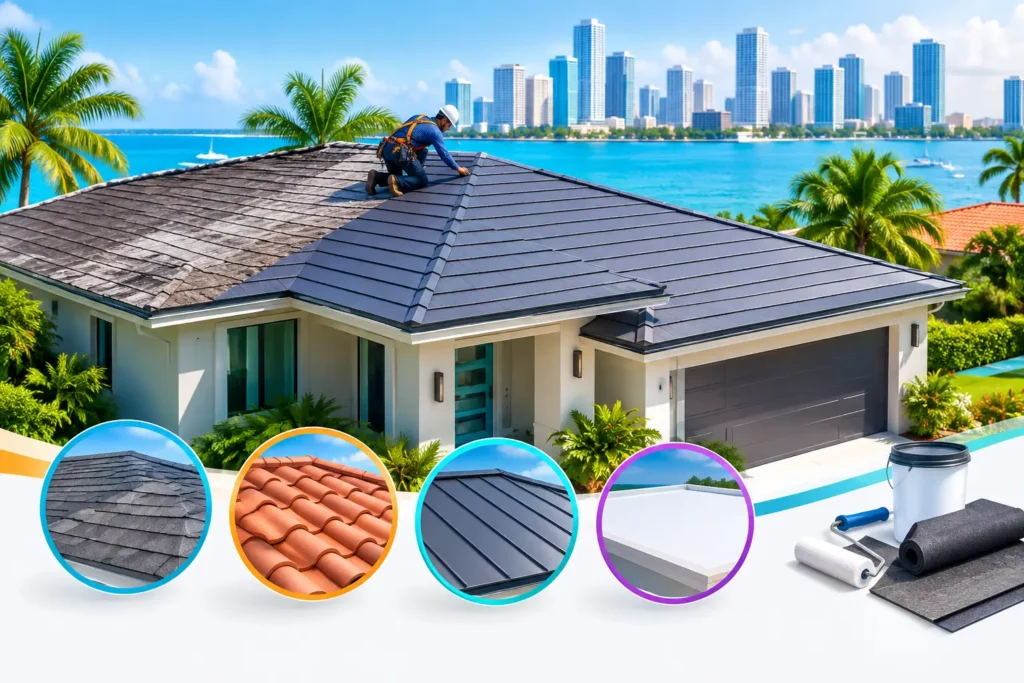
Different roofing materials age differently under South Florida weather. A good inspection is not a generic checklist. It should focus on the failure points of the system on your building.
Tile and Shingle Roofs
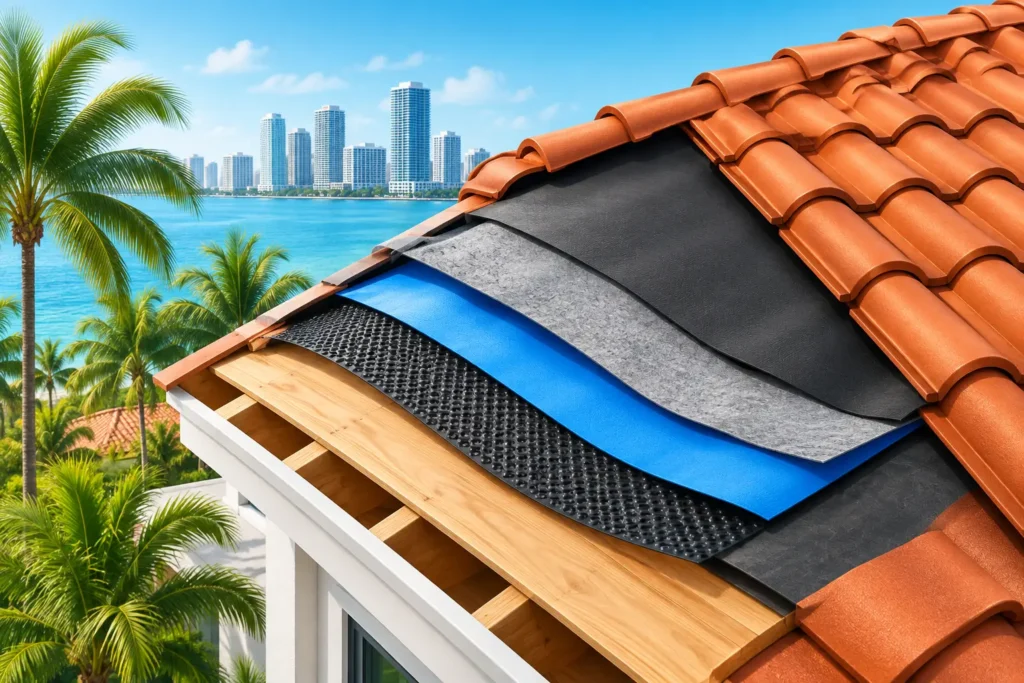
Tile roofs are durable, but individual tiles can crack, shift, or break from foot traffic, wind, and impact. Underlayment and flashing can also wear out before the tile itself. An inspection should look at the field tiles, ridges, valleys, penetrations, and the waterproofing layers beneath the visible surface.
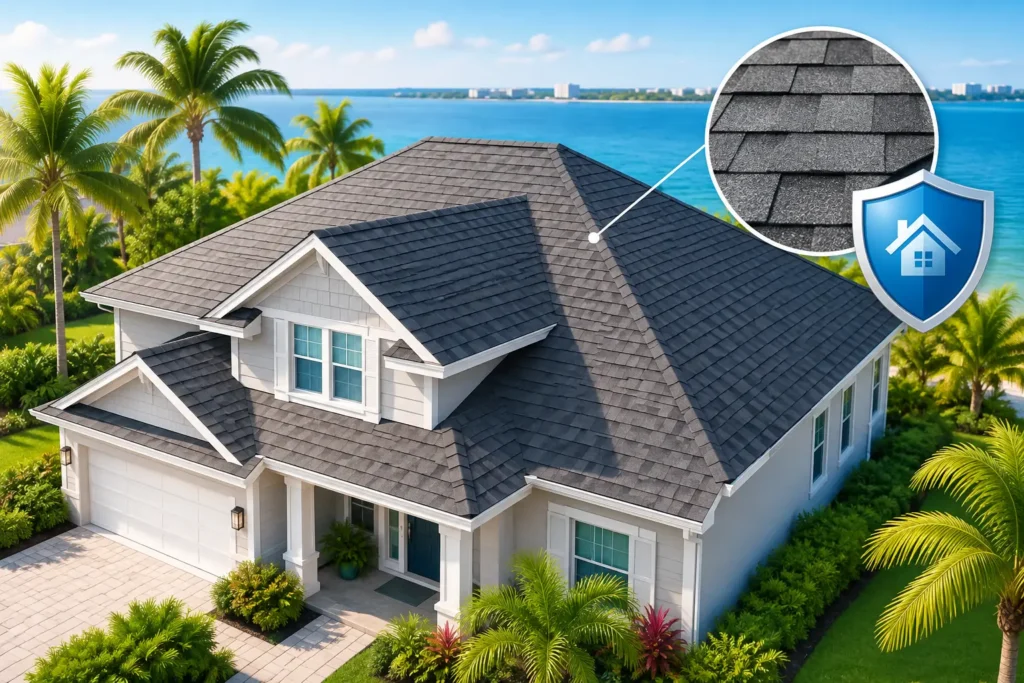
Shingle roofs need attention for lifted tabs, granule loss, nail pops, cracked shingles, and aging seal strips. Miami heat accelerates material aging, while wind-driven rain can exploit even a small area that has lifted.
Metal Roofs
Metal roofs perform well in harsh conditions when they are installed and maintained correctly. Their inspection should focus on fasteners, panel seams, flashing, sealant, expansion points, and corrosion. Salt air can be especially hard on coastal properties, so early signs of rust or coating failure should not be ignored.
Flat, Membrane, and Commercial Roofs
Low-slope roofs require consistent maintenance because their drainage and detailing do much of the work. Inspectors look for ponding water, punctures, open seams, deteriorated coatings, cracked flashing, soft areas, blocked drains, and failed seals around pipes and equipment.
A roof coating can extend the life of an eligible roof, but it is not a cure for trapped moisture, saturated insulation, widespread seam failure, or major structural issues. The inspection determines whether coating, repair, restoration, or replacement makes sense. Doing it once and doing it right costs less than coating over a problem that will keep growing underneath.
What a Professional Roof Inspection Should Include
A useful inspection should give you more than a quick glance and a vague recommendation. You should receive a clear explanation of the roof’s condition, the issues found, their urgency, and the practical options for correcting them.
A thorough inspection generally evaluates the roof covering, flashing, vents, penetrations, drainage, edge details, signs of moisture intrusion, structural concerns visible from accessible areas, and previous repair work. For commercial properties, the inspection may also include rooftop equipment areas and maintenance-related damage caused by other trades.
Ask for photos when possible. Photos make it easier to understand what is happening on your roof and why a repair is being recommended. They also create a record you can compare over time. A contractor should be able to explain the difference between a localized repair, preventive maintenance, and a roof that has reached the point where replacement is the more honest recommendation.
Flash Roofing & Sheet Metal approaches inspections with that standard: identify the root cause, show the evidence, and provide a straightforward scope without mystery fees or pressure.
Do Not Wait for the Roof to Leak
Many property owners postpone an inspection because the roof is not actively leaking. That can be a reasonable instinct if the roof is new, has documented recent maintenance, and has not experienced a significant storm. But in Miami, the cost of a yearly inspection is usually small compared with opening a ceiling, removing wet insulation, treating mold, replacing damaged finishes, or shutting down part of a commercial space.
Age matters, too. If you do not know when the roof was last replaced or inspected, schedule an assessment now. A roof nearing the later part of its expected service life needs closer attention, not because replacement is automatic, but because repairs and maintenance need to be planned based on its actual condition.
The best time to inspect a roof is before weather turns a small defect into interior damage. Put an annual check on the calendar, inspect after serious storms, and act quickly when something looks or feels different. A roof that gets regular attention has a far better chance of protecting the property beneath it when Miami weather does what Miami weather does.