A dark roof can become brutally hot under a Miami afternoon sun. That heat does not stay on the surface. It moves into the roof assembly, warms the attic or ceiling space, and makes your air conditioner work longer. So, does roof color affect cooling? Yes – but color is only one part of a roof system that has to stand up to UV exposure, humidity, heavy rain, salt air, and hurricane conditions.
For homeowners, property managers, and commercial owners, the right decision is not simply “pick white.” A cooler-looking roof that is poorly installed, badly insulated, or not suited to the building can still create costly problems. The goal is to reduce heat gain without sacrificing drainage, wind resistance, warranty coverage, appearance, or long-term durability.
How roof color affects cooling
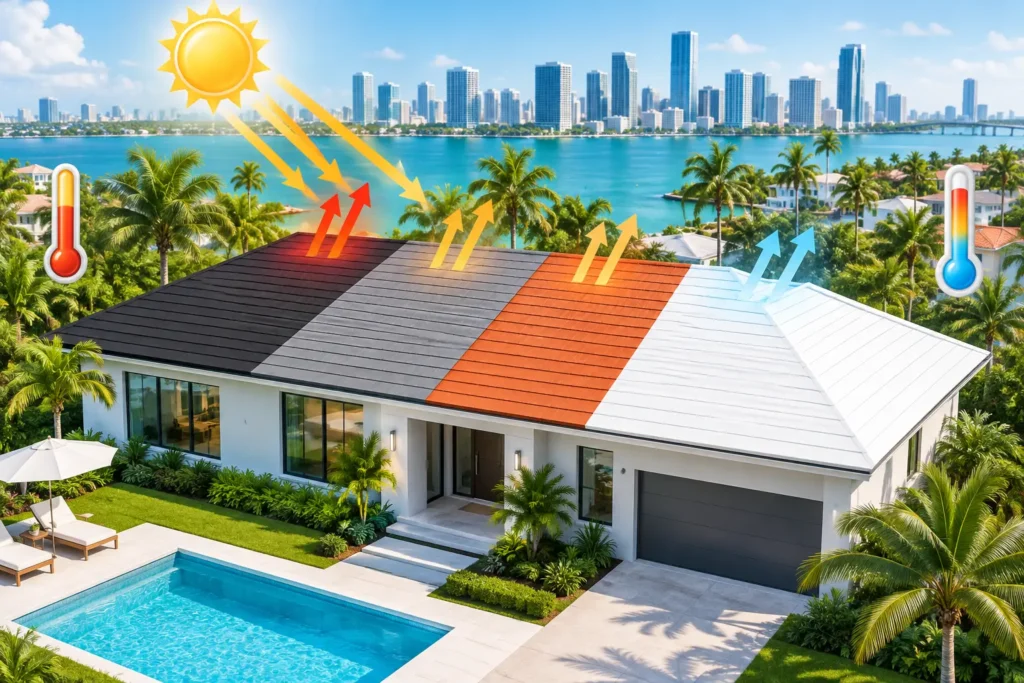
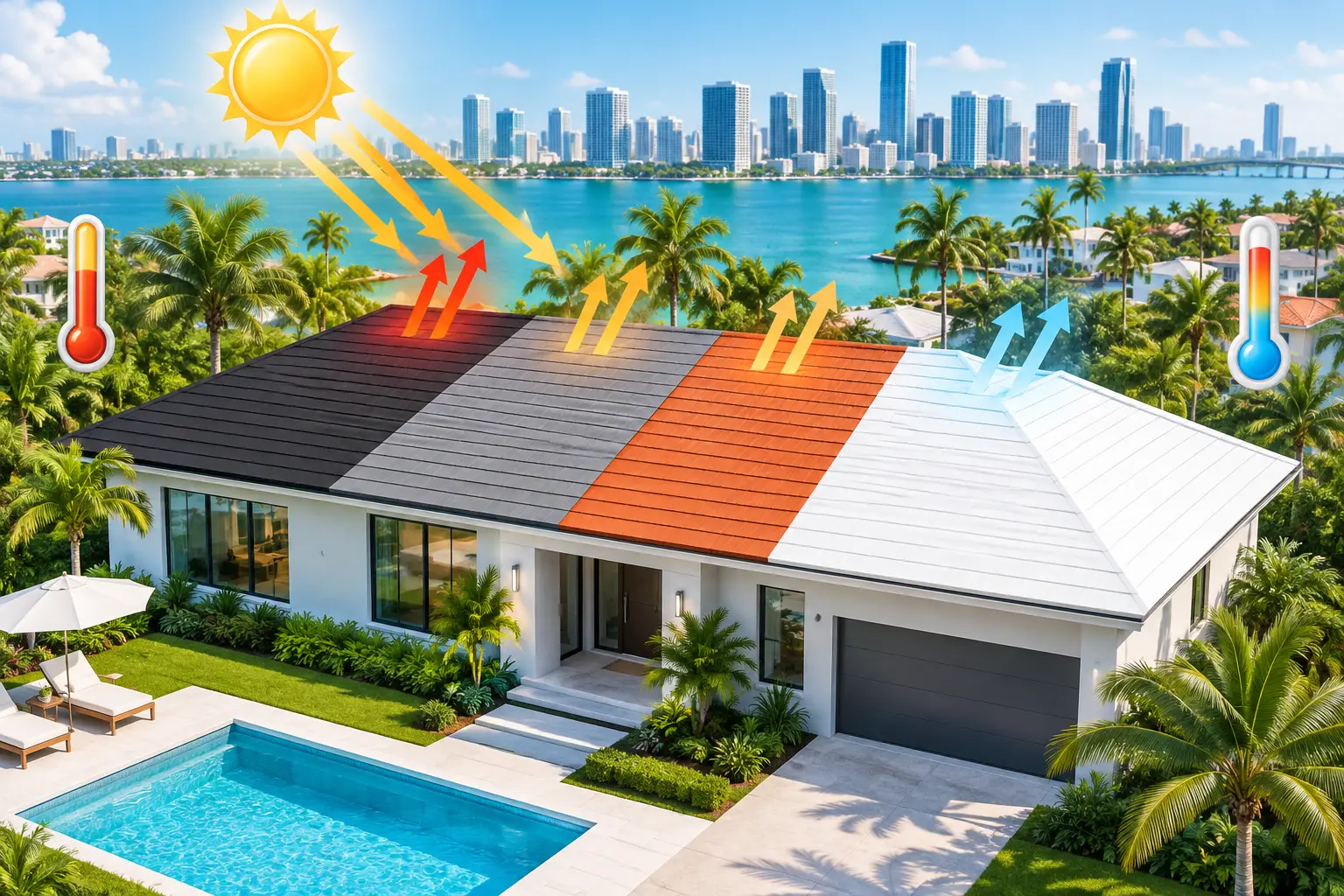
Roof color affects how much solar energy the roof surface absorbs. Dark colors absorb more of the sun’s energy and generally reach higher surface temperatures. Light colors reflect more sunlight and tend to stay cooler. On a clear South Florida day, that surface-temperature difference can be significant.
A cooler roof surface can reduce the amount of heat passing into the building. That may lower cooling demand, especially in buildings with limited attic insulation or large flat roof areas exposed all day. It can also reduce thermal stress on certain roofing materials, which matters when a roof is dealing with relentless heat year after year.
The technical term you may hear is solar reflectance. A highly reflective roof sends more sunlight back rather than absorbing it. Another useful measurement is thermal emittance, or how effectively a heated surface releases absorbed heat. Together, these properties help determine how a roof performs in the sun.
Color is an easy clue, but it is not the whole measurement. Two roofs that both look light gray can have very different reflective ratings based on their material, coating, texture, age, and manufacturer formulation. If cooling performance is a priority, ask for the actual product data rather than choosing by a color sample alone.
Why the answer is different in Miami
Miami roofs face conditions that change the calculation. We do not have a few hot months followed by a long heating season. Air conditioning runs for much of the year, and roofs take intense ultraviolet exposure almost daily. That makes reflectivity more valuable here than it may be in colder parts of the country.
Still, South Florida is not just hot. Roofs must shed heavy rain, resist wind uplift, manage moisture, and withstand salt exposure near the coast. A roof color choice cannot override those basics. A bright white coating applied over a roof with trapped moisture, open seams, poor drainage, or failing flashing is not a real solution. It may look better for a while, but the underlying problem remains.
For commercial buildings with broad, low-slope roofs, a light-colored membrane or reflective coating can make a meaningful difference because there is so much exposed roof area. For a home with a well-ventilated attic and strong insulation, the indoor cooling difference from shingle color may be smaller, though the roof surface itself can still run cooler.
Roof material matters as much as color
The best color depends on the roofing system. A good roofing decision starts with the system your property needs, not the color you happen to prefer.
Flat and low-slope roofs
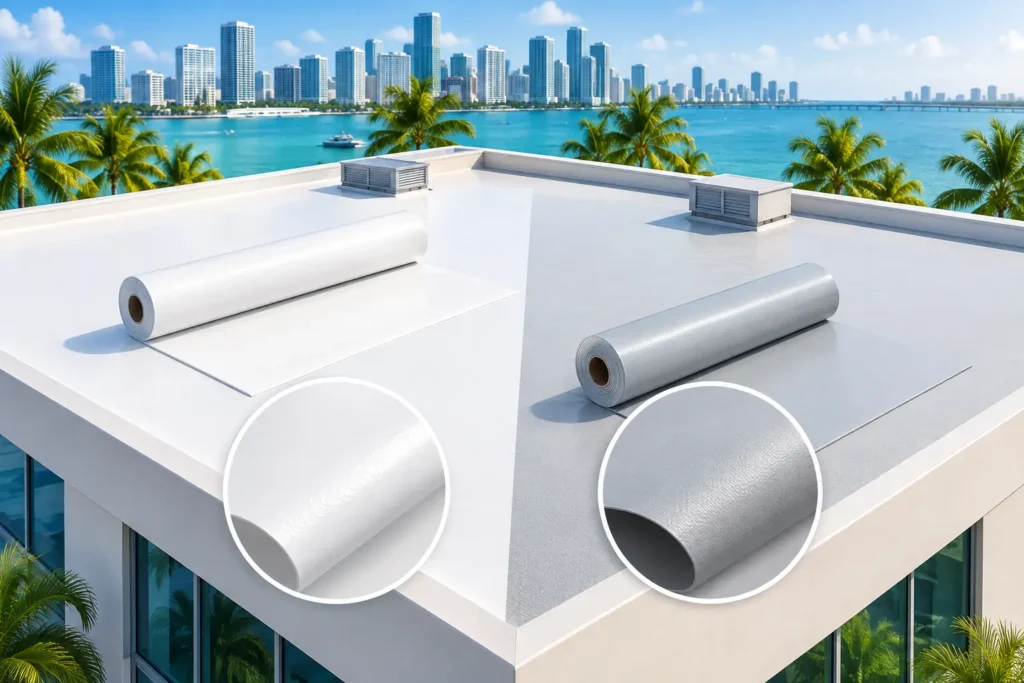
White TPO, PVC, and certain coated modified-bitumen systems are common choices for Miami commercial roofs because they are designed to reflect sunlight. They can be excellent performers when the seams, penetrations, drains, edge details, and insulation are installed correctly.
Reflective roof coatings can also restore or improve the surface performance of an existing roof, but only when that roof is a proper candidate. The roof must be clean, dry, structurally sound, and repaired before coating begins. Coating over active leaks or deteriorated substrate is a patch, not a repair.
Shingle roofs
On steep-slope residential roofs, lighter shingle colors often absorb less heat than black or very dark shingles. But homeowners should also consider wind ratings, manufacturer requirements, architectural style, and the condition of the decking and underlayment.
Modern shingles sometimes use reflective granules, allowing certain medium or darker colors to perform better than their appearance suggests. That can be helpful if a homeowner wants a traditional look without choosing the hottest available option. The actual product rating matters more than a broad assumption about color.
Tile, metal, and other systems
Tile roofs can perform well in Miami because the space beneath the tile can help manage heat, particularly when paired with the right underlayment and ventilation. Lighter tile colors generally reflect more sun, but the condition of the underlayment is often the bigger issue on an aging tile roof. A beautiful tile surface cannot protect a home if the waterproofing layer beneath it has failed.
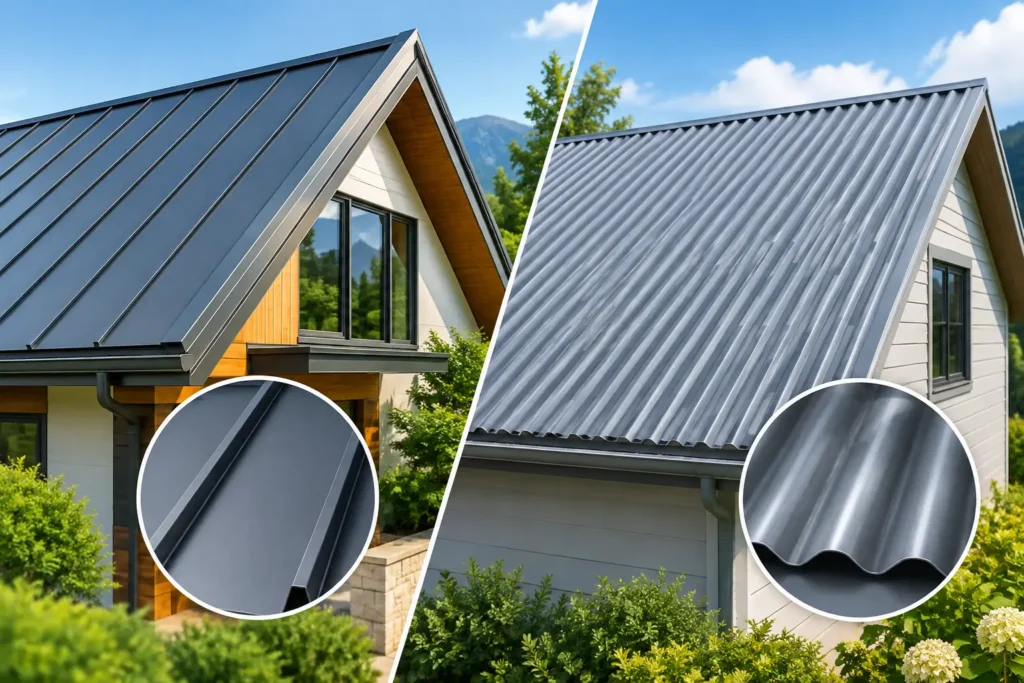
Metal roofing can also be a strong choice for heat performance, especially with a reflective finish. It is lightweight, durable, and available in finishes built for high solar reflectance. In coastal areas, however, the coating quality, fasteners, flashing details, and corrosion resistance need close attention. Salt air finds weak points fast.
What roof color cannot fix
A light roof helps reduce solar heat gain, but it cannot compensate for poor insulation, air leaks, inadequate ventilation, or a failed roofing system. If an upstairs room is always hot, roof color may be part of the reason, but it is rarely the only reason.
The attic or roof cavity deserves inspection. Insulation slows heat transfer. Ventilation can help control heat and moisture in appropriate attic assemblies. Air sealing prevents conditioned air from escaping into spaces where it does no good. On a low-slope commercial roof, the insulation package beneath the membrane has a major impact on energy performance.
Drainage matters, too. Flat roofs are not supposed to hold standing water for long periods. Ponding water can accelerate wear, collect debris, and expose weaknesses around drains and seams. A reflective roof surface does not change that. The roof has to be designed and maintained as a complete system.
The trade-offs of a white or light-colored roof
Light-colored roofs have real benefits, but there are practical trade-offs. White surfaces show dirt, mildew staining, leaf debris, and foot traffic more clearly than darker roofs. In humid Miami conditions, that means periodic cleaning may be needed to preserve the roof’s reflectivity and appearance.
Glare can also be a concern on some commercial buildings, especially where nearby windows, neighboring properties, or rooftop equipment areas are affected. Some owners choose light gray or another high-reflectance finish rather than bright white to balance appearance and performance.
For residential properties governed by an HOA or architectural standard, approved colors may limit the options. That does not mean energy performance is off the table. A contractor can help identify compliant products with better solar ratings and make sure the roof choice meets local code and wind-zone requirements.
When a roof coating makes sense
A reflective coating can be a practical option for a qualifying flat or low-slope roof that still has useful service life. It can improve reflectivity, help protect the roof surface from UV exposure, and delay replacement when the underlying system is sound.
But coating is not a shortcut around a roof that has reached the end of its life. Blisters, widespread membrane failure, saturated insulation, recurring leaks, deteriorated decking, or major drainage problems call for an honest assessment. The lowest upfront price is not a savings if the roof has to be replaced again soon.
A proper inspection should document the condition of seams, flashing, penetrations, drains, substrate, insulation, and areas with previous repairs. Photo documentation makes it easier to see what is actually happening overhead and decide whether repair, restoration, coating, or replacement is the right path.
Choosing a cooler roof the right way
Start with your building type and the condition of the existing roof. A commercial warehouse with a large low-slope roof needs a different approach than a tile-roof home in Coral Gables or a coastal property exposed to wind-driven salt spray. Then consider solar reflectance, insulation, roof slope, drainage, local code requirements, and how the finished roof will be maintained.
For Miami property owners, the strongest approach is straightforward: choose a system built for the climate, install it correctly, and address the root causes of heat or water intrusion before they become larger repairs. Flash Roofing & Sheet Metal approaches roof decisions that way – with clear findings, honest options, and no mystery fees.
A cooler roof can help your building use less energy, but the best result comes from a roof that is also dry, secure, properly detailed, and ready for the next South Florida storm. Before selecting a color or coating, get the roof inspected and make the decision based on proof, not guesswork.