
A roof leak over a living room or a failing flat roof over a business creates pressure to move fast. That is exactly when the difference between roofing bids versus estimates matters most. One number may be a preliminary planning figure. Another may be a detailed offer to complete defined work for a stated price. If you treat them as the same thing, you can end up approving a job with major details left unanswered.
For Miami-Dade property owners, those details are not small. Roofing work has to account for intense UV exposure, wind requirements, humid conditions, salt air near the coast, drainage, permits, and the condition of the roof deck below the surface. A low number without a clear scope is not automatically a deal. It may simply be an incomplete picture.
Roofing Bids Versus Estimates: The Practical Difference
In everyday conversation, contractors and customers often use “bid,” “quote,” and “estimate” interchangeably. But they do not always carry the same level of commitment.
An estimate is generally an informed projection of what the work may cost based on visible conditions, measurements, material choices, and labor. It is useful early in the process, especially when a roof has not been opened up or when a property owner is comparing repair options against replacement. Estimates can be accurate, but they may change if hidden damage, deteriorated decking, wet insulation, or code-related requirements are discovered.
A bid is usually more specific. It is a contractor’s proposed price to complete a defined scope of work using identified materials and methods. A solid roofing bid should make it clear what is included, what is excluded, and what could cause a change in price. Once accepted and incorporated into a signed agreement, it becomes the working basis for the project.
The key point is simple: labels alone do not protect you. An estimate with detailed line items can be more useful than a vague bid. What matters is whether the document gives you enough information to understand what is being done to your roof, why it is needed, and what you will actually pay.
What a Real Roofing Estimate Should Tell You
A good estimate should be clear enough that you can compare it with another contractor’s proposal without guessing. It does not need to read like a legal textbook, but it should show the work behind the number.
For a roof repair, that means identifying the problem area and the proposed repair method. If a contractor says they will “seal the leak,” ask what is causing it. Is the issue failed flashing, cracked tile, a damaged membrane seam, ponding water, rusted metal, a compromised penetration, or deteriorated underlayment? A repair that addresses the root cause is different from a temporary surface patch.
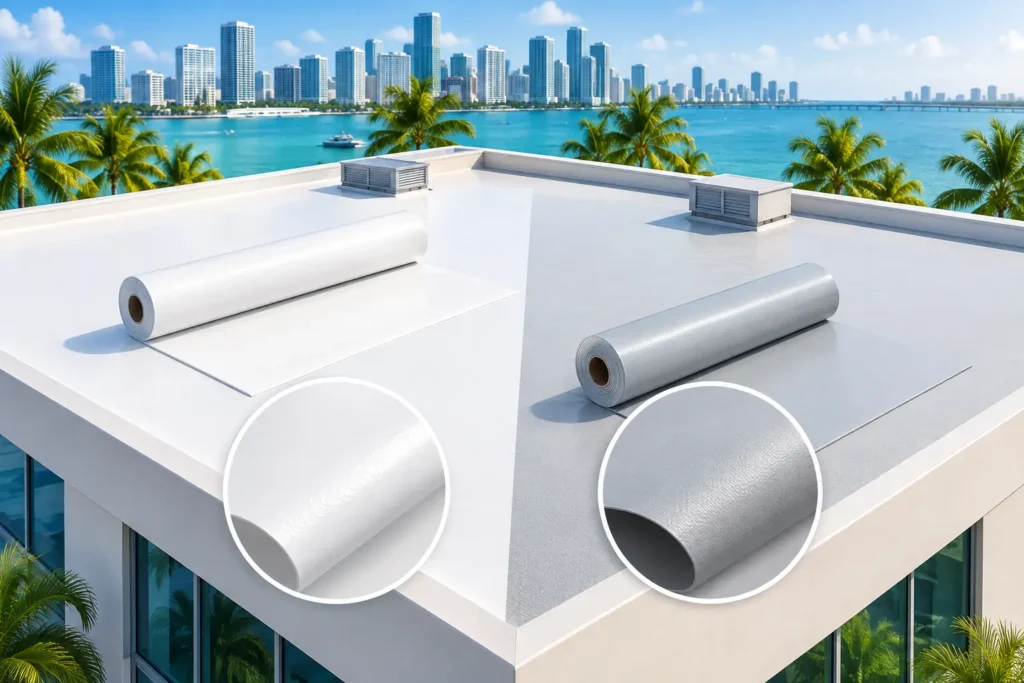
For a replacement, the estimate should identify the roofing system, material manufacturer or product line when applicable, approximate roof area, removal work, underlayment or insulation, flashing, drainage components, vents, edge metal, and debris disposal. On a commercial flat roof, details around drains, scuppers, parapet walls, curbs, and membrane terminations can determine whether the new system performs when heavy rain hits.
It should also state whether permits are included and whether the contractor expects code upgrades. Miami-Dade roofing work often involves requirements that are not optional. If one proposal includes permit handling, hurricane-rated components, and proper flashing details while another leaves them out, the lower price is not an apples-to-apples comparison.
When an Estimate Can Change
Even the most careful inspection cannot reveal everything without removing roofing materials. That is why honest contractors explain possible unknowns before work begins instead of surprising you after the crew is already on the roof.
Common discoveries include rotten plywood, damaged concrete substrates, corroded fasteners, wet insulation, cracked decking, hidden leaks around penetrations, or structural issues caused by years of water intrusion. On older Miami properties, previous repairs may also be buried beneath coatings, tile, or layers of roofing material.
A professional estimate should explain how those conditions will be handled. Will there be a unit price for deck replacement? Will the contractor document concealed damage with photos before proceeding? Who must approve added work? These questions matter because legitimate change orders happen, but mystery charges should not.
No one can promise that a roof will have zero hidden issues. They can promise to communicate clearly, provide proof, and get approval before adding work beyond the agreed scope.
How to Read a Roofing Bid Before You Sign
A roofing bid should make it possible to see the whole job, not just the final number. Take the time to review the scope, then ask questions before a deposit changes hands.
Look for these four areas:
- Scope of work: What sections of the roof are included? Is this a repair, restoration, coating, recover, or full tear-off and replacement?
- Materials and installation details: Which roofing system will be used, and how will flashing, penetrations, drainage, edges, and transitions be handled?
- Price and payment terms: Is the price fixed for the stated scope? What is the deposit, when are remaining payments due, and what costs are excluded?
- Protection and accountability: Does the bid address permits, cleanup, warranty terms, insurance, licensing, and written approval for change orders?
Be careful with proposals that only say “replace roof” or “repair leak” followed by one lump-sum price. They may not identify the material, thickness, attachment method, underlayment, or number of repair areas. If there is a disagreement later, a vague document leaves too much room for interpretation.
A detailed bid also protects the contractor. Good roofers want both parties to know what success looks like before the work starts.
Why the Lowest Bid Can Cost More in South Florida
A lower bid is not always wrong. A contractor may have a more efficient crew, better material pricing, or a scope that genuinely requires less work. But a price far below every other proposal deserves a closer look.
In South Florida, cutting corners often shows up at the places water and wind find first: flashing, penetrations, edges, drains, seams, fasteners, and transitions between roof sections. A roof may look clean from the ground while a poor installation is already vulnerable to wind uplift, ponding water, UV breakdown, or moisture intrusion.
Ask what has been omitted rather than only asking why the price is lower. Is the contractor removing the old roof or installing over it? Are they replacing failed flashing? Is the proposal based on a basic material when the property needs a system suited to its exposure? Are permits included? Has anyone inspected the attic, deck, or interior signs of leakage?
For coastal and near-coastal properties, salt exposure can accelerate corrosion on metal components. For flat roofs, drainage and membrane details can matter more than the square-foot price. For tile roofs, broken tiles may be visible, but failing underlayment is often the larger issue. The right recommendation depends on the roof, not on a generic package.
Questions Worth Asking Before You Choose
You do not need to be a roofer to evaluate a proposal. You do need direct answers. Ask whether the contractor inspected the roof in person, what evidence supports the recommendation, and whether photos are available. Ask what happens if hidden damage is found and how any added cost will be approved.
For replacement work, ask whether the proposed system is appropriate for your roof slope, drainage pattern, building use, and local exposure. For repairs, ask whether the work is intended as a temporary solution or a long-term correction. There is nothing wrong with a temporary repair when it is the practical choice, but it should be described honestly.
Also ask about the warranty in plain language. A material warranty and a workmanship warranty are different. Know who is responsible if an installation-related issue appears after the work is complete.
Get Clarity Before the First Nail or Seam
The best roofing proposal does not pressure you with technical language or hide behind a low starting price. It gives you a clear path: the problem, the recommended solution, the materials, the cost, and the conditions that could affect that cost.
At Flash Roofing & Sheet Metal, that means looking at the roof as a South Florida system, not just a surface that needs a quick patch. Before approving any roofing work, ask for the details, review the photos, and make sure the document reflects the job your property actually needs. Do it once. Do it right.