
A roof can look fine from the driveway and still be one hard rain away from leaking into your ceiling. In Miami, that risk is higher because roofs take a beating from intense UV exposure, year-round humidity, wind-driven rain, salt air, and hurricane conditions. Hiring a licensed insured roofing contractor is not just a box to check before signing a contract. It is one of the clearest ways to protect your property, your budget, and the quality of the work overhead.
The lowest quote is not always the lowest cost. A cheap repair that skips the source of a leak can turn into damaged insulation, mold concerns, rotted decking, or a full replacement much sooner than expected. The right contractor documents the condition, explains the repair, follows local requirements, and stands behind work built for South Florida.
What “Licensed and Insured” Should Mean
These two words are often used together, but they protect you in different ways. A license shows that the contractor is authorized to perform roofing work under the applicable state and local requirements. Insurance addresses the financial risk if there is property damage or someone is injured during the job.
Neither should be treated as a verbal promise. Before work starts, ask for current documentation and take time to review it. A legitimate contractor should not dodge basic questions about credentials, permits, scope of work, or who will be on your roof.
Licensing matters because roofing is not cosmetic work
Roofing affects the building envelope, drainage, structural components, energy efficiency, and storm protection of your home or commercial property. A proper repair may involve flashing details, underlayment, fasteners, drain connections, roof-to-wall transitions, or replacement of damaged decking. These are not areas for guesswork.
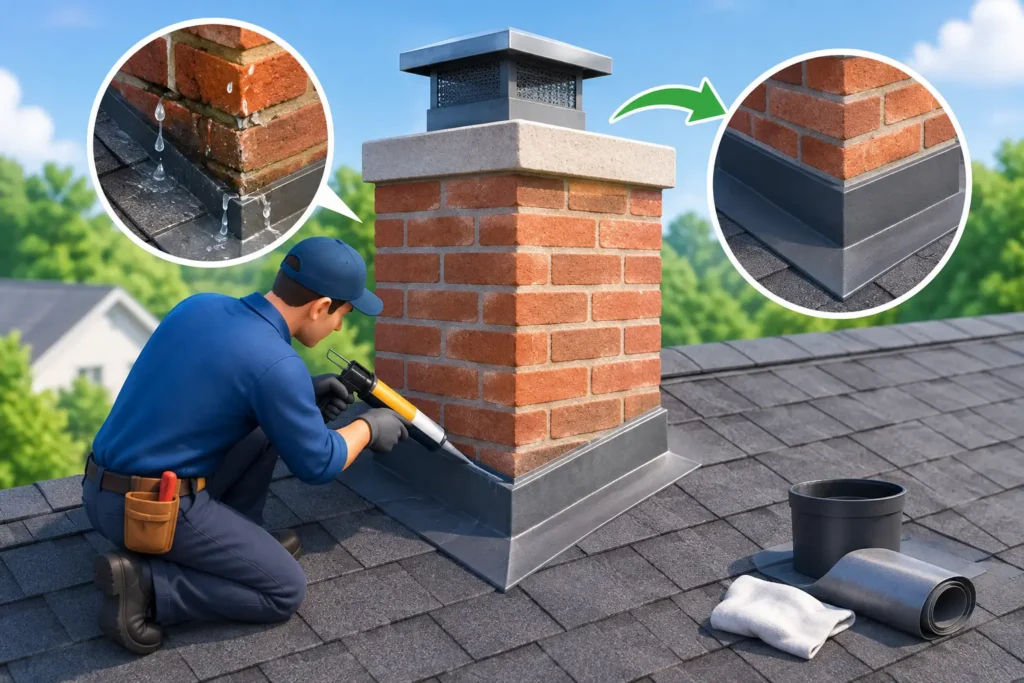
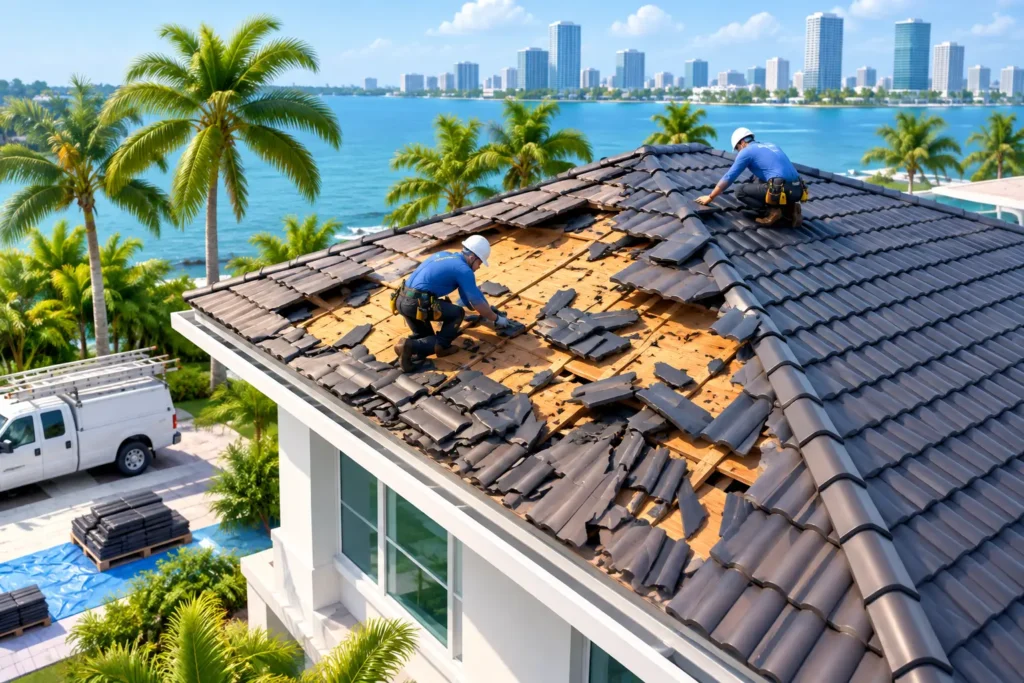
A licensed contractor understands that a roof must perform as a complete system. Replacing a few broken tiles without addressing failed flashing may stop a visible drip for a short time, but it will not solve the reason water got in. The same is true for flat roofs where a surface patch may hide a problem with seams, ponding water, drains, or deteriorated membrane edges.
For Miami-Dade properties, code awareness is especially important. Hurricane-zone requirements, product approvals, permit rules, and wind-resistance details can all affect how a project should be planned. The exact requirements depend on the building, roof system, and job scope, but an experienced local roofer should know when permits and inspections are part of the process.
Insurance protects the property owner from unnecessary risk
Roof work carries real hazards. Workers use ladders, remove materials, carry heavy loads, and work on steep or elevated surfaces in heat that can be brutal for much of the year. If a contractor is uninsured or cannot show proper coverage, the property owner may be exposed to problems that should never become theirs.
Ask about general liability coverage and workers’ compensation coverage, where applicable. General liability is intended to address certain property damage or injury claims. Workers’ compensation is connected to injuries sustained by workers. Coverage details vary, so do not assume a logo on a truck or a line on an estimate tells the full story.
Request proof that is current and matches the company you are hiring. If the name on the certificate, contract, and business card do not line up, stop and ask why. Clear paperwork is not red tape. It is a sign of a contractor who runs a professional operation.
Why a Licensed Insured Roofing Contractor Costs More Sometimes
There is a reason a qualified contractor may not be the cheapest name on a list. Proper licensing, insurance, trained crews, safety practices, permits, quality materials, waste removal, and detailed documentation all have a cost. Those costs support a job that is accountable from the first inspection through final cleanup.
That does not mean the highest quote is automatically the best one. It means you should compare proposals based on what they actually include. Two estimates can have very different prices because one includes only a surface repair while the other addresses damaged substrate, flashing, drainage, or matching materials needed for a lasting result.
A good estimate should make the scope understandable. You should know what area will be repaired or replaced, what materials are planned, what is excluded, whether permits are anticipated, and what conditions could change the price. No mystery fees starts with no mystery scope.
Miami Roof Problems Need Local Answers
A roofing method that works in a mild, dry climate may fail quickly here. Heat can dry and crack materials over time. Heavy rain exposes weak seams and flashing. Salt air can speed up corrosion around metal components. Hurricane winds can exploit loose edges, worn fasteners, lifted tiles, and aging shingles.
That is why inspection matters before repair. The visible damage is not always the starting point of the problem. Water can travel beneath tile, through insulation, along a deck, or around penetrations before it shows up as a stain inside. A contractor should look beyond the stain or missing shingle and identify the path water is taking.
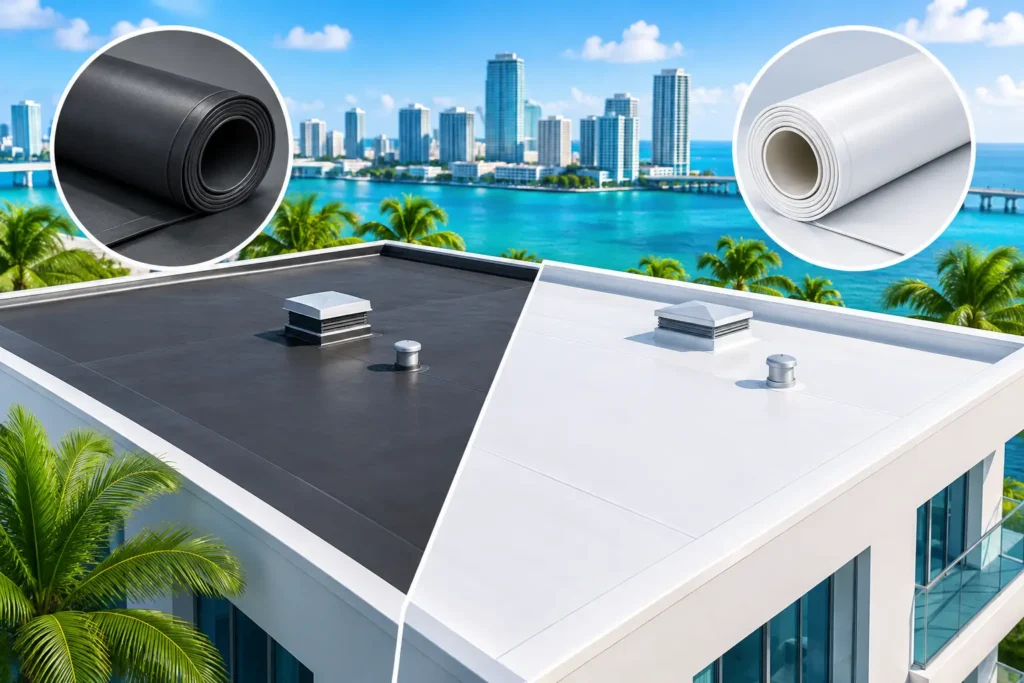
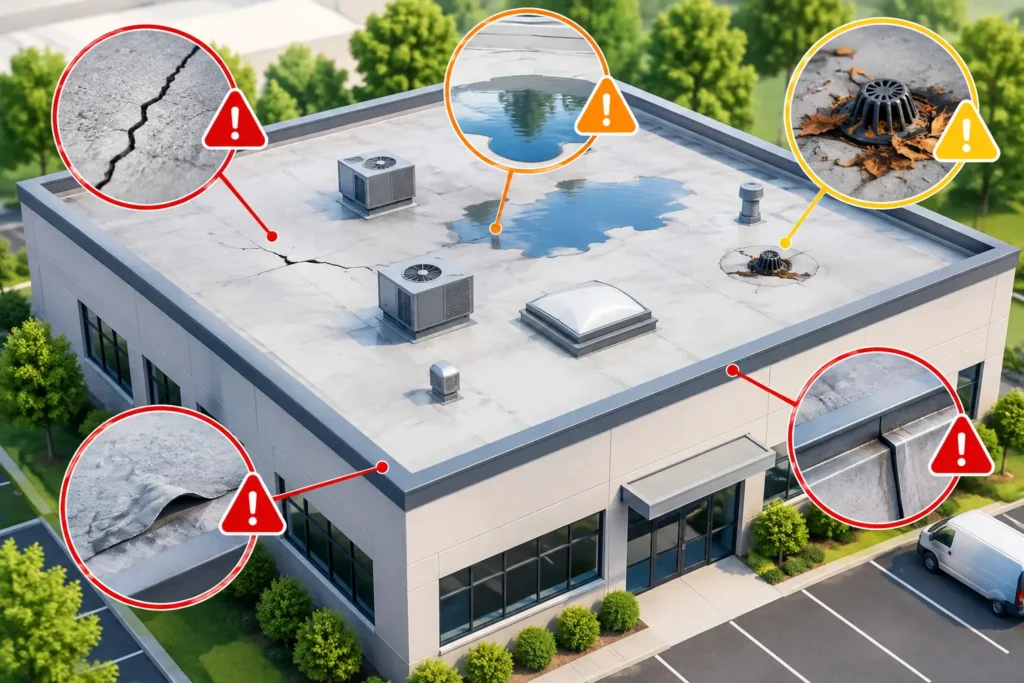
For commercial buildings, the same principle applies to flat and low-slope systems. Ponding water, clogged drains, seam separation, punctures, and deteriorated coatings can each create leaks that look simple from inside the building. The right repair depends on the membrane type, roof age, drainage pattern, and overall condition. Sometimes a targeted repair is the responsible answer. Other times, repeated patching is only delaying a restoration or replacement that the roof already needs.
Questions Worth Asking Before You Sign
You do not need to be a roofing expert to hire one. You do need clear answers. Ask whether the contractor is licensed and insured, whether documentation can be provided, and whether the work requires a permit. Ask who supervises the job and whether subcontractors will be involved.
Also ask how the contractor identified the source of the problem. If the answer is simply, “We will seal it,” without an inspection or explanation, be careful. Sealant has a place in roofing, but it is not a cure for failed flashing, trapped moisture, loose material, or structural deterioration.
Photo documentation is especially useful. Before-and-after photos help you understand what was found, what was repaired, and why the recommended work was necessary. They also create a record for property managers, insurance discussions, maintenance files, and future planning.
For replacement projects, ask about the roofing system itself. Tile, shingle, metal, modified bitumen, TPO, and other membrane systems each have different strengths, maintenance needs, and installation details. The best choice depends on the building design, slope, drainage, budget, exposure, and long-term goals. There is no one material that is right for every Miami roof.
Red Flags That Should Slow You Down
Be cautious when a roofer pressures you to sign immediately, refuses to put the scope in writing, asks for an unusually large payment before materials or work are underway, or offers a price that seems impossible compared with every other estimate. Storm-chasing crews and unqualified operators often rely on urgency, especially after severe weather.
Another red flag is a contractor who cannot explain the difference between a repair, restoration, and replacement. A repair addresses a defined failure. Restoration may extend the life of an existing roof when the system remains a suitable candidate. Replacement removes and rebuilds the roof system when repairs no longer make financial or practical sense. Honest advice includes telling you when a small repair is enough and when it is not.
At Flash Roofing & Sheet Metal, the goal is not to sell the biggest job possible. It is to identify the condition of the roof, show you the evidence, and recommend work that makes sense for the property and South Florida weather.
Choose Proof Over Promises
A roof is too important to hand over to someone because they answered first or quoted lowest. Look for a contractor who communicates clearly, provides documentation, explains the root cause, and treats permits, safety, and cleanup as part of the job – not optional extras.
When you choose a licensed insured roofing contractor, you are buying more than labor. You are choosing accountability when the rain starts, the wind picks up, and your roof has to do the work it was built to do. Get the facts, review the scope, and choose the team prepared to do it once and do it right.