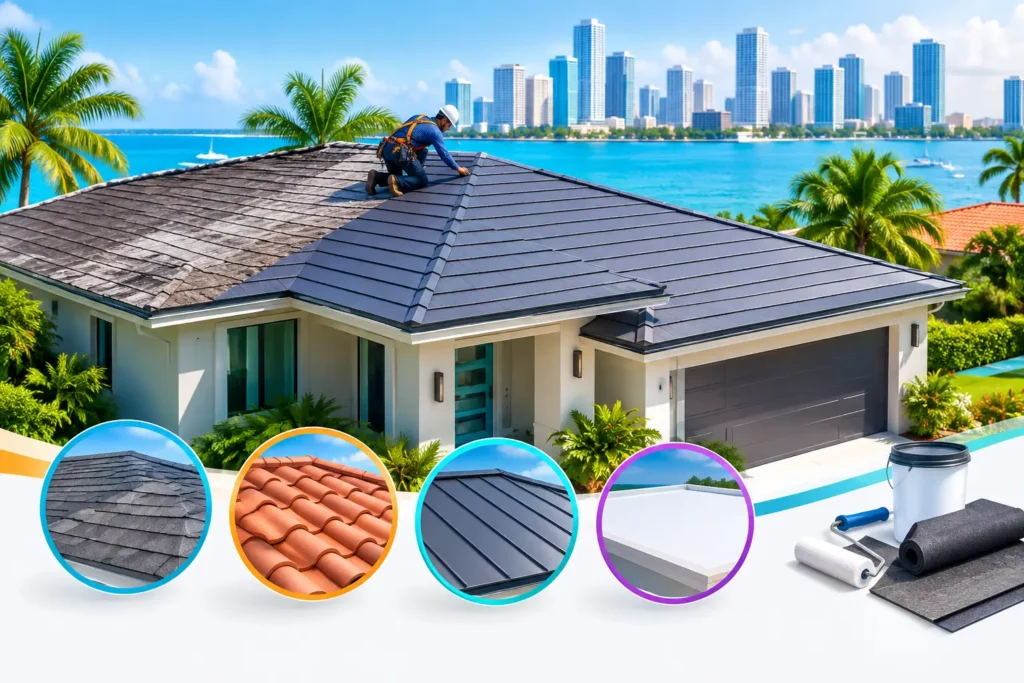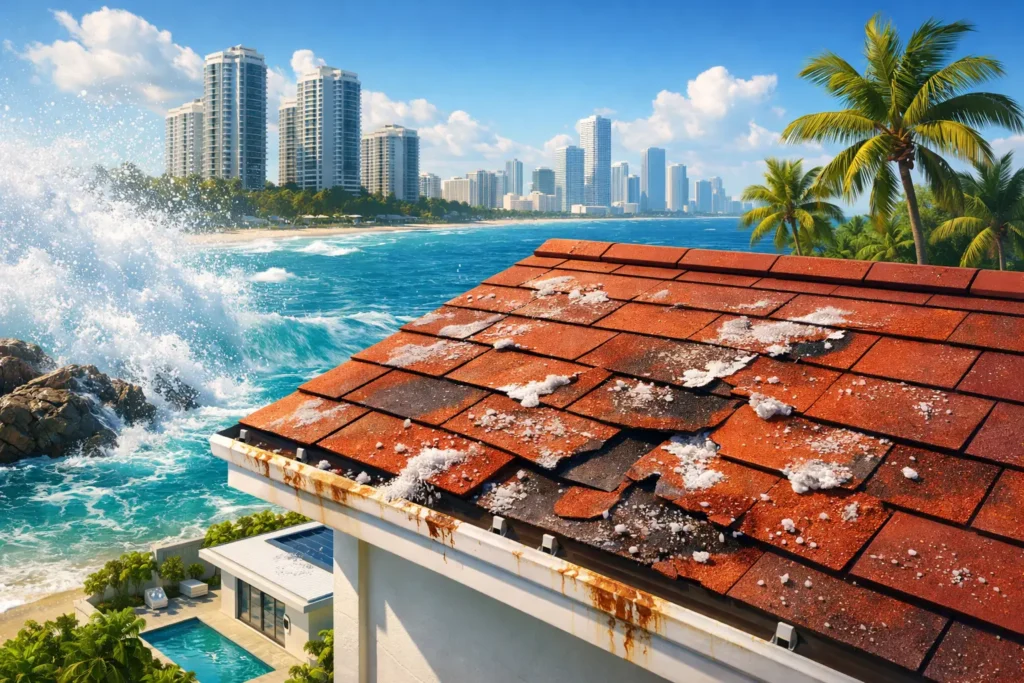

A stain near the top of an interior wall is easy to blame on the roof field. On a flat or low-slope roof, however, the problem is often at the edge. Proper parapet leak repair means finding where water is getting behind the wall, coping, flashing, or membrane – then rebuilding that detail to handle Miami sun, wind-driven rain, humidity, and salt air.
A quick patch at the visible crack may slow the leak for a while. It will not solve a failed transition between the roof and parapet. That is where experienced diagnosis matters. The goal is not to cover a symptom. It is to restore a continuous, watertight system.
Why Parapet Walls Leak So Often in South Florida
A parapet is the short wall that extends above a roofline. You see them on many commercial flat roofs, condominium buildings, modern homes, and properties with rooftop equipment. They can look simple from the ground, but they combine several vulnerable roofing details in a small area: wall flashing, membrane terminations, metal coping, sealant joints, drains, and sometimes stucco or masonry.
Miami weather puts every one of those details under pressure. UV exposure dries and cracks sealants. Heavy afternoon rain can push water into gaps that would stay dry during a light shower. Hurricane-force winds can lift coping caps, loosen fasteners, and drive water upward beneath metal edges. Salt air accelerates corrosion on improperly selected or maintained metal components.
Water also travels. The place where it appears inside may be several feet from the actual opening. A leak at the coping joint can run behind stucco, through a masonry cavity, or along the roof deck before it shows up as bubbling paint, a wet ceiling, or moldy drywall. That is why a roof inspection should include the entire parapet assembly, not just the spot directly above the stain.
Signs You May Need Parapet Leak Repair
Some warning signs are obvious, while others only appear after a hard storm. Water staining at the upper portion of a wall, peeling paint, and recurring leaks around roof edges are common indicators. On the roof, look for loose or bowed coping metal, open seams, cracked sealant, deteriorated stucco, rust stains, membrane pulling away from the wall, or flashing that has split at corners.
Commercial property managers should also pay attention to small changes after maintenance crews access the roof. A displaced metal cap or punctured membrane edge can become a major water entry point during the next storm. Homeowners may notice that a leak only happens when rain comes from a certain direction. That detail is useful because it often points to wind-driven rain entering a parapet joint or wall transition.
Do not assume an active leak will remain small. Water behind a parapet can damage insulation, rot wood blocking, corrode metal decking, weaken stucco attachment, and create conditions for mold. The longer the moisture stays trapped, the more extensive the repair may become.
What a Real Parapet Leak Repair Should Include
There is no one-size-fits-all fix. A sound repair begins by identifying the roof type, parapet construction, age of the materials, drainage path, and prior repair history. A modified bitumen roof, TPO membrane, PVC system, metal roof, or built-up roof will each have different flashing requirements.
Inspection Beyond the Visible Crack
The first step is a close inspection of the parapet top, inside and outside faces, coping joints, roof-to-wall flashing, corners, scuppers, and nearby drains. If water is entering around a scupper, the repair may require rebuilding both the drainage opening and the membrane transition. If the problem is under coping metal, removing sections of the cap may be necessary to inspect the substrate and flashing below.
Photo documentation helps property owners see what is actually failing. It also creates a clear record of the recommended scope, rather than leaving customers with vague language and a mystery price.
Removing Failed Materials
Sealant can be part of a repair, but it should not be the entire repair when underlying materials have failed. Loose coping, cracked counterflashing, brittle membrane, wet insulation, rotted wood, or damaged masonry must be addressed before new materials go on.
This is where low-cost repairs often fall short. Applying fresh caulk over an open joint may look clean on day one, but it cannot replace a missing termination bar, a failed membrane flashing, or corroded fasteners. A repair should provide a durable path for water to shed away from the building.
Rebuilding the Waterproof Transition
Depending on the roof system, the repair may involve new base flashing, reinforced membrane corners, properly fastened termination bars, compatible sealant, new metal coping, or rebuilt counterflashing. All materials must work together. Using the wrong sealant on a membrane, mixing incompatible metals, or fastening too close to an exposed edge can shorten the life of the repair.
Corners deserve special attention. They expand and contract, collect wind pressure, and are often the first place a poorly installed flashing detail opens up. On older Miami buildings, technicians may also need to repair cracked stucco or deteriorated masonry before installing new flashing. Roofing materials cannot perform correctly over a failing wall surface.
Testing and Final Documentation
After repair, the area should be checked for secure attachment, proper drainage, and fully sealed transitions. When conditions allow, targeted water testing can help confirm whether a suspected entry point has been corrected. Final photos give homeowners and building managers proof of the work completed.
Repair or Replacement: How to Make the Call
A localized repair makes sense when the parapet issue is limited, the surrounding roof membrane is still in good condition, and the flashing can be integrated reliably with the existing system. For example, a few failed coping joints or one damaged corner may be repairable without replacing the whole roof.
Replacement becomes the better value when leaks are recurring across multiple parapet sections, membrane flashings are brittle or detached, insulation is saturated, or the roof itself is near the end of its service life. Patching a failing roof edge onto an aged roof field can become an expensive cycle. The right answer depends on the condition of the complete assembly, not just the immediate leak.
For commercial properties, it is also smart to consider the cost of disruption. A planned restoration or replacement may be easier to manage than repeated emergency service calls, tenant complaints, and interior water damage. Honest recommendations should explain both options clearly, including what a repair can reasonably accomplish and where its limits are.
Preventing Future Parapet Leaks
Parapets need regular attention because they are exposed on multiple sides. A professional roof inspection before hurricane season and after major storms can catch loose coping, failed sealant, rusting metal, and open membrane edges before water gets inside.
Keep roof drains and scuppers clear so water does not pond against the parapet. Avoid allowing other trades to attach equipment, signs, or conduits to parapet walls without coordinating the waterproofing detail. Even a few misplaced fasteners can create hidden leak paths.
For older buildings, planned maintenance is usually more affordable than waiting for failure. Recoating metal coping where appropriate, renewing compatible sealants at the correct time, and repairing small flashing defects can extend the useful life of the roof edge. The key is maintenance based on actual conditions, not a blanket coating or caulk application over damaged materials.
Get a Clear Answer Before the Next Storm
A parapet leak is not something to ignore until the ceiling starts dripping again. The earlier the source is found, the better the chance of limiting damage to the roof edge instead of opening walls, replacing insulation, or repairing interior finishes.
Flash Roofing & Sheet Metal approaches roof leaks the same way it approaches every repair: inspect the full detail, document the evidence, explain the options, and do the work correctly the first time. If your Miami property has recurring water intrusion near a roof edge or parapet wall, get a professional evaluation before the next hard rain turns a small opening into a larger repair.