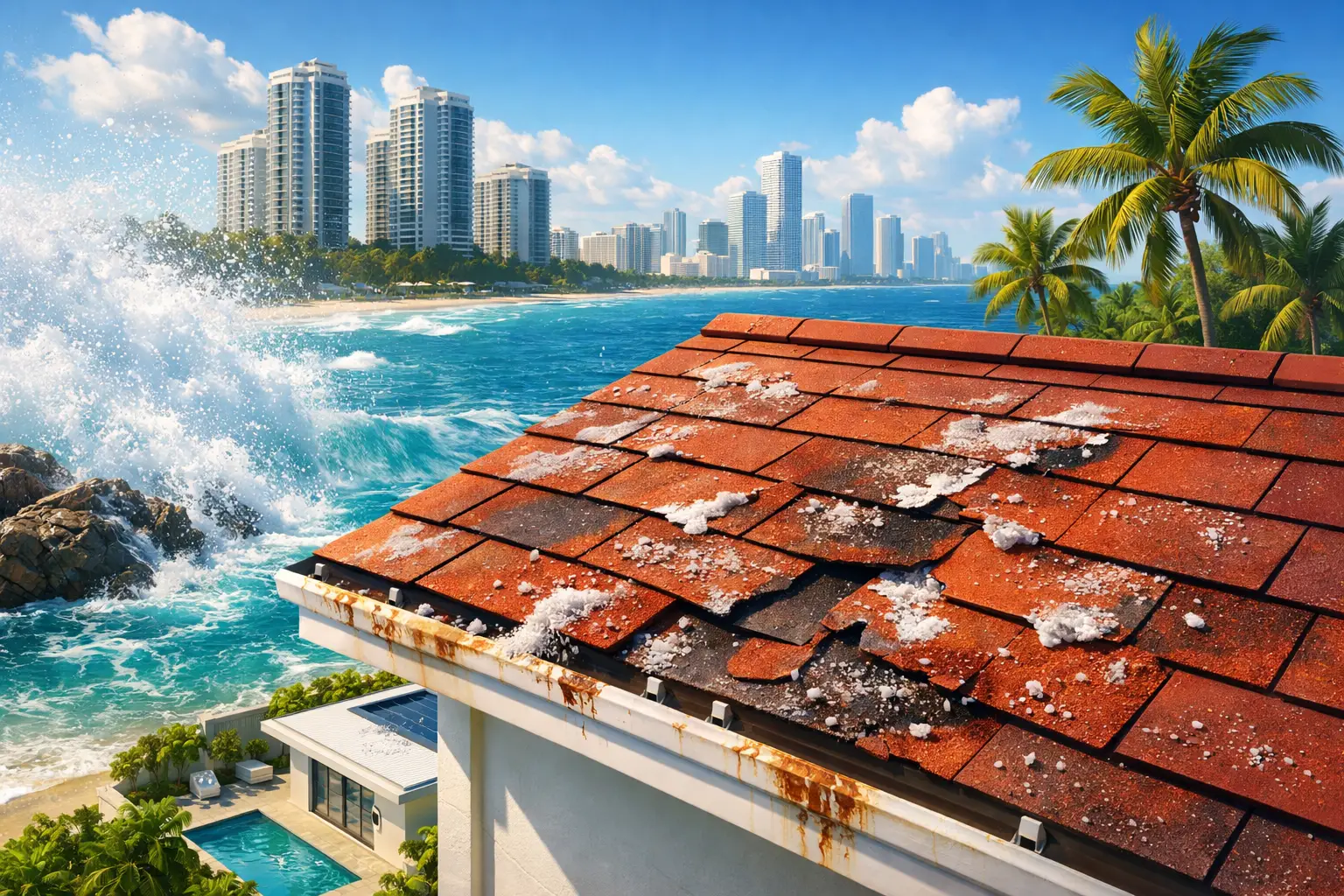
A roof can look fine from the street while salt is quietly working on its weakest points: fasteners, flashing, metal edges, vents, drains, and rooftop equipment. So, can salt air damage roofs? Yes. In Miami and across Miami-Dade, salt-laden moisture can speed up corrosion, weaken connections, and shorten the life of materials that would hold up well farther inland.
The risk is highest near Biscayne Bay and the coast, but salt air does not stop at the beach. Wind carries it inland, and South Florida humidity helps it stay active. Add intense UV exposure, frequent rain, and hurricane-season winds, and small maintenance issues can become leaks faster than many property owners expect.
How Salt Air Damages a Roof
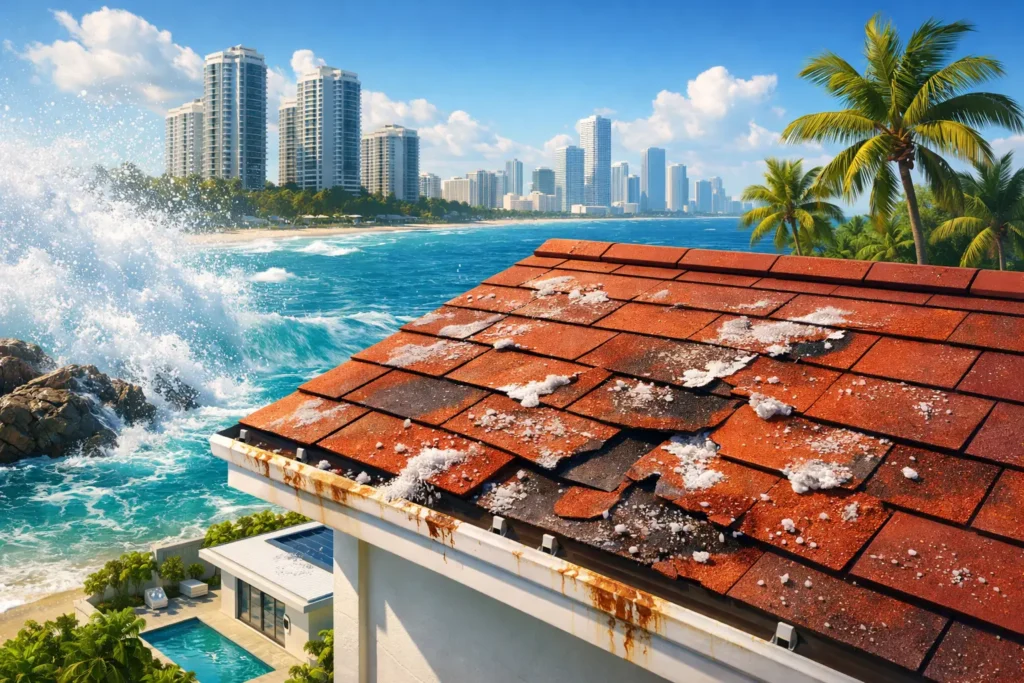
Salt does not usually eat through a roofing system overnight. The problem is repeated exposure. Fine salt particles settle on the roof, absorb moisture from humid air, and create conditions that accelerate corrosion on susceptible metals. Rain may rinse some residue away, but protected areas around seams, equipment bases, gutters, and flashing can hold moisture longer.
When metal components corrode, the roof loses more than its appearance. A rusted screw can no longer hold a panel or flashing securely. Corroded flashing can open a path for water at a wall transition or chimney. A failing drain edge on a flat roof can allow moisture beneath the membrane. These are root-cause issues, not cosmetic details.
Salt exposure also affects more than bare steel. Aluminum, galvanized metal, coated fasteners, and certain metal roof finishes all have different corrosion resistance levels. The material, coating quality, installation method, and maintenance history matter. A properly specified system can perform well in Miami, while the wrong fastener or incompatible metal can become the weak link.
Which Roofing Materials Are Most Vulnerable?
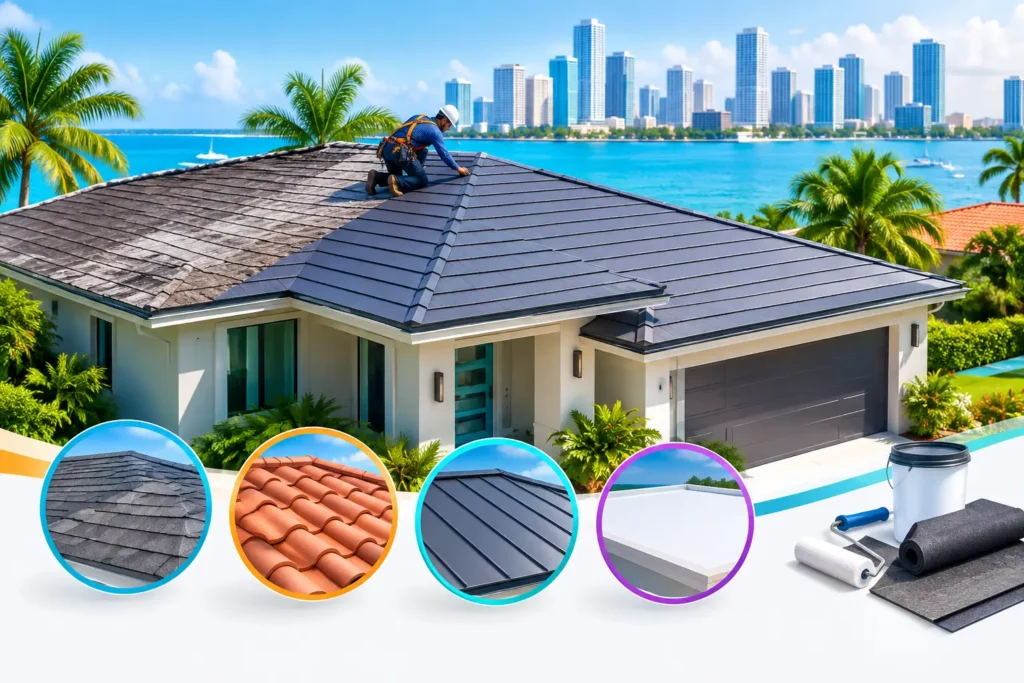
Metal roofing and metal accessories deserve close attention in coastal areas, but every roof type has components that can be affected by salt air.
Metal and Steel Roofs
Exposed-fastener metal roofs are especially dependent on the condition of their screws and washers. If fastener heads rust, washers crack, or screws back out, water can enter through hundreds of small penetrations. Standing-seam systems have fewer exposed penetrations, but their clips, trim, flashings, and sealants still need inspection.
Coastal-grade finishes and corrosion-resistant fasteners make a real difference. So does proper separation between dissimilar metals. For example, when incompatible metals touch and stay wet, galvanic corrosion can develop. That is a technical issue that should be addressed during installation, not after staining or failure appears.
Tile Roofs
Concrete and clay tile do not rust, but tile roofs rely on metal flashings, nails, valley metal, vents, and attachment systems. Salt air can corrode those parts out of sight. A tile may remain intact while its fastener deteriorates beneath it, creating a potential wind-resistance and water-intrusion concern.
Miami tile roofs also collect debris in valleys and around penetrations. That debris holds moisture and salt residue against flashing, which speeds up wear. Replacing a broken tile without checking the underlayment and flashing below it is often just a surface patch.
Shingle, Flat, and Membrane Roofs
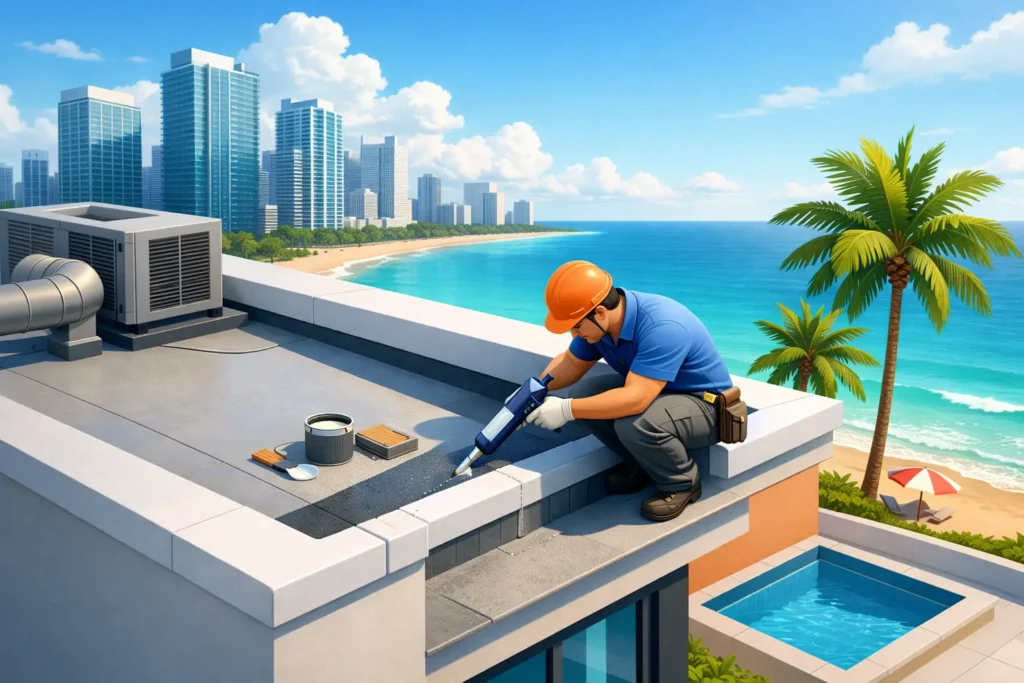
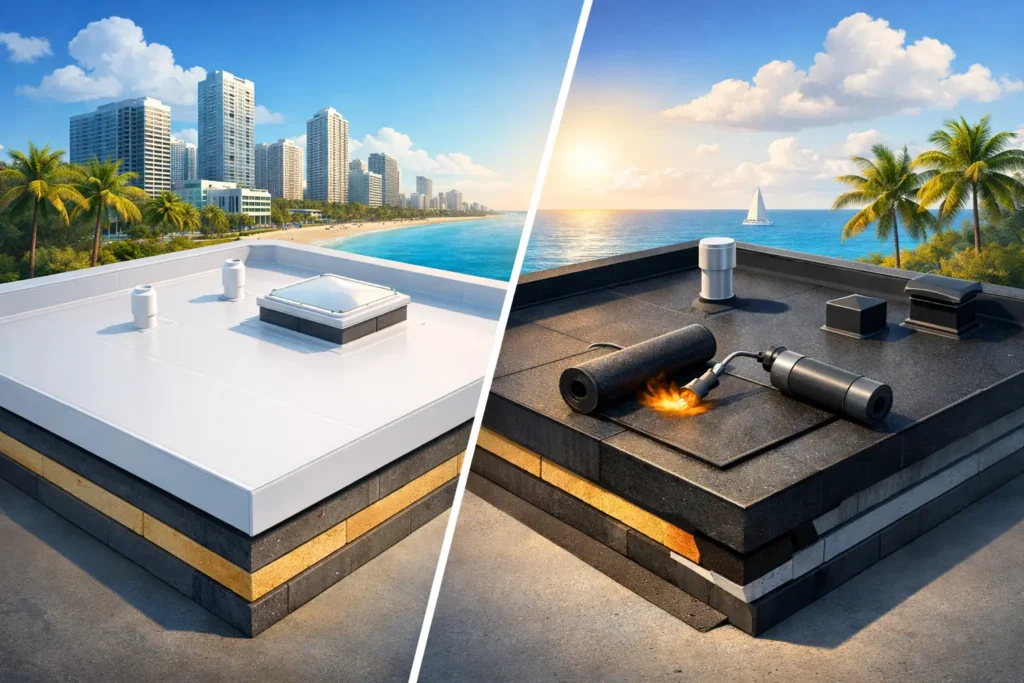
Asphalt shingles and modern membrane systems are not immune simply because they are not metal. Their perimeter edges, termination bars, drains, scuppers, HVAC curbs, vents, and fasteners may all include metal parts. On commercial flat roofs, salt exposure can be especially hard on rooftop mechanical supports and drainage components.
For these systems, standing water compounds the problem. Salt residue and moisture remain in contact with edges and penetrations longer, while UV works on the membrane or sealant. A roof coating can help in the right situation, but it must be compatible with the existing roof and applied after necessary repairs. Coating over corroded metal or failed flashing does not correct the underlying issue.
Signs Salt Air May Be Affecting Your Roof
You do not need to walk on the roof to notice every problem. Some signs show up around the building or in photo documentation from a professional inspection. Watch for these warning signs:
- Rust streaks on fascia, walls, soffits, or metal roofing panels
- Orange or brown corrosion around screws, vents, gutters, and flashing
- Loose metal trim, lifted flashing, or missing fasteners after windy weather
- Cracked sealant around roof penetrations or rooftop equipment
- Water stains on ceilings, damp insulation, or recurring leaks in the same area
- Pooling water near drains, scuppers, or low areas of a flat roof
A stain inside the building does not always sit directly below the roof opening. Water can travel along decking, framing, insulation, or conduits before it becomes visible. That is why a real inspection follows the water path and checks the roof components around it instead of guessing from the ceiling alone.
Distance From the Coast Matters, But It Is Not the Whole Story
A property directly on the ocean faces the heaviest salt exposure and generally needs more frequent inspection and washing. Still, inland Miami properties can experience salt-related corrosion, particularly after strong coastal winds and storms. The age of the roof, whether trees block natural rinsing, drainage conditions, and the quality of the original installation may matter just as much as mileage from the shoreline.
A newer roof with low-grade fasteners can develop trouble sooner than an older roof built with the right coastal materials. Conversely, a well-installed roof that is inspected and maintained consistently can perform for years in a harsh environment. There is no honest one-size-fits-all timeline.
What Prevents Salt-Air Roof Damage?
The best approach is practical: use the right materials, keep water moving, and catch corrosion before it becomes a leak. For a new roof or replacement, ask what fasteners, flashings, coatings, and edge metals are being specified for South Florida exposure. The answer should be clear, not vague.
For an existing roof, periodic cleaning can remove salt residue, algae, and debris, but aggressive pressure washing can damage shingles, dislodge tile, force water into openings, or harm a membrane. The method must match the roofing system. A roof is not a driveway.
Regular inspections are equally valuable after major storms and before small defects spread. A qualified roofer should check exposed metal, penetrations, transitions, drainage, sealants, and signs of moisture beneath the surface. Photos of the actual conditions give property owners a clear record of what needs attention now and what can be monitored.
Repair Early, Not Repeatedly
There is a difference between a targeted repair and a temporary patch. Replacing corroded fasteners, repairing flashing, resealing a properly prepared penetration, or correcting drainage can be smart maintenance. Applying more sealant over rust, ignoring loose metal, or repeatedly fixing the same leak without finding its entry point wastes money.
For residential and commercial owners in Miami-Dade, the goal is not to chase every spot of discoloration. It is to identify whether corrosion has compromised a waterproofing detail, attachment point, or drainage component. That is the difference between maintenance that extends roof life and a repair that fails during the next hard rain.
When to Schedule a Professional Roof Inspection
Schedule an inspection if you see rust, a new leak, loose roof metal, damaged gutters, cracked sealant, or water that does not drain after rainfall. It also makes sense to have a roof checked after hurricane-force winds, especially on buildings near the coast and on older systems with visible metal accessories.
Flash Roofing & Sheet Metal approaches salt-air issues with the full South Florida picture in mind: heat, humidity, wind, UV, drainage, and corrosion working together. The right repair starts with clear evidence, honest recommendations, and work that addresses the failure point instead of hiding it.
Salt air is part of life in Miami, but a damaged roof does not have to be. Keep an eye on the metal details, take recurring leaks seriously, and get clear documentation before a small corrosion issue turns into interior damage.