A roof can look worn out long before it has reached the end of its service life. In Miami, that distinction matters. Sun exposure, heavy rain, salt air, trapped moisture, and hurricane-force winds can break down a roof in ways that are not always visible from the driveway. This guide to roof restoration options explains when a repair or restoration makes sense, when it does not, and what property owners should ask before spending money.
The right answer is not always a full replacement. It is also not always a coating. A roof restoration should address the reason the roof is failing, not just make it look newer for a few months.
Start With the Roof’s Actual Condition
Before choosing an option, the roof needs a thorough inspection. A proper assessment looks beyond a water stain on the ceiling or a cracked tile. The visible leak may be several feet away from the actual entry point, especially on low-slope commercial roofs where water can travel beneath a membrane.
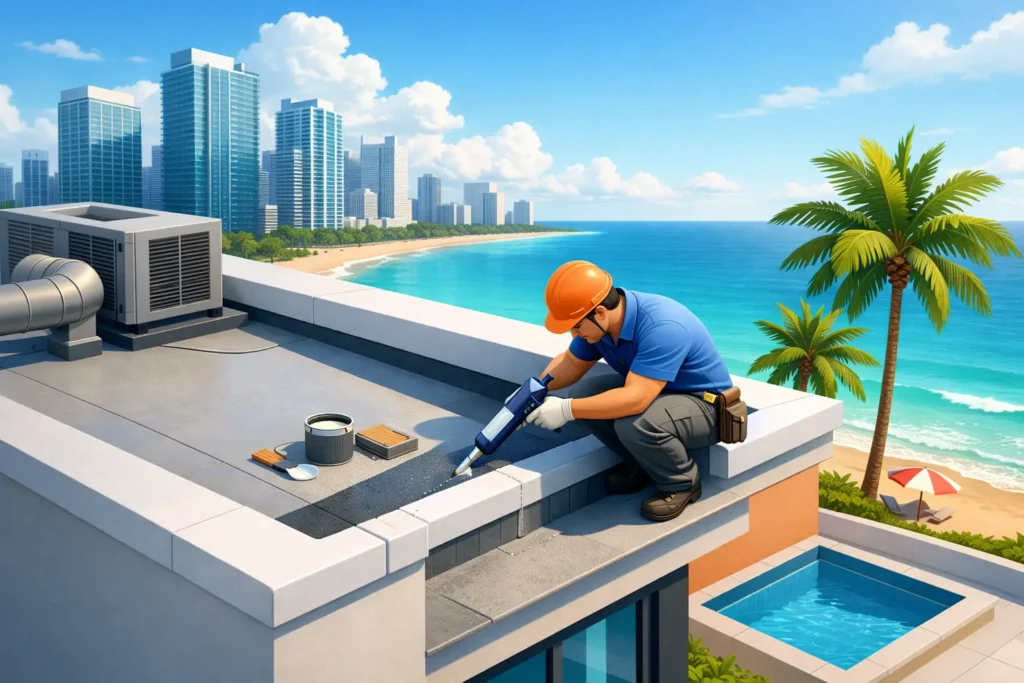
A contractor should examine the roof covering, flashings, penetrations, drains, seams, fasteners, and edges. On tile and shingle roofs, that includes checking underlayment, valleys, ridge areas, and damaged or displaced materials. On flat roofs, the inspection should focus on membrane seams, ponding water, blisters, cracks, termination bars, and areas around HVAC equipment.
The roof deck and insulation matter, too. If moisture has saturated the materials below the surface, applying a coating over the top will not solve the problem. It can hide damage while trapped moisture continues to weaken the system. Photo documentation makes the decision easier because you can see what is happening instead of taking a contractor’s word for it.
Age is part of the conversation, but it should not be the only factor. A 12-year-old roof with widespread leaks and deteriorated materials may need replacement. A 20-year-old roof with a sound substrate and isolated wear may still be a strong candidate for restoration. Condition wins over calendar age.
Guide to Roof Restoration Options for Miami Properties
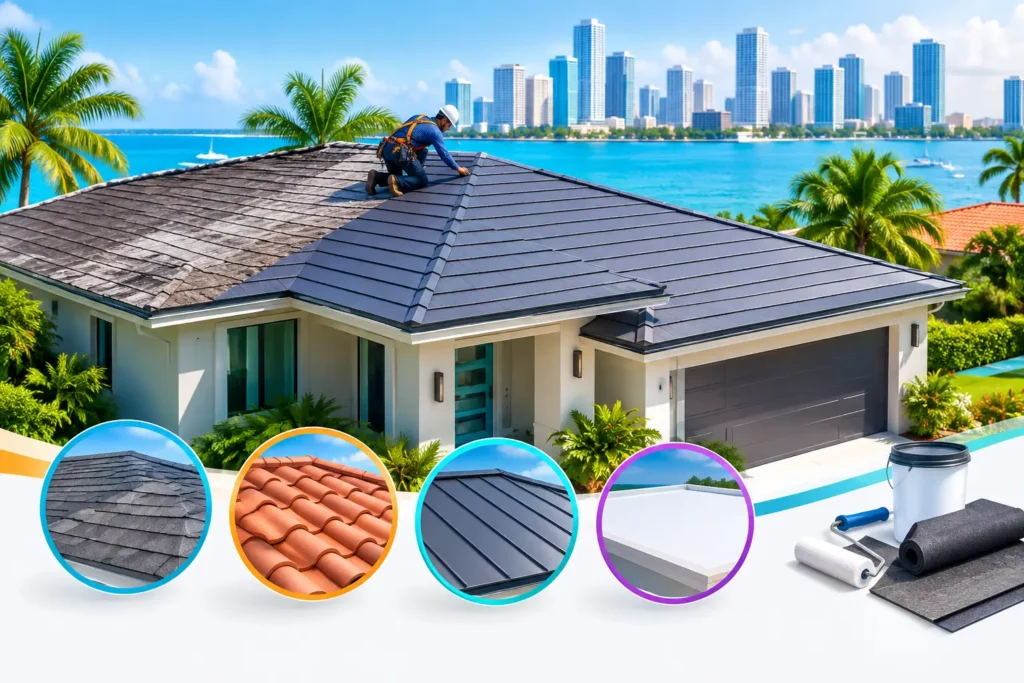
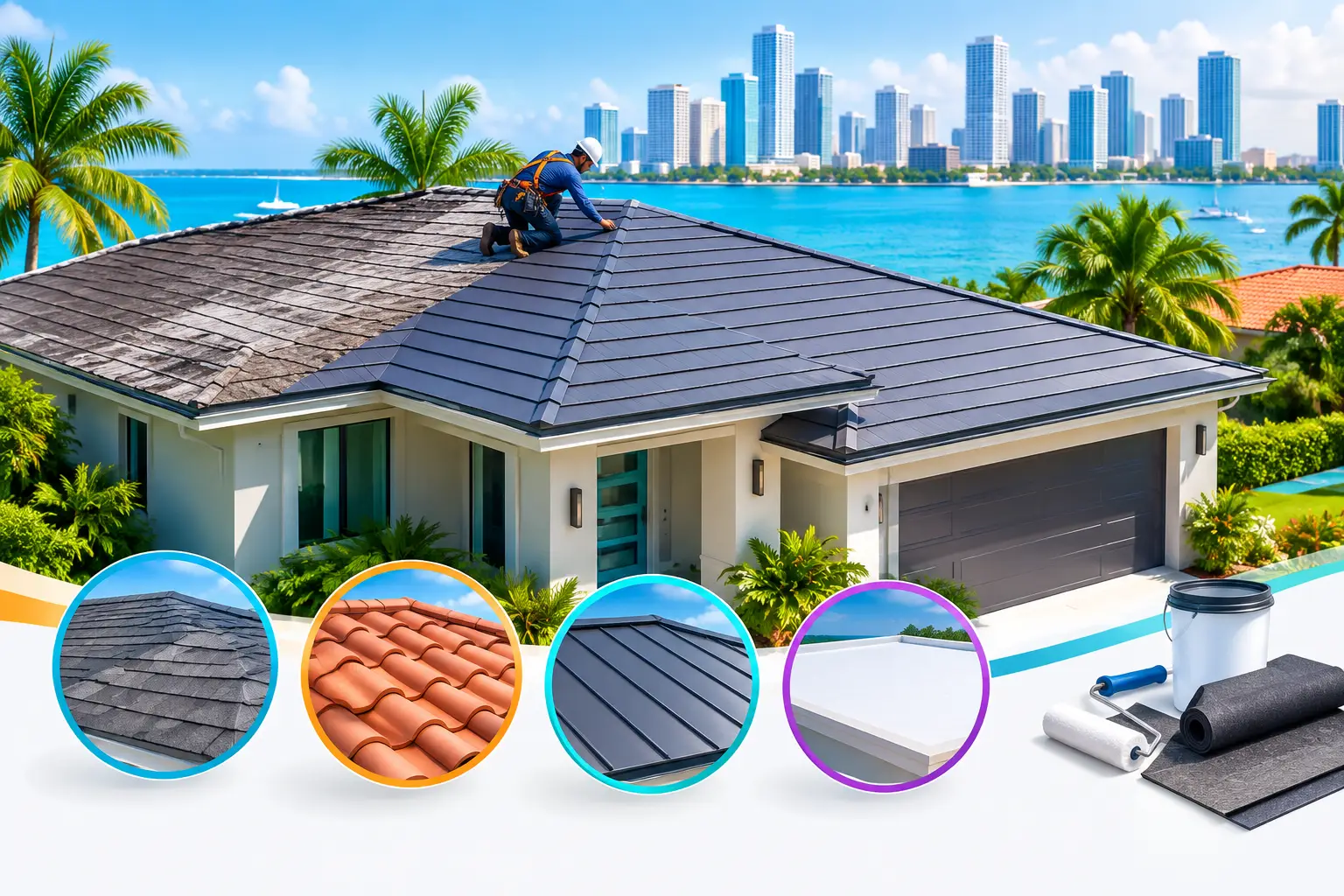
Roof restoration is a broad term. It can include targeted repairs, protective coatings, replacement of worn components, or a more extensive recover system. Each option has a place, but only under the right conditions.
Targeted repairs for localized damage
A repair is often the most practical choice when the problem is limited to a specific area and the rest of the roof is in good shape. Examples include cracked pipe flashings, loose ridge tiles, a small puncture in a membrane, corroded metal flashing, or a few missing shingles after a storm.
This is not a shortcut when it is done correctly. The repair should match the existing roofing system and tie into the surrounding materials without creating a new weak point. On a Miami roof, details around vents, skylights, parapet walls, drains, and equipment curbs need special attention because wind-driven rain finds small openings quickly.
Repairs become less cost-effective when they are repeated across the roof. If you are calling for leak repairs every rainy season, the roof is telling you something. At that point, restoration or replacement may provide better value than another temporary patch.
Roof coatings for eligible flat and low-slope roofs
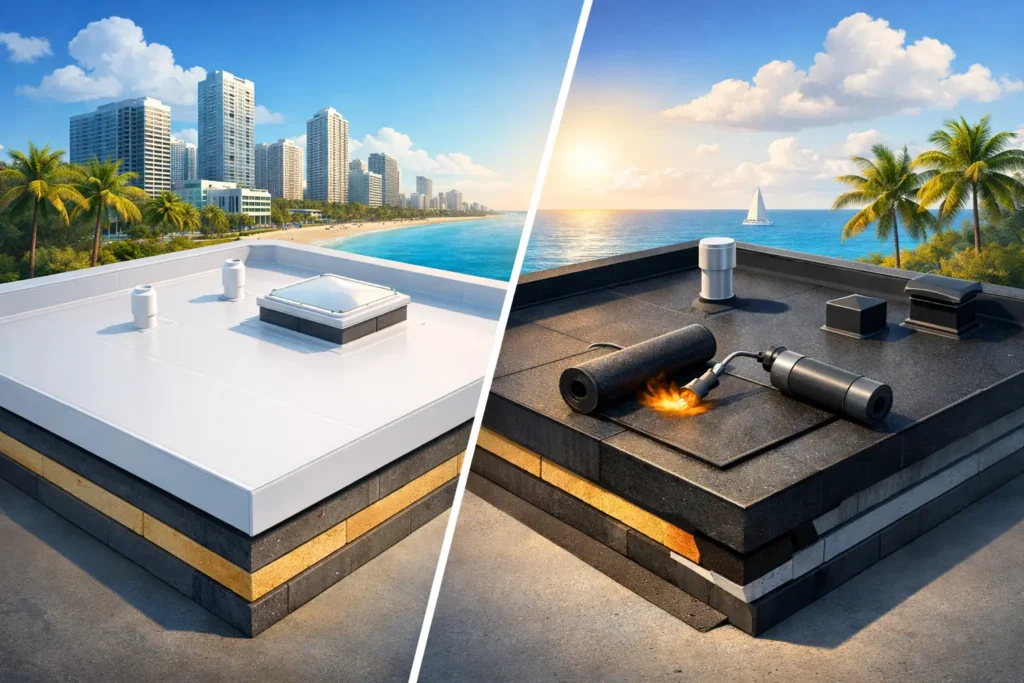
A roof coating can restore protection on many flat or low-slope systems, including certain modified bitumen, metal, and single-ply membrane roofs. Depending on the system and conditions, coatings can help protect against ultraviolet exposure, reduce surface temperatures, seal minor weathering, and extend the service life of a roof.
But a coating is not liquid replacement roofing. It will not correct rotten decking, widespread wet insulation, failing seams, major ponding issues, or a membrane that has reached the point of breakdown. The roof must be cleaned, dried, repaired, and properly prepared before coating begins. Seams, penetrations, drains, and flashing transitions often need reinforcing treatment before the main coating is applied.
The coating material also has to fit the roof. Silicone can perform well where ponding water is a concern, while acrylic coatings are commonly used for reflectivity and UV protection when drainage is adequate. The best choice depends on the existing roof, slope, exposure, drainage, and manufacturer requirements. A one-size-fits-all recommendation is a red flag.
Tile roof restoration and component replacement
Miami tile roofs often outlast the underlayment beneath them. The tiles may still be serviceable while the waterproof layer has become brittle, torn, or worn around valleys and penetrations. In those cases, restoration can involve removing and resetting tiles in affected sections, replacing underlayment, repairing flashings, and replacing broken tiles with compatible materials.
This work requires care. Tile should not be walked on carelessly, and replacement pieces should be selected to preserve proper fit and drainage. The goal is not merely to swap visible broken tiles. It is to restore the roof’s water-shedding system and secure it for South Florida wind conditions.
If the underlayment is failing across most of the roof, localized repairs may only delay a larger project. A full tile lift and reset with new underlayment can be the more honest recommendation, even if the tiles themselves are still usable.
Metal roof restoration
Metal roofing can be a durable choice in coastal areas, but salt air and moisture can accelerate corrosion when coatings fail or fasteners loosen. Restoration may include treating rust, replacing deteriorated fasteners, sealing laps and penetrations, repairing flashing, and applying a compatible protective coating.
Surface preparation is the difference between a coating that performs and one that peels. Rust must be addressed, loose material removed, and the roof cleaned thoroughly. A metal roof with extensive corrosion through the panels, structural damage, or recurring leaks at multiple seams may require panel replacement or a larger reroofing plan.
Roof recover systems
Some commercial roofs may qualify for a recover system, where a new roof layer is installed over an existing one. This can reduce tear-off costs and limit disruption to a business, but it is not automatically allowed or advisable. Local code requirements, the number of existing roof layers, roof loading, drainage, and the condition of the existing system all need review.
A recover only works when the existing roof is dry, stable, and securely attached. Covering a wet or unstable roof creates a bigger problem that is harder and more expensive to find later.
Full roof replacement
Replacement is the right call when the roof has widespread failure, recurring leaks, saturated insulation, deck damage, severe storm damage, or materials that can no longer hold up under Miami conditions. It is the largest upfront investment, but it also provides the chance to correct drainage, upgrade flashing details, improve wind resistance, and install a system designed for the property.
For homeowners, this may mean selecting new tile, shingle, metal, or synthetic materials. For commercial owners, it may involve a new membrane system built around drainage, equipment access, and long-term maintenance. The best replacement is not simply the lowest-priced proposal. It is the system that fits the building and is installed correctly from the deck up.
Miami Weather Changes the Calculation
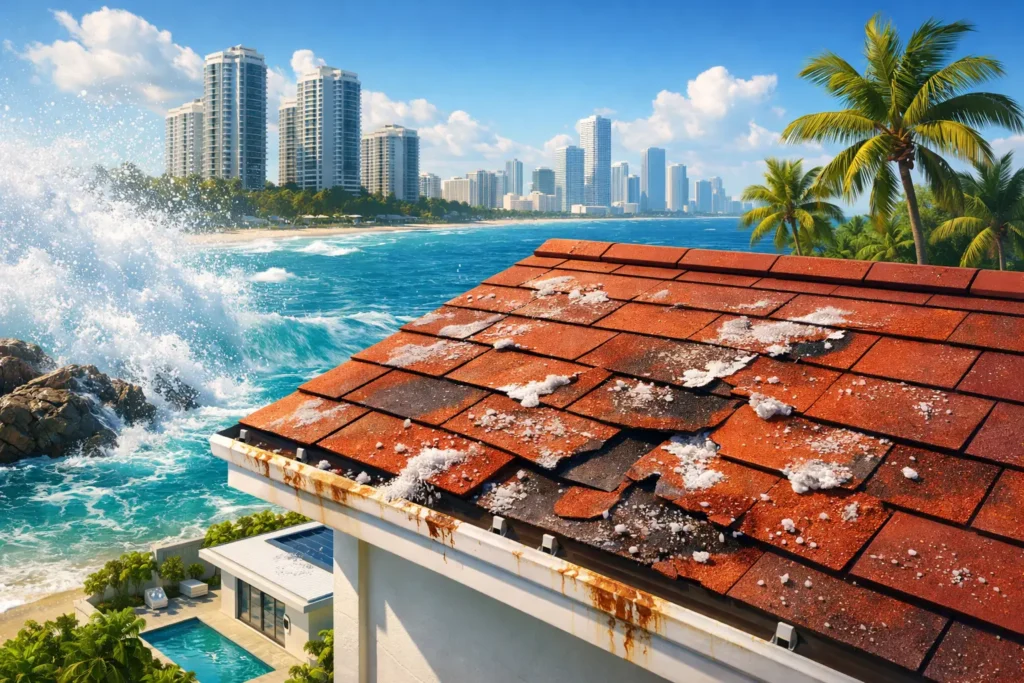
A roof in South Florida takes a different kind of beating than a roof in a mild climate. Intense UV exposure dries and degrades materials. Afternoon storms test every seam. Humidity can keep moisture trapped where it should not be. Coastal salt can corrode metal components, while hurricanes put uplift resistance and edge details under real pressure.
That is why restoration decisions should account for more than the current leak. A coating that looks good on paper may not perform if water regularly ponds near drains. A low-cost flashing repair may fail if corroded metal was not replaced. A tile repair may not last if the underlayment below is at the end of its life.
Good roofing work in Miami is detail work. Proper drainage, secure attachment, compatible materials, sealed penetrations, and code-conscious installation all matter when the next major storm arrives.
How to Compare Restoration Quotes
An honest quote should explain the scope in plain language. You should know what damage was found, what repairs are included before restoration, what material will be used, and whether the contractor expects any concealed conditions once work begins.
Ask whether the proposal includes cleaning and surface preparation, seam or flashing treatment, material thickness or application rate for coatings, replacement of damaged components, and cleanup. For a replacement or recover, ask how the contractor will address wet materials, drainage, permit requirements, and wind-resistance details.
Be cautious with a quote that promises a long-term result without an inspection, photographs, or a clear explanation of the roof’s condition. Low pricing can leave out the preparation work that makes restoration last. No mystery fees is the standard, but so is no mystery scope.
Flash Roofing & Sheet Metal approaches restoration with the same principle used for every repair: identify the root cause, show the evidence, and recommend the work that fits the roof rather than the sale.
Do Not Wait for a Small Problem to Become Interior Damage
The best time to evaluate restoration is before water reaches ceilings, insulation, inventory, or electrical systems. Schedule inspections after major storms, watch for stains and peeling paint indoors, and pay attention to loose materials, clogged drains, bubbling roof surfaces, or rust around metal details.
A roof does not need to be perfect to be worth restoring. It does need to be structurally sound, dry where it counts, and prepared the right way. Get clear evidence, compare the options based on condition rather than pressure, and choose work built to stand up to Miami weather.