A storm damaged roof repair example in Miami rarely starts with a dramatic hole in the ceiling. More often, it starts with a small brown stain, a wet insulation smell, loose tile in the yard, or water collecting near a roof drain after a hard afternoon storm. By the time those signs are visible indoors, wind-driven rain may already have worked beneath the roofing system.
South Florida roofs take a different kind of beating. Hurricane-force wind, UV exposure, heat, humidity, standing water, and salt air can turn a minor weak point into an active leak. The right repair is not simply replacing what looks damaged from the ground. It means finding where the roof system failed, correcting the cause, and documenting the work clearly.
A Realistic Storm Damaged Roof Repair Example
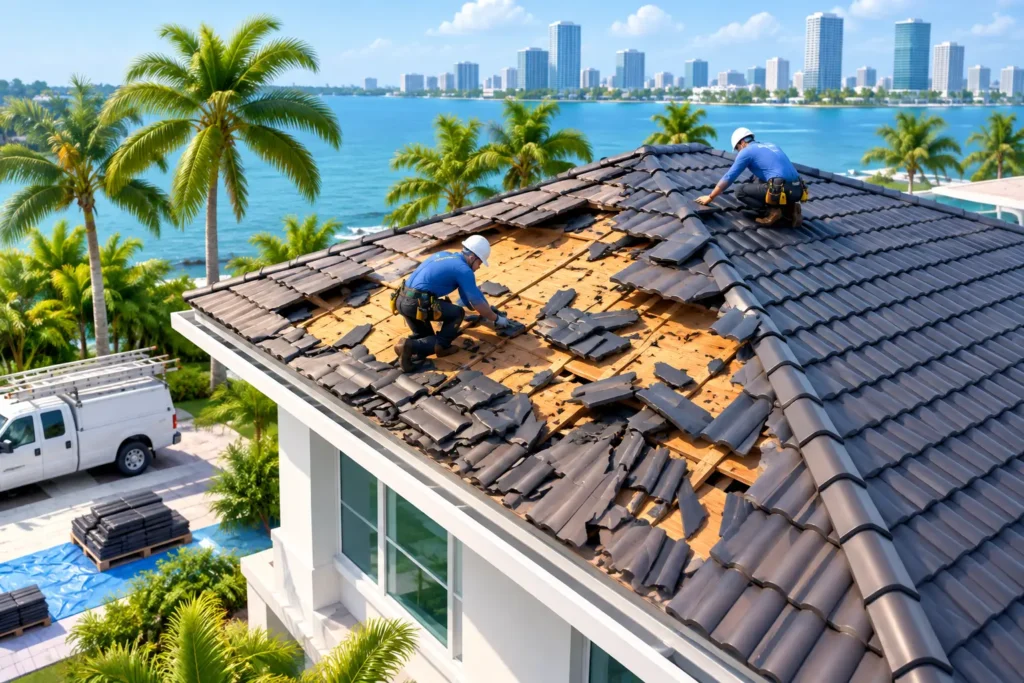
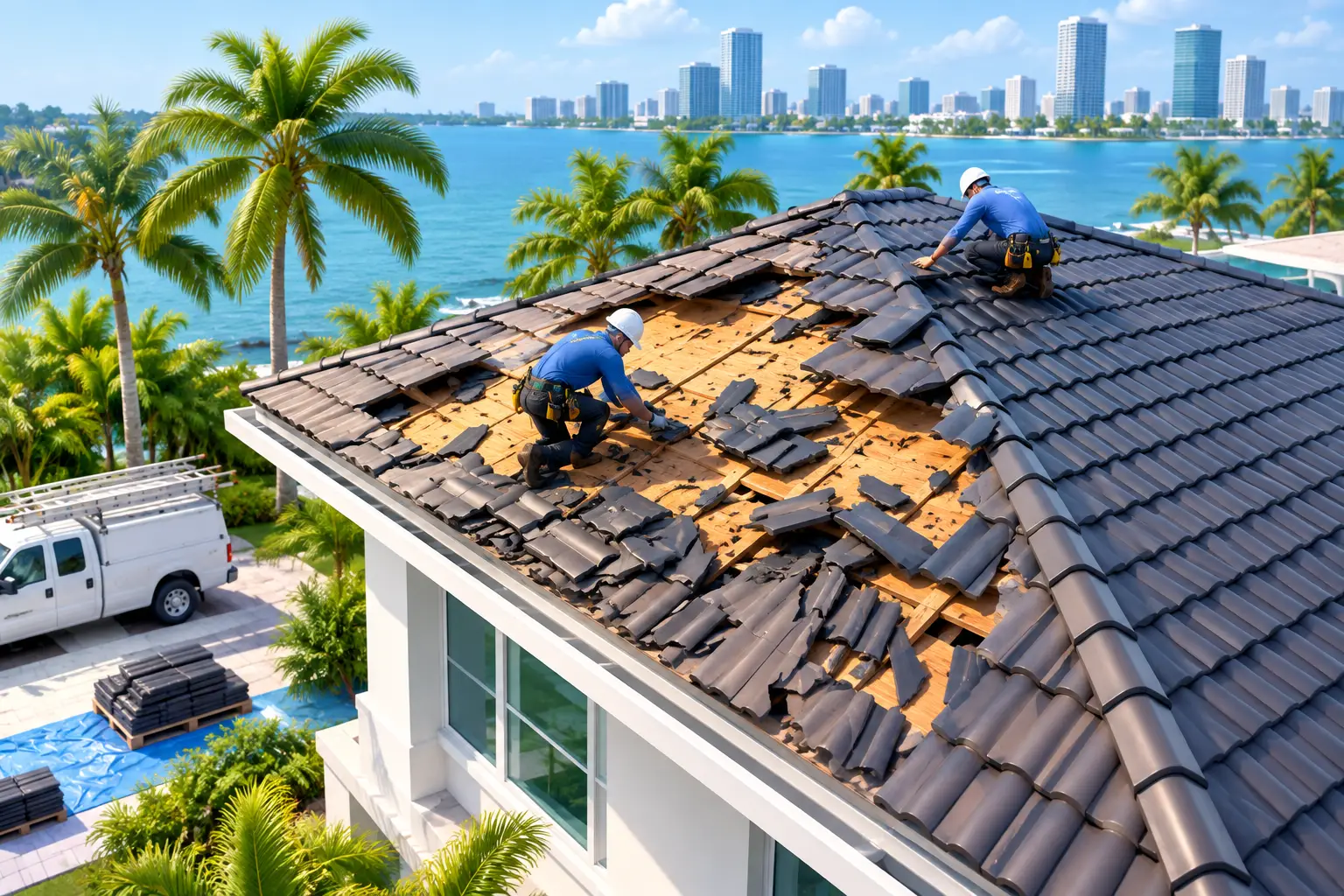
Consider a Miami-Dade homeowner with a concrete tile roof that is about 16 years old. After a strong storm, they notice several tiles on the lawn and a water spot forming on a second-floor bedroom ceiling. A quick patch may seem tempting, especially when rain is in the forecast. But a proper inspection often shows more than the missing tiles.
In this example, the roof inspection finds cracked and displaced tiles along a roof slope, with additional loose tiles near the ridge. Under several damaged tiles, the underlayment has torn at fastener points and along a flashing transition. Wind lifted the tile assembly enough to let water travel beneath it. The ceiling stain is not directly below the visible missing tile, which is common. Water can move along the underlayment, decking, framing, or insulation before it shows up inside.
The repair plan is built around the actual failure points. First, the affected area is protected from incoming rain. Damaged tiles are carefully removed, and the roof deck is checked for moisture damage or soft areas. If the deck is sound, the contractor replaces the compromised underlayment, repairs or replaces damaged flashing, and reinstalls compatible tile using the correct fastening method for the roof system and local wind requirements.
This is also the time to inspect nearby areas that took similar wind pressure. Replacing only the three tiles found in the yard may leave loose tiles and weakened underlayment one row over. A good repair stops the current leak while reducing the chance of another leak during the next storm.
What the Inspection Should Prove
A storm repair should never rely on guesswork. Property owners deserve photos, a clear explanation of the damage, and a written scope that separates urgent work from recommended preventive work.
For a tile roof, the inspection should look beyond the surface tile. The contractor needs to check ridges, valleys, penetrations, wall flashing, vents, skylights, and areas around previous repairs. Broken tile matters, but so do deteriorated flashings and exposed underlayment. On older Miami roofs, the tiles may still look serviceable while the waterproof layer underneath has reached the end of its life.
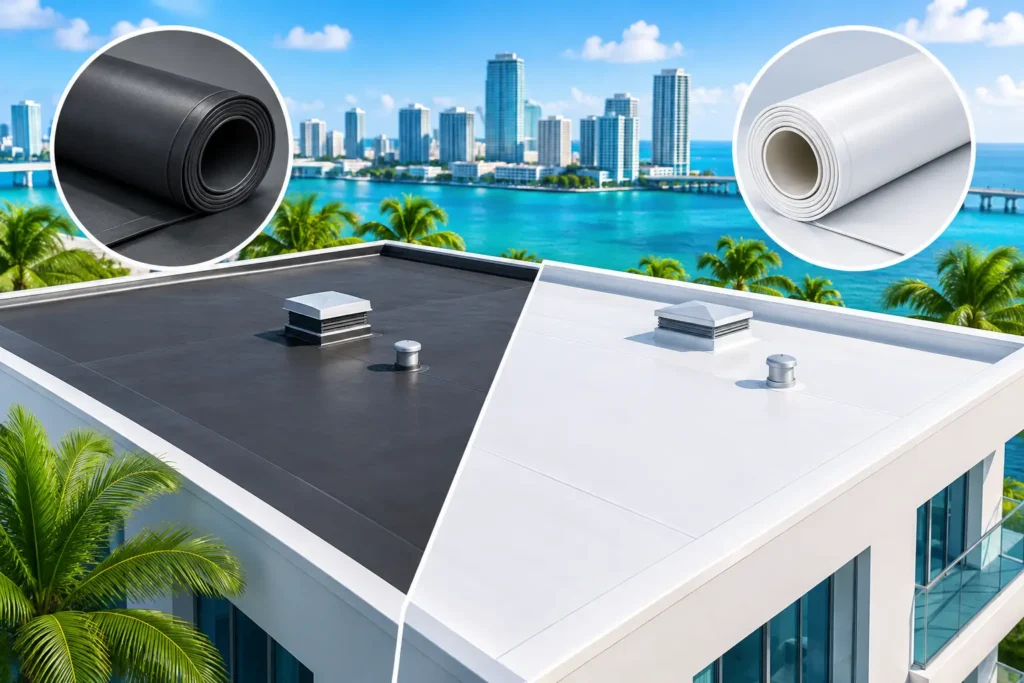
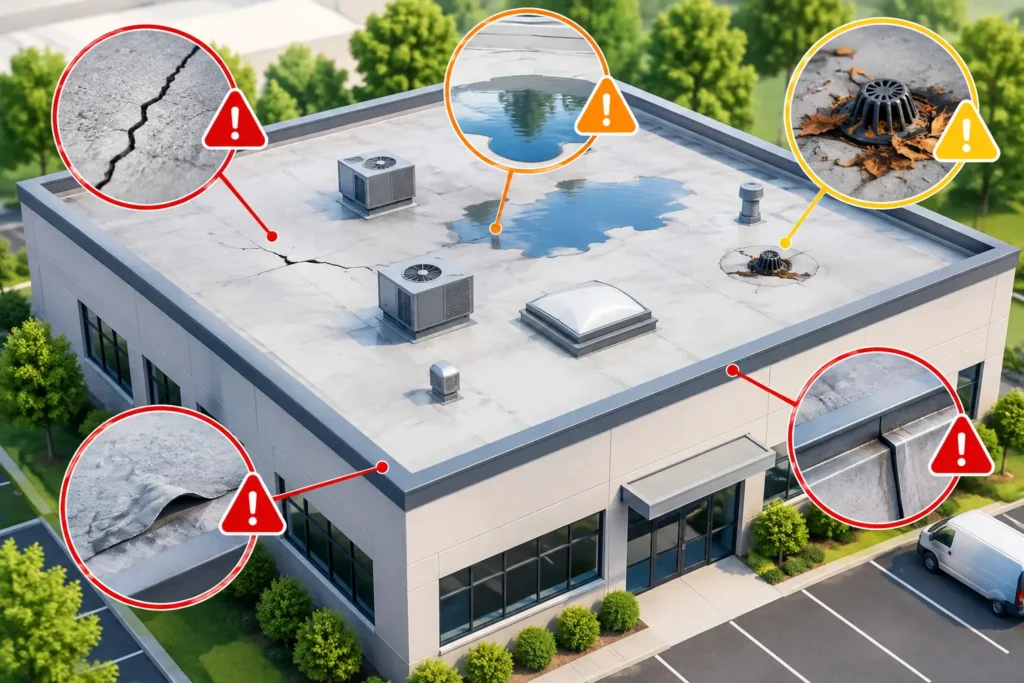
For a flat commercial roof, the evidence can look different. High winds may pull at membrane seams, loosen edge metal, damage roof-mounted equipment curbs, or expose insulation at a perimeter. Heavy rain can reveal blocked drains and ponding water that put added stress on seams. A repair may involve heat-welding compatible membrane patches, rebuilding a flashing detail, securing edge components, and correcting drainage problems. The best solution depends on the membrane type, the age of the roof, and whether the damage is isolated or part of a larger system failure.
Photos before, during, and after repair matter. They give homeowners, property managers, and insurance representatives a record of what was found and what was corrected. They also make it easier to understand the quote. No mystery fees, no vague line item called “storm repair.”
Emergency Protection Comes Before Permanent Work
When water is entering the building, the first job is damage control. That may mean installing a temporary cover over a damaged area, securing loose materials, and protecting exposed sections from more rain. Temporary protection is not the final repair, but it can prevent drywall damage, mold conditions, ruined inventory, and electrical risks while permanent materials and approvals are arranged.
A responsible contractor will explain the difference. If weather conditions prevent a lasting repair that day, the temporary work should be clearly identified as temporary. Once the roof is dry enough to inspect and repair correctly, the permanent scope can move forward.
For commercial properties, speed matters even more. A small roof opening above offices, retail space, or equipment can interrupt operations quickly. The goal is to stabilize the roof, document conditions, and make a repair that matches the existing system rather than introducing incompatible materials that create another failure point later.
Repair or Replacement: It Depends on the Roof
Not every storm-damaged roof needs replacement. If the damage is confined to a small area and the surrounding system is in good condition, a targeted repair can be the honest, cost-effective answer. This is especially true for newer roofs with a clear storm-related failure at a vent, flashing, seam, or limited section of tile or shingle.
Replacement becomes a more serious conversation when the inspection finds widespread underlayment failure, recurring leaks in different areas, brittle roofing materials, extensive deck damage, or a roof nearing the end of its practical service life. Repairing one leak on a worn-out system can make sense as a short-term measure, but it should not be presented as a long-term cure.
Miami property owners should be cautious of both extremes: the contractor who wants to replace every roof without investigating repair options, and the contractor who promises a cheap patch without checking the full system. Doing it right means giving you the facts and explaining the trade-off.
Why South Florida Details Matter
A roof repair that might hold up in a mild climate can fail quickly here. Materials and installation methods must account for intense sun, high moisture, wind uplift, and salt exposure near the coast. Metal components need appropriate corrosion resistance. Flashing details need to shed heavy rain, not just light showers. Tile, shingle, metal, and membrane systems each require compatible repair materials and proper attachment.
Local code and hurricane-zone requirements also matter. A repair is not just about making the roof look normal again. It must restore the roof’s ability to resist weather where it is installed. That is why a contractor familiar with Miami-Dade construction practices can identify risks that a generic repair approach may miss.
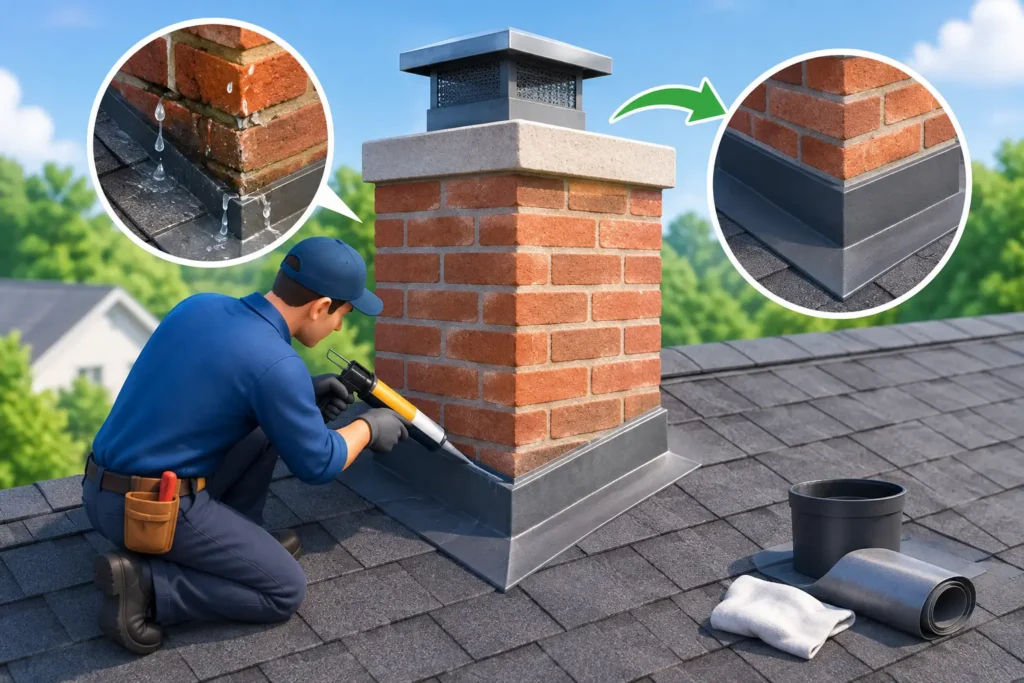
For example, a cracked pipe boot might appear to be a simple replacement. But if the surrounding flashing, fasteners, and underlayment are compromised, replacing only the visible boot can leave water pathways behind. The same principle applies to a lifted membrane seam or a missing tile. The visible damage is the clue, not always the complete repair scope.
What a Clear Storm Repair Quote Includes
A professional quote should identify the roofing system, the damaged locations, the materials to be used, and whether any concealed deck damage would require additional approval. It should also state whether temporary protection is included and describe the permanent repair work in plain language.
Ask how the contractor will verify the leak source, whether photos will be provided, and what happens if damage extends beyond the visible area. These are reasonable questions, not pressure tactics. Honest answers help you compare bids based on scope and workmanship instead of choosing the lowest number with the fewest details.
At Flash Roofing & Sheet Metal, the focus is on showing property owners what the roof is doing, what caused the problem, and what it will take to correct it. A repair should earn your confidence before work begins.
Do Not Wait for a Bigger Leak
After a storm, walk the property safely from the ground. Look for displaced roofing materials, damaged gutters, bent metal, ceiling stains, wet walls, and debris around drains. Do not climb onto the roof or pull on loose materials. That can create more damage and put you at risk.
A prompt inspection gives you a better chance to limit the repair scope. It also creates a record while storm damage is fresh and easier to document. The useful next step is simple: get clear evidence, get an honest repair plan, and make the fix before South Florida’s next hard rain turns a manageable problem into interior damage.