A roof that looks great in a brochure can become an expensive problem after its first Miami summer or hurricane season. When comparing metal roofing vs tile, the right answer depends on more than appearance. Your building’s structure, distance from the coast, existing roof condition, wind requirements, maintenance budget, and long-term plans all matter.
Both systems can perform well in South Florida when they are properly designed and installed. The trouble starts when a roofing choice is made on price alone, or when the installation ignores local wind, moisture, and salt-air conditions. Do it once, do it right.
Metal Roofing vs Tile: The Main Difference
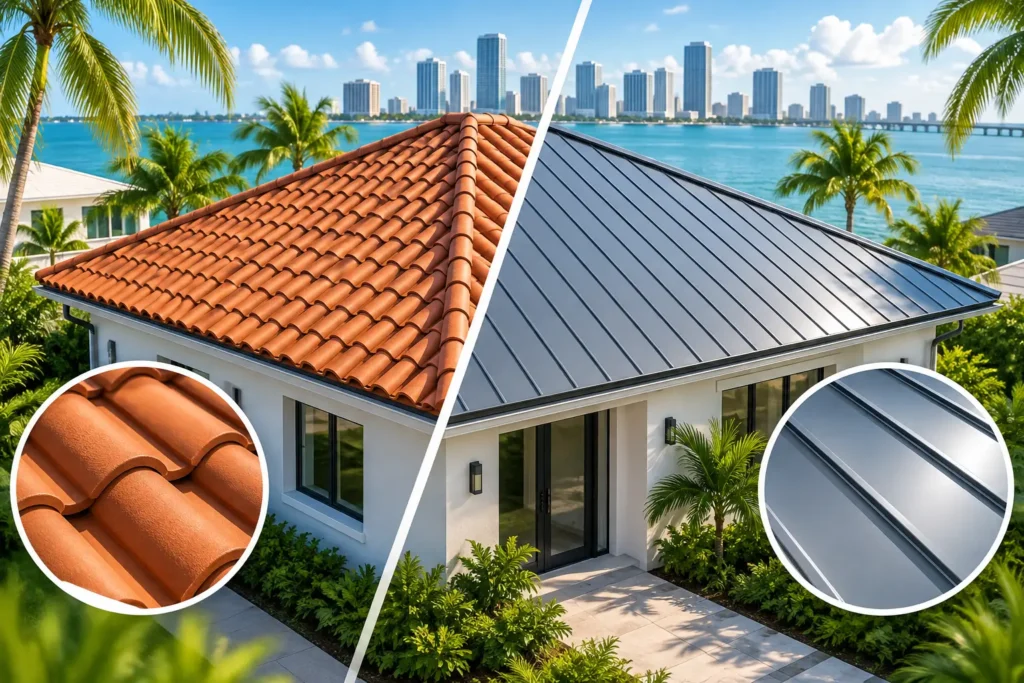
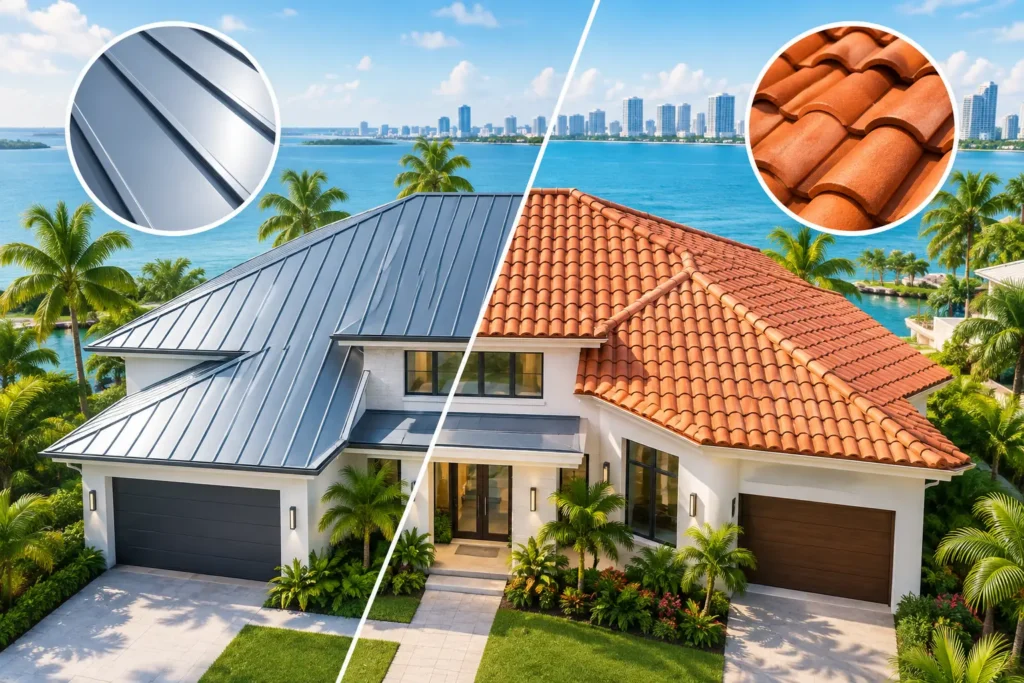
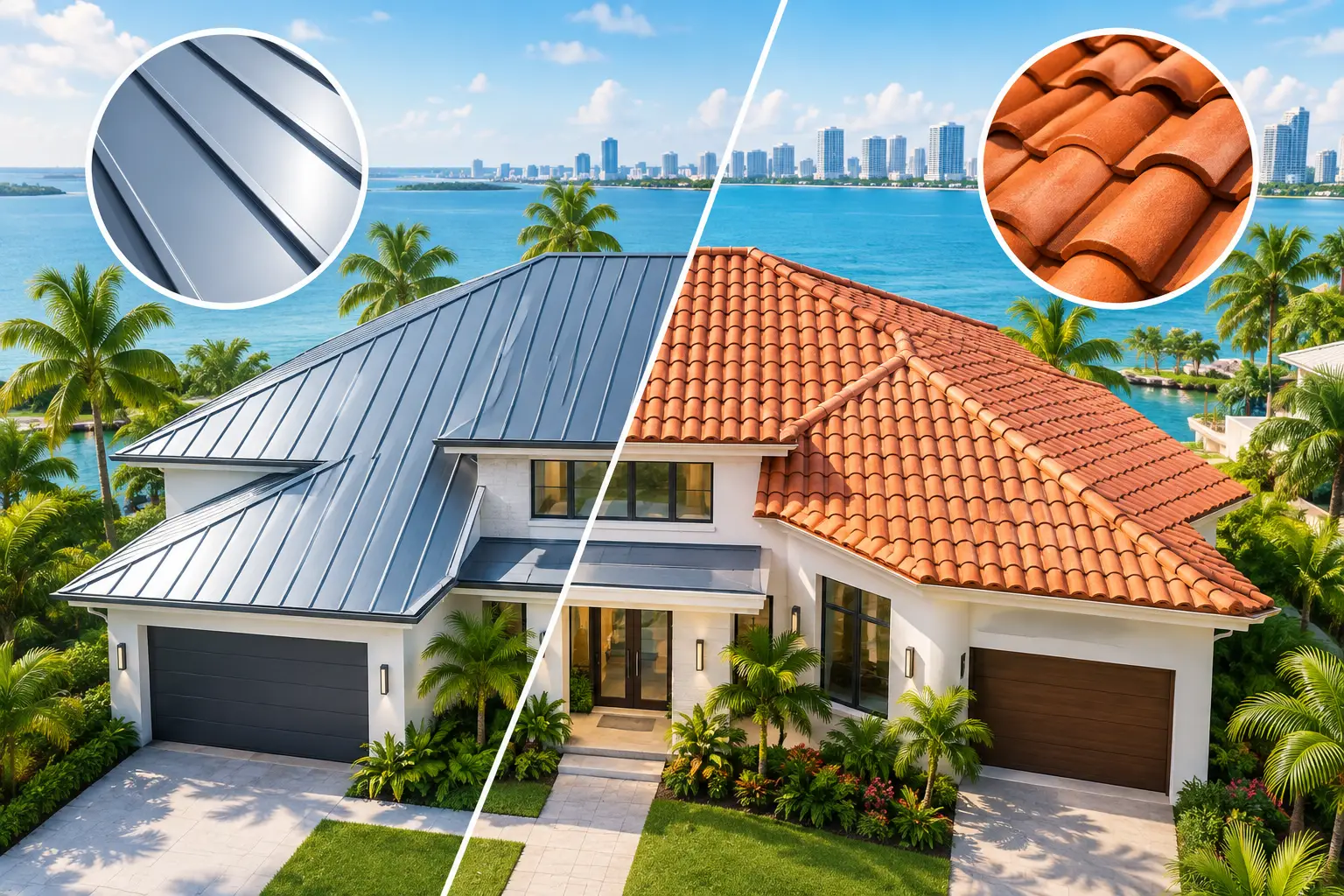
Metal and tile take very different approaches to protecting a property. Metal roofing is lightweight, durable, and usually installed in large interlocking panels or standing-seam sections. Tile roofing uses individual concrete, clay, or composite tiles installed over an underlayment system.
A metal roof is often chosen for its clean appearance, lower structural weight, and long service life. Tile is a classic Miami look that adds dimension and curb appeal, especially on Mediterranean, Spanish-style, and higher-end residential properties. Neither is automatically better. The best system is the one that fits the building and is installed to handle South Florida weather.
Hurricane Winds and Water Intrusion
For Miami property owners, wind performance is not a side issue. It is one of the first things to examine.
A properly engineered and installed metal roof can perform very well in high winds. Panels are secured to the roof deck with a fastening system designed for the roof’s wind zone, and standing-seam systems have fewer exposed fasteners than many other metal options. The details matter: panel width, clip spacing, edge metal, fasteners, flashing, and deck condition all affect how the roof performs in a storm.
Tile can also meet Florida wind requirements, but it depends heavily on the attachment method and condition of the existing system. Individual tiles may be mechanically fastened, adhered, or installed using a combination of approved methods. During a hurricane, damaged or poorly attached tiles can become airborne. One missing tile may also expose the underlayment beneath it to direct rain and wind.
Water management is another difference. Metal is a water-shedding system. When panels and flashing are installed correctly, water moves quickly off the roof. Tile is water-shedding too, but the tiles themselves are not the final waterproof barrier. The underlayment below the tile does much of that work. If aging underlayment fails, a tile roof can leak even when most tiles still look fine from the ground.
Salt Air, Heat, and Humidity
Miami roofs take a daily beating from UV exposure, heavy rain, humidity, and, near the coast, salt air. Material selection matters.
Metal roofing needs the right metal and coating for the location. Aluminum is highly resistant to corrosion and is often a strong choice for coastal properties. Galvalume and steel systems can perform well too, but they need quality protective coatings and properly specified components. Mixing incompatible metals can create corrosion issues, so fasteners, flashing, and accessories must be selected as a complete system.
Tile does not rust, which is a real advantage in salty environments. Concrete and clay tiles can handle heat well, and the air space beneath the tiles may help reduce heat transfer to the roof deck. But tile systems still contain metal flashings, fasteners, vents, and other components that need to be suitable for coastal conditions.
In both cases, mildew, debris, clogged drainage paths, and neglected flashing can shorten roof life. Miami’s climate does not reward deferred maintenance.
Weight Can Decide the Project Before Style Does
Tile is considerably heavier than metal. That does not mean tile is a bad choice, but it means the structure must be able to support it.
If a property is changing from shingles or metal to concrete or clay tile, the roof framing and deck may need evaluation before work begins. Older homes, additions, and buildings with previous repairs deserve a careful look. Structural changes can add cost and affect the project timeline.
Metal is among the lighter roofing options available. This can make it practical for certain older structures, reroof projects, and buildings where added roof weight is a concern. A lighter roof can also reduce the need for structural modifications, though every property should be assessed individually.
Upfront Cost Versus Long-Term Cost
It is easy to compare two quotes and focus only on the bottom line. That does not show the full cost of ownership.
Metal roofing often has a higher upfront price than asphalt shingles, but pricing compared with tile varies by material, roof complexity, and installation requirements. A simple metal roof may be cost-effective over time because it is lightweight and has fewer individual pieces to repair. Premium metals, specialty finishes, and complex roof shapes can raise the investment.
Tile can be costly because of the material weight, labor, underlayment, tile handling, and roof complexity. If a tile roof needs a full tear-off, underlayment replacement, or structural work, the cost can rise quickly. On the other hand, a well-maintained tile roof can provide a long service life and strong curb appeal for the right property.
The quote should clearly separate the roof system components: tear-off, deck repairs, underlayment, flashing, ventilation, attachment method, permit requirements, and final cleanup. No mystery fees. A low quote that skips critical details is rarely a bargain after the first leak.
Maintenance and Repair Expectations
Metal roofs generally require less routine attention than tile, but they are not maintenance-free. Property owners should periodically check for loose fasteners where applicable, damaged sealant, finish wear, debris buildup, and flashing issues around penetrations. Coastal properties deserve closer inspection for early signs of corrosion.
Tile roofs need routine inspections because individual tiles can crack, slip, or break from foot traffic and storm debris. The most important part of an aging tile roof may be hidden below the surface: the underlayment. Replacing a few broken tiles may solve a localized issue, but it will not fix widespread underlayment failure.
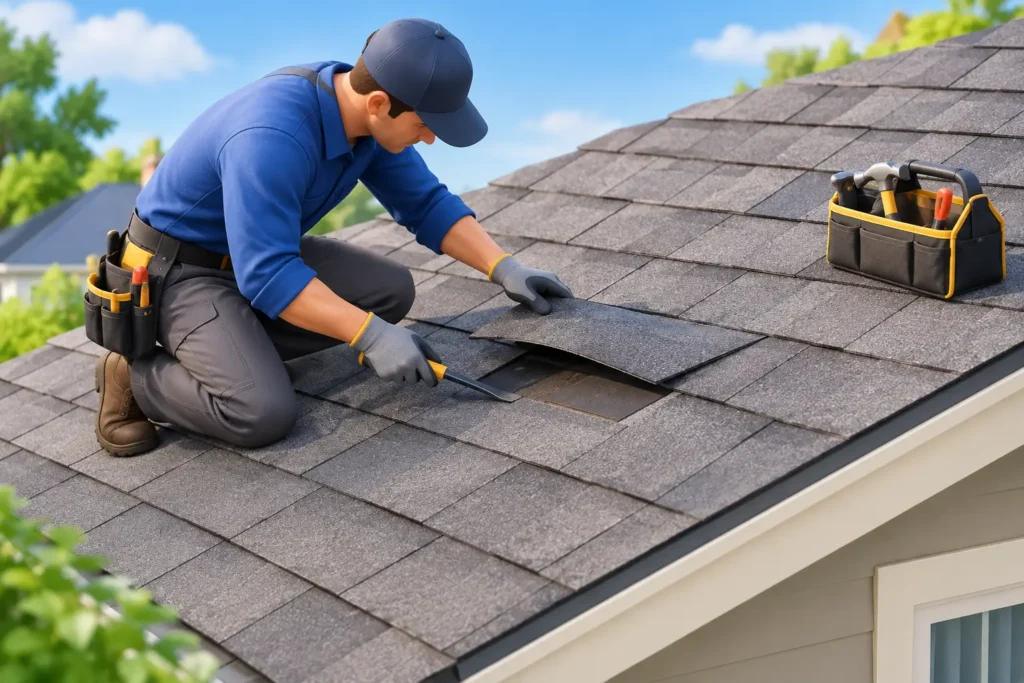
Repair access also matters. Walking carelessly on tile can crack it. Working on metal requires technicians who understand how to move across panels without damaging the finish or compromising seams. Roofing repairs are not the place for guesswork or superficial patches.
Appearance, Resale, and Commercial Considerations
Tile remains a natural fit for many Miami neighborhoods and architectural styles. It offers texture, depth, and a traditional South Florida appearance that many homeowners want. Concrete tile also comes in a broad range of profiles and colors.
Metal can look traditional, modern, coastal, or commercial depending on the panel profile and finish. Standing seam is especially popular for clean contemporary designs, while metal tile profiles can provide a more classic appearance with the benefits of metal.
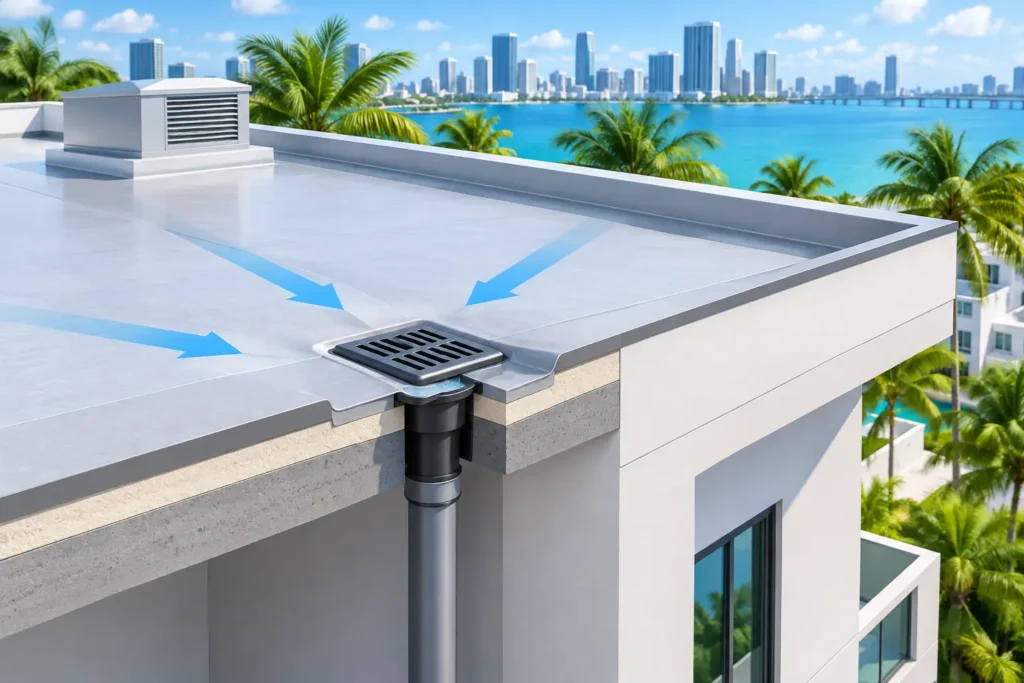
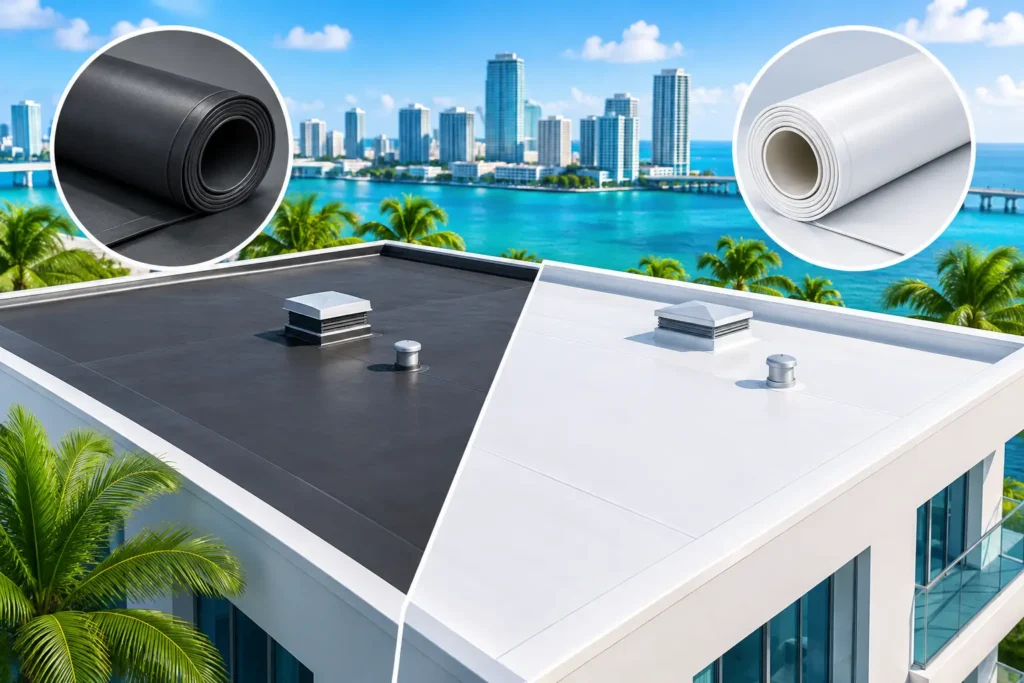
For commercial and multifamily properties, the decision may come down to roof slope, drainage design, equipment penetrations, and maintenance access. A steep-slope metal or tile roof is different from a low-slope commercial membrane roof. The system has to match the building, not just the look a property owner prefers.
Which Roof Is Right for Your Miami Property?
Metal may be the better fit if you want a lighter system, clean lines, strong water-shedding performance, and a material that can be specified for coastal corrosion resistance. It is especially worth considering when structural weight is a concern or when the roof design has fewer complex transitions.
Tile may be the better fit if your home was built for its weight, the neighborhood style supports it, and you value its traditional South Florida appearance. It can be an excellent long-term system, provided the underlayment, attachment, flashing, and maintenance are handled correctly.
Before deciding, get a close inspection of the roof deck, framing where accessible, existing leaks, drainage, flashing, and storm-related wear. Photo documentation should show what is actually happening on your roof, not just what someone assumes from the driveway. Flash Roofing & Sheet Metal approaches roof replacement this way: identify the root cause, explain the options plainly, and build the system for Miami conditions.
A good roofing decision should leave you with more than a new color overhead. It should give you clear documentation, a system suited to your property, and confidence when the next hard rain starts.