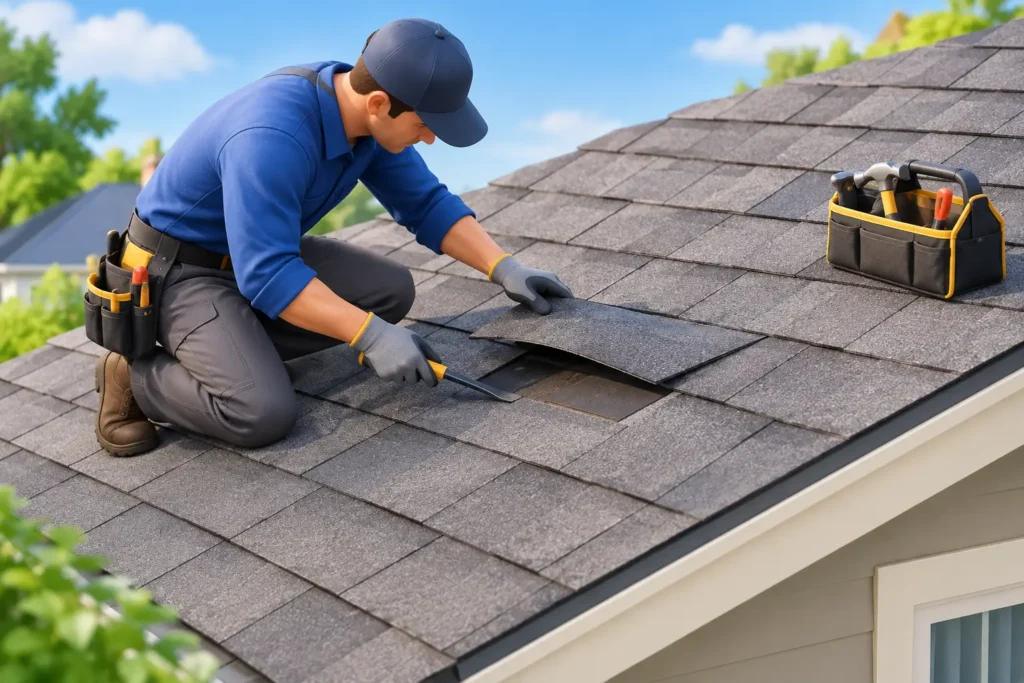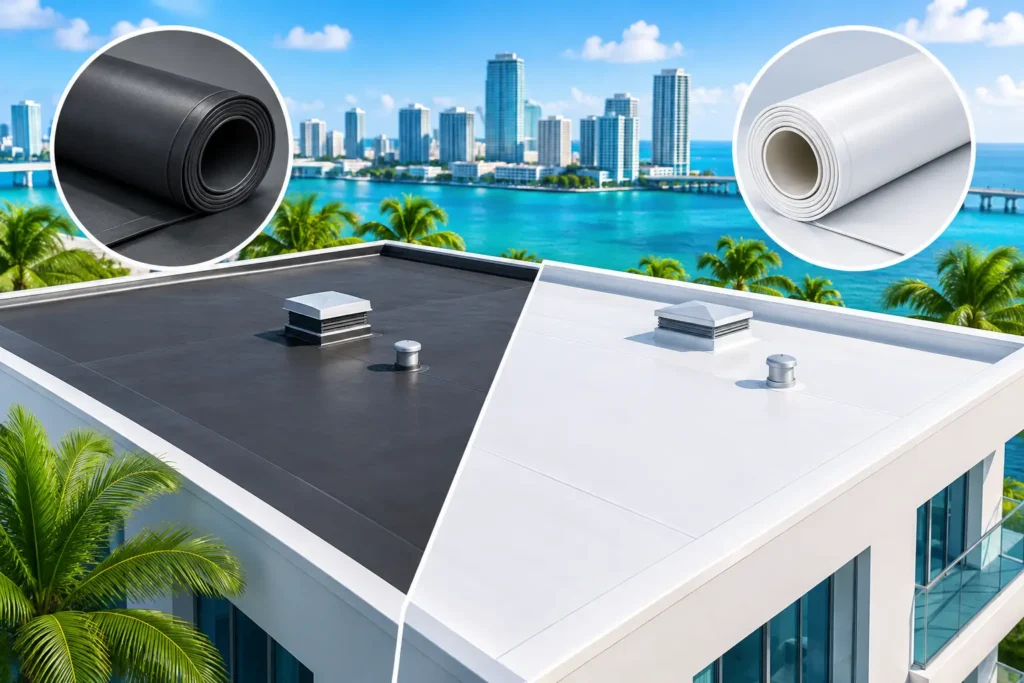
A flat roof does not need much standing water to become an expensive problem. In Miami, a sudden downpour can drop inches of rain in a short time, then leave intense sun and humidity to work on every weak seam. The best flat roof drainage solutions move water off the roof quickly, keep it away from the building, and account for hurricane-season conditions – not just a normal afternoon shower.
Drainage is not an add-on to the roofing system. It is part of the system. A new membrane, coating, or repair will not perform as intended if water continues to pond around drains, curbs, penetrations, or low spots. Do it once, do it right means finding out why water is collecting before covering up the evidence.
Why Flat Roof Drainage Fails in South Florida
Most flat roofs are not truly flat. They are built with a slight slope that directs water toward drains, scuppers, or gutters. When that slope is interrupted by settlement, poor installation, clogged outlets, deteriorated insulation, or a patched-over low area, water has nowhere to go.
Miami’s weather makes the consequences more serious. UV exposure dries and weakens aging materials. Humidity keeps damp areas from fully drying. Salt air can corrode metal components. Then a tropical storm tests every drain bowl, flashing detail, and overflow path at once. Water that sits for more than 48 hours is a warning sign, especially when it returns to the same spot after every storm.
The visible puddle is not always the real issue. A roof can hold water because a drain is clogged, but it can also hold water because the roof deck has sagged, insulation has compressed, or the original slope was never adequate. Cleaning the drain helps only in the first situation. A proper inspection separates maintenance needs from a design or structural problem.
Best Flat Roof Drainage Solutions by Roof Layout
There is no single drainage method that fits every property. The right choice depends on roof size, parapet walls, available discharge points, deck condition, local code requirements, and whether the roof is being repaired, restored, or replaced.
Interior roof drains
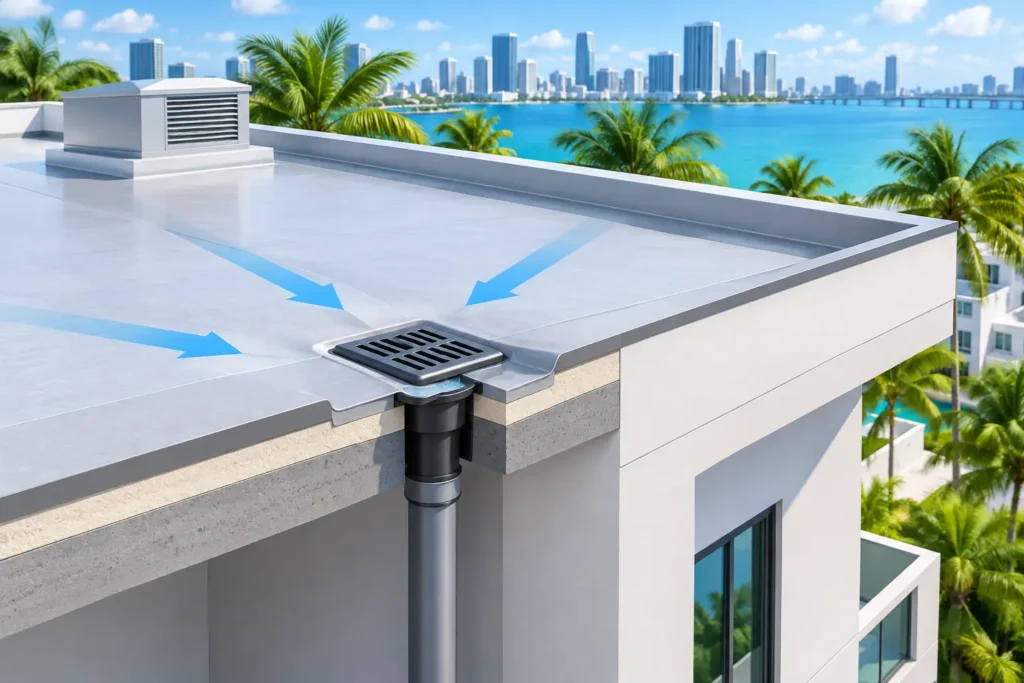
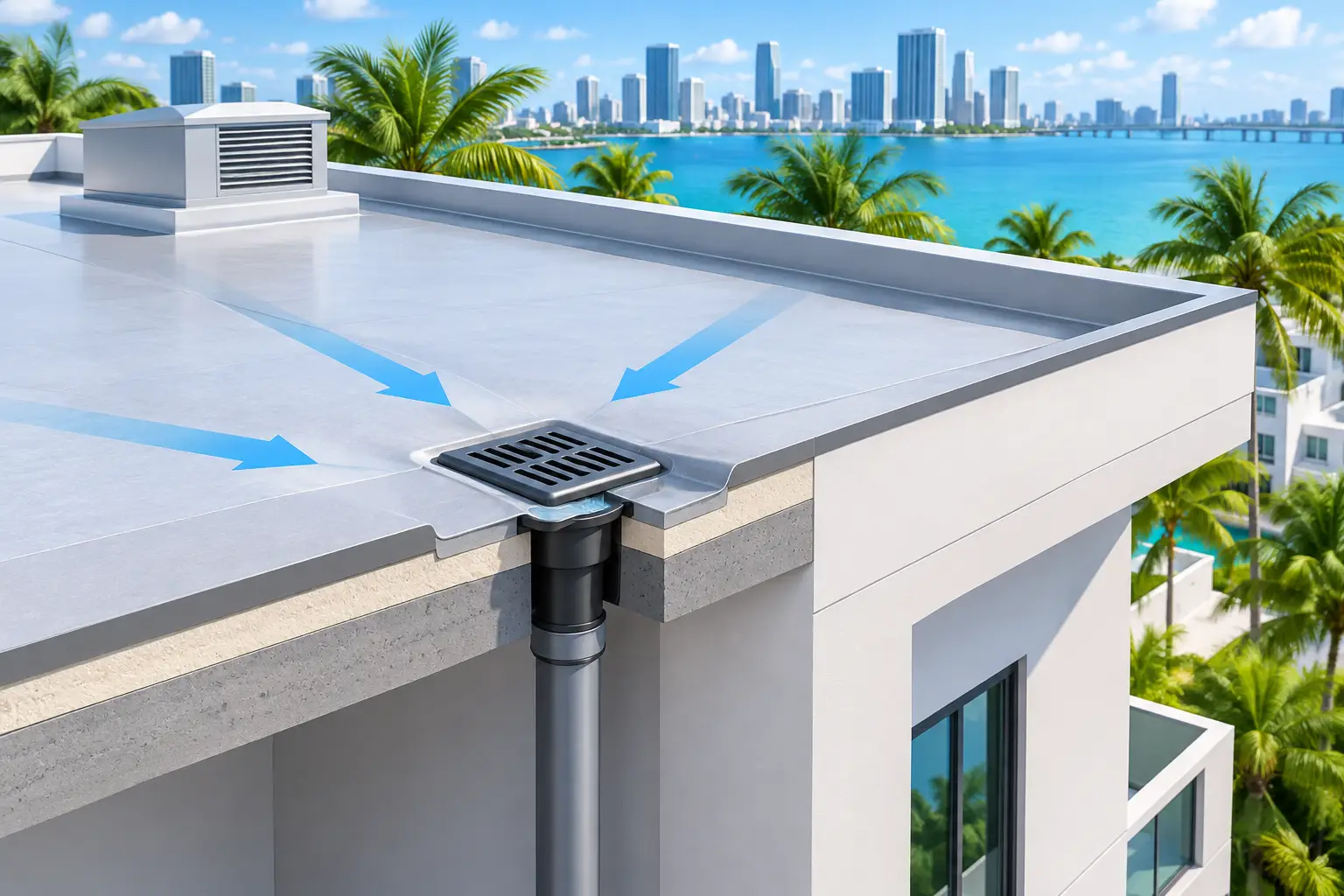
Interior drains collect water through a drain bowl set into the low point of the roof, then carry it through piping inside the building. They are common on larger commercial roofs and many multifamily properties because they keep water management contained and can handle large roof areas when correctly sized.
Their strength is capacity. Their weak point is maintenance and detailing. Strainers can clog with leaves, debris, and roofing gravel. A damaged clamping ring or failed membrane connection around the bowl can create a leak that appears inside the building far from the drain itself. In Miami, interior drains should be inspected before and during hurricane season, not only after a leak shows up.
A quality installation includes a properly flashed drain connection, a secure strainer, correct slope into the drain, and an emergency overflow plan. If the main drain blocks during a heavy storm, the roof needs another safe route for water to escape.
Scuppers and conductor heads
A scupper is an opening through a parapet wall that lets roof water exit into a conductor head, downspout, or open discharge path. Scuppers work well on smaller commercial roofs, low-slope residential roofs, balconies, and buildings where interior piping is impractical.
They are simple, visible, and easier to monitor than hidden piping. But simple does not mean careless. The scupper opening must be large enough for the roof area and local rainfall conditions. It also needs proper membrane flashing and metal work at the wall. A poorly detailed scupper can leak behind the parapet, stain exterior walls, or send water where it can undermine landscaping and foundations.
For South Florida properties, corrosion-resistant metal matters. Salt exposure can shorten the life of unprotected components, particularly near the coast. The downspout discharge should also be directed away from doors, walkways, and building walls.
Gutters and oversized downspouts
Gutters can be a practical solution when the roof edge allows water to drain outward. They are often used on residential low-slope additions, carports, patios, and smaller flat roof sections. On the right roof, gutters reduce the need for internal piping and make routine debris checks straightforward.
The trade-off is that gutters can become overwhelmed or clogged quickly in heavy rain. Small gutters and undersized downspouts may look fine during light showers but overflow during a Miami storm. They also need secure attachment because wind-driven rain and hurricane conditions put extra stress on edge components.
A gutter system should have enough capacity, enough downspouts, properly sealed end caps, and a clear discharge route at ground level. Water should not spill beside the foundation or dump onto a lower roof without a designed drainage path.
Tapered insulation for ponding areas
When a roof has recurring low spots, tapered insulation is often one of the best long-term flat roof drainage solutions. The insulation is installed in a planned slope pattern beneath a new membrane or roofing assembly, guiding water toward drains or scuppers.
This approach addresses the cause instead of repeatedly patching the symptoms. It is especially useful during a roof replacement or major restoration, when the existing roof can be evaluated for poor slope, wet insulation, and structural irregularities.
Tapered insulation costs more than a quick patch because it requires design, material, and proper installation. Still, it can prevent repeated leak calls, reduce stress on the membrane, and improve drainage across the entire roof. If ponding water is widespread, this is usually more honest than promising that another surface repair will solve everything.
Overflow drains and emergency scuppers
Primary drainage should never be the only plan. Overflow drains or emergency scuppers provide backup when the main drainage system cannot keep up or becomes blocked. They are set above the normal drainage level so they do not handle everyday water flow. Their job is to prevent water from rising high enough to threaten the roof structure, parapet walls, or interior spaces.
Emergency outlets are particularly valuable on commercial buildings with interior drains. They give property managers a visible warning that the primary system is not working as it should. If water is coming through an overflow scupper, it is time to inspect the main drains immediately.
Drainage Details That Make or Break the Roof
The drainage method gets attention, but the details around it determine whether it lasts. Drain bowls need clean, secure membrane connections. Scuppers need solid flashing at the parapet. Gutters need correct pitch and fastening. Every transition needs to withstand standing water, thermal movement, wind pressure, and routine maintenance.
Roof edges deserve special attention in hurricane country. Water moving across the roof during a storm can expose weak edge metal, loose flashings, and poorly adhered membrane seams. A drainage plan should work with the roof’s wind-resistance design, not compete with it.
It also pays to consider where the water goes after it leaves the roof. A downspout that discharges against a wall, onto a lower roof, or into a poorly graded area simply moves the problem. Good drainage protects the roof and the property around it.
How to Choose the Right Drainage Fix
Start with evidence, not assumptions. A professional roof inspection should document ponding areas, drain conditions, roof slope, membrane wear, flashing defects, and any signs of wet insulation or deck movement. Photos matter because they show the condition before work begins and provide a clear basis for the recommended repair.
For a localized issue, clearing and repairing a drain, scupper, or gutter may be enough. For a roof with multiple low areas, deteriorated insulation, or repeated leaks, a larger corrective project may be the better value. The cheapest option is not always the lowest cost over the next few hurricane seasons.
Property managers should also plan regular maintenance. Drains and scuppers should be checked after major storms and cleared before the rainy season. Do not wait for ceiling stains. By then, water may already be traveling beneath the membrane or through the building assembly.
When to Call a Roofing Professional
Call for an inspection if water remains on the roof two days after rainfall, drains back up during storms, gutters overflow repeatedly, or leaks appear near interior drain lines and parapet walls. Soft spots, bubbling membrane, rusting metal, and recurring patch repairs are also signs that drainage needs a closer look.
Flash Roofing & Sheet Metal approaches drainage as a root-cause issue, with clear photos and honest recommendations rather than mystery fixes. Whether the answer is a repaired scupper, larger drainage components, tapered insulation, or a full roof replacement, the goal is the same: give water a dependable path off the roof before Miami weather finds the weak point.
A dry ceiling starts on the roof. Address the water path now, while the problem is still visible and repair options are still in your control.