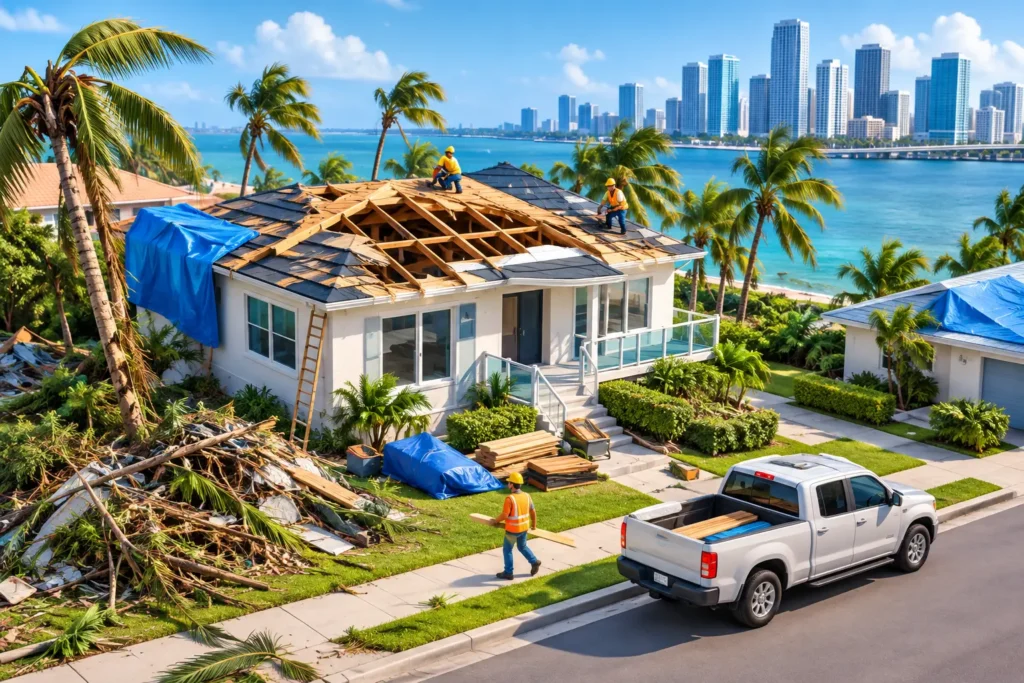
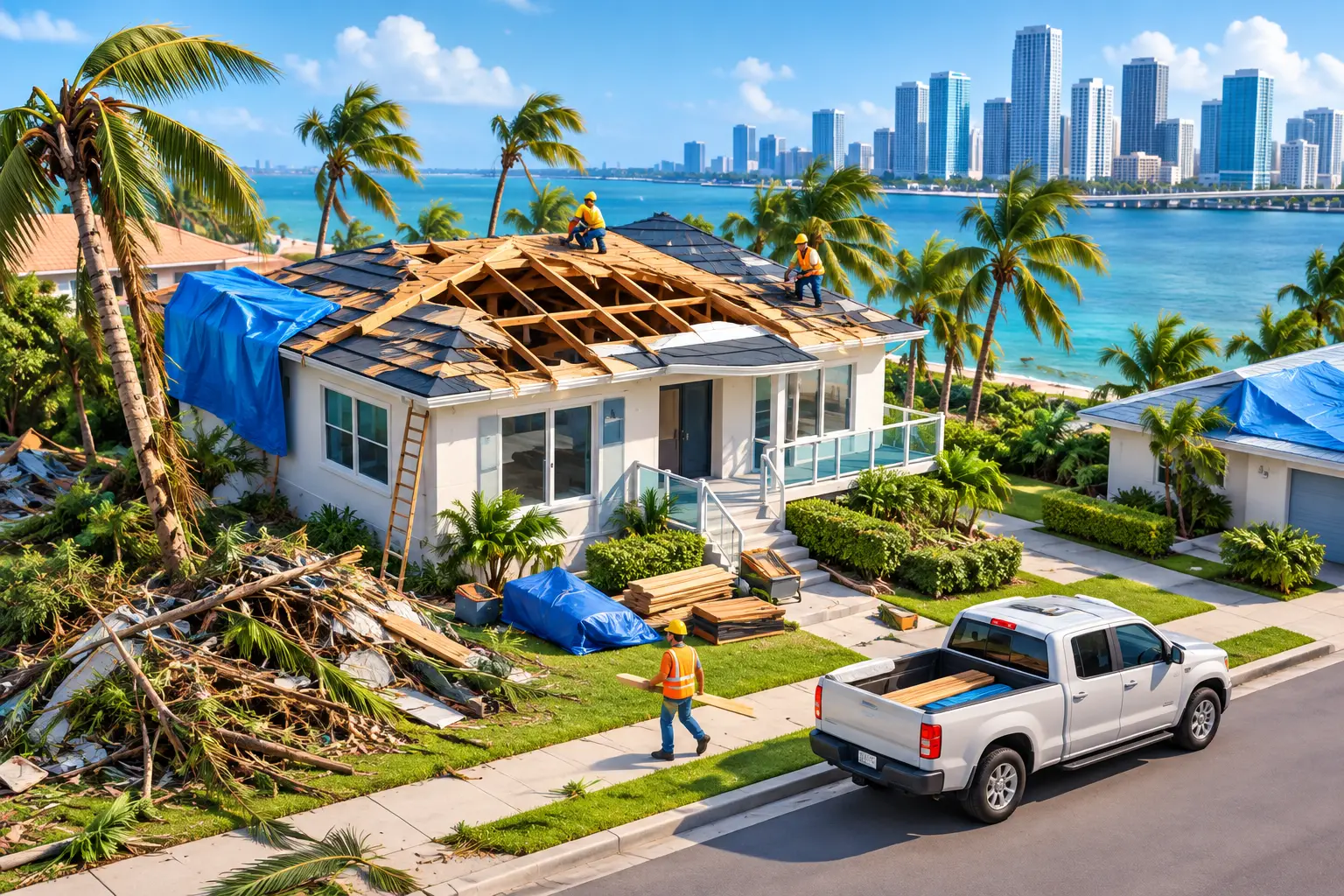
A Miami storm can leave behind more than a few missing shingles. Wind-driven rain can get beneath tile, lift membrane seams, soak insulation, corrode flashing, and turn a small opening into a leak that spreads through ceilings and walls. Proper storm damage reconstruction starts with finding the full path of the damage, not covering the most obvious spot and hoping for the best.
For homeowners, property managers, and commercial building owners, the pressure to act fast is real. Water does not wait. But rushing into an undocumented patch or accepting a vague quote can create bigger problems when the next heavy rain hits. The right response is fast, organized, and based on proof.
Storm Damage Reconstruction Starts With the Roof System
Storm damage is not always visible from the ground. A roof may look mostly intact while its underlayment, fasteners, flashing, drains, edge metal, or membrane seams have been compromised. On a flat commercial roof, ponding water can expose weak areas days after a storm. On a tile roof, displaced tiles may allow water under the surface even when few tiles are broken.
That is why reconstruction should begin with a detailed inspection. A qualified roofer should assess the roof covering, penetrations, transitions, drainage, attic or interior signs of water intrusion, and any related exterior damage. Photos matter here. They give property owners a clear record of what was found, what needs immediate attention, and what can be planned as part of the permanent repair.
The goal is not to make the roof look better for a week. The goal is to restore its ability to shed water and stand up to South Florida weather.
Emergency Stabilization Comes First
When active leaks or exposed areas are present, temporary protection may be necessary before full repairs can begin. This can include securing loose materials, covering vulnerable openings, removing standing water where possible, or making temporary weatherproofing repairs.
Temporary work has its place, especially when another storm is approaching or materials must be ordered. Still, it should be clearly identified as temporary. A tarp or surface sealant may reduce immediate water intrusion, but it does not replace failed underlayment, rotten decking, damaged flashing, or a compromised membrane system.
A contractor should explain what the emergency work accomplishes, how long it is expected to hold, and what permanent reconstruction is still required. No mystery fees and no vague promises.
What a Complete Reconstruction Plan Should Address
The scope of work depends on the roof type, storm severity, age of the system, and extent of water intrusion. A newer roof with isolated wind damage may need targeted repairs. An older roof with widespread deterioration may need restoration or replacement because patching one section after another becomes an expensive cycle.
A sound reconstruction plan usually addresses the damaged materials and the components that caused or allowed the failure. That may include roof decking, underlayment, tile or shingles, membrane sections, insulation, flashing, pipe boots, vents, gutters, edge metal, roof drains, and wall-to-roof transitions.
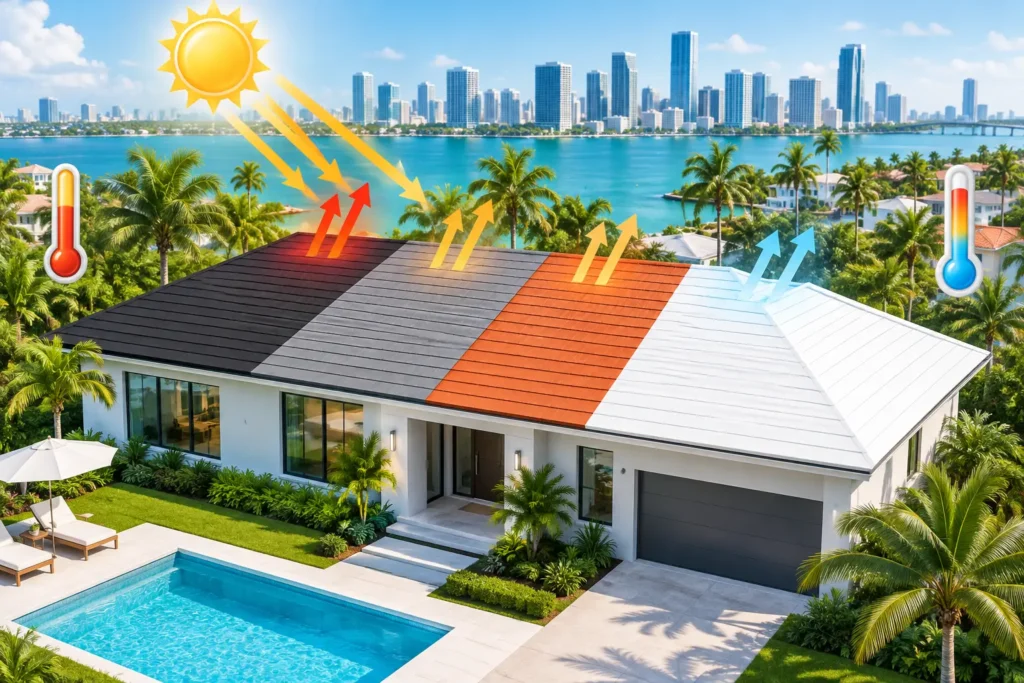
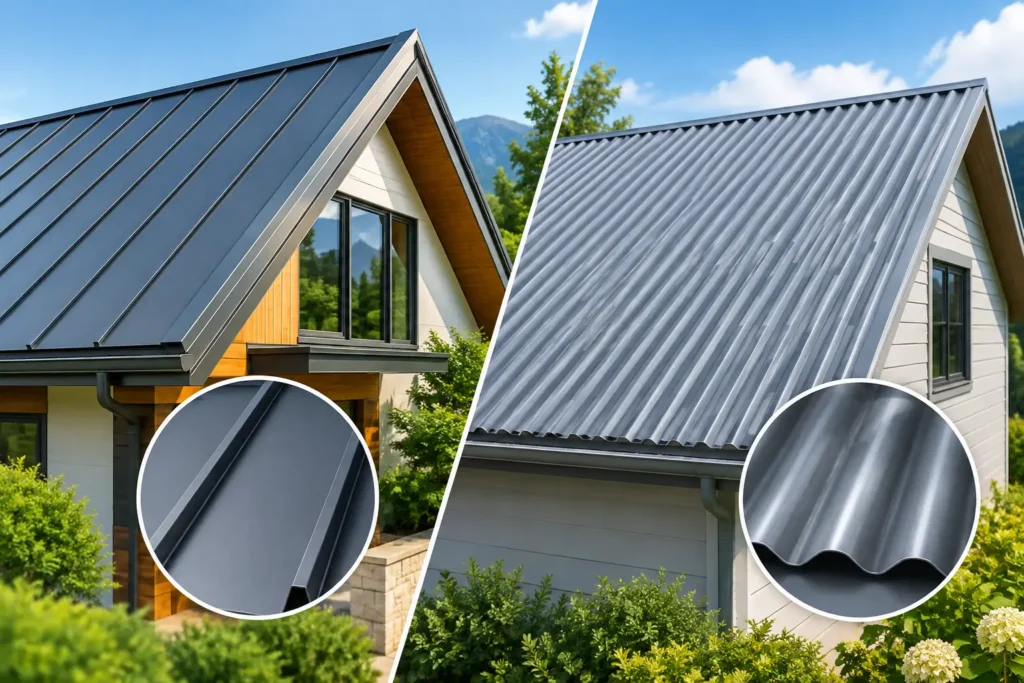
For Miami properties, material selection is not a minor detail. Extreme UV exposure, humidity, salt air, heavy rain, and hurricane-force winds all affect how a roofing system performs. The right solution for an inland shingle roof may not be the right solution for a coastal commercial flat roof.
Residential Roofs Need More Than Replacement Tiles
A cracked or missing tile is easy to spot. What is harder to see is whether the water barrier beneath it was torn, whether nearby tiles have loosened, or whether the fastening system has been affected. Replacing only the visible tile can leave the actual leak path untouched.
The same is true for shingle roofs. Wind may crease, lift, or break the seal between shingles without removing large sections. Flashing around chimneys, skylights, vents, and walls also deserves close inspection because these transition areas often fail first under wind-driven rain.
A good residential reconstruction plan matches new materials to the existing roof where appropriate, while correcting weak details that could fail again. Sometimes a focused repair is the honest answer. Sometimes the roof’s age and condition make a larger restoration the more cost-effective choice. It depends on the evidence, not a sales script.
Commercial Roof Damage Can Spread Below the Surface
Commercial roofing systems often hide storm damage below the top layer. A puncture or separated seam can allow water into insulation, where it may travel far from the original opening. Over time, saturated insulation loses performance, adds weight, and can contribute to deck deterioration or interior damage.
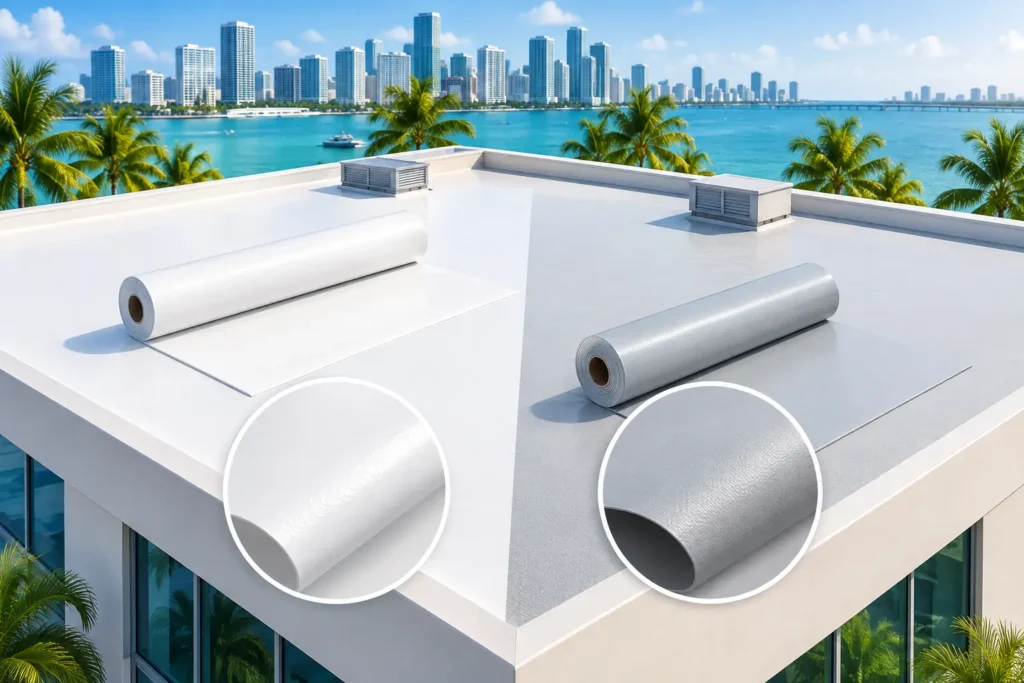
Flat and low-slope roofs also depend on drainage. If storm debris blocks drains or scuppers, standing water can put added stress on seams and weak areas. During reconstruction, the roof should be evaluated as a complete water-management system, not just a surface that needs a coating.
Roof coatings can be a smart option when the underlying roof is dry, sound, and properly prepared. They are not a cure for trapped moisture, failing seams, or deteriorated substrate. A coating applied over unresolved damage may look clean at first, then fail when it is needed most.
Documentation Protects Your Property and Your Budget
After storm damage, photographs and clear written findings are more than nice extras. They help you understand the work, communicate with insurers when applicable, document conditions for tenants or ownership groups, and compare estimates fairly.
A reliable quote should identify the affected areas, recommended repairs, materials, labor, and any conditions that could change the scope once concealed sections are opened. Roofing work can uncover hidden deterioration, particularly after prolonged leaks. Honest contractors explain that possibility before work begins instead of surprising customers with it later.
Be cautious with quotes that are dramatically lower than the others but provide little detail. Low pricing can mean incomplete repairs, unlicensed labor, poor materials, or exclusions that show up after the job starts. The cheapest repair is rarely the cheapest outcome if it fails in the next storm season.
Local Code and Wind Resistance Matter
Miami-Dade roofing work is not generic construction. Local code requirements and hurricane-zone conditions affect material approvals, fastening methods, flashing details, and installation practices. Reconstruction should account for the roof type, building design, wind exposure, and applicable permit requirements.
This is especially important after storm damage because the temptation to make a quick repair can be strong. Quick does not have to mean careless. An experienced local contractor can stabilize the property promptly while building the permanent scope around code-compliant, durable work.
Flash Roofing & Sheet Metal approaches storm repairs with that local reality in mind. Heat, salt exposure, tropical moisture, and hurricane winds all demand more than a surface-level fix.
When to Repair, Restore, or Replace
There is no one answer for every damaged roof. Repair is often the right choice when damage is limited and the existing system has useful life remaining. Restoration may make sense when the roof is structurally sound but needs broader waterproofing, reinforcement, or protective coating. Replacement becomes the better investment when damage is widespread, moisture has compromised underlying materials, or the roof is already near the end of its service life.
The deciding factor should be the roof’s condition as a whole. If repeated repairs are chasing leaks across an aging system, a larger project may save money and frustration over time. If the damage is isolated, a well-executed repair can restore protection without paying for work you do not need.
Ask for the reasoning behind the recommendation. You deserve to know why a repair is sufficient, why restoration is being considered, or why replacement may be the responsible option.
Do Not Wait for the Next Leak
A ceiling stain may dry after a storm, but the moisture above it can remain. Wet insulation, decaying wood, mold growth, and corroded metal do not disappear because the weather cleared. A post-storm inspection is the practical way to catch damage before it reaches the interior or disrupts your business.
The best next step is simple: get a documented assessment, ask direct questions, and choose work that fixes the cause of the problem. When South Florida weather tests your roof again, you should have more than a patch – you should have proof that the job was done right.