A flat roof can look fine from the ground while water is already working its way through a seam, drain detail, or wall flashing. In Miami, that small failure can become a major repair after one hard rainstorm or hurricane season. TPO versus PVC performance is not just a material question. It is a decision about how your roof will handle punishing UV exposure, standing water, wind uplift, humidity, salt air, and the way your building is actually used.
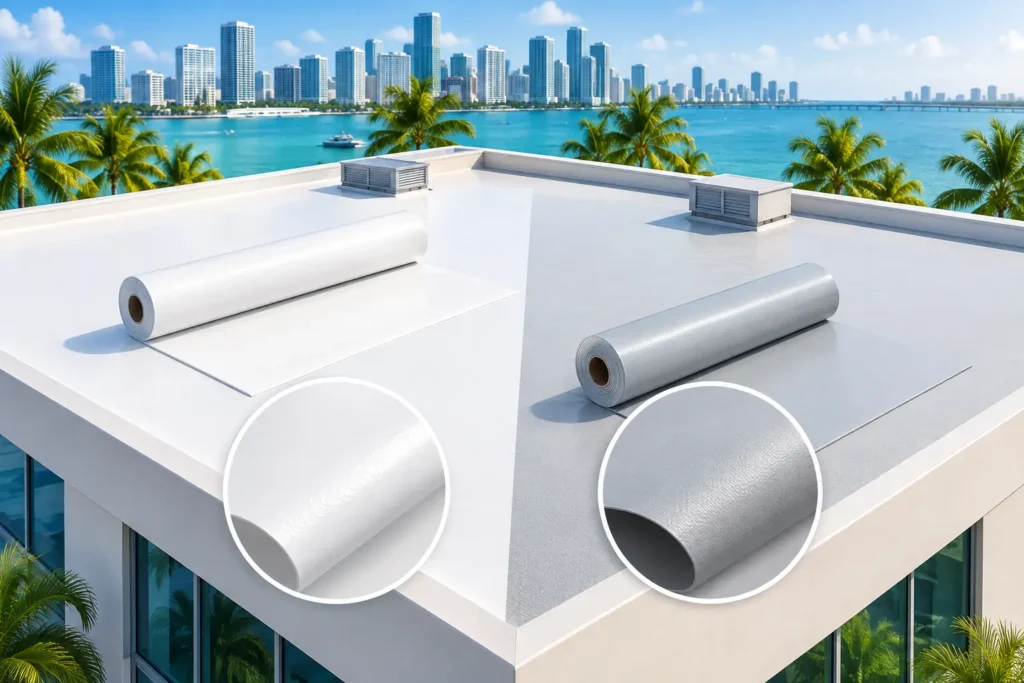
Both TPO and PVC are single-ply membranes commonly installed on commercial low-slope roofs and certain residential flat-roof sections. Both can provide a clean, reflective roofing surface and heat-welded seams. Neither is automatically the right answer for every property. The right system depends on the roof deck, drainage, exposure, rooftop equipment, budget, and installation quality.
Why TPO Versus PVC Performance Matters in Miami
South Florida does not give roofing systems much downtime. Strong sun heats the membrane daily. Afternoon storms test drainage and seams. Humid conditions can expose trapped moisture problems. Near the coast, salt-laden air adds another layer of wear to metal components, fasteners, and rooftop equipment.
A membrane roof is only as good as its complete assembly. That includes the insulation, attachment method, edge metal, penetrations, drains, flashings, and welds. A cheap installation with weak perimeter details can fail long before a quality membrane reaches the end of its expected service life.
For Miami property owners, the comparison should start with real conditions, not a generic product brochure. Is the roof exposed to restaurant exhaust? Does water pond after heavy rain? Is the building in a high-wind zone? Are there solar mounts, HVAC curbs, or frequent service traffic? Those answers matter.
TPO Performance: Reflective and Cost-Conscious
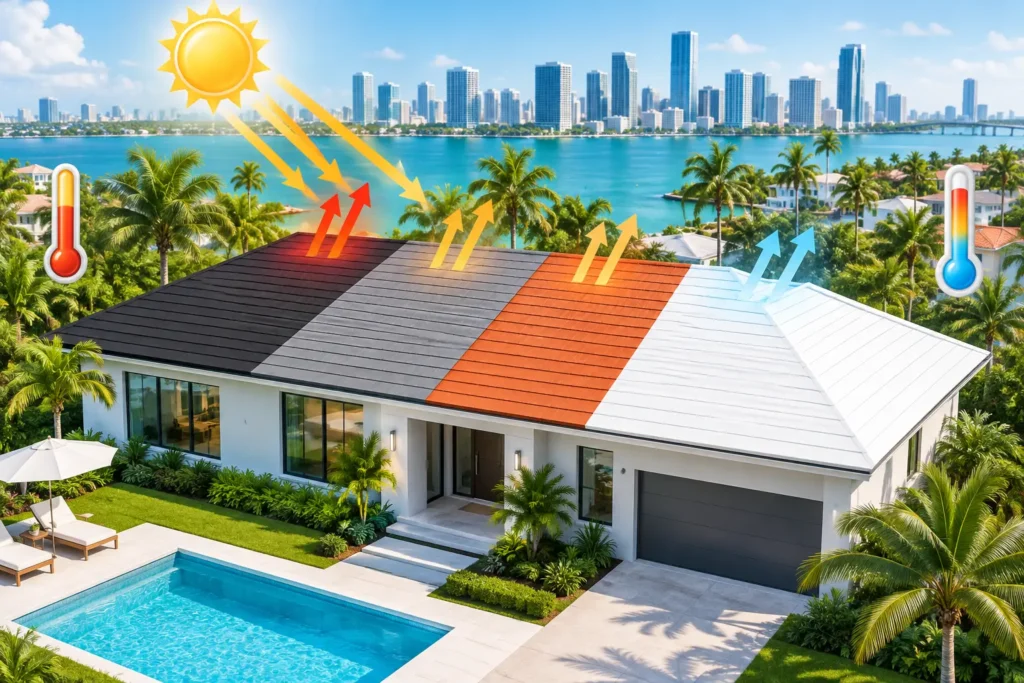
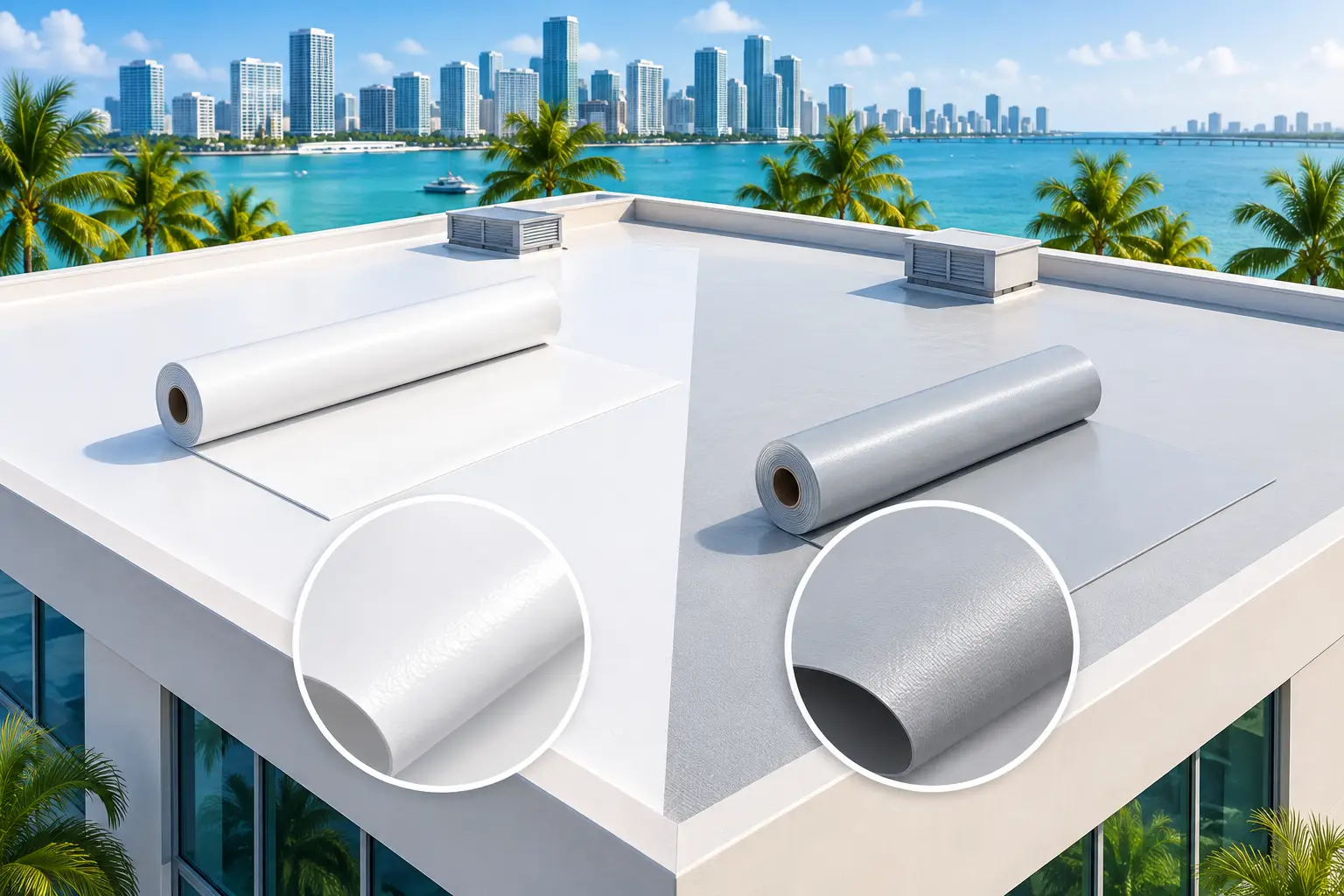
TPO, short for thermoplastic polyolefin, is widely used because it offers a white, reflective surface and is often a more budget-friendly single-ply choice. Its light color can help reduce heat absorption, which is valuable on a roof receiving direct Miami sun for most of the day.
TPO seams are heat-welded rather than glued. When welded properly, the seams become a major strength of the system. This is especially useful on broad commercial roofs where there may be many field seams. TPO is also available in reinforced assemblies designed for improved puncture resistance and wind performance.
The trade-off is that TPO formulations have varied over the years between manufacturers and product lines. Not every TPO membrane has the same track record, thickness, reinforcement, or long-term weathering characteristics. A lower upfront price can make sense, but only when the specified membrane and installation details are appropriate for the building.
TPO can be a strong choice for office buildings, warehouses, retail spaces, and residential flat-roof areas with normal rooftop conditions. It may be less ideal where the roof is routinely exposed to grease, oils, or harsh chemicals. In those situations, material compatibility needs to be evaluated before installation, not after stains or deterioration appear.
What Makes TPO Work Well
TPO performs best when it is installed over a dry, properly prepared substrate with correct insulation layout and drainage. The membrane must be attached according to an engineered wind-uplift plan, especially at roof edges and corners where hurricane winds apply the greatest pressure.
Good workmanship also means clean welds, properly detailed pipe boots and curbs, secure termination at walls, and edge metal installed to local code requirements. The membrane is only one part of the job.
PVC Performance: Chemical Resistance and Proven Seams
PVC, or polyvinyl chloride, is another heat-welded single-ply roofing membrane. Like TPO, it is commonly white and reflective. PVC has a long history in low-slope roofing and is particularly respected for its resistance to many oils, fats, and chemicals.
That characteristic can make PVC a practical option for restaurants, food-processing facilities, commercial kitchens, and buildings with rooftop exhaust that may release grease. On these roofs, selecting a membrane that can handle the operating environment is not an upgrade for appearances. It can prevent premature roof damage.
PVC also has welded seams that, when made correctly, create a dependable watertight connection. The material remains flexible, which helps with detailing around drains, curbs, and penetrations. For a roof with many mechanical units or complicated transitions, the ability to form and weld details properly has real value.
PVC usually costs more than TPO at installation. The higher initial investment may be justified when chemical exposure, demanding rooftop conditions, or long-term service expectations call for it. But paying more for PVC does not fix poor drainage, bad flashing, or moisture trapped below the membrane.
Points to Consider With PVC
PVC membranes contain plasticizers that help keep the material flexible. Over a long service life, the membrane needs to be compatible with adjacent materials and properly detailed at transitions. A qualified contractor should verify the manufacturer-approved components, accessories, and installation method instead of mixing products without a plan.
As with TPO, thickness matters. A thicker reinforced membrane may offer better resistance to punctures and jobsite abuse, but it still needs protection in high-traffic service areas. Walk pads near HVAC equipment are a smart detail, not an optional extra.
Hurricane Winds, Rain, and Standing Water
For Miami roofs, hurricane performance comes down to the full system design. TPO and PVC can both be installed in assemblies engineered to meet required wind-uplift ratings. Mechanically attached, fully adhered, and induction-welded systems each have different applications. The proper method depends on the deck type, building height, roof geometry, and code requirements.
The highest-risk locations are often not the middle of the roof. Perimeters, corners, parapet walls, scuppers, edge metal, and penetrations take serious stress during wind events. If those details are underbuilt, a quality membrane cannot carry the whole roof by itself.
Rain creates a separate problem. Neither TPO nor PVC is a cure for poor drainage. Water that stays on a roof after storms accelerates dirt buildup, makes leak detection harder, and can expose weaknesses around drains. Before choosing a membrane, inspect the roof slope, drains, scuppers, and insulation layout. Sometimes a tapered insulation design or drainage correction is the real repair.
Cost Is More Than the Price Per Square Foot
TPO often wins the initial-price comparison. For a straightforward roof with low chemical exposure and sound drainage, that may be the practical choice. PVC may carry a higher material cost, but it can offer better value on roofs exposed to grease, oils, and more demanding operational conditions.
The better question is not, “Which membrane is cheaper?” It is, “Which complete roof system is less likely to create expensive problems?” A low bid that skips wet-insulation removal, uses inadequate edge details, or ignores drainage can cost far more after the first major storm.
Ask for a clear scope of work. It should identify the membrane type and thickness, insulation, attachment method, flashings, edge metal, drain work, substrate repairs, and warranty options. No mystery fees and no vague language. You should know what is being installed and why.
Choosing the Right Membrane for Your Building
TPO is often a sensible fit for buildings that need a reflective, reliable membrane roof with controlled upfront costs. PVC is often worth closer consideration when the roof faces grease, oils, chemical exposure, or heavy rooftop activity. Both can perform well in South Florida when the assembly is designed for local wind and weather conditions.
A roof inspection should also determine whether replacement is truly necessary. If the membrane is generally sound and the problem is limited to a drain, flashing, seam, or penetration, a targeted repair may be the honest solution. If moisture has spread beneath the roof, seams are failing in multiple areas, or the roof is nearing the end of its service life, replacement may be the safer long-term call.
At Flash Roofing & Sheet Metal, the goal is to identify the root cause before recommending a system. Photos, clear findings, and a straightforward quote give property owners the information they need to make the call with confidence.
Before committing to TPO or PVC, have the roof evaluated as a complete system. The membrane matters, but the details that keep wind and water out are where a Miami roof proves its value.