A metal roof can look great on a Miami property and still fail early if the panel type, metal, fasteners, and installation details are wrong for the building. When comparing standing seam vs corrugated metal, the real question is not which one looks better from the street. It is which system can handle your roof slope, wind-zone requirements, salt exposure, budget, and long-term maintenance plan.
Both systems are used across South Florida, from residential homes to warehouses, retail buildings, and coastal properties. They are not interchangeable. One relies on concealed fastening and clean vertical lines; the other uses a wavy or ribbed profile with visible screws. That basic difference changes the price, leak risk, repair approach, and how the roof performs over time.
Standing Seam vs Corrugated Metal: The Core Difference
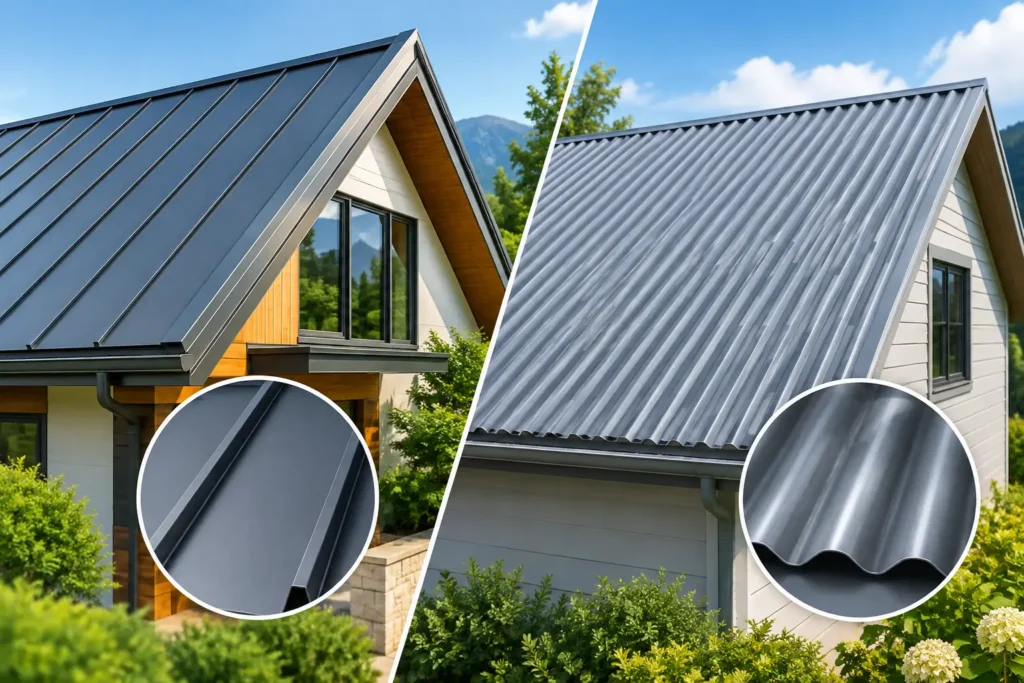
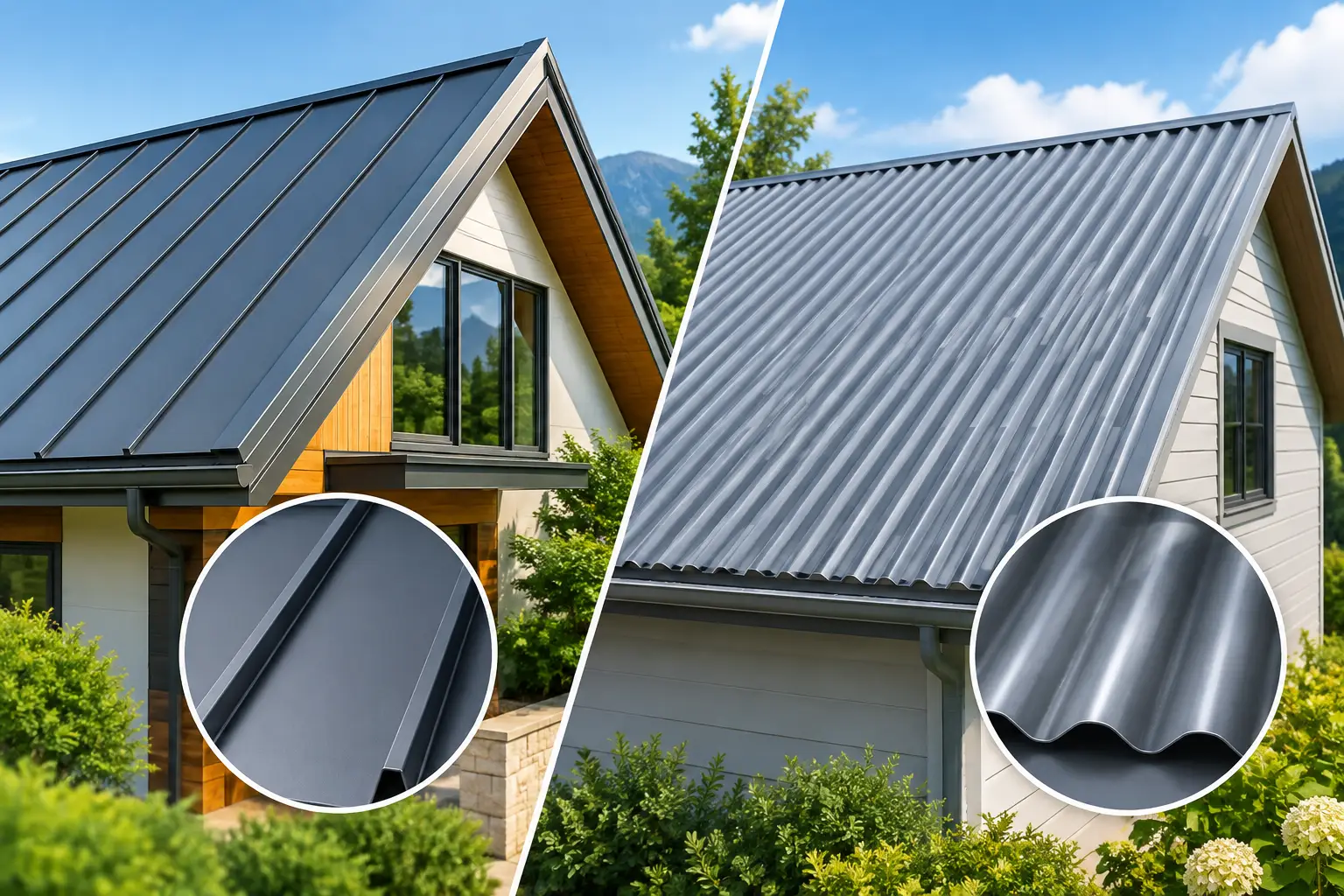
Standing seam roofing uses long metal panels that lock together at raised vertical seams. The panels are typically secured with clips or concealed fasteners beneath the seams, so there are few, if any, exposed screws through the face of the roof. The result is a clean architectural look and a system designed to allow for normal metal movement as temperatures rise and fall.
Corrugated metal is formed into repeating waves, ribs, or curves. It is commonly fastened directly through the panel with screws and sealing washers. Corrugated panels are familiar, economical, and widely available. They can be an effective roofing choice when they are properly specified and installed, but every exposed fastener becomes a future maintenance point.
That does not make standing seam automatically right for every property. A well-installed corrugated roof can serve a building well. But a low-cost corrugated installation with poor screw placement, thin material, or no attention to wind uplift can become an expensive problem after a few Miami summers and one serious storm.
How Each Roof Handles South Florida Weather
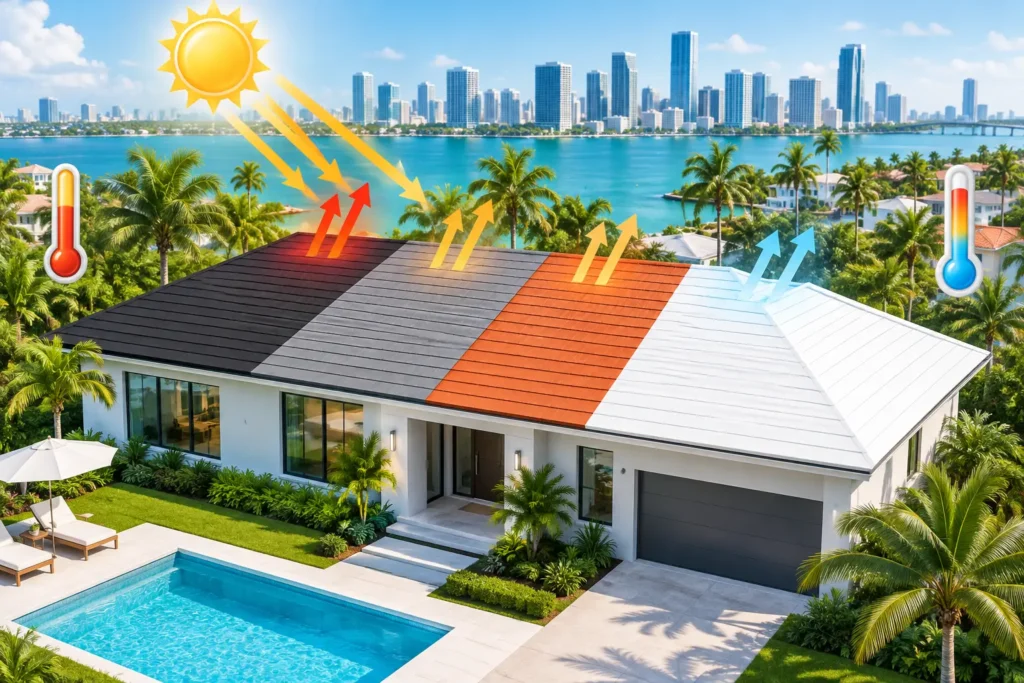
Miami roofing is not a standard climate application. Roofs here take intense UV exposure, daily heat, high humidity, driving rain, windborne debris, and, near the coast, salt-laden air. The metal panel is only one part of the system. Underlayment, flashing, fastener type, edge details, and attachment pattern matter just as much.
Wind and hurricane performance
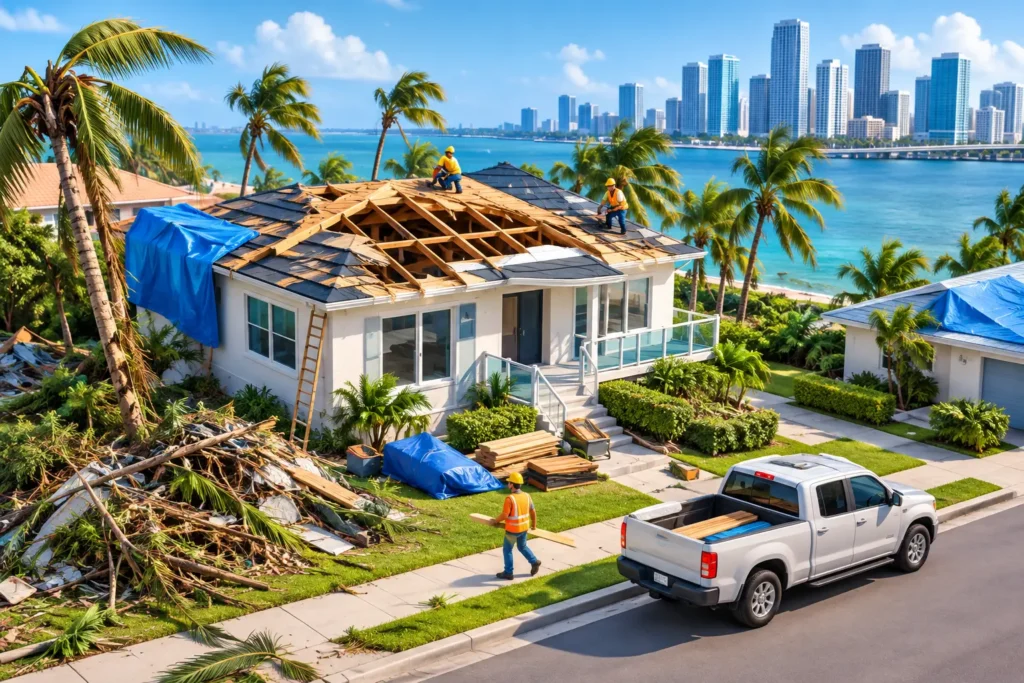
Standing seam systems can perform very well in high-wind areas because concealed clips and engineered seam connections distribute loads across the panel assembly. Some systems are specifically tested and approved for high-wind conditions. Still, the panel profile alone is not proof of hurricane performance. The roof must be installed according to an approved assembly, with the correct deck attachment, clip spacing, edge metal, and fastening schedule.
Corrugated metal can also be designed for strong wind resistance, especially on commercial and agricultural-style structures. Its performance depends heavily on panel thickness, rib profile, purlin or deck spacing, screw pattern, and perimeter fastening. A contractor cannot simply add a few extra screws and call a roof hurricane-ready. The details must match the system approval and local code requirements.
For either option, ask for clear documentation of the proposed materials and installation method. Good roofing work leaves a paper trail, not just a promise.
Salt air and corrosion
Salt is hard on metal roofs. If your property is close to Biscayne Bay, the ocean, or other saltwater exposure, material selection deserves extra attention. Galvalume steel may be suitable for many locations, but aluminum is often a stronger choice for highly corrosive coastal environments because it does not rust the way steel can when its protective coating is compromised.
Standing seam panels have an advantage here because they generally have fewer exposed penetrations through the field of the roof. Corrugated systems use more exposed screws, and those screws and washers need to be compatible with the panel material. A mismatched fastener can lead to corrosion around the screw head or premature washer failure.
The finish matters too. A quality paint system helps protect the metal and preserve its appearance under Florida sun. It will not fix poor installation or eliminate maintenance, but it is part of building a roof that lasts.
Heat, expansion, and heavy rain
Metal moves as it heats and cools. Standing seam roofs are designed to accommodate that movement through clip systems and panel design. This is especially helpful on longer roof runs, where thermal expansion is more noticeable.
Corrugated panels can also perform properly, but direct fastening restricts movement. If screws are overdriven, underdriven, installed off-center, or spaced incorrectly, the panel can deform around the fastener. Over time, that can create openings for water. Miami’s wind-driven rain has a way of finding every weak screw, poorly lapped panel, and shortcut around a flashing.
Cost: Upfront Price Versus Long-Term Maintenance
Corrugated metal usually costs less upfront than standing seam. The panels are generally less expensive, installation is often faster, and the labor is more straightforward. For a budget-conscious owner with a simple roof shape, that can be a practical reason to choose corrugated metal.
Standing seam typically costs more because the panels, clips, trim details, labor, and fabrication demand greater precision. Complex roofs with valleys, skylights, chimneys, and wall transitions add more cost. That higher initial price can make sense when a property owner wants a cleaner appearance, fewer exposed fasteners, and a system built for long-term ownership.
The mistake is comparing only the first proposal total. Corrugated roofing may require more routine attention to screws, washers, and sealants. Standing seam has fewer field fasteners, but repairs can be more specialized if panels need to be removed or if custom trim is involved. Neither system is maintenance-free.
A reliable estimate should identify the panel gauge, material type, coating, underlayment, flashing, fasteners, and wind-rated assembly. If the quote only says metal roof with one lump-sum price, there is too much room for substitution and confusion later.
Appearance and Building Fit
Standing seam is often the better fit for modern homes, higher-end residential properties, offices, and commercial buildings where clean lines matter. Its vertical seams create a more refined profile, and concealed fastening avoids the dotted pattern of visible screw heads. It can complement contemporary, coastal, and minimalist architecture particularly well.
Corrugated metal has a more traditional industrial or coastal character. On the right building, it looks intentional and practical. It is commonly chosen for sheds, workshops, covered patios, warehouses, utility structures, and simpler roof designs. It can also work on homes, but the profile should match the rest of the property rather than look like an afterthought.
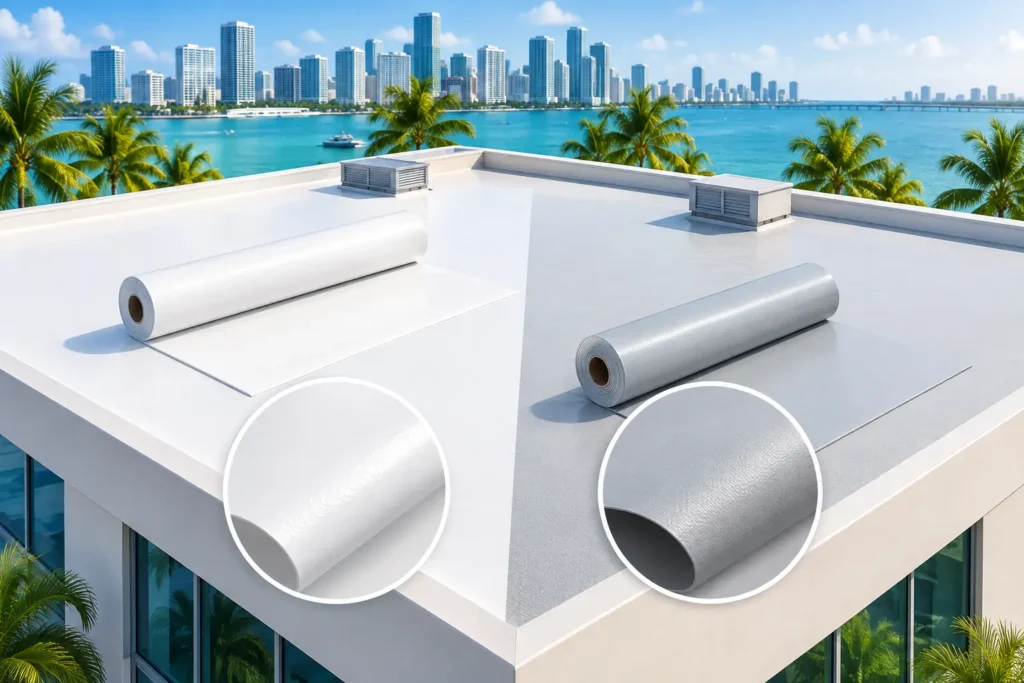
Roof slope matters as well. Low-slope metal roofing requires carefully selected panels and waterproofing details. A panel that works on a steeper shed roof may not be appropriate for a low-slope commercial roof. In some cases, a properly designed membrane roof is the better answer, even when an owner initially prefers metal.
Maintenance Expectations for Both Systems
Metal roofs need regular inspections, especially after major storms. Standing seam inspections focus on seams, clips, flashings, penetrations, edge metal, sealant transitions, and any debris that may hold moisture against the roof. The panel surface should also be checked for scratches, coating damage, and signs of corrosion.
With corrugated metal, fasteners deserve special attention. Washers can dry out or crack under UV exposure. Screws can back out as panels move. Loose or rusted fasteners, deteriorated sealant, and damaged overlaps should be addressed before they turn into interior leaks.
Property owners should also keep gutters, valleys, and roof drains clear. Water that cannot drain properly creates problems regardless of panel style. A small leak often starts at a flashing or penetration, then travels along the roof deck before it shows up on a ceiling. That is why surface patches are not enough. The source has to be identified and corrected.
Which Metal Roof Is Right for Your Property?
Choose standing seam when long-term appearance, concealed fastening, thermal movement, and reduced fastener maintenance are priorities. It is often worth the investment for homes and commercial properties expected to remain in the owner’s portfolio for years, particularly where a polished architectural finish matters.
Choose corrugated metal when the building has a straightforward design, budget is a major factor, and the owner is prepared to maintain exposed fasteners. It can be a smart, durable system for the right structure, provided the materials and attachment details are designed for South Florida conditions.
The right choice also depends on whether the project is a full replacement, a roof-over application, a new construction build, or a repair to an existing metal system. A roof inspection should look beyond the visible panels to the deck condition, drainage, insulation, flashing, and code requirements. Flash Roofing & Sheet Metal approaches metal roofing that way: find the root cause, document the condition, and recommend the system that fits the building instead of forcing a one-size-fits-all answer.
Before signing a metal roofing contract, ask to see the exact panel profile, gauge, material, fastening method, and wind-related approval information proposed for your property. Clear answers before work begins are usually the best protection against costly surprises after the next heavy rain.