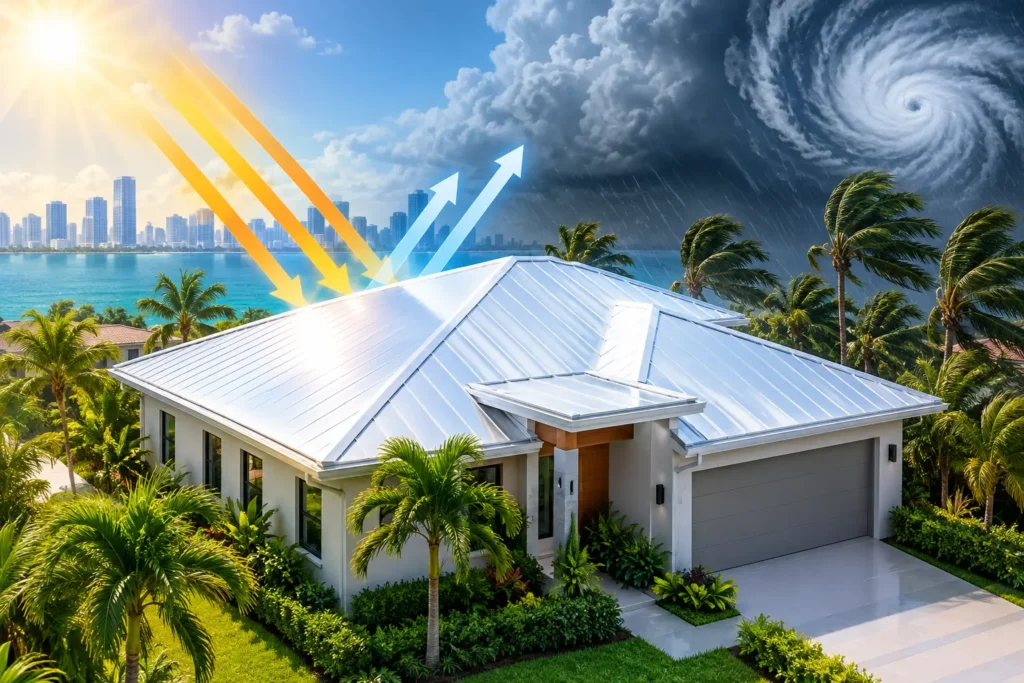
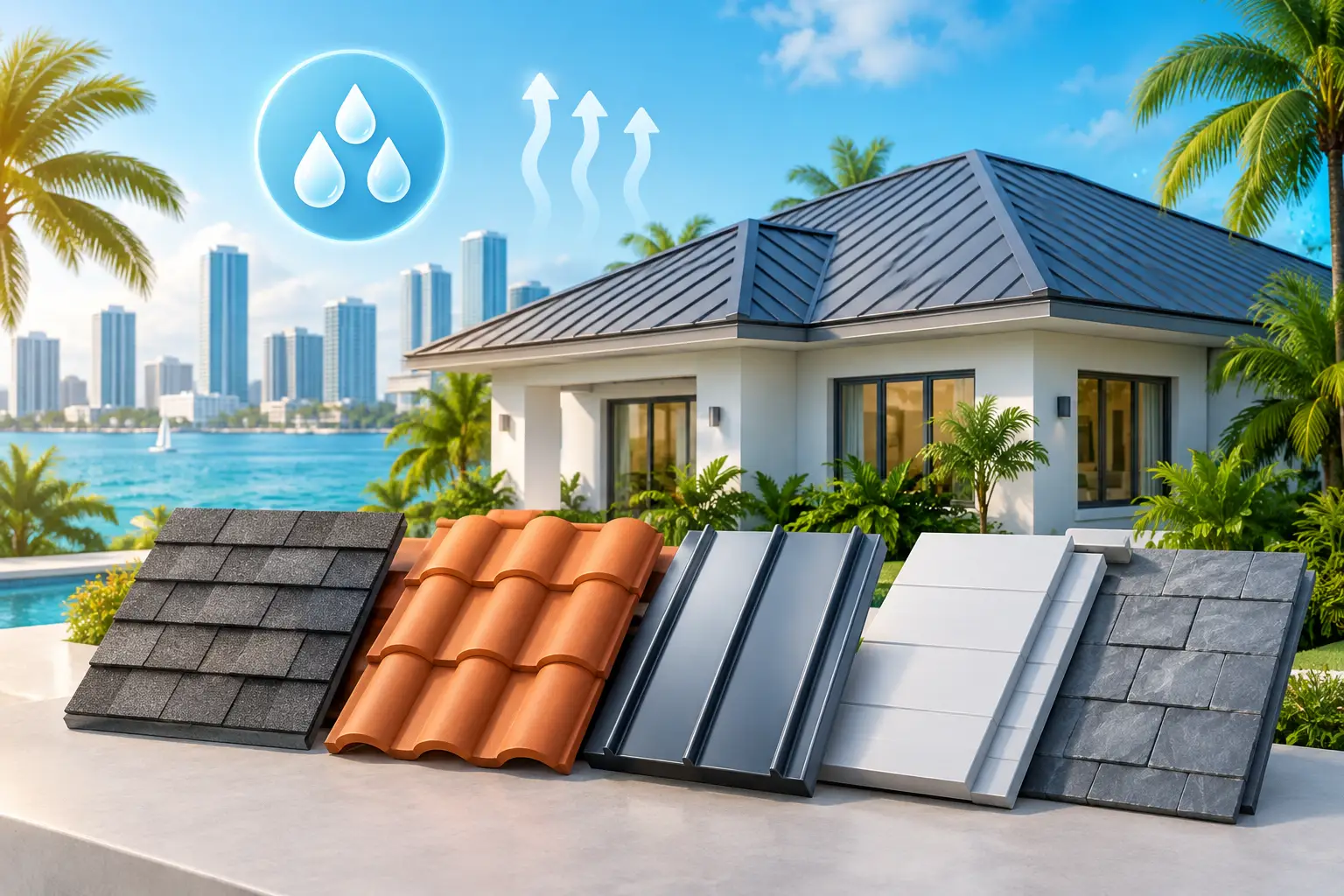
Miami roofs do not get a break. They take daily heat, sudden downpours, high humidity, salt-heavy air, and hurricane-season winds – often all in the same year. The best roofing materials for humidity are not simply the ones labeled “waterproof.” They are systems that manage moisture, resist corrosion and sun damage, and stay properly secured when severe weather arrives.
For homeowners, property managers, and commercial owners in Miami-Dade, the right choice depends on roof slope, building design, budget, drainage, and distance from the coast. A material that performs well in a dry climate can fail early here if the underlayment, flashing, fasteners, or installation details are wrong. Do it once, do it right means looking at the whole roofing system, not just the surface material.
What Humidity Does to a Miami Roof
Humidity by itself does not punch a hole through a roof. The real trouble starts when humid air, rainwater, condensation, trapped moisture, and intense UV exposure work together. Moisture can get below shingles or tiles, feed algae growth, corrode metal components, weaken roof decking, and damage insulation in commercial buildings.
Miami’s salt air adds another layer of risk. Near Biscayne Bay or the coastline, metal panels, flashings, screws, and rooftop equipment can corrode faster than expected. On flat roofs, heavy rain exposes every drainage problem. Water that sits after a storm can shorten the service life of nearly any membrane.
That is why material selection needs to start with an honest inspection of the roof’s condition. If the deck is soft, the drainage is poor, or the flashing has failed, covering the problem with a new surface will not produce a long-lasting result.
Best Roofing Materials for Humidity and Salt Air
Aluminum metal roofing
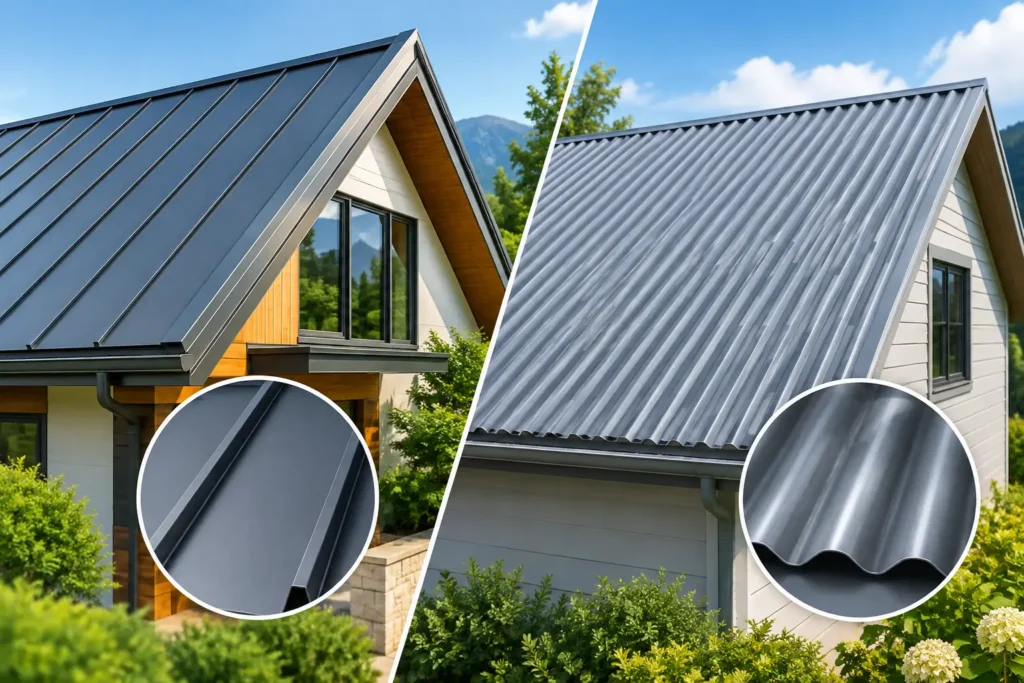
Aluminum is one of the strongest choices for coastal South Florida homes because it does not rust the way steel can. It is lightweight, sheds rain quickly on sloped roofs, reflects a significant amount of solar heat when properly finished, and holds up well in salty environments.
The trade-off is cost. Aluminum typically costs more than asphalt shingles, and the quality of the installation matters just as much as the panel itself. Panels must be engineered and attached for local wind requirements. Fasteners, clips, sealants, penetrations, and flashings all need compatible corrosion-resistant materials. One cheap component can create a weak point in an otherwise excellent roof.
For many Miami homeowners, aluminum is a smart long-term investment when the home is close to the water, has a steep enough roof slope, and needs a material built for heat, moisture, and salt exposure.
Concrete or clay tile roofing
Tile is a familiar sight across Miami for good reason. Concrete and clay tile do not rot, and they can perform very well under relentless sun and humidity. Tile also provides a classic South Florida look and can offer a long service life when the roof structure and installation are properly designed.
But tile itself is only part of the system. Water can pass beneath individual tiles during wind-driven rain, so the underlayment below is critical. A failing underlayment can cause leaks even when the tiles above look fine. Cracked tiles, loose caps, deteriorated flashing, and improperly installed attachment points can also create trouble during storms.
Concrete tile is generally more budget-friendly than clay, while clay may offer better color retention and a more premium appearance. Both are heavy materials. Before installation, the roof framing must be evaluated to confirm it can support the load. In hurricane-prone Miami-Dade, correct fastening and code-compliant installation are non-negotiable.
PVC membrane roofing for flat and low-slope roofs
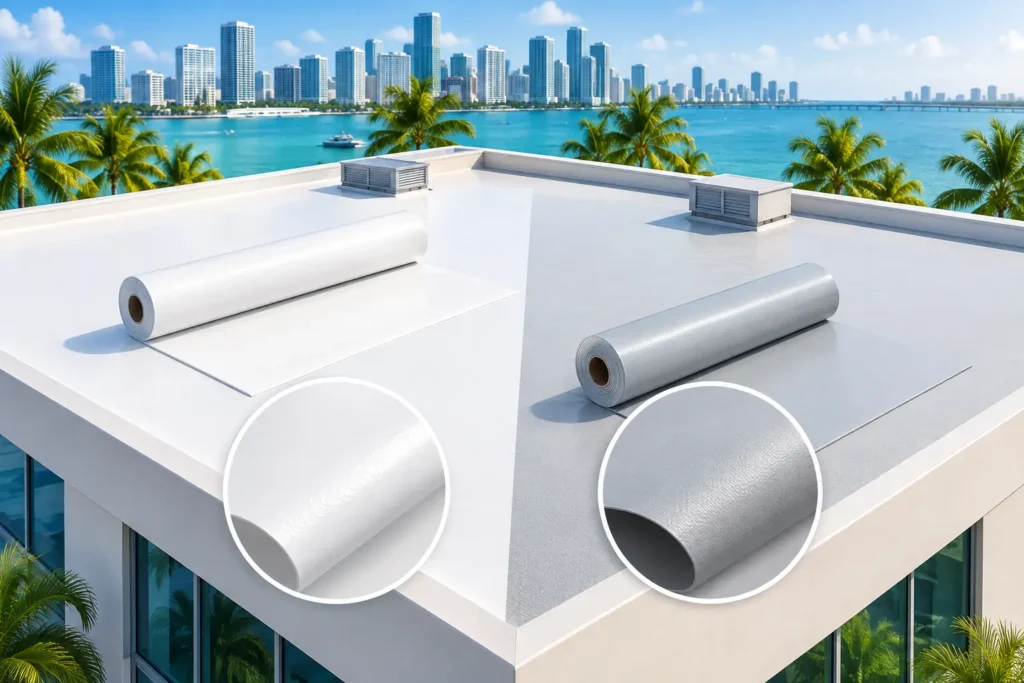
For commercial buildings and homes with flat or low-slope sections, PVC membrane is often one of the best options for hot, humid conditions. PVC is a single-ply roofing membrane with heat-welded seams. When installed correctly, those welded seams create a strong, continuous barrier against water intrusion.
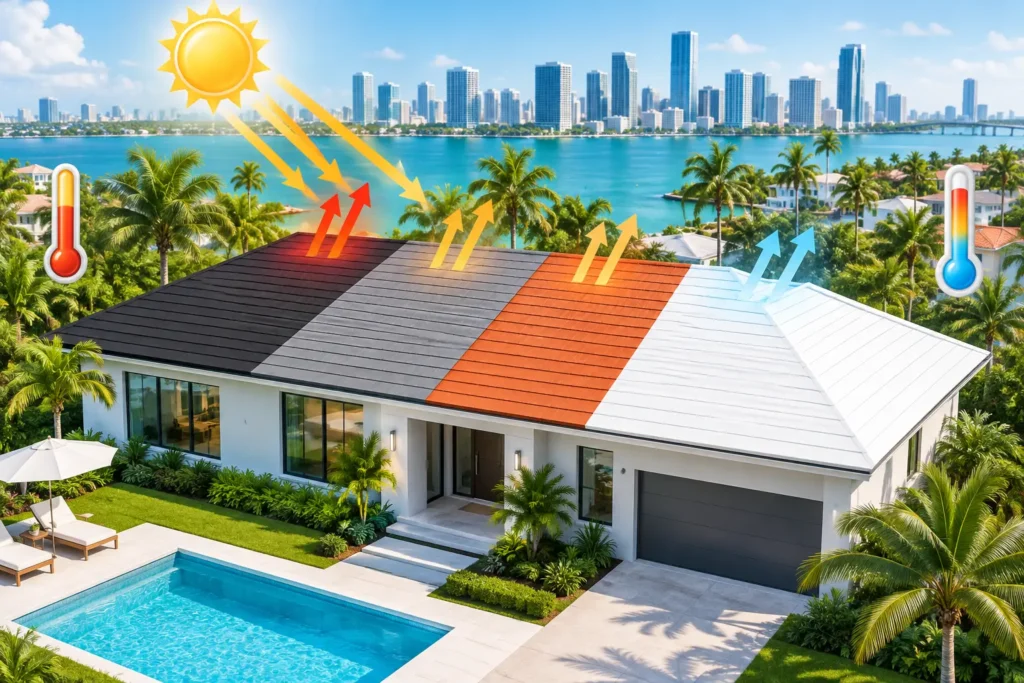
PVC is especially useful where ponding water, grease exhaust, chemical exposure, or frequent rooftop traffic may be concerns. Its reflective surface can also help reduce heat absorption, which matters on large Miami commercial roofs that bake in the afternoon sun.
No membrane can overcome poor drainage forever. If water repeatedly sits on a roof, the solution may include correcting slopes, adding drains or scuppers, or installing tapered insulation. The membrane choice matters, but water management matters more.
TPO membrane roofing
TPO is another popular single-ply membrane for commercial and low-slope residential roofs. It is commonly selected for its bright, heat-reflective surface and its value compared with some other membrane systems. A properly installed TPO roof can perform well in Miami’s heat and rain.
The key phrase is properly installed. TPO seams are heat-welded, and workmanship at the seams, penetrations, perimeter edges, and drains determines whether the roof stays watertight. The membrane also needs the right thickness and attachment method for the building and local wind zone.
TPO can be a practical choice for owners who want an efficient, modern roof system without automatically choosing the highest-cost option. It is not a shortcut material. The roof still needs sound insulation, drainage, edge metal, and detailed flashing work.
Modified bitumen roofing
Modified bitumen remains a reliable option for many flat and low-slope roofs in South Florida. This asphalt-based system is installed in multiple layers, which provides redundancy. If one surface is damaged, the layers below can offer additional protection while repairs are made.
It is often a good fit for roofs with many penetrations, equipment curbs, or complicated details. Modified bitumen can also be repaired effectively when the issue is found early. Reflective coatings may be used on compatible systems to reduce surface temperatures and provide added UV protection.
Its main limitation is that it is not a one-size-fits-all answer. Material quality, installation method, ventilation, drainage, and maintenance all affect performance. A low bid that skips proper flashing or uses poor-quality details is not a bargain when leaks return after the first heavy season.
Architectural asphalt shingles
Architectural shingles can work in humid climates, especially for homeowners looking for a lower initial cost than tile or metal. Today’s better shingle products may include algae-resistant granules and higher wind ratings, but the entire assembly must be chosen for Florida conditions.
Compared with aluminum or tile, shingles are generally more vulnerable to moisture-related staining, algae growth, granule loss, and wind damage over time. In humid, shaded areas, black streaks and organic growth may appear sooner. Proper attic ventilation, high-quality underlayment, adequate flashing, and regular maintenance help, but they do not make shingles equal to metal or tile in every setting.
Shingles can make sense for a budget-conscious roof replacement, particularly when the roof design is straightforward and the owner understands the expected maintenance and service-life trade-offs. They are less appealing for buildings facing heavy coastal exposure or owners seeking the longest possible lifespan.
The Hidden Materials That Matter Just as Much
A roof is never only its visible covering. In Miami, underlayment, flashing, fasteners, sealants, edge metal, ventilation, and drainage often determine whether a roof succeeds or fails.
For tile and shingle roofs, the underlayment is a critical secondary water barrier. For metal roofs, corrosion-resistant fasteners and properly detailed flashings protect vulnerable connection points. For flat roofs, drains, scuppers, overflow paths, and tapered insulation keep water from staying where it does not belong.
This is where superficial repairs create expensive problems. Coating over a damaged membrane, replacing a few tiles without checking the underlayment, or sealing around a leak without tracing the water path may stop the symptom for a while. It does not address the root cause.
How to Choose the Right Material for Your Property
Start with the roof’s slope. Sloped residential roofs are often well suited to aluminum, tile, or architectural shingles. Flat and low-slope roofs generally need a membrane system such as PVC, TPO, or modified bitumen.
Next, consider location. A property near the coast needs more attention to salt corrosion than a property farther inland. Buildings surrounded by trees may face more algae and debris buildup. Commercial roofs with HVAC units, vents, and regular service traffic need a membrane and detail work designed for those conditions.
Then look at ownership plans. If you expect to stay in the property for decades, a higher upfront investment in metal or tile may be worthwhile. If the building needs a cost-conscious roof with dependable short- to mid-term performance, a properly specified shingle or membrane system may be the better fit. The honest answer depends on the building, not on which material happens to be easiest to sell.
A qualified local roofer should explain the options, show you what is happening on your existing roof, and provide a clear scope of work. At Flash Roofing & Sheet Metal, photo documentation and straightforward recommendations help property owners see the difference between a real repair plan and a temporary patch.
Before Miami’s next stretch of heavy rain exposes a weak seam, clogged drain, cracked tile, or corroded flashing, have the roof inspected. The right material performs best when it is matched with sound drainage, proper installation, and regular attention to the details that humidity works hardest to destroy.