
A Miami roof does not fail because a storm is simply “too strong.” In many cases, wind finds one weak connection, lifts an edge, opens a path beneath the covering, and turns a small defect into major damage. This guide to roof wind mitigation explains what helps keep that chain reaction from starting – and what property owners should look for before hurricane season puts the roof to the test.
Wind mitigation is not one product or one quick repair. It is the combination of roof design, attachment methods, materials, drainage, and maintenance that helps a building stand up to high winds. For Miami-Dade homes and commercial properties, the details matter. Heat, intense UV exposure, wind-driven rain, salt air, and long hurricane seasons all work against a roof at the same time.
What Roof Wind Mitigation Actually Means
Roof wind mitigation is the process of strengthening the roof system and documenting the features that reduce wind damage. It focuses on how the roof is connected to the building, how the roof covering is secured, and how vulnerable areas such as edges, vents, and openings are protected.
A roof covering can look fine from the street and still have weak points underneath. Loose fasteners, deteriorated decking, poorly sealed flashing, corroded metal components, or aging adhesive can all reduce resistance when wind pressure builds. The goal is not to make promises that any roof can survive every possible storm. The goal is to identify preventable failures and correct them before they become expensive losses.
For many homeowners, a documented wind mitigation inspection may also be useful when discussing available insurance discounts. Eligibility and savings depend on the insurer, the building, and the features confirmed in the report. A qualified inspector can document what exists. A roofer can identify what needs to be repaired or upgraded.
Why Miami Roofs Need a Different Standard
South Florida roofs live under conditions that punish shortcuts. Constant sun dries out sealants and accelerates wear. Humidity can expose small leaks before anyone sees staining indoors. Salt-laden air can corrode exposed fasteners, flashing, and metal accessories, especially near the coast.
Then hurricane winds add uplift. As wind moves over a roof, it can create suction that pulls upward on shingles, tiles, metal panels, or membrane edges. Wind-driven rain follows the opening. Once water reaches the underlayment, deck, or insulation, the repair can become much larger than the original weak spot.
This is why a low-price patch is often the wrong answer. If the underlying issue is a failing edge detail, cracked tile attachment, soft decking, or outdated fastening pattern, covering the symptom will not provide dependable protection. Do it once, do it right means correcting the cause.
The Roof Areas Most Likely to Fail First
Roof-to-wall connections
The roof must be securely tied to the structure below it. Metal clips, straps, and other connectors help transfer wind forces from the roof framing into the walls. The type, spacing, and installation quality of these connections can make a meaningful difference in wind performance.
On an older property, the connections may not meet current expectations or may be difficult to verify without an inspection. Access conditions matter. Sometimes an attic review provides clear answers; in other buildings, documentation or limited investigative work may be necessary.
Decking and fastening
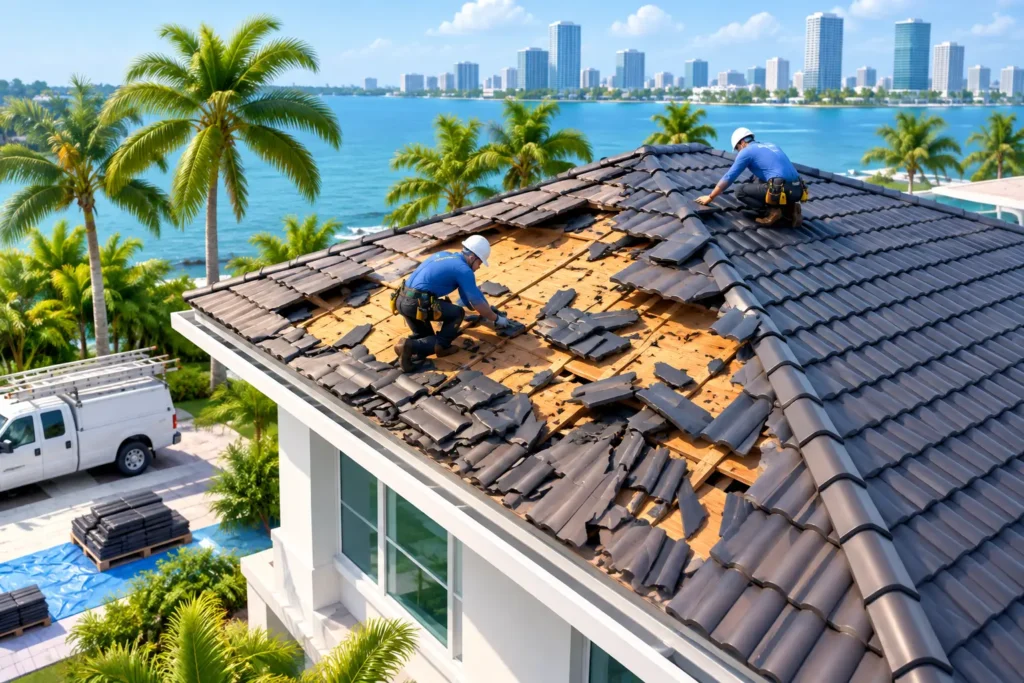
Roof decking is the wood or structural layer beneath the roofing material. If it is loose, damaged, or poorly nailed, high winds can lift sections of the roof from below. Proper deck attachment is especially important during a replacement, when the roof is open and the condition of the substrate can be verified.
A contractor should not ignore soft or deteriorated decking just to keep a quote low. Replacing compromised sections and using the appropriate fastening pattern helps protect the investment in the new roof system above it.
Roof edges, flashing, and transitions
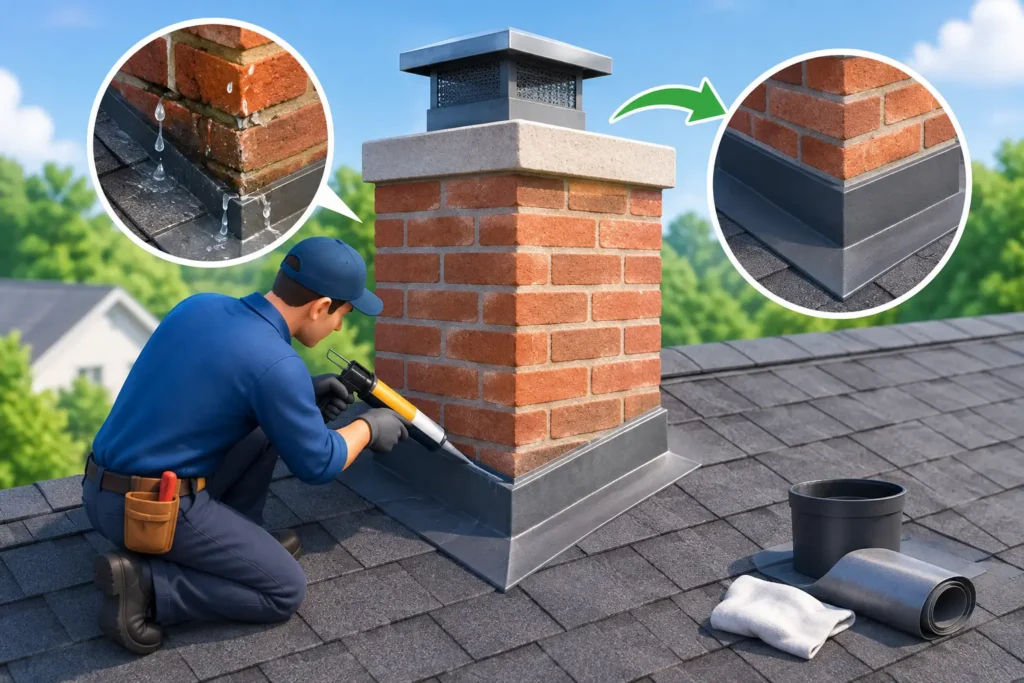
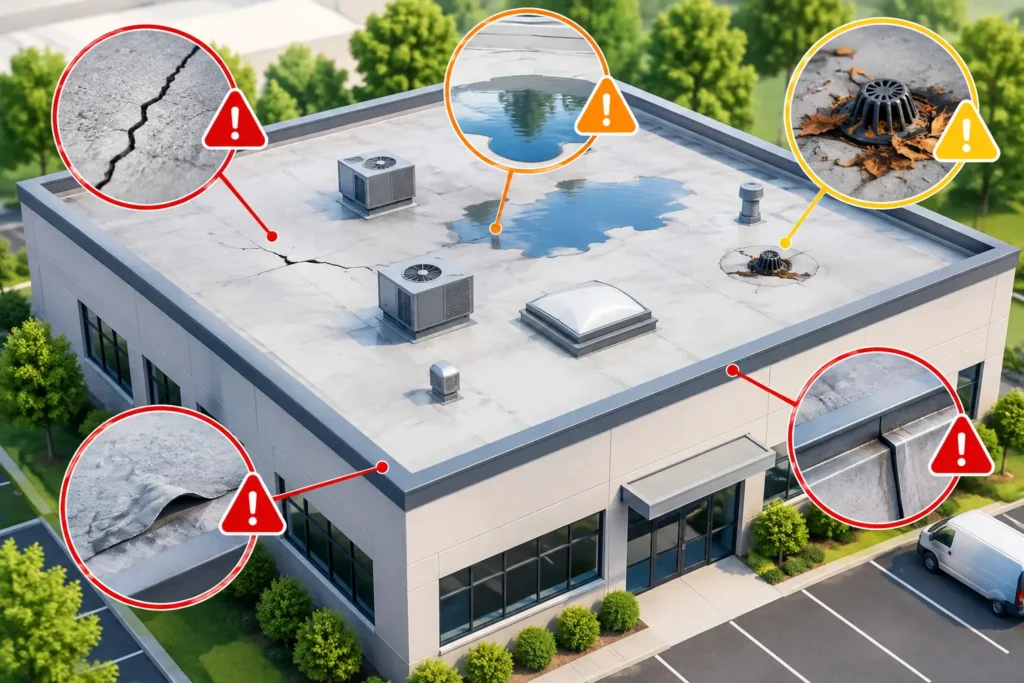
Roof edges take some of the hardest wind pressure. On flat and low-slope commercial roofs, perimeter metal and membrane edge details are critical. On tile, shingle, and metal roofs, flashing around walls, valleys, chimneys, skylights, and penetrations must be properly secured and sealed.
These details are not cosmetic. An edge that begins to peel or flashing that separates can allow wind to get underneath the system. Once that happens, uplift can spread quickly across a larger area.
Roof coverings and their attachment
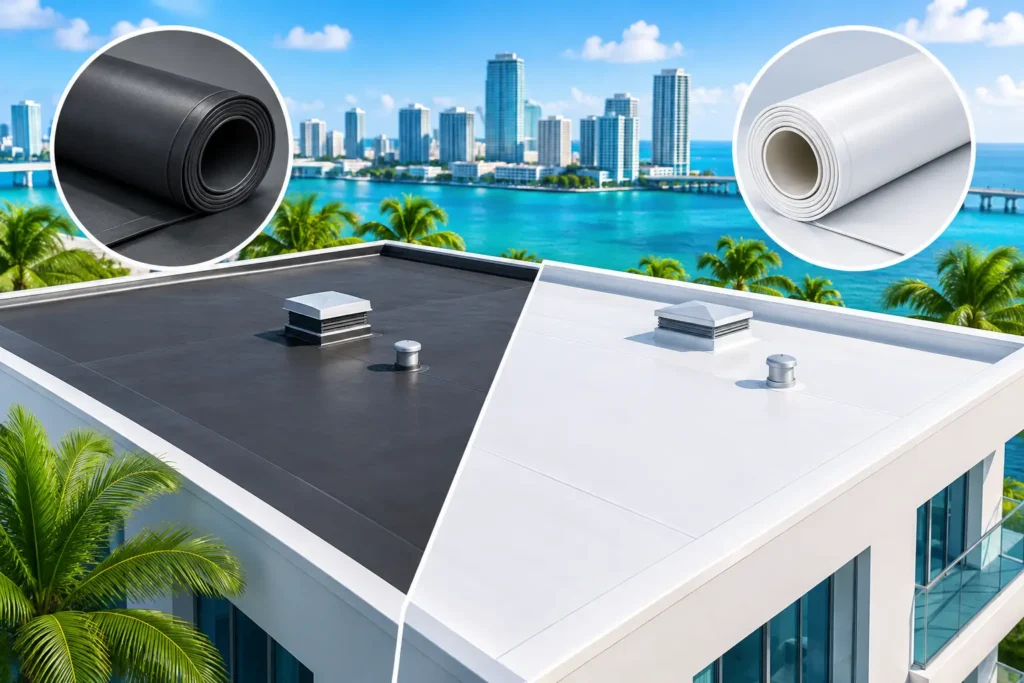
Every roofing material has its own wind-resistance requirements. Shingles depend on correct nailing, starter strips, sealant adhesion, and intact edges. Tile roofs need proper mechanical attachment and secure hip, ridge, and perimeter details. Metal panels require the right fasteners, clip systems, and flashing. Flat roofs rely on the correct attachment of membrane, insulation, seams, and edge metal.
There is no one best material for every Miami property. A system that works well on a coastal home may not be the right fit for a large commercial building with heavy rooftop equipment. The best choice depends on roof slope, structure, drainage, budget, code requirements, maintenance plans, and exposure to wind and salt.
A Practical Guide to Roof Wind Mitigation Upgrades
Start with an honest inspection, not a sales pitch. A good roof evaluation looks beyond visible missing material. It checks for loose perimeter components, damaged flashing, cracked or displaced tiles, open seams, deteriorated sealants, corrosion, ponding water on flat roofs, and evidence of previous repairs that may not be holding.
If the roof is generally sound, targeted repairs may be the right move. Refastening loose components, replacing failed flashing, repairing membrane seams, securing edge metal, and addressing damaged roof areas can improve performance without requiring a full replacement.
If the roof is near the end of its service life, repeated repairs can become wasted money. A replacement creates the best opportunity to address deck condition, improve attachment details, upgrade underlayment, and install a roofing system designed for current code and local conditions. That is a larger investment, but it may offer more reliable protection than patching an aging system every season.
For commercial properties, the evaluation should also include drains, scuppers, rooftop curbs, HVAC penetrations, and expansion joints. Wind mitigation and water management work together. A roof that resists uplift but holds standing water will still age faster and develop avoidable problems.
Do Not Overlook Openings and Maintenance
The roof is only part of the building envelope. Hurricane-rated windows, doors, shutters, and garage doors help reduce internal pressure if debris strikes the building. If an opening fails, pressure can build inside and increase the force pushing upward on the roof.
Maintenance also matters more than many owners realize. A clean roof surface and clear drainage path make it easier to spot problems. Tree limbs should be trimmed back from the roof. Loose satellite mounts, aging vents, unsecured equipment, and damaged gutters should be addressed before a storm warning is issued.
Avoid waiting until a hurricane is approaching. At that point, material availability, labor schedules, and safe working conditions can all become issues. Wind mitigation works best when it is planned during calm weather, with enough time to inspect, repair, and document the work correctly.
Questions to Ask Before Hiring a Roofer
Ask whether the contractor is licensed and insured, whether the scope identifies the root cause of the problem, and whether photos will be provided before and after the work. You should also ask how the proposed repair or replacement addresses wind uplift, flashing, fastening, and local code requirements.
Be cautious with quotes that describe only a surface-level fix without explaining what is happening beneath the roofing material. The cheapest number is not always the lowest cost over time. A repair that fails during the next major storm can cost far more than doing the detail correctly the first time.
Flash Roofing & Sheet Metal approaches Miami roofing with that standard: clear findings, photo documentation, honest pricing, and work built for the conditions local roofs actually face.
A wind-ready roof is not built in the week before a storm. It is built through sound materials, secure connections, proper drainage, and repairs that solve the real problem. If you are unsure how your roof would perform, a professional inspection is the practical place to start.