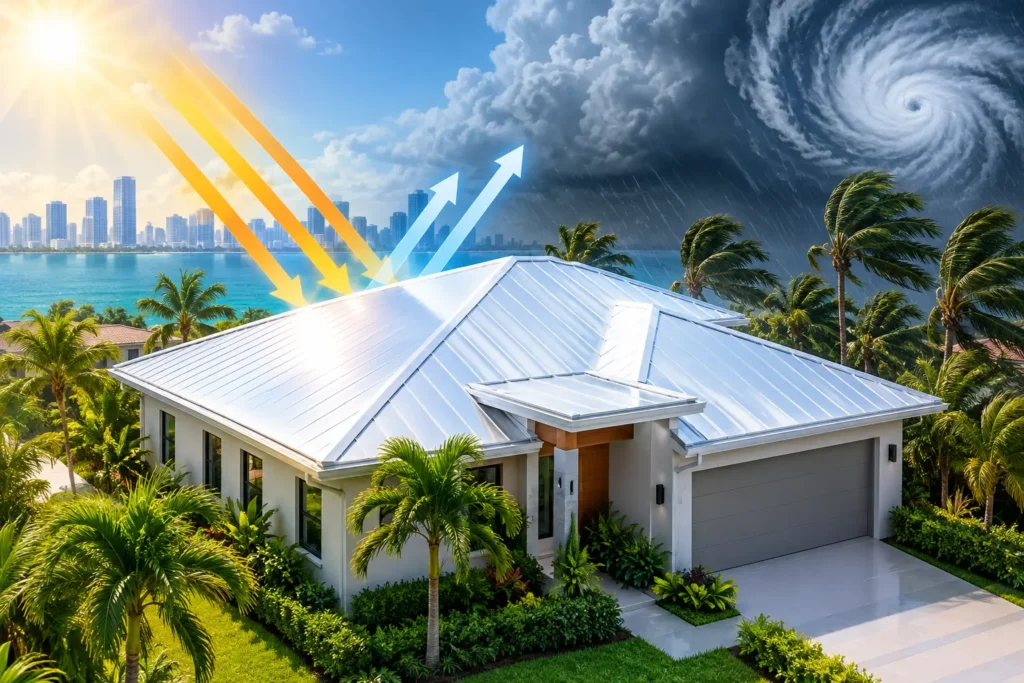
A roof can look fine from the street while salt air is slowly attacking the parts that keep it watertight. That is how salt air affects roofs across Miami and Miami-Dade: it settles on exposed materials, holds moisture against them, and speeds up corrosion long before a major leak appears. For homes and commercial buildings near the coast, salt exposure is not an occasional weather issue. It is part of the environment your roof faces every day.
South Florida roofs already work hard under intense UV rays, heavy rain, humidity, and hurricane-force winds. Salt air adds another layer of stress. The right response is not panic or a cosmetic patch. It is choosing compatible materials, inspecting the vulnerable areas, and fixing small problems before water gets into the structure.
How Salt Air Affects Roofs in Miami
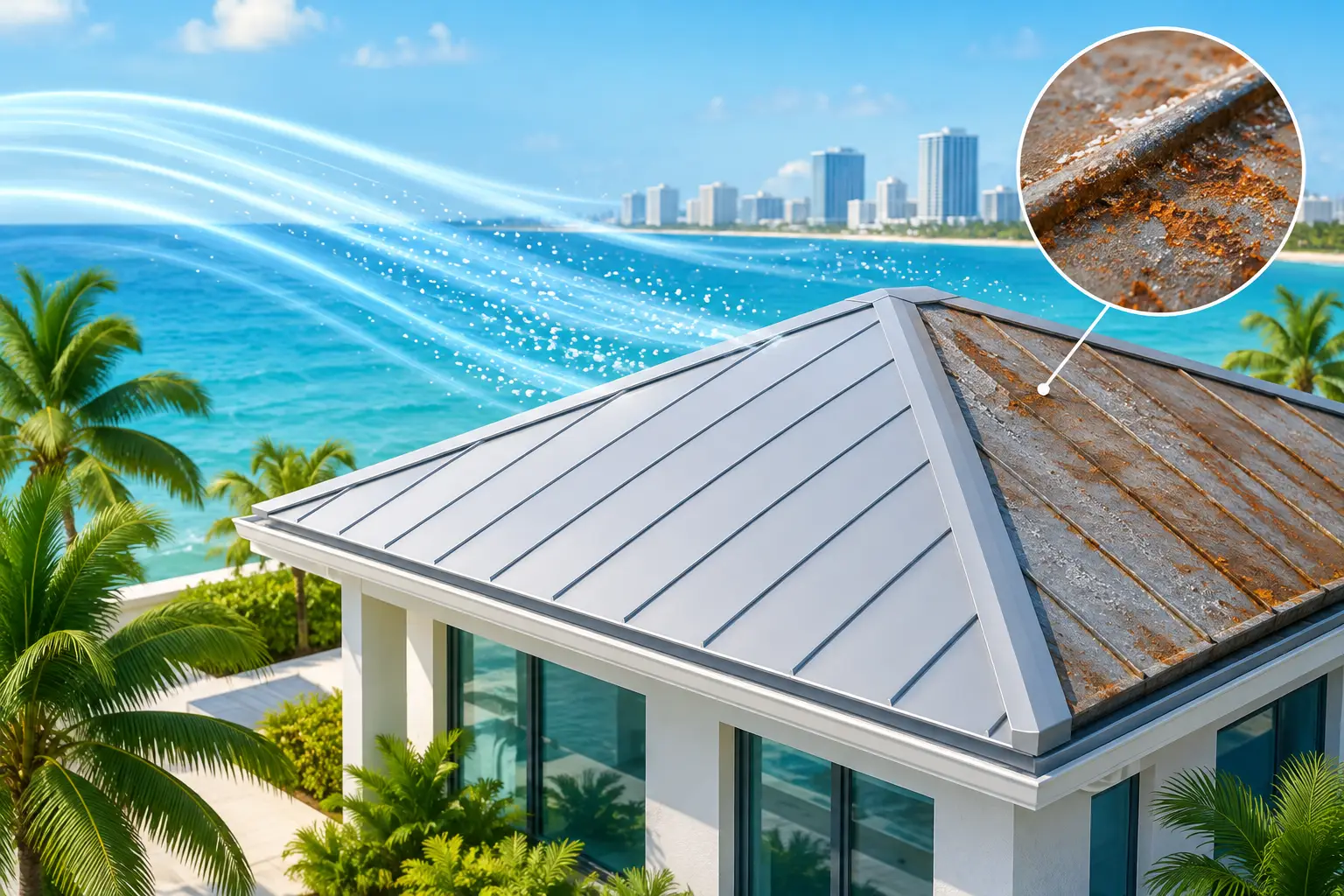
Salt air carries fine particles inland from the ocean. Those particles land on roofing surfaces, metal flashings, fasteners, vents, gutters, and rooftop equipment. When humidity, rain, or morning dew adds moisture, the salt creates conditions that accelerate corrosion.
Metal is usually the first concern, but salt can affect much more than a standing-seam metal roof. Corroded screws can loosen panels. Rusted flashing can separate from a wall or chimney. Deteriorated edge metal can allow wind-driven rain beneath the roof covering. On a flat commercial roof, corroding drains, scuppers, curbs, and equipment supports can create water-management problems that shorten the life of the membrane.
The closer a property is to Biscayne Bay or the Atlantic, the heavier the exposure tends to be. Still, salt air can travel well beyond beachfront neighborhoods, especially during windy conditions. A building farther inland is not automatically safe from salt-related wear. Its roof may simply show damage more slowly.
Corrosion Often Starts at the Smallest Parts
A roof system is only as dependable as its connections. Fasteners, clips, flashing, sealant joints, pipe boots, and edge details may be small, but they are where many salt-air failures begin.
Take a metal roof as an example. The panels may still have years of useful life, while screws at the laps or ridge have started to corrode. As those fasteners weaken, their washers can crack or lose compression. Water then has a path inside at dozens of small points. Replacing a few failed screws early is far less expensive than waiting for widespread leaks, wet insulation, or rusted decking.
The same principle applies to tile and shingle roofs. Tile itself does not rust, but the underlayment, flashings, nails, and valley metal beneath it can deteriorate. A missing tile gets attention. Rusted flashing hidden at a wall transition often does not, until staining appears inside the building.
Salt, Moisture, and Heat Work Together
Salt does not damage every roofing material in the same way, but it makes Miami’s existing weather conditions harder on all of them. Salt attracts and retains moisture. That extra moisture keeps metal wet longer and can accelerate breakdown at seams, penetrations, and coated surfaces.
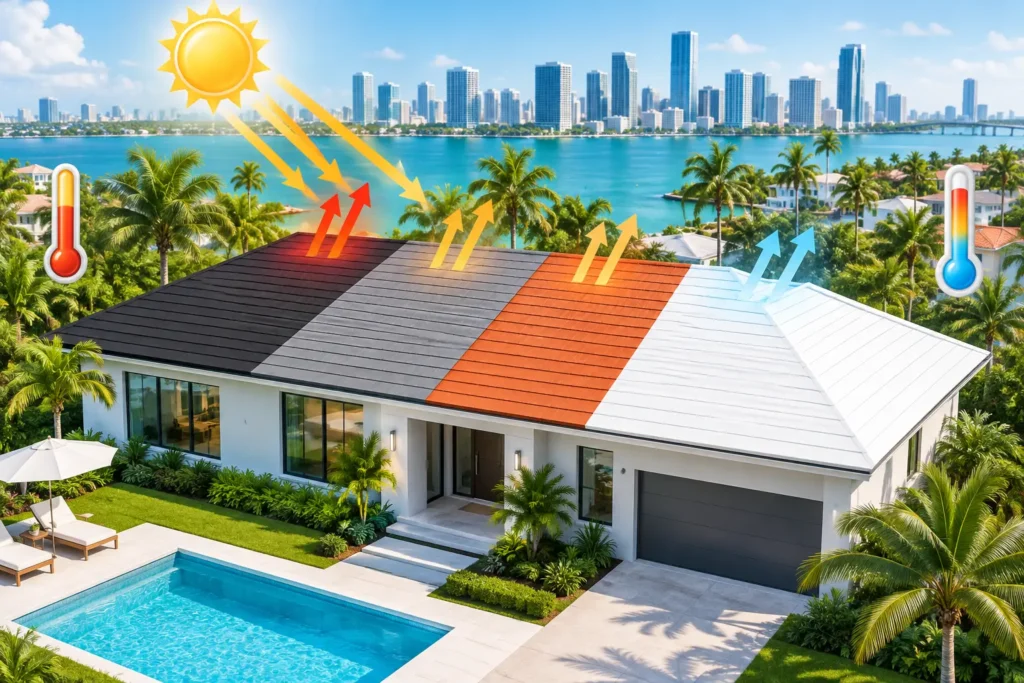
Heat adds another challenge. Roof materials expand during the day and cool at night. Over time, this movement can stress sealants and joints. If salt residue is present around a joint that is already aging, corrosion and separation can move faster. Heavy rain then tests every weak detail at once.
That is why a roof can seem to fail suddenly after a storm when the real problem has been building for months or years. The storm may be the moment water enters, but neglected corrosion, failed sealant, or loose flashing is often the root cause.
Which Roofs Need the Closest Attention?
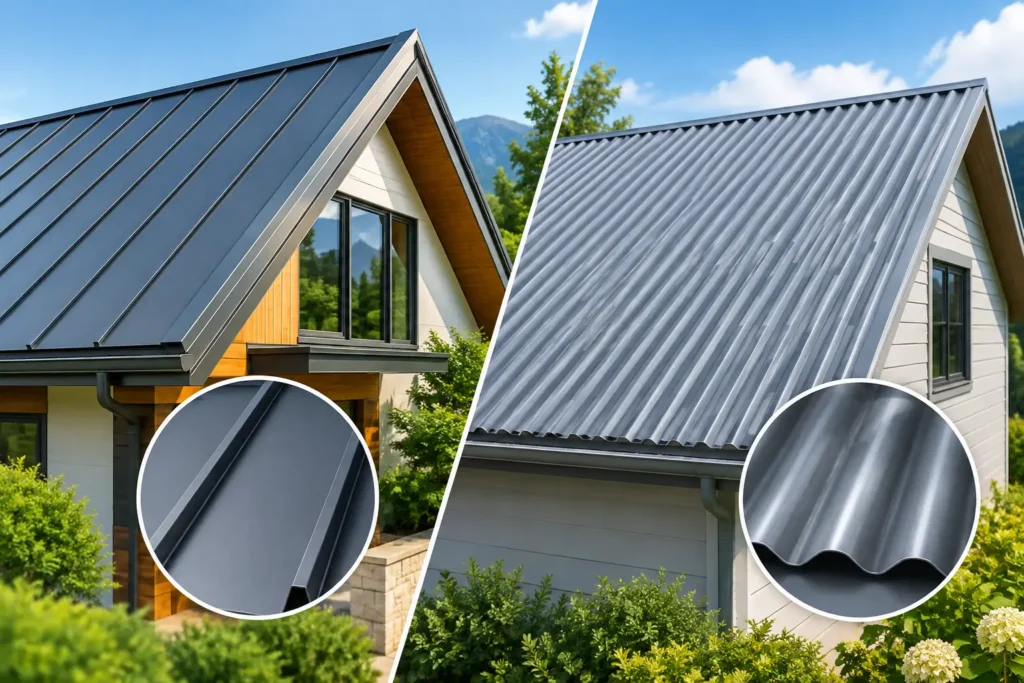
Any roof in coastal South Florida deserves regular inspection, but some systems need extra attention. Metal roofs and steel components are obvious candidates because corrosion can spread if protective coatings are damaged. Aluminum performs well in many coastal applications, but it is not maintenance-free and can still develop issues where it contacts incompatible metals or where finishes wear down.
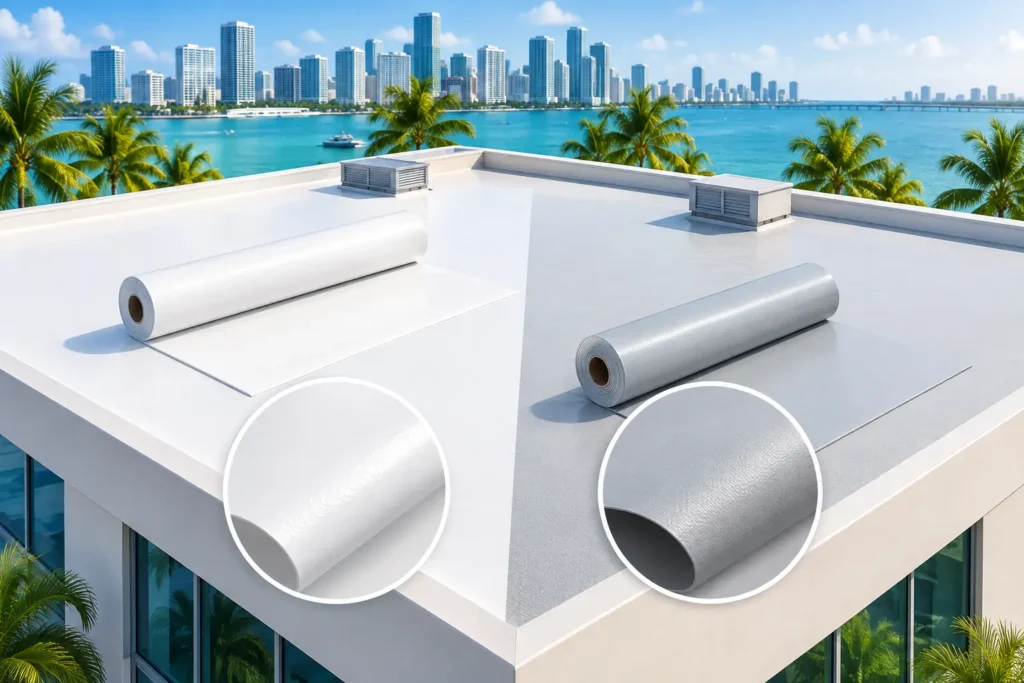
Flat and low-slope commercial roofs also need a careful eye. The membrane may be in good condition while metal edge systems, drain assemblies, rooftop HVAC curbs, and pipe supports are corroding. Ponding water makes the issue worse because salt and moisture remain in contact with those components longer.
Tile roofs need inspection around valleys, flashings, vents, solar attachments, and areas where tiles have shifted. Shingle roofs need the same attention at flashing and penetrations, along with checks for granule loss and aging sealant. The roof covering matters, but the details around it matter just as much.
Warning Signs Homeowners and Property Managers Can See
You do not need to walk on the roof to spot every problem. From the ground, look for brown streaks on fascia or exterior walls, rust around vents and roof edges, loose gutters, staining near soffits, or metal pieces that look discolored or uneven. Inside, ceiling stains, musty odors, peeling paint, and damp spots near exterior walls deserve prompt attention.
On commercial properties, watch for standing water after rain, rust below rooftop equipment, loose metal coping, and recurring leaks in the same area. A recurring leak is a red flag. Reapplying sealant without addressing the corroded flashing, failed fastener, blocked drain, or damaged substrate underneath is a short-lived repair.
Some damage cannot be confirmed from the ground. That is where a professional roof inspection earns its value. A thorough inspection should identify the condition of flashings, fasteners, coatings, penetrations, drainage components, and the roof field. Photos should show what is wrong and why the recommended repair makes sense. No mystery fees and no vague claims that you need a replacement before the evidence supports it.
Maintenance That Slows Salt-Air Damage
There is no way to remove salt from Miami’s climate, but regular maintenance can slow the damage and protect the roof’s service life. The best schedule depends on the roof type, age, distance from the coast, nearby trees, and whether the property has rooftop equipment. For many properties, an inspection before hurricane season and another after major storms is a practical starting point.
A maintenance plan may include cleaning accumulated debris, checking drains and gutters, examining exposed metal, replacing compromised fasteners, resealing penetrations where appropriate, and repairing damaged coatings. Cleaning matters because debris traps moisture against roof surfaces. However, aggressive pressure washing or the wrong cleaning products can damage coatings, dislodge tiles, or force water under the roof covering. The method needs to fit the roof system.
Protective coatings can help in the right application, especially on certain metal and low-slope roofs. But a coating is not a cure for active rust, loose seams, wet insulation, or failed flashing. The surface must be properly prepared, and the underlying defects must be repaired first. Do it once, do it right.
Material Choices Matter for Coastal Roof Work
When repairing or replacing a roof near the water, material compatibility matters. Using the wrong fastener with the wrong metal can create galvanic corrosion, where one metal deteriorates faster because of contact with another. This can happen at screws, brackets, flashing transitions, gutters, and rooftop equipment connections.
A good coastal roofing plan considers more than the visible roof surface. It accounts for fasteners, underlayment, flashing, edge metal, sealants, drainage, wind resistance, and the condition of the deck below. Lower-cost materials may reduce the upfront price, but they can create repeat repair costs when they cannot stand up to salt, heat, and moisture.
That does not mean every Miami roof needs the most expensive system available. A well-installed shingle, tile, membrane, or metal roof can perform well when it is matched to the building and maintained correctly. The honest answer depends on the property, its exposure, and the current condition of the roof.
When Repair Is Enough and When It Is Not
Localized corrosion does not always mean full replacement. If the roof field is sound and the damage is limited to fasteners, flashing, a vent, or an edge detail, a targeted repair may be the right call. The key is making sure the repair addresses the source of water entry instead of hiding it.
Replacement becomes more likely when corrosion is widespread, leaks are recurring in multiple areas, decking or insulation has been compromised, or the existing system is near the end of its expected life. For commercial roofs, moisture in the insulation can be a major factor. For residential roofs, extensive underlayment failure beneath tile or widespread fastener deterioration can change the scope quickly.
Flash Roofing & Sheet Metal approaches coastal roofing with the conditions Miami buildings actually face, not a generic repair playbook. Clear photos, a straightforward explanation, and an honest quote give property owners the information they need to make a sound decision.
If you see rust, staining, loose metal, or a leak that keeps returning, do not wait for the next heavy storm to give you the answer. A timely inspection can turn a small coastal maintenance issue into a manageable repair instead of an expensive interior damage claim.