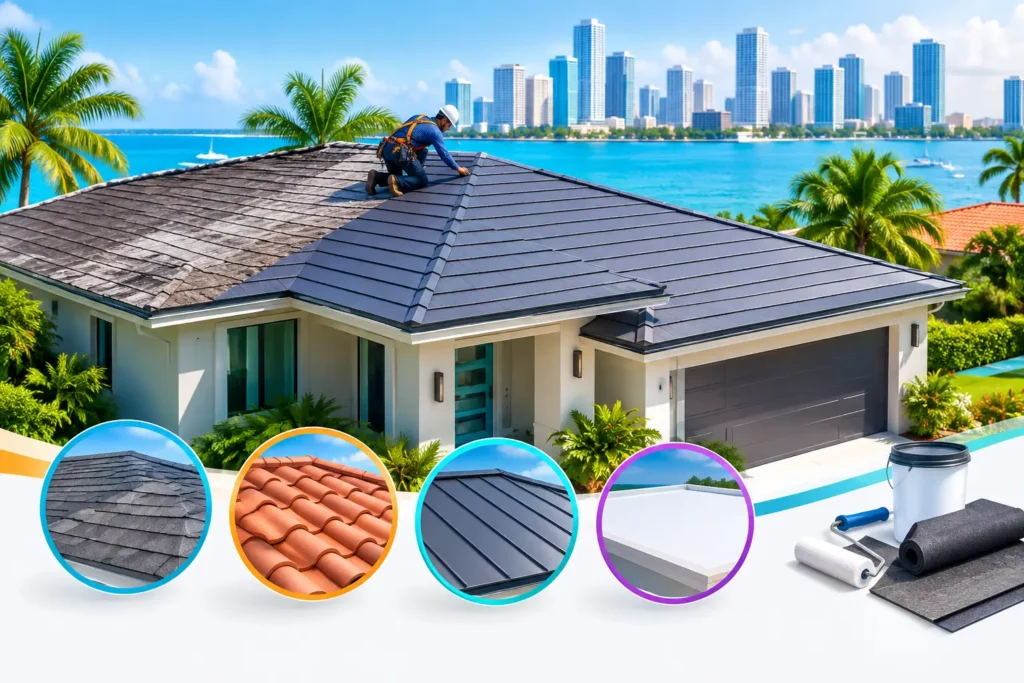

A roofing estimate can look straightforward until you compare two of them side by side. One contractor may quote $8,000, another $14,000, and both may claim they are replacing the same roof. The difference is usually in the details: what gets removed, which materials are actually included, how the roof will be secured for hurricane conditions, and whether the contractor has accounted for what is likely hiding beneath the old roof. Knowing how to read roofing estimates protects you from paying for a cheap patch that becomes an expensive second job.
In Miami-Dade, a roof is not just dealing with rain. It takes punishing UV exposure, trapped humidity, wind-driven storms, salt air near the coast, and building-code requirements designed for a hurricane zone. A useful estimate should show that the contractor understands those conditions. It should not leave you guessing what you are buying.
Start With the Scope of Work
The scope of work is the heart of the estimate. It explains what the roofing contractor plans to do, not just the final price. If the scope is vague, the price is not truly comparable.
Look for clear language about whether the work is a repair, restoration, coating, reroof, or full replacement. A repair estimate should identify the suspected source of the leak and the affected area. “Repair roof leak” is not enough. A better description explains whether the work includes replacing damaged underlayment, repairing flashing, resealing penetrations, replacing cracked tiles, or correcting a drainage issue.
For a replacement, the estimate should say whether the existing roof will be removed down to the deck. It should also explain what happens if the contractor finds rotten wood, damaged concrete, wet insulation, rusted metal, or failed fasteners. These conditions are common on aging South Florida roofs, and they cannot always be confirmed until materials come off.
Do not assume “complete reroof” means every layer is included. Ask exactly what will be removed, inspected, repaired, and installed. A contractor who gives a direct answer is giving you something valuable: a defined job instead of a moving target.
How to Read Roofing Estimates Line by Line
A detailed estimate does not need to be filled with confusing technical language, but it should separate the major parts of the job. Review each line and make sure it has a purpose.
Labor, tear-off, and disposal
Tear-off labor means removing old roofing materials. Disposal includes hauling away shingles, tile, membrane, insulation, nails, and other debris. Some low quotes look attractive because they exclude disposal or assume a limited tear-off.
Check whether the estimate includes protection for landscaping, driveways, walls, HVAC equipment, and surrounding areas. On commercial properties, it should also address debris control, site access, and keeping the building safely operational when possible.
Decking and structural repairs
The roof deck is the surface that supports the roofing system. On a shingle roof, this may be plywood. On flat commercial roofs, it may involve concrete, metal decking, lightweight concrete, or other assemblies.
Many estimates include deck repairs as an allowance or a per-sheet price because hidden damage is unknown until tear-off. That is reasonable, as long as it is disclosed. Watch for a quote that says nothing about deck damage at all. If problems are found later, you need to know the rate before work begins, not after.
Underlayment, waterproofing, and flashing
The visible roof covering is only one part of the system. Underlayment and waterproofing layers do much of the work during heavy rain and wind-driven storms. Flashing protects the areas where roofs meet walls, chimneys, vents, skylights, drains, parapets, and HVAC curbs.
The estimate should identify the underlayment or membrane type and where it will be used. For tile roofing, ask whether the quote includes replacing the underlayment beneath the tile or simply resetting existing tile. For flat roofs, ask about membrane thickness, insulation, seams, drains, edge metal, and termination details.
A low price may mean the contractor is planning to reuse old flashing or install minimal waterproofing. That can be acceptable in a small, targeted repair if the existing components are sound. It is rarely the right approach for a roof replacement intended to last.
Roofing materials and quantities
Material descriptions should be specific enough to verify what is being installed. “Architectural shingles,” “metal roof,” or “flat roof material” is too broad on its own.
Look for the manufacturer, product line or material type, color if relevant, and expected coverage. A shingle estimate should identify the shingle type, starter strips, ridge caps, ventilation components, and underlayment. A tile quote should clarify whether tiles are new, reused, or a combination. A metal roofing estimate should identify panel type, gauge when applicable, finish, fastener system, and corrosion-resistant components.
For flat and low-slope roofs, material thickness matters. A membrane system may be PVC, TPO, modified bitumen, or another product, but the installation method and detail work matter just as much as the material name. South Florida heat and standing water will expose weak seams and poor drainage quickly.
Check Permits, Code Compliance, and Wind Requirements
In Miami-Dade County, permits and product approvals are not optional details to brush aside. Roofing systems must meet applicable code requirements, including wind resistance standards and approved installation methods.
Your estimate should state whether permit fees, inspections, notices, engineering, and required documentation are included. If they are excluded, ask for the expected cost and who is responsible for obtaining them. “Permit not included” is not automatically a red flag, but it must be clear before you sign.
Be cautious if a contractor suggests skipping permits for work that clearly requires one. That can create problems when you sell, refinance, file an insurance claim, or need proof that work was completed to code. It may also leave you responsible for correcting unpermitted work later.
Ask how the roofing system will be fastened and what wind-rating requirements apply to your property. The answer may vary based on the roof type, location, building height, and current code. A real Miami roofing contractor will not treat hurricane resistance as an upgrade you can casually ignore.
Compare Prices Only After You Compare Coverage
The lowest estimate is not always the least expensive job. It may omit tear-off, permit costs, flashing, deck repairs, ventilation, insulation, edge metal, or a proper warranty. When those items appear later as change orders, the savings disappear.
Put competing estimates next to each other and compare the same categories: scope, material type, tear-off, waterproofing, flashings, code items, permits, cleanup, and warranty. If one contractor has fewer details, ask them to clarify in writing. Do not fill in the blanks with assumptions.
You should also ask whether the price is fixed or whether materials can change based on market pricing. Roofing materials can fluctuate, especially after major storms. A clear estimate tells you how long the price is valid and what conditions could create an additional charge.
Understand Allowances and Change Orders
An allowance is a budgeted amount for work that cannot be fully measured before the project starts. Damaged decking is the most common example. Allowances are not inherently dishonest. They become a problem when the estimate uses vague allowances to make the starting number look lower.
Ask what triggers a change order, who approves it, and whether approval must be in writing. You should receive photos or an on-site explanation of concealed damage before authorizing additional work whenever practical. Flash Roofing & Sheet Metal follows the simple standard property owners deserve: show the condition, explain the fix, and document the cost.
Be especially careful with estimates that say “as needed” repeatedly without a unit price or limit. “Replace wood as needed” should identify a per-sheet or per-square-foot cost. “Repair flashing as needed” should describe the affected locations or provide a defined labor rate.
Read the Warranty Beyond the Headline
A warranty is only useful if you understand who provides it and what it covers. A manufacturer warranty generally addresses defects in the roofing material. A workmanship warranty addresses installation errors by the contractor. They are not the same thing.
Read the duration, exclusions, maintenance requirements, transfer rules, and claim process. A long manufacturer warranty does not fix poor installation. Likewise, a contractor warranty is only as dependable as the contractor behind it.
For repairs, a shorter workmanship warranty can be reasonable because the contractor is addressing one area of an older roof system. For a full replacement, ask what installation details are covered and whether the warranty includes leaks caused by workmanship, not just material failure.
Watch for These Warning Signs
An estimate deserves a closer look when it has no license or insurance information, no defined scope, no permit discussion, or no clear material description. Be wary of a contractor who pressures you to sign immediately, demands a large cash payment, or promises that a roof can be repaired without inspecting it.
Another warning sign is a quote dramatically below every other qualified contractor. There are legitimate reasons prices vary, including different materials and job complexity. But a price that seems too good often depends on missing work, unlicensed labor, inferior components, or future add-ons.
The best estimate is not the prettiest document or the cheapest total. It is the one that clearly states what will happen to your roof, what materials will protect it, what could change, and who stands behind the work. Ask the questions before the first shingle, tile, or membrane comes off. A contractor worth hiring will answer them without pressure or mystery fees.