Your roof is the first thing a hurricane hits. And the last thing most homeowners think about until it is too late.
Hurricane season starts June 1. If your roof has loose tiles, worn flashing, or aging underlayment, a tropical storm will turn a small problem into a five-figure repair bill. We have been through every major storm that has hit Miami-Dade since the early 1990s. The pattern never changes: homeowners who called a roofer in April came through intact. The ones who waited spent weeks fighting insurance adjusters and searching for available crews.
This is your pre-season checklist. Not a panic list. A practical guide from a local roofing contractor who has rebuilt after Andrew, Irma, and every storm in between.
Why Your Roof Is Your Home's First Line of Defense
Hurricane Season by the Numbers
The Atlantic hurricane season runs from June 1 through November 30. Peak activity hits between August and October. NOAA tracks an average of seven hurricanes per season, and Miami-Dade County sits in the direct path of storms that curve through the Caribbean and Gulf.
This is not abstract risk. Hurricane Andrew ripped through Homestead and South Dade in 1992 and destroyed over 125,000 homes. Irma in 2017 tore roofing off structures across the county, even in areas that avoided a direct hit.
Miami-Dade is inside the High Velocity Hurricane Zone (HVHZ). Building codes here are stricter than anywhere else in Florida. Those codes exist because the risk is real.
What Happens When a Roof Fails During a Hurricane
Once the roof envelope breaks, the damage compounds fast. Wind lifts shingles or tiles. Rain follows immediately. Water pours into the attic, soaks insulation, and saturates drywall. Within 24 to 48 hours in Miami’s humidity, mold begins growing.
A roof failure during a storm does not just mean a new roof. It means drywall replacement, mold remediation, electrical inspections, and in some cases temporary relocation. We have seen homeowners in Kendall spend $60,000 to $80,000 repairing storm damage that started with a $3,000 roofing problem they knew about before the season.
The roof is the envelope. When it holds, everything else stays dry. When it fails, everything else fails with it.
The Pre-Season Roof Checklist: Do This Before June 1
These six steps take a professional roofer one visit and a homeowner one phone call. Start now.
1. Schedule a Professional Roof Inspection
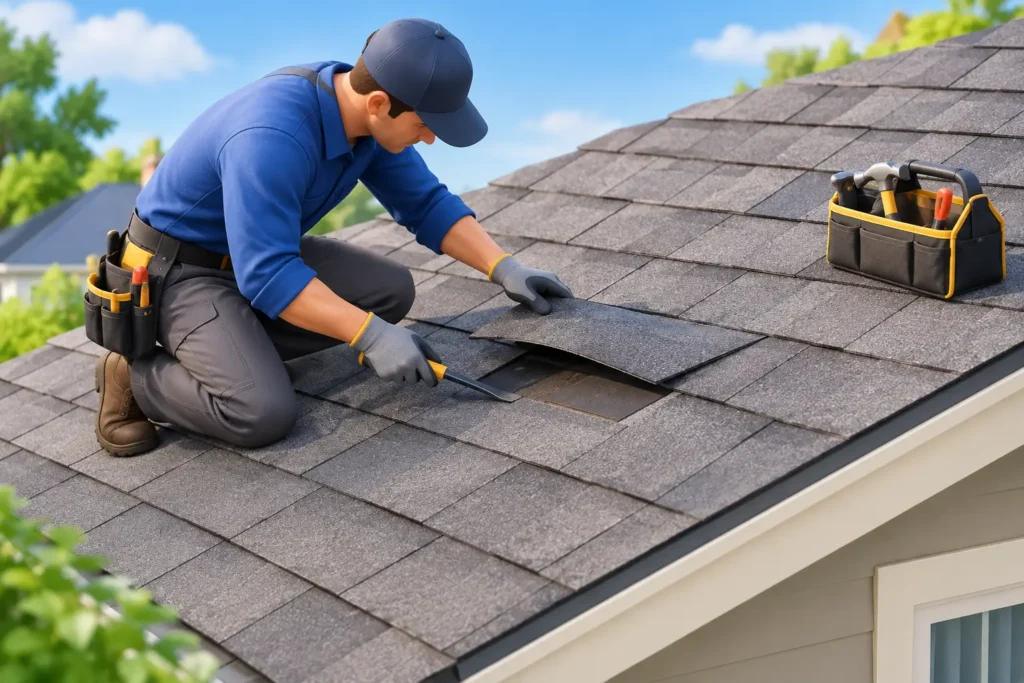
A trained inspector checks what you cannot see from the ground: loose tiles, corroded flashing, worn underlayment, weakened fasteners, and moisture penetration. They also check inside. Attic ventilation, daylight penetration through the roof boards, and moisture stains on rafters all tell a story about your roof’s readiness.
A pre-season roof inspection catches problems when they are small and affordable. After the storm, every roofing crew in Miami-Dade is booked for months.
2. Address Any Existing Damage Now
That missing shingle on the west slope. The cracked barrel tile near the chimney. The ridge cap that lifted in last year’s thunderstorm. These are minor repairs today. During a hurricane, each one becomes an entry point for wind and water.
If you know about damage and have been putting off the call, this is the deadline. Fix it before June or budget for a much larger repair after August. For a breakdown of what those repairs run, see our guide on what to budget for leak repairs.
3. Check and Reinforce Hurricane Straps and Clips
Hurricane straps (also called tie-downs or clips) connect your roof structure to the walls of your home. They prevent the roof from lifting off during high winds. HVHZ code requires them on all new construction, but homes built before 1994 frequently lack them. Older versions frequently fall short of current standards.
A roofing contractor can inspect your strap connections and install reinforcements if needed. This is one of the most cost-effective upgrades you can make for storm protection.
4. Clean Gutters, Drains, and Roof Debris
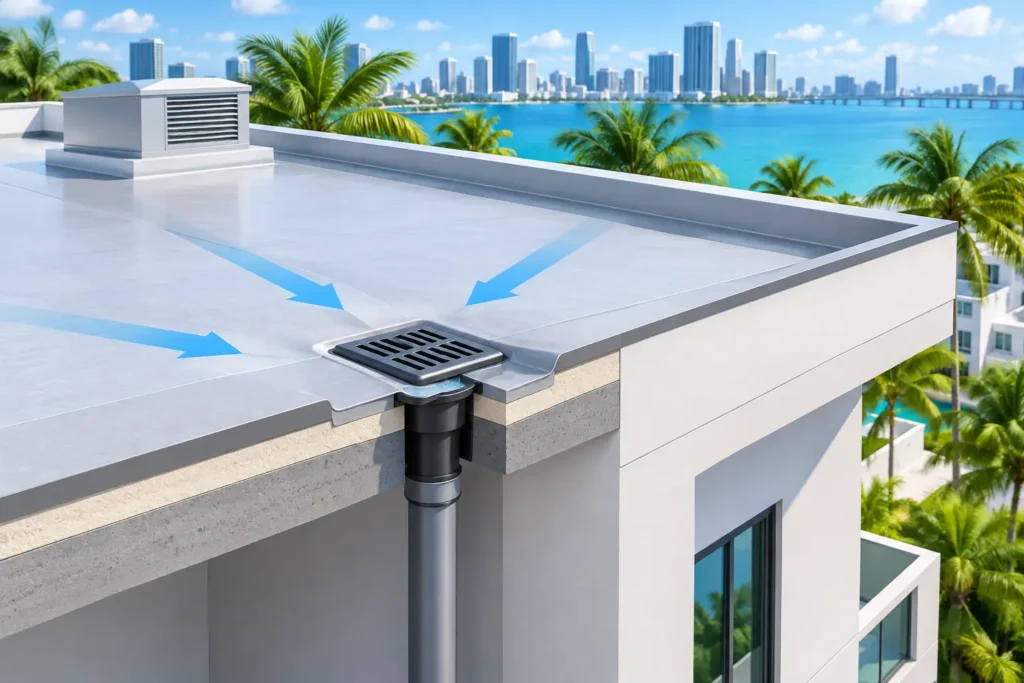
When a summer thunderstorm drops three inches of rain in 30 minutes, blocked gutters push water back up under your roof edge. Standing water on a flat roof adds thousands of pounds to a structure not designed for it.
Clear all gutters, downspouts, and flat roof drains. Remove leaves, branches, and debris from last season.
5. Trim Overhanging Tree Branches
This is the number one preventable cause of storm damage to roofs in Miami-Dade. A branch that touches your roof on a calm day becomes a battering ram in 80 mph winds.
Trim any branch within six feet of your roof. If the tree is large, hire a licensed arborist. The $300 you spend on trimming now prevents $10,000 in roof damage later.
6. Verify Your Insurance Coverage
Florida’s homeowner insurance market is volatile. Carriers have been dropping coverage and refusing renewals for roofs over a certain age. Before hurricane season, verify three things:
- Your roof is covered for wind damage
- You know your hurricane deductible amount (typically 2% to 5% of the insured value)
- Your carrier has no outstanding requirements about roof age or condition
Document your roof’s current condition with dated photos. If your roof is in good shape, that documentation protects your claim after a storm. If your roof has warning signs your roof needs attention, better to know now than after a denial letter.
Hurricane-Rated Roofing Materials for Miami-Dade
Not all roofing materials perform the same in a hurricane. Here is what holds up best in HVHZ conditions.
Metal Roofs: Best Wind Resistance
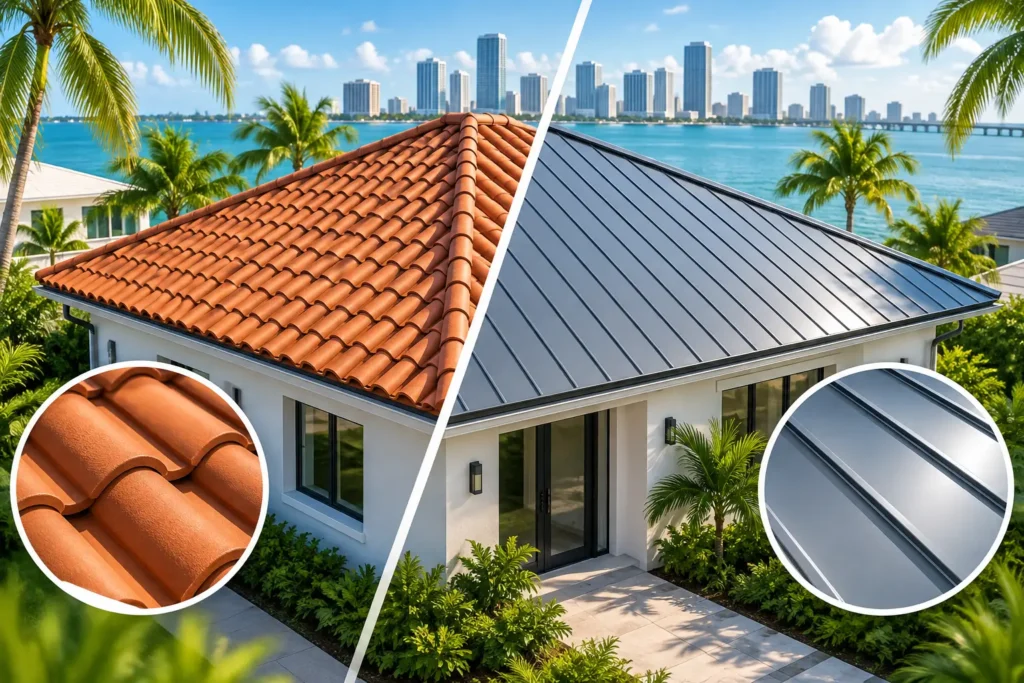
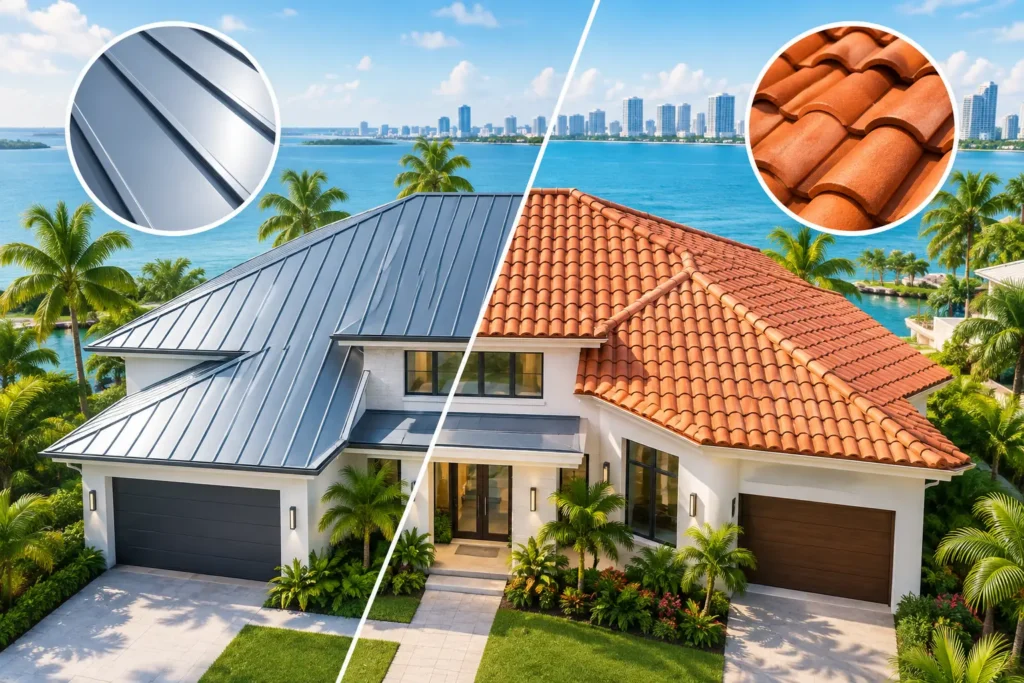
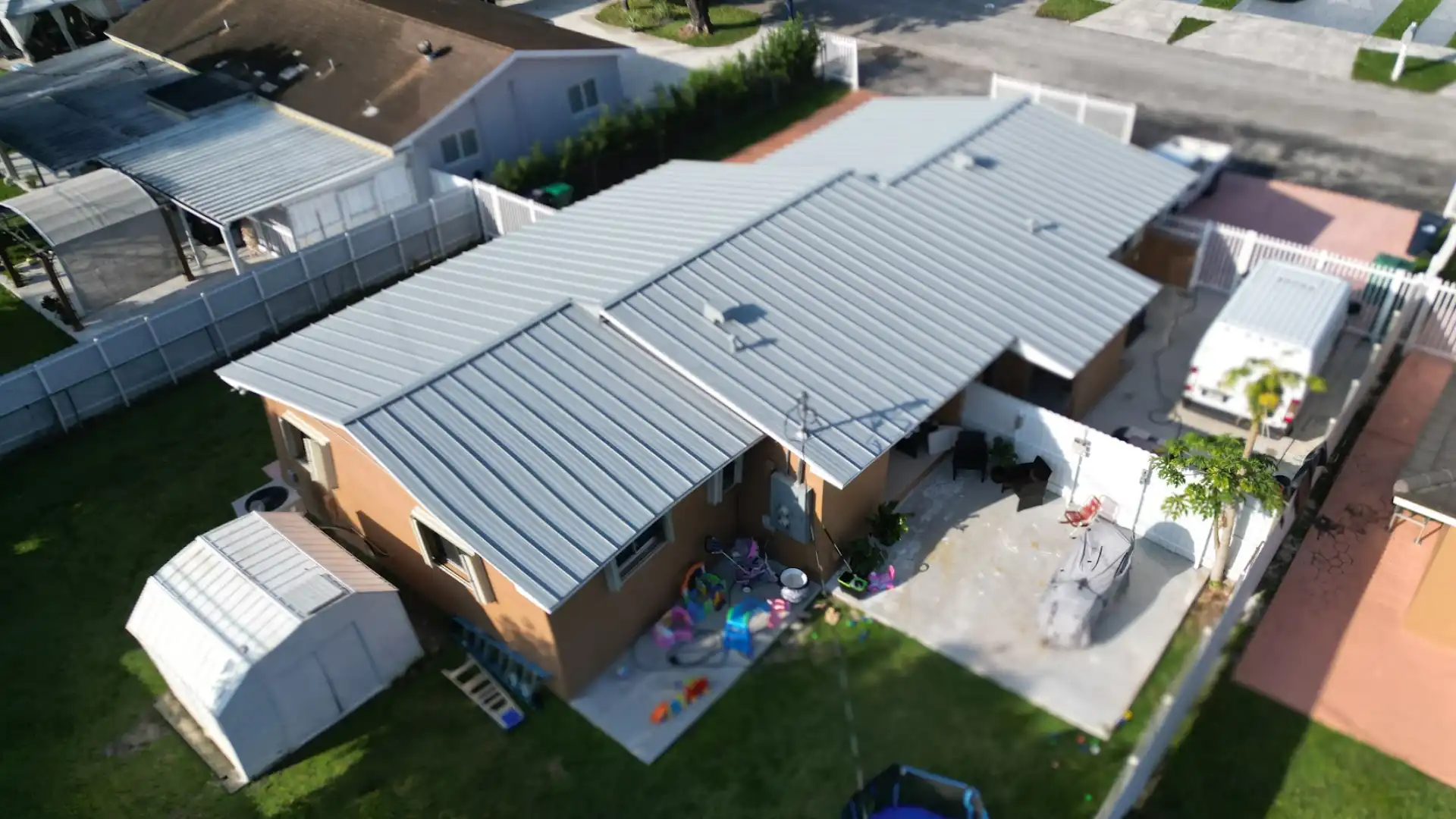
Standing seam metal roofs are rated for 160 mph winds and higher. The panels interlock and use concealed fasteners, so there are no exposed screws to pull out under pressure. Metal does not crack like tile, does not peel like shingles, and does not absorb water.
After Irma, we saw the difference on every block. Metal roofs held. Shingle roofs peeled. Tile roofs lost individual pieces that became projectiles. That pattern held across Miami, Coral Gables, and the Keys.
Metal roofing is our specialty at Flash Roofing. We install standing seam, corrugated, and metal shingle systems throughout Miami-Dade and Key West and the Lower Keys.
Concrete Tile: Traditional Miami Standard
Barrel tile and flat tile have been the default in Miami for decades. They are heavy, durable, and last 50 years or more when properly maintained. But individual tiles can crack from thermal expansion, and a loose tile in a hurricane becomes a dangerous projectile.
Pre-season maintenance is critical for tile roofs. Reattach any loose tiles, replace cracked ones, and check the underlayment beneath them. The tile can look fine from the street while the felt paper underneath has deteriorated.
Impact-Rated Shingles
Class 4 impact-rated shingles resist hail and debris damage. They are lighter than tile and more affordable than metal. HVHZ-approved products are available for Miami-Dade installations, and some Florida insurers reduce premiums for impact-rated roofing.
They are a solid option for homeowners who need storm protection on a tighter budget.
What to Do If a Storm Damages Your Roof
Immediate Steps: Safety First
Do not climb on a damaged roof. After a storm, structural integrity is compromised, surfaces are wet, and downed power lines are a real hazard. Call a professional.
If water is actively entering your home, move valuables away from the leak, place buckets to catch water, and call for emergency roof repair when storms hit. Temporary tarping can stop further water intrusion until a full repair is possible. Flash Roofing provides 24/7 emergency response throughout Miami-Dade.
Document Everything for Insurance
Before anyone touches the damage, take photos and videos. Date-stamped images of the damaged roof, interior water intrusion, and debris around the property. These records are the foundation of your insurance claim.
Get at least two written contractor estimates. Keep every receipt and every communication with your insurance company.
Choose a Local Contractor Over Storm Chasers
After every hurricane, out-of-state crews flood Miami with door-to-door solicitations. They promise fast work, claim insurance will cover everything, and pressure homeowners to sign immediately. Many are unlicensed in Florida. Some take deposits and disappear.
Choose a company that was here before the storm and will be here after. Ask for a Florida roofing license (CCC or CGC), verify it on the DBPR website, and check for local reviews and a physical address. We have been at 16677 SW 117 Ave for over three decades.
Expert Insight
We have been through every major storm since the early 1990s. After Andrew, we spent two years rebuilding across Homestead and Florida City. After Irma, our crew was on roofs in Coral Gables and Kendall within 48 hours.
The first days after a hurricane look the same every time: the phone rings nonstop, every call is urgent, and tarps are the priority. Full repairs come later, one roof at a time.
April and May are the most important time to call a roofer. A $500 repair in May prevents a $15,000 emergency in September. That is the math, every year.
Frequently Asked Questions
How do I prepare my roof for hurricane season in Miami?
What roofing materials are best for hurricane resistance in Florida?
Does insurance cover hurricane roof damage in Miami-Dade?
Should I get a roof inspection before hurricane season?
Protect Your Roof Before the Storm
The six steps in this checklist are straightforward. Most take a single visit from a qualified roofing contractor.
Flash Roofing has been protecting Miami-Dade homes for over 30 years. Call us at 786-237-9440 to schedule your pre-season roof inspection before June 1. If a storm has already caused damage, our crew provides 24/7 hurricane roof repair in Miami .
Do not wait for the first tropical storm warning. Call now.
Disclaimer: All pricing provided is for informational purposes only. Actual costs will vary based on specific project requirements and property conditions. Reach out to us for a free, personalized estimate.