Your roof does not fail all at once. It sends signals for months before the first serious leak shows up. We have inspected hundreds of roofs across Miami-Dade that looked solid from the driveway but were failing underneath the surface material.
Knowing when to replace a roof saves you from two expensive mistakes: replacing too early (wasting a roof that still has life) and replacing too late (paying for water damage, mold, and emergency repairs on top of the replacement). Both are preventable.
This post covers the 7 warning signs your roof needs to be replaced, why Miami’s climate shortens every roof lifespan by material type, and the professional roof inspection that gives you a clear answer.
What Are the 7 Warning Signs Your Roof Needs Replacement?
If you see two or more of these signs on the same roof, replacement is worth a serious conversation. Some you can spot yourself. Others require a professional on the roof.
Sign 1. Your Roof Is Approaching Its Expected Lifespan
Every roofing material has a clock. Here’s what the numbers look like in South Florida’s climate:
Material | National Average | Miami Adjusted Lifespan
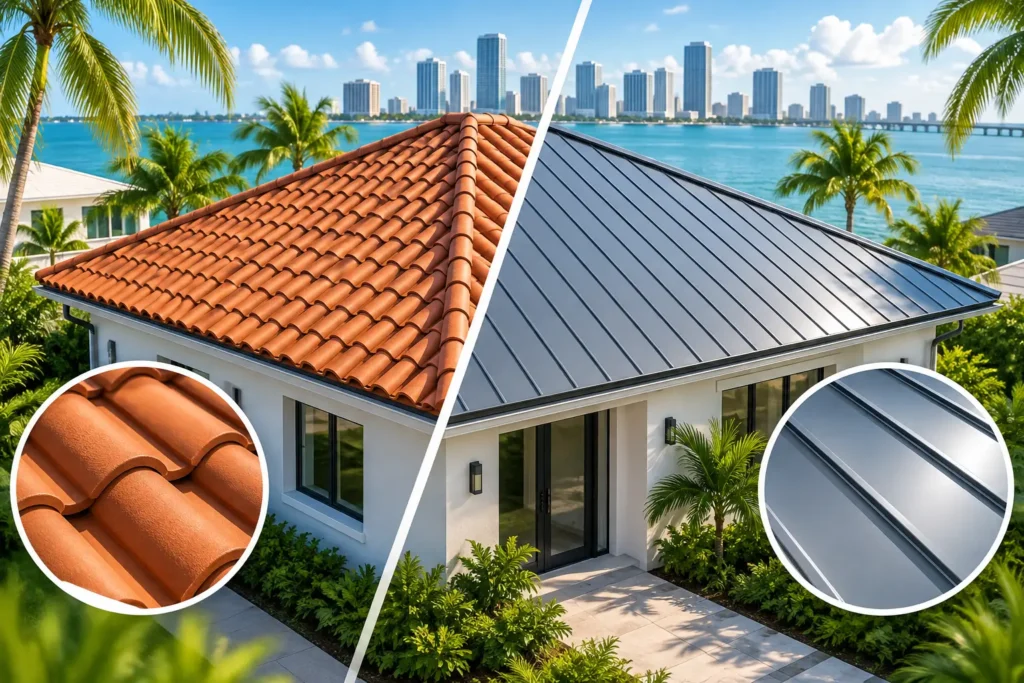
3-tab asphalt shingles | 20-25 years | 15-20 years
Architectural shingles | 25-30 years | 20-25 years
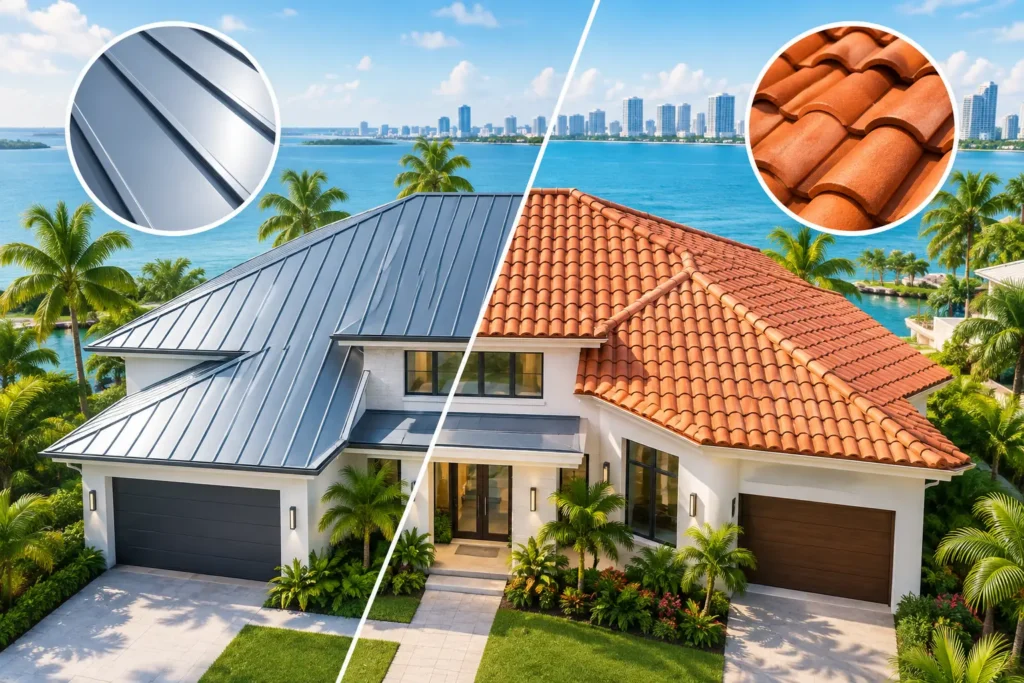
Concrete/clay tile | 50+ years | 40-50 years
Standing seam metal | 40-70 years | 35-50 years
Flat (TPO/mod-bit) | 20-30 years | 15-25 years
Every Miami number is 5 to 10 years shorter than the national figure. UV exposure, salt air, and hurricane stress accelerate aging here in ways that manufacturers in Ohio don’t account for in their warranty literature.
If your roof is within 5 years of its Miami-adjusted lifespan, start planning.
Sign 2. Multiple Leaks in Different Areas
One leak is a repair. Two leaks on the same slope are a section repair. Three or more leaks on different slopes or roof planes are your roof telling you the underlying system is failing, not just one spot.
We handled a home in Kendall last year where the homeowner had patched four separate leaks over 18 months, spending $2,100 on individual repairs. The underlayment was shot across the entire south-facing slope. A roof replacement in Miami would have cost less than two more years of chasing individual failures.
Sign 3. Visible Sagging or Structural Dip
Stand at the curb and look at your roofline. It should be straight. If you see a dip or a sag, the structural deck or trusses underneath are compromised.
This is not a repair situation. Sagging is the one sign on this list where you call a roofer this week, not next quarter. A sagging section can collapse under its own weight during a tropical storm.
Sign 4. Granule Loss or Bare Spots on Shingles
Check your gutters after the next rainstorm. If you find a layer of dark, sandy granules in the trough, your shingles are shedding their protective coating.
New shingles lose some granules during the first year. That’s normal. But consistent granule accumulation on a roof older than 10 years signals the asphalt layer is exposed to direct UV. We have seen unprotected shingle sections blister and crack within a single Miami summer after losing their granule layer.
Sign 5. Daylight Visible Through Roof Boards
Go into your attic on a sunny afternoon. Turn off the lights. Look up.
If you see pinpoints of light coming through the roof deck, those are penetrations where water will follow during the next rain. One or two small points near a nail pop might be repairable. But widespread daylight, especially combined with water stains on the surrounding plywood, points to decking deterioration that section repair won’t solve
Sign 6. Rising Energy Bills Without Explanation
If your FPL bill has crept up 15% to 25% over two years and you haven’t changed your usage or HVAC equipment, your roof’s insulation value has degraded.
In Miami, cooling accounts for up to 40% of residential energy costs (per the U.S. Department of Energy). A failing roof hits your wallet every month before a single drop of water gets through. Compressed insulation and moisture-saturated underlayment both reduce thermal performance.
Homeowners in Kendall neighborhoods with post-Andrew homes from the mid-1990s report the most dramatic energy improvement after replacement because those original systems used minimal insulation by current standards.
Sign 7. Your Neighbors Are Replacing Theirs
This sounds like peer pressure, but it’s data. If you live in a planned community where homes were built in the same 2-to-3-year window, the roofs all age at the same rate.
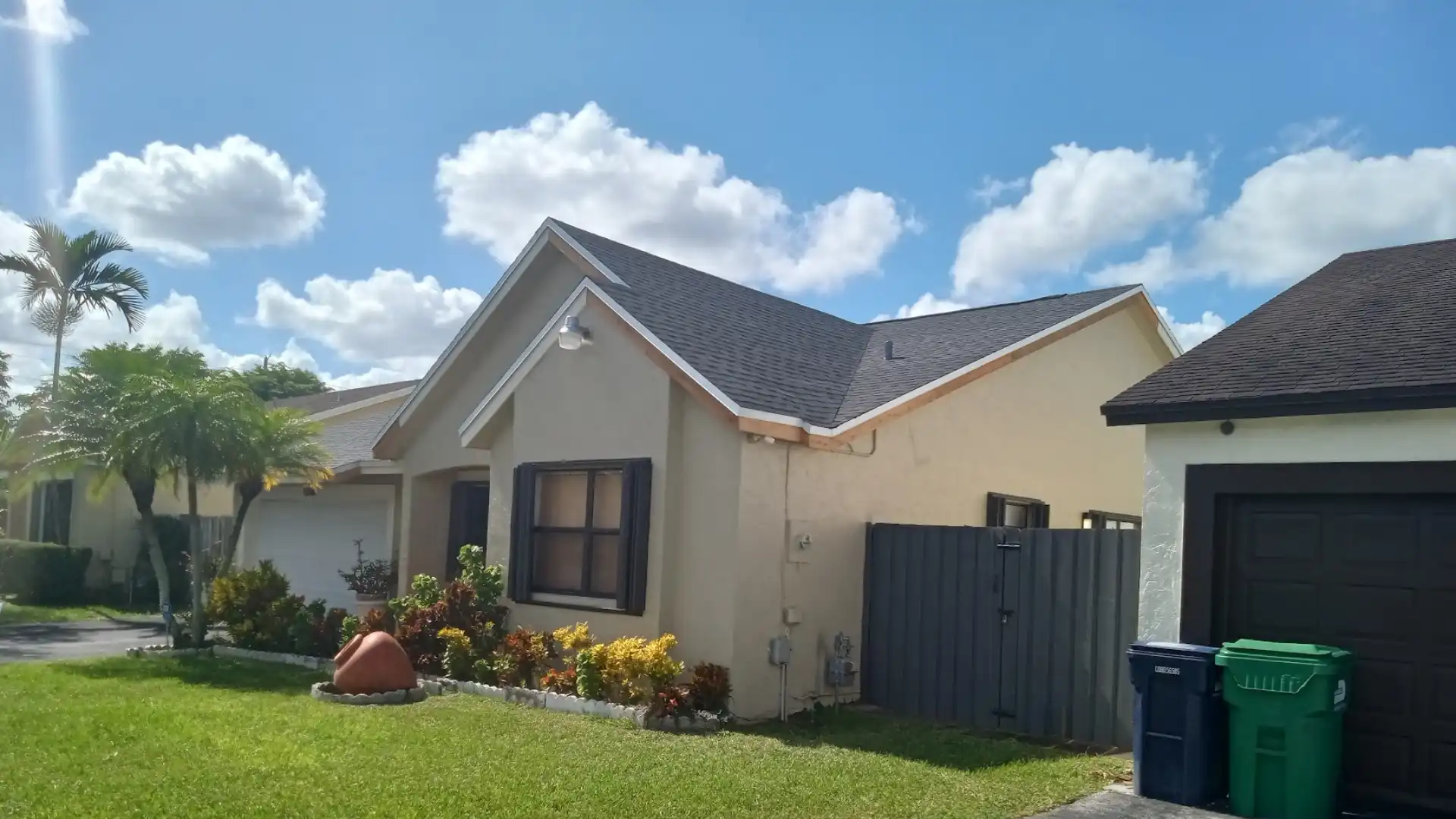
In developments across Kendall and down through Homestead, entire streets of homes built between 1993 and 1998 are hitting the 28-to-33-year mark right now. When three houses on your block replace their roofs in the same year, that’s a cohort of identically aged roofing systems reaching end of life together.
Why Does Miami's Climate Accelerate Roof Aging?
South Florida shortens roof lifespans by 5 to 10 years compared to the national average. Three climate factors drive this acceleration, and they compound each other.
UV Exposure and Heat Cycling
Miami averages 248 sunny days per year (per NOAA data). Shingle surfaces reach 150 to 170 degrees on a July afternoon.
But it’s the cooling cycle that does the real damage. Overnight temperatures drop 25 to 35 degrees from daytime highs. This daily expansion and contraction works on every fastener and sealant bond. Over 15 years, that’s more than 5,000 thermal cycles pushing materials apart.
Hurricane Wind and Rain Stress
Tropical storm-force winds (39+ mph) hit Miami-Dade every 2 to 3 years on average. Each event loosens tabs, shifts tiles, and fatigues fastener connections.
A roof that survives a Category 1 is not the same roof it was before the storm. Some connections loosened just enough to let water in during the next heavy rain six months later.
Salt Air Corrosion (Coastal Properties)
Properties east of I-95 and throughout Key West and the Florida Keys face salt air corrosion that inland homes don’t experience. We see galvanized steel flashings and fasteners fail in 10 to 12 years near the coast versus 20+ years inland. Stainless steel or aluminum components cost more upfront but outlast galvanized steel by a decade in the salt zone.
What Does the Inspection That Answers the Question Look Like?
Here’s the honest answer: you need someone on the roof with the right tools. Guessing from the ground costs money either way.
What a Professional Inspection Covers
A professional roof inspection covers:
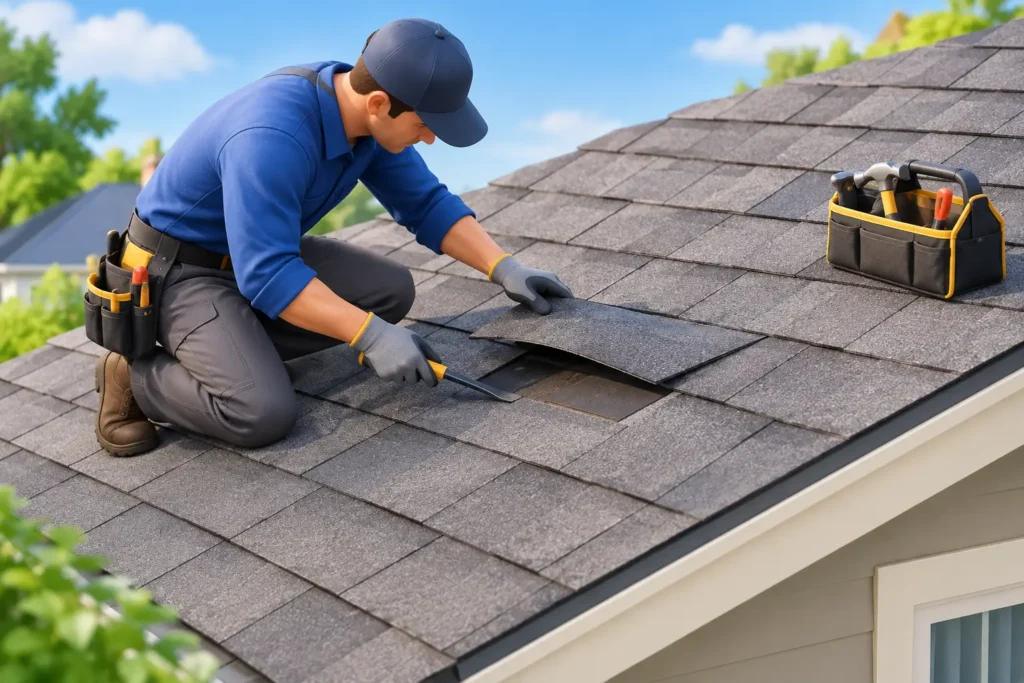
- Surface walk evaluating material condition, granule retention, tile integrity, and flashing state
- Infrared moisture scan mapping trapped moisture invisible to the eye
- Structural assessment of sag points, truss condition, and fastener integrity
- Remaining life estimate based on material type, condition, and Miami climate factors
- Written report with photos, delivered within 48 hours
The inspection gives you a number: how many years your roof has left. That number, combined with your budget and insurance situation, drives the decision.
When to Schedule One
Three situations call for an inspection within the next 30 days:
- Your roof is within 5 years of its expected lifespan by material type
- You see 2 or more of the 7 warning signs listed above
- Your insurer has requested a roof condition report (increasingly common in Florida for policies covering roofs over 15 years old)
Don’t wait for a leak to confirm what an inspection would have told you a year earlier.
What Happens If You Wait Too Long?
Delaying a replacement past the point where the roof is actively failing compounds costs in two directions at once.
Water Damage, Mold, and Structural Decay
A failing roof in Miami’s humidity creates a cascade: water degrades decking, saturated wood breeds mold within 48 to 72 hours during summer, and mold spreads into insulation and wall cavities. Remediation alone runs $2,000 to $6,000.
We see this pattern every hurricane season. A homeowner postpones replacement, a storm exposes the weakened areas, and the repair scope triples.
Insurance Implications (Florida-Specific)
Florida insurers are tightening roof age requirements across the state. As of 2026, many carriers refuse to write or renew policies on homes with roofs older than 15 to 20 years unless the homeowner provides a certified inspection proving remaining useful life.
If your insurer drops coverage because of roof age, you lose the ability to file storm damage claims. A planned replacement on your timeline costs less than an emergency replacement forced by an insurance deadline.
Frequently Asked Questions About Roof Replacement Timing
How often should you replace a roof in Miami?
Should I replace my roof if it's not leaking?
How long does a roof last in Florida before it needs replacing?
How much does a full roof replacement cost in Miami?
Know Where Your Roof Stands
A 20-year-old roof in Coral Gables looks the same from the street whether it has 5 years left or 5 months. The only way to know is to get someone on it.
30+ years inspecting and replacing roofs across Miami-Dade. From post-Andrew homes in Kendall to coastal properties in the Keys, we know what fails first and what lasts.
59 Google reviews. Licensed for all HVHZ work. Hablamos Espanol.
Disclaimer: All pricing provided is for informational purposes only. Actual costs will vary based on specific project requirements and property conditions. Reach out to us for a free, personalized estimate.