A roof leak does not always start in the middle of the roof. In Miami, water often gets in where the roof changes direction or meets another surface: around vents, skylights, chimneys, walls, drains, and equipment curbs. That is where flashing does its job. To repair roof flashing correctly, you have to find out why it failed, not just cover the wet spot with sealant.
South Florida heat, UV exposure, wind-driven rain, humidity, and salt air are hard on flashing materials and fasteners. A small loose edge can become a major leak after one heavy storm. The right repair protects the roof system beneath it and helps prevent moisture damage from spreading into insulation, decking, ceilings, and walls.
What Roof Flashing Does
Flashing is a metal, membrane, or formed material that directs water away from vulnerable roof transitions. It creates a weather-tight connection where standard roofing materials alone cannot reliably shed water.
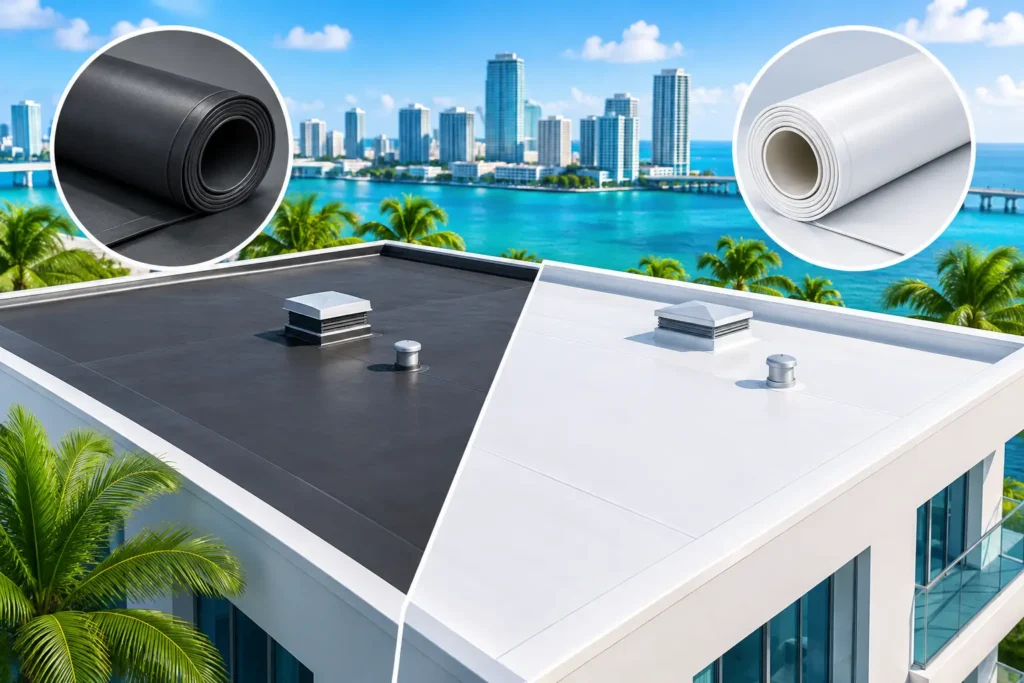
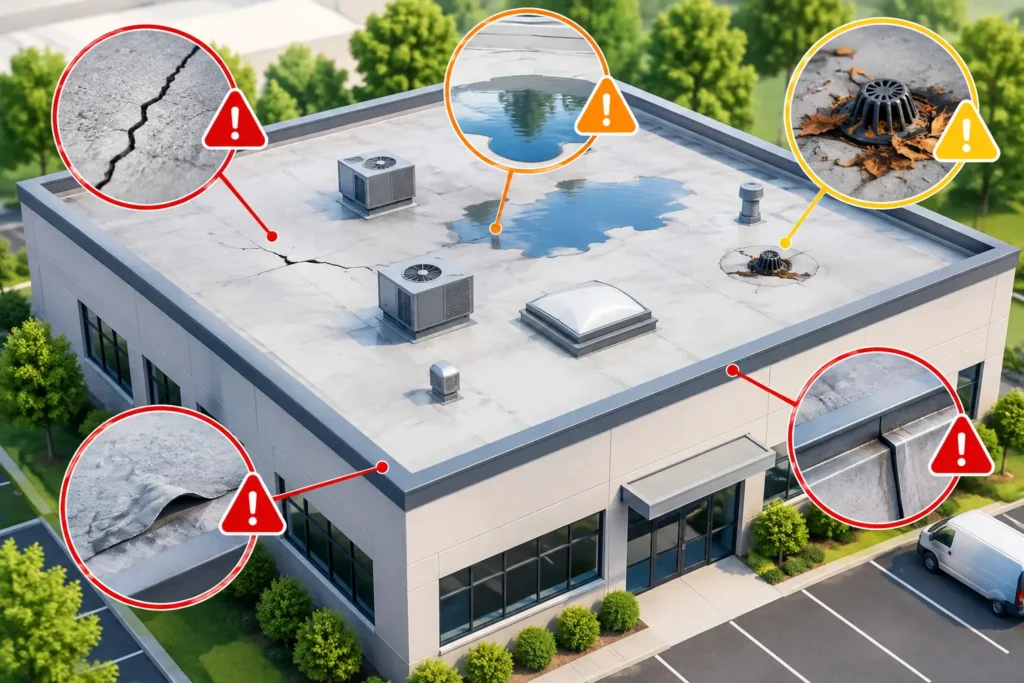
On a shingle or tile roof, flashing may sit at roof-to-wall intersections, valleys, chimneys, and pipe penetrations. On flat and low-slope commercial roofs, it is commonly installed along parapet walls, curbs, drains, scuppers, vents, and HVAC equipment. The material may be aluminum, galvanized steel, copper, stainless steel, lead, or a compatible membrane detail.
The material matters, but installation matters more. Flashing has to be integrated into the roofing system so water flows over it and away from the building. If it is simply face-sealed at the surface, it may hold for a while, then fail when heat, movement, standing water, or hurricane-force wind puts pressure on the area.
Signs You May Need to Repair Roof Flashing
Water stains near a chimney, exterior wall, skylight, vent, or ceiling penetration are common warning signs. So are peeling paint, damp drywall, moldy odors, and visible drips after rain. But waiting for interior damage is never the best way to identify a flashing problem.
From the roof, look for lifted edges, rusted metal, cracked sealant, missing fasteners, open laps, split membrane corners, or loose counterflashing. On tile roofs, broken or shifted tiles near walls and penetrations can expose the flashing underneath. On flat roofs, ponding water around a curb or drain can reveal a failed detail even if the main roof surface looks intact.
Wind damage is another concern. A storm can bend metal flashing, pull nails loose, or tear membrane flashing at a corner. Salt air can corrode exposed metal and fasteners, especially near the coast. Florida sun also dries out sealants faster than many property owners expect.
Why Flashing Fails in Miami-Dade
Not every flashing repair is the same because the cause of failure is not always the same. A proper inspection separates a localized defect from a roof system problem.
Poor original installation is a frequent issue. Flashing may have been installed in the wrong sequence, nailed where it should have been mechanically secured differently, sealed with incompatible products, or left without enough overlap. These shortcuts can stay hidden until a hard rain exposes them.
Age and weathering can also take their toll. Metal expands and contracts under intense heat. Sealants shrink, crack, and lose adhesion. Membrane flashing can pull away from vertical surfaces when adhesives fail or when water gets behind the detail. On older buildings, movement in walls, curbs, and roof decking can also break the seal at critical transitions.
A leak near flashing does not automatically mean the flashing is the only problem. Water can travel under tile, shingles, or membrane before it enters the building. That is why experienced roofers inspect the surrounding roof area, not just the place where water appeared indoors.
The Right Way to Repair Roof Flashing
A lasting repair starts with access and inspection. The damaged area must be cleaned and opened enough to see the condition of the flashing, underlayment, membrane, fasteners, and roof deck beneath it. If moisture has damaged the substrate, sealing over the top is not a repair. The affected materials may need to be removed and replaced first.
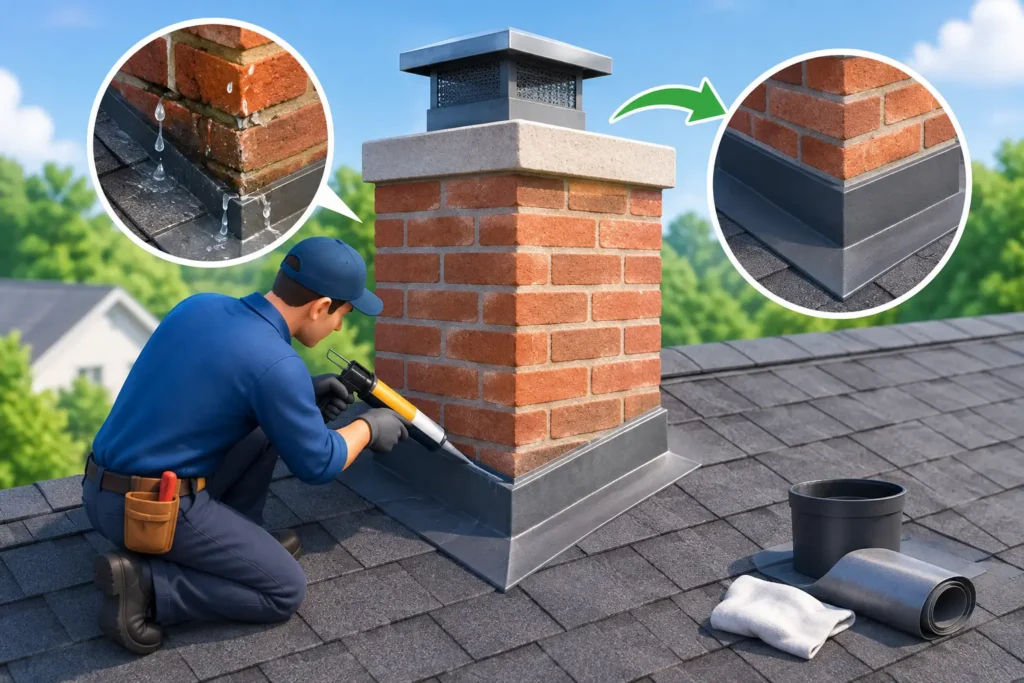
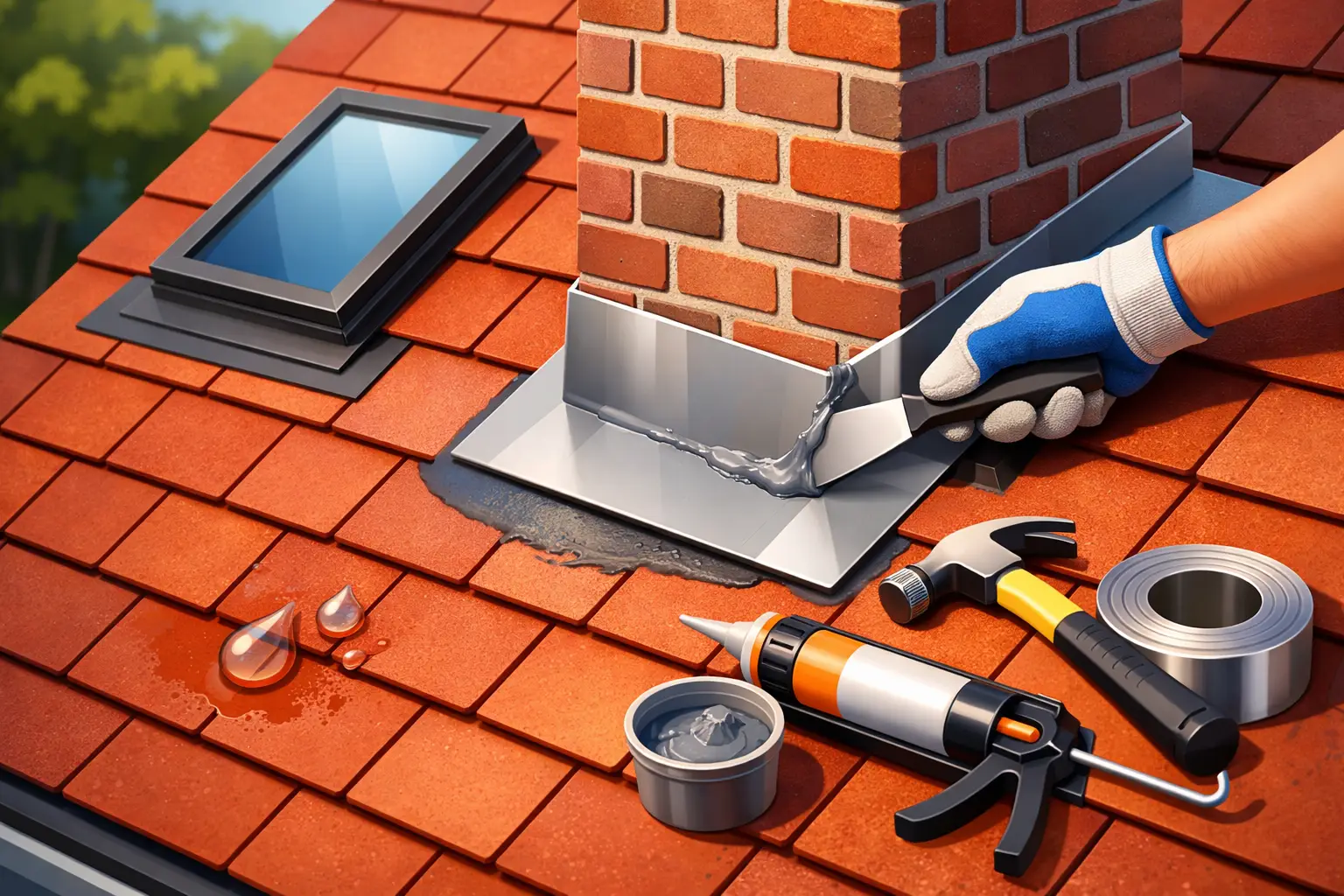
For a small, isolated issue, the repair may involve resetting loose flashing, replacing corroded fasteners, correcting overlap, and applying a compatible sealant where the detail requires one. The work should restore the intended water path, with materials lapped so water sheds naturally instead of relying only on caulk.
For more serious damage, sections of flashing may need replacement. This is common when metal is rusted through, bent beyond reuse, improperly installed, or separated from the roof system. On low-slope roofs, damaged membrane flashing may need to be cut out and rebuilt with compatible membrane, reinforcement, adhesives, and termination details.
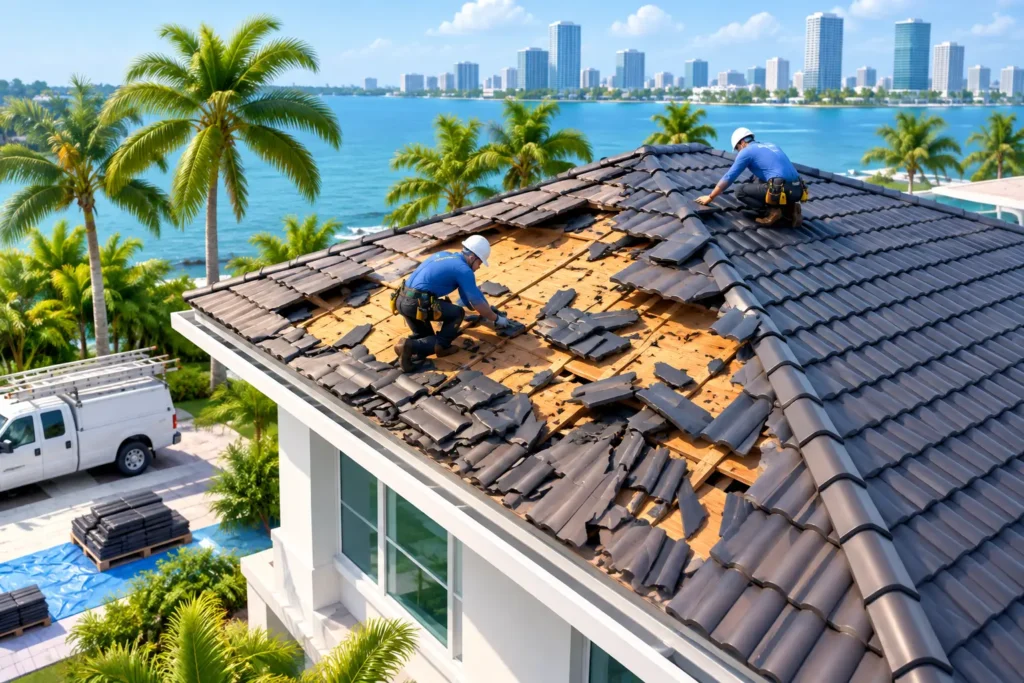
Tile roof repairs require special care. Tiles near the problem area may need to be removed without breaking them, then reinstalled after the flashing and underlayment are repaired. Shingle roof repairs often require replacing shingles around the flashing so the layers shed water in the right order. The exact approach depends on the roof type, slope, age, and the condition of surrounding materials.
Sealant Is a Finish, Not the Whole Fix
Roof cement and sealant have a place in professional roofing work, but they are not magic. They can reinforce a properly built detail or address a minor exposed joint. They cannot make rusted metal whole, correct missing flashing, repair rotten decking, or solve a failed transition that was installed incorrectly.
If a contractor proposes a quick coating or caulk-only fix without inspecting the layers underneath, ask what is causing the opening and how the repair will hold under wind and standing water. Honest answers matter because a cheap patch can turn into a larger interior repair after the next storm.
When a Repair Is Enough and When Replacement Makes More Sense
Repair is usually the smart choice when the problem is limited to one or two details and the surrounding roof is still in serviceable condition. A loose vent flashing on an otherwise healthy shingle roof, a separated curb detail on a newer flat roof, or localized corrosion around a fastener can often be corrected without replacing the entire roof.
Replacement becomes more practical when flashing failures are widespread, the roof covering around them is deteriorated, or water has compromised the deck and insulation. If multiple penetrations are leaking, the roof is near the end of its life, or prior repairs have piled up over the same areas, isolated patching may only delay a larger project.
Commercial property owners should also consider operational risk. A small flashing leak above electrical equipment, inventory, tenant spaces, or ceiling systems can cost far more than the roof repair itself. Photo documentation and a clear scope of work help owners make a decision based on actual conditions rather than guesswork.
Do Not Ignore Flashing Before Hurricane Season
Roof edges, wall transitions, vents, and equipment curbs take direct force from wind-driven rain. During hurricane season, water can be pushed uphill and sideways into openings that would not leak during a normal shower. A lifted flashing edge or cracked sealant joint is an easy entry point when wind pressure rises.
The best time to inspect flashing is before a storm is on the radar. A roof professional can identify loose materials, exposed fasteners, corroded metal, open membrane seams, and drainage issues while the repair is still manageable. After a storm, documented inspection findings can also help establish the condition of the roof and identify new damage promptly.
Choose a Contractor Who Repairs the Detail, Not Just the Symptom
Flashing work looks simple from the ground, but it sits at some of the most failure-prone parts of a roof. The contractor should understand your specific system, use compatible materials, explain what failed, and show you the condition with photos when possible. Licensed and insured workmanship is especially important where roof penetrations, walls, electrical equipment, or commercial curbs are involved.
At Flash Roofing & Sheet Metal, the focus is on identifying the source of the leak and building the repair to handle Miami heat, moisture, salt exposure, and severe weather. No mystery fees, no pressure, and no patch sold as a permanent fix when the roof needs more.
If you see staining, loose metal, cracked sealant, or storm damage near a roof transition, do not wait for the next downpour to test it. A clear inspection and a properly built flashing repair can keep a small opening from becoming a costly building problem.