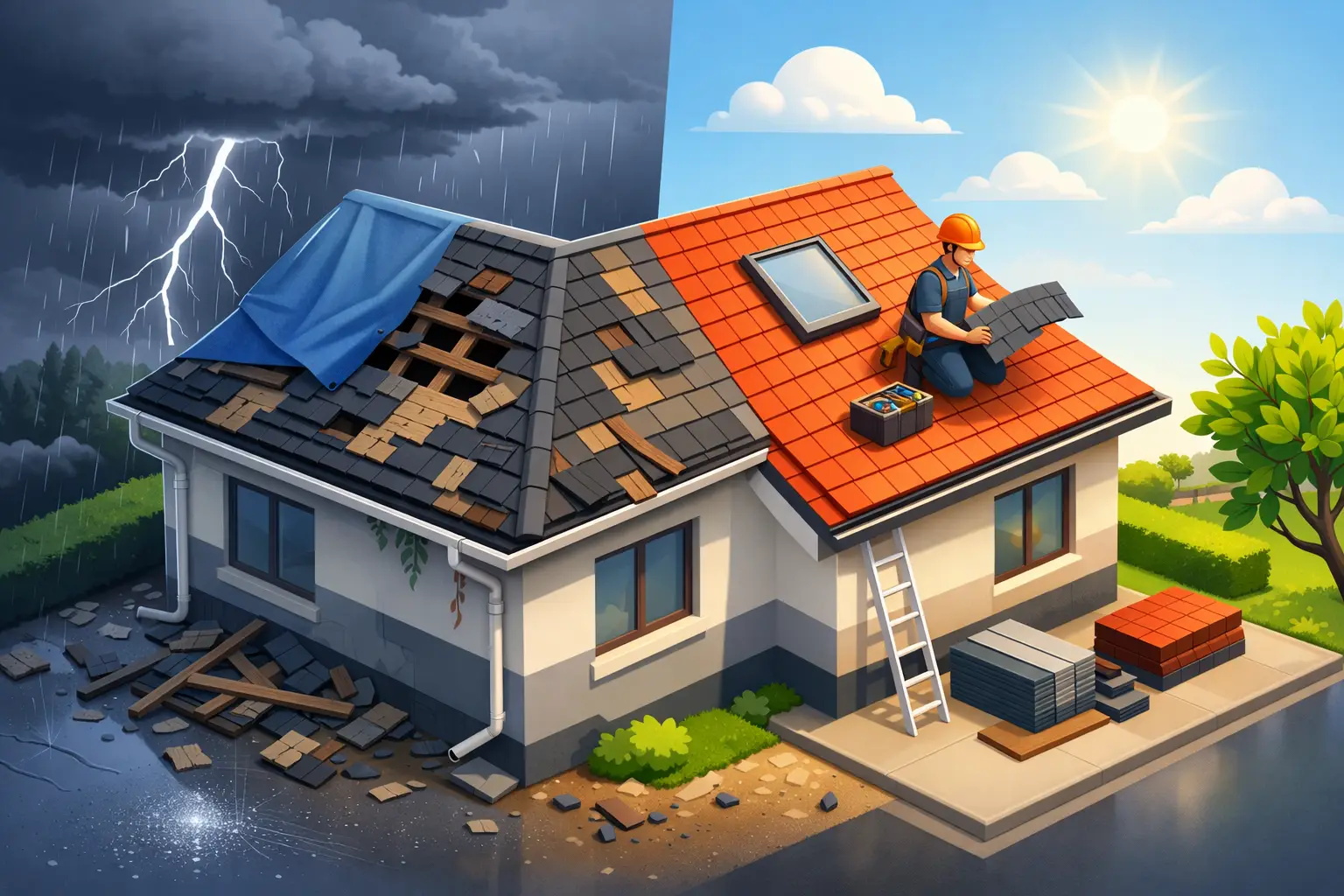
A Miami storm can leave a roof looking fine from the driveway while water is already working its way beneath tile, shingles, flashing, or a flat roof membrane. That is why deciding on roof repair or replacement after storm damage should not come down to a quick glance or the lowest quote. The right answer depends on where the roof failed, how much of the system was affected, and whether the existing roof can still protect the building through the next hurricane season.
South Florida roofs take a different beating than roofs in most of the country. Hurricane-force wind can lift materials and break seals. Wind-driven rain finds gaps that ordinary showers never reach. Then sun, humidity, and salt air accelerate the damage that remains. A small opening today can become wet insulation, damaged decking, mold concerns, and interior repairs tomorrow.
Start With Safety, Documentation, and Damage Control
After the storm passes, stay off the roof. Loose tile, slick membranes, hidden soft spots, and downed electrical lines make a homeowner inspection dangerous. Walk the property from the ground and look for obvious signs: missing or displaced materials, bent metal edging, exposed underlayment, fallen branches, debris buildup, and water staining around soffits or exterior walls.
Inside, check ceilings, attic spaces, upper-floor walls, and light fixtures for stains, bubbling paint, damp insulation, or active drips. Take clear photos and videos before moving debris or making temporary changes. If water is entering the property, reasonable emergency protection matters. A qualified roofer can tarp or secure the affected area while a full inspection determines the permanent repair.
Do not wait for a leak to become a flood. At the same time, do not let anyone sell you a full roof based only on a storm-day observation. A proper assessment should identify the source of the damage, document the condition with photos, and explain what the proposed work will actually fix.
Roof Repair or Replacement After Storm Damage: What Decides It?
The key question is not simply, “How bad does it look?” It is whether the roof system can be restored to reliable performance without creating a patchwork of weak points. A professional inspection considers the roof’s age, material, installation quality, storm damage pattern, drainage, prior repairs, and the condition of the materials below the visible surface.
When a repair is usually the smarter choice
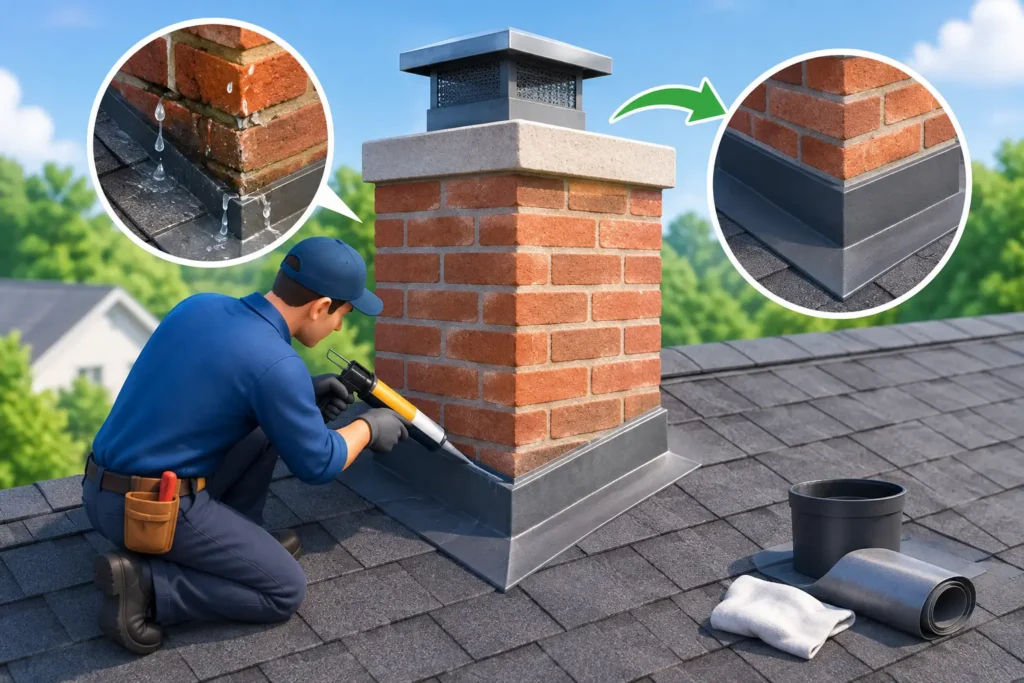
Repair often makes sense when the damage is isolated and the rest of the roof is in sound condition. Examples include a few wind-damaged shingles, several displaced tiles, a puncture in a commercial membrane, failed flashing around a vent or wall transition, or a localized leak caused by debris impact.
The repair must match the roof system and address the reason it failed. On a tile roof, replacing broken tiles without correcting damaged underlayment or flashing can leave the leak in place. On a flat roof, coating over a split seam or saturated insulation is not a real repair. On a metal roof, tightening a fastener without addressing corrosion or a failed washer may only buy a little time.
A good repair is targeted, compatible with the existing system, and supported by evidence. It should not be a vague promise to “seal it up.” Ask for photos of the damaged area and a plain-language explanation of the recommended scope.
When replacement becomes the honest answer
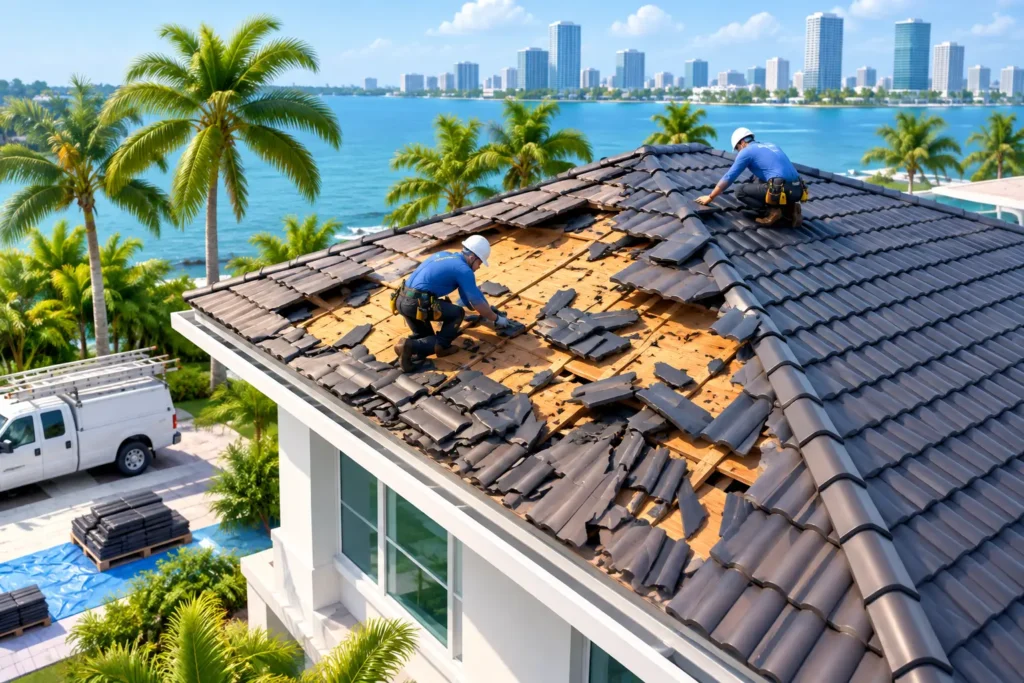
Full replacement may be the better investment when storm damage exposes a roof that was already near the end of its service life. If large sections are lifted, cracked, punctured, or waterlogged, repairs can become an expensive series of temporary fixes. The same is true when leaks appear in multiple locations or when repeated repairs have created a mismatched, unreliable roof surface.
Replacement is also worth serious consideration if the underlying deck has sustained damage, the roofing material is no longer available for a proper match, or the roof does not meet current hurricane-zone expectations. For commercial properties, widespread membrane deterioration, wet insulation, or persistent ponding water can make restoration impractical.
This does not mean every older roof needs to come off after a storm. It means the recommendation should account for the roof’s remaining useful life. Spending heavily to repair a roof that will need replacement in a year or two may not be the best use of your money. Honest pricing includes explaining that trade-off upfront.
The Miami Factors That Change the Decision
Miami-Dade roofing decisions cannot be made with generic advice. Heat and UV exposure dry out and weaken materials over time. Humidity keeps moisture in places it should not be. Salt air can corrode metal components, fasteners, and flashing, particularly near the coast. Heavy rain also tests drainage systems hard, especially on low-slope and flat commercial roofs.
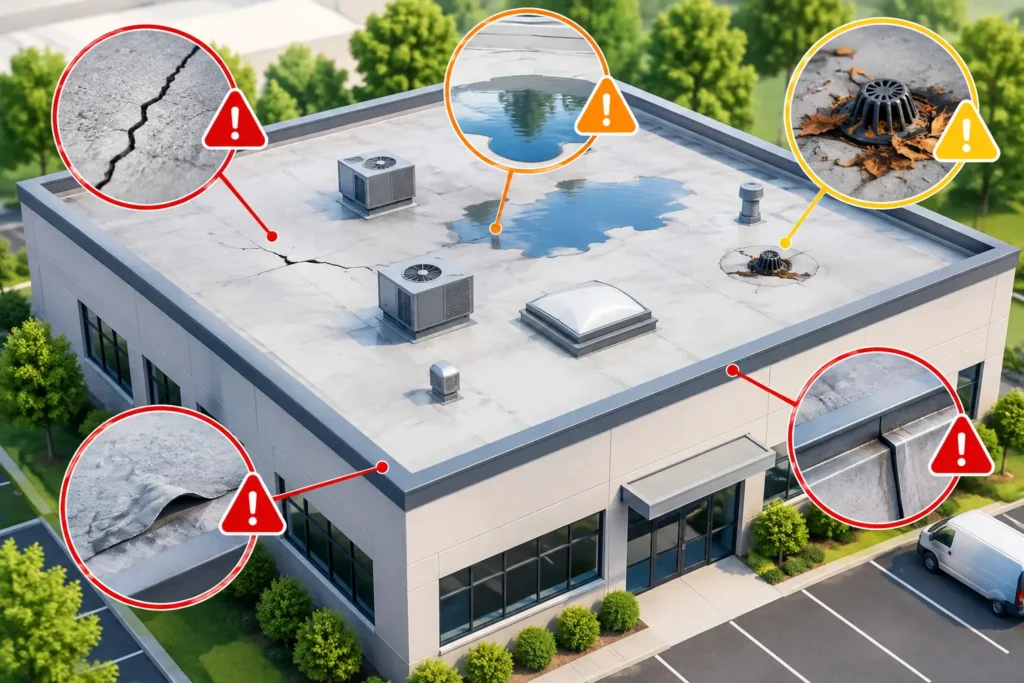
Wind damage is not always visible as missing materials. On shingle roofs, wind may break adhesive seals and reduce resistance to future storms. On tile roofs, pieces may shift enough to expose the underlayment below. On flat roofs, wind can stress seams, edge metal, penetrations, and drain details. These are the areas where trained inspection matters most.
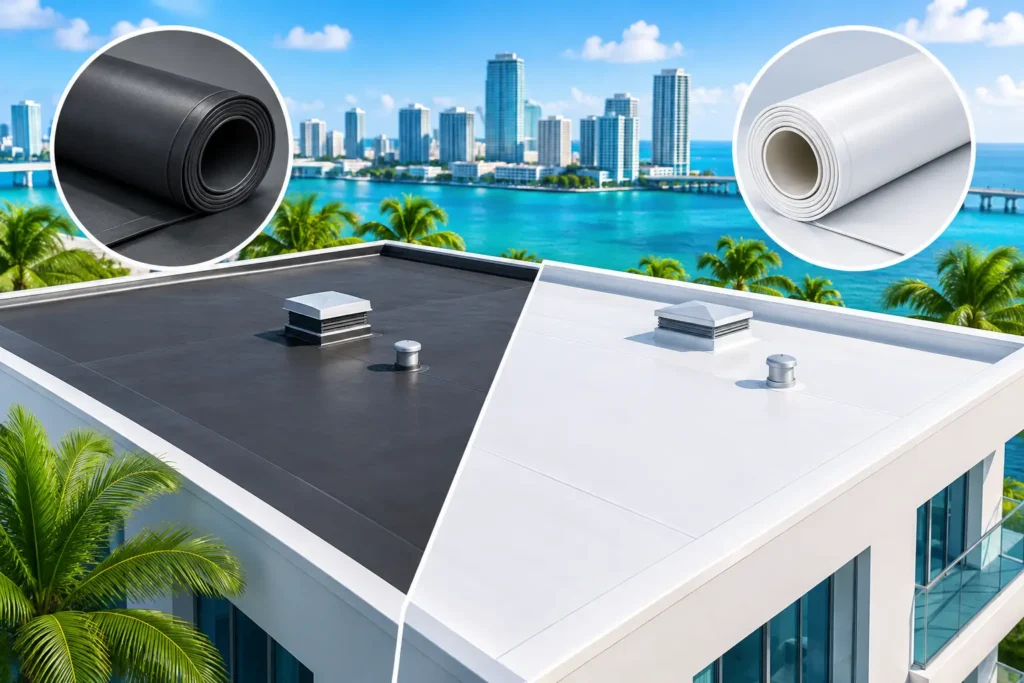
The roofing material also affects the repair-versus-replacement calculation. Tile can often be repaired when the field tiles are intact and the waterproofing layers below remain sound. Shingle repairs depend on age, matching availability, and how widespread the wind damage is. Metal roofing demands close attention to fasteners, panel movement, rust, and flashing. For TPO, modified bitumen, and other membrane roofs, seam integrity, insulation moisture, and drainage condition are central to the decision.
What a Thorough Storm Roof Inspection Should Include
A useful inspection goes beyond identifying the drip point inside the building. Water can travel along decking, rafters, insulation, or structural members before it becomes visible. The location of an interior stain is not always the location of the roof opening.
The inspection should review the roof covering, flashing, penetrations, valleys, ridges, roof edges, drains or scuppers, gutters where applicable, and the transition points where different materials meet. For flat roofs, the contractor should look closely at seams, ponding areas, curb details, and signs of moisture beneath the membrane. For tile and shingle roofs, underlayment condition and wind-related displacement deserve equal attention.
Photo documentation makes the process clearer. You should be able to see the problem, understand why it happened, and know whether the recommended work is a repair, restoration, or replacement. No mystery fees, no pressure, and no vague line items that leave you guessing what was done.
Be Careful With Quick Storm Fixes
After major weather events, property owners often hear offers for cheap sealing, fast patches, or a claim that a roof can be fixed without an inspection. A temporary tarp has its place when water is entering the building. A rushed patch can also prevent further damage while materials and approvals are arranged. But temporary work should be identified as temporary.
Watch for contractors who cannot explain licensing and insurance, refuse to provide a written scope, demand a large payment before work begins, or insist that insurance will cover work before the damage has been properly reviewed. Storm recovery creates urgency, but urgency is not a reason to skip due diligence.
For insurance-related damage, keep your photos, repair receipts, inspection documents, and records of when leaks first appeared. Your roofer can document conditions and provide a detailed estimate, but it is wise to review policy requirements and communicate directly with your insurer or adjuster. Do not delay reasonable emergency mitigation while waiting for every answer.
Choose the Fix That Will Hold Up
The best outcome is not the smallest repair or the biggest project. It is the work that restores dependable protection for the actual condition of your roof. For one property, that may be a carefully matched tile repair and new flashing. For another, it may be replacing a failing membrane system before the next round of heavy rain turns a roofing problem into a building problem.
Flash Roofing & Sheet Metal approaches storm damage with that standard: find the source, show the evidence, and recommend work designed for Miami heat, rain, wind, and salt exposure. Whether the answer is repair or replacement, the goal is the same: do it once, do it right.
If your roof has been through a storm, get it inspected before a small hidden failure has time to spread. Clear documentation and a straight answer now can protect the building, the budget, and your peace of mind when the next storm forms offshore.