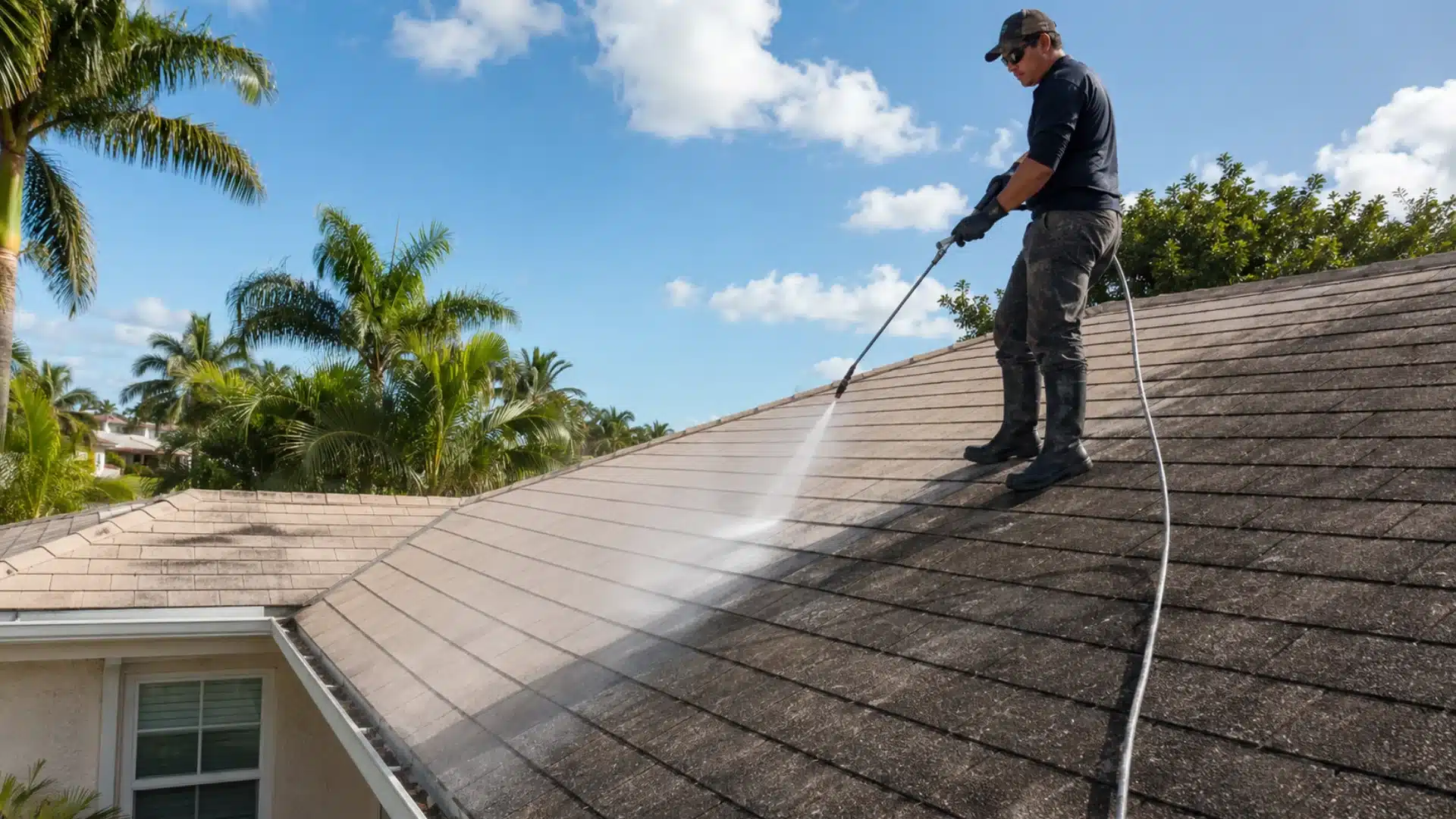
Soft wash roof cleaning is a low-pressure roof cleaning method used to remove algae, mold, mildew, moss, dirt, stains, and organic buildup from roofing surfaces. Instead of using high-pressure water, soft washing uses a controlled cleaning solution and gentle water pressure to clean the roof without damaging shingles, tiles, or other roofing materials.
This method is commonly used for asphalt shingles, tile roofs, metal roofs, and other residential roofing systems because it is safer than pressure washing and provides longer-lasting results.
Why Roofs Need Soft Washing
Over time, roofs collect dirt, moisture, algae, mold, and black streaks. In warm and humid areas, this buildup can spread faster because moisture creates the right environment for organic growth.
The black stains often seen on roofs are usually caused by algae. If left untreated, roof stains can make a property look older, reduce curb appeal, and may contribute to faster roof wear.
Soft wash roof cleaning helps remove this buildup while protecting the roof surface.
How Soft Wash Roof Cleaning Works
Soft washing is not just rinsing the roof with water. It is a step-by-step cleaning process designed to treat the source of the stains and growth.
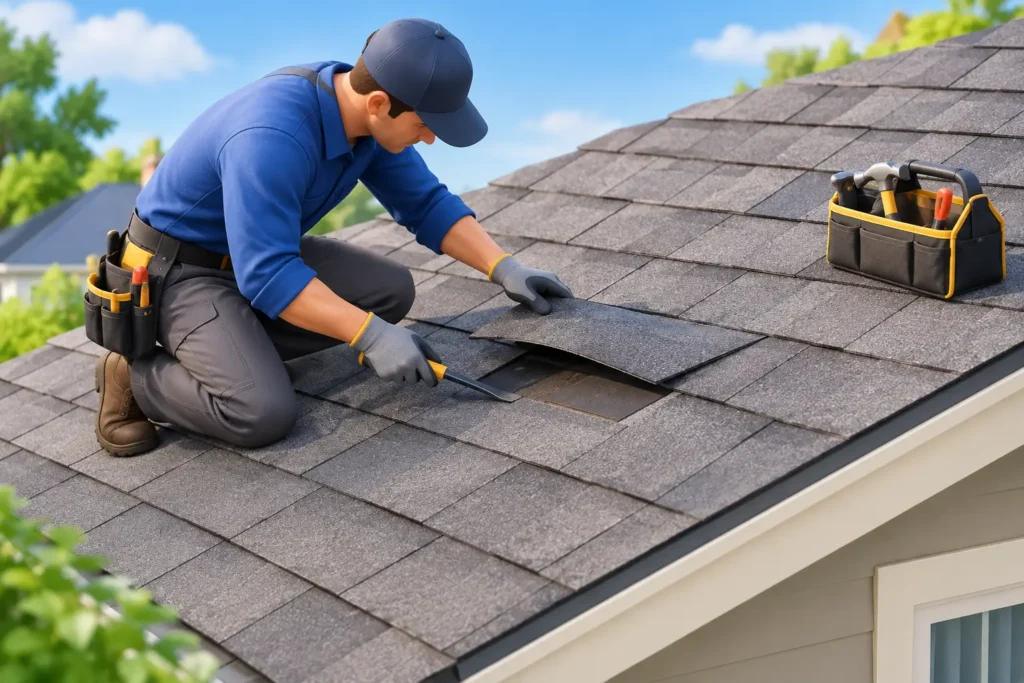
Step 1: Roof Inspection
Step 2: Property Protection
Plants, landscaping, gutters, walls, windows, and nearby surfaces are protected before applying any cleaning solution. This is an important step because roof cleaning solutions must be handled carefully.
Step 3: Cleaning Solution Application
A soft wash solution is applied to the roof using low pressure. The solution helps break down algae, mold, mildew, and other organic buildup from the roofing surface.
Step 4: Dwell Time
Step 5: Gentle Rinse
The roof is rinsed using low-pressure water. The goal is to remove the buildup without lifting shingles, cracking tiles, damaging granules, or forcing water under the roofing material.
Soft Washing vs Pressure Washing
Many homeowners confuse soft washing with pressure washing, but they are very different methods.
Pressure washing uses high-pressure water to blast away dirt. While this may work on concrete or some hard surfaces, it can damage a roof. High pressure can remove granules from shingles, crack tiles, loosen flashing, and push water under the roof surface.
Soft washing uses low pressure and cleaning solutions to treat the buildup safely. It cleans the roof without relying on force.
For most roof types, soft washing is the better and safer option.
Benefits of Soft Wash Roof Cleaning
Protects Roofing Materials
Soft washing uses gentle pressure, which helps protect shingles, tiles, and other roofing surfaces from unnecessary damage.
Removes Algae, Mold, and Mildew
Improves Curb Appeal
A clean roof can instantly improve the look of a home. Removing stains and dark streaks helps the property look newer and better maintained.
Helps Extend Roof Life
Keeping the roof clean can reduce buildup that may contribute to wear over time. Regular maintenance helps the roof stay in better condition.
Safer Than High Pressure Cleaning
What Types of Roofs Can Be Soft Washed?
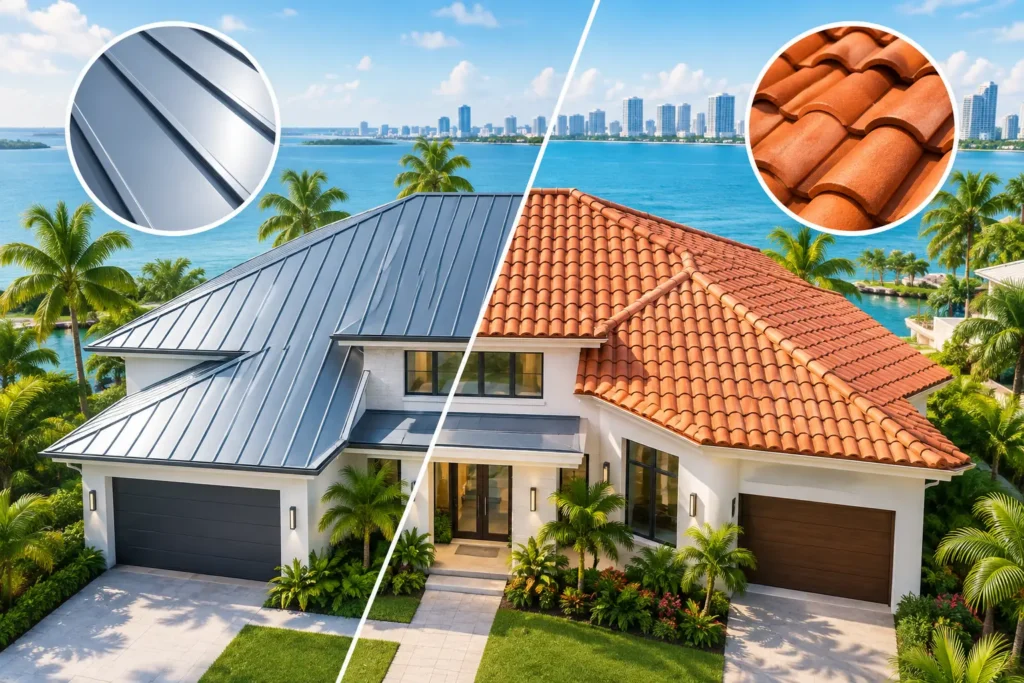
- Soft wash roof cleaning can be used on many common roof types, including:
- Asphalt shingle roofs
- Tile roofs
- Metal roofs
- Flat roofs
- Concrete tile roofs
- Clay tile roofs
- Before cleaning, the roof should always be inspected to confirm the right method and solution for the material.
How Often Should You Soft Wash Your Roof?
Most roofs benefit from soft washing every 1 to 3 years, depending on location, weather, tree coverage, roof material, and the amount of algae or mold growth.
Homes in humid climates or areas with heavy shade may need roof cleaning more often because moisture and shade encourage organic growth.
Is Soft Wash Roof Cleaning Safe?
Yes, soft wash roof cleaning is safe when done properly by trained professionals. The key is using the correct cleaning solution, proper dilution, low pressure, and careful protection for plants and surrounding surfaces.
DIY roof cleaning can be risky because of fall hazards, improper chemical handling, and the possibility of damaging the roof. For best results, roof cleaning should be handled by experienced professionals.
Can Soft Washing Remove Black Streaks?
Yes, soft washing is one of the most effective ways to remove black streaks from a roof. These streaks are often caused by algae, and soft washing helps break down and remove the growth instead of simply rinsing the surface.
Does Soft Washing Damage Shingles?
Soft washing does not damage shingles when done correctly. In fact, it is much safer than pressure washing. High-pressure cleaning can strip protective granules from shingles, while soft washing uses gentle pressure and a cleaning solution to do the work.
Signs Your Roof Needs Soft Washing
Your roof may need soft washing if you notice:
- Black streaks on the roof
- Green algae or moss growth
- Mold or mildew stains
- Dirt buildup
- Dark patches
- Roof looking old or discolored
- Reduced curb appeal
- Stains returning after basic rinsing
Should You Soft Wash or Replace the Roof?
Final Thoughts
Soft wash roof cleaning is a safe and effective way to clean your roof without using damaging high pressure. It removes algae, mold, mildew, dirt, and stains while helping your roof look cleaner and better maintained.
If your roof has black streaks, organic growth, or visible staining, soft washing may be the right solution. A professional roof cleaning team can inspect your roof, recommend the correct method, and clean it safely.
Frequently Asked Questions
What is soft wash roof cleaning?
Is soft washing better than pressure washing a roof?
How long does soft wash roof cleaning last?
Can soft washing remove moss?
Is soft washing safe for roof tiles?
Can I soft wash my roof myself?
Protect Your Flat Roof Before Miami's Rainy Season
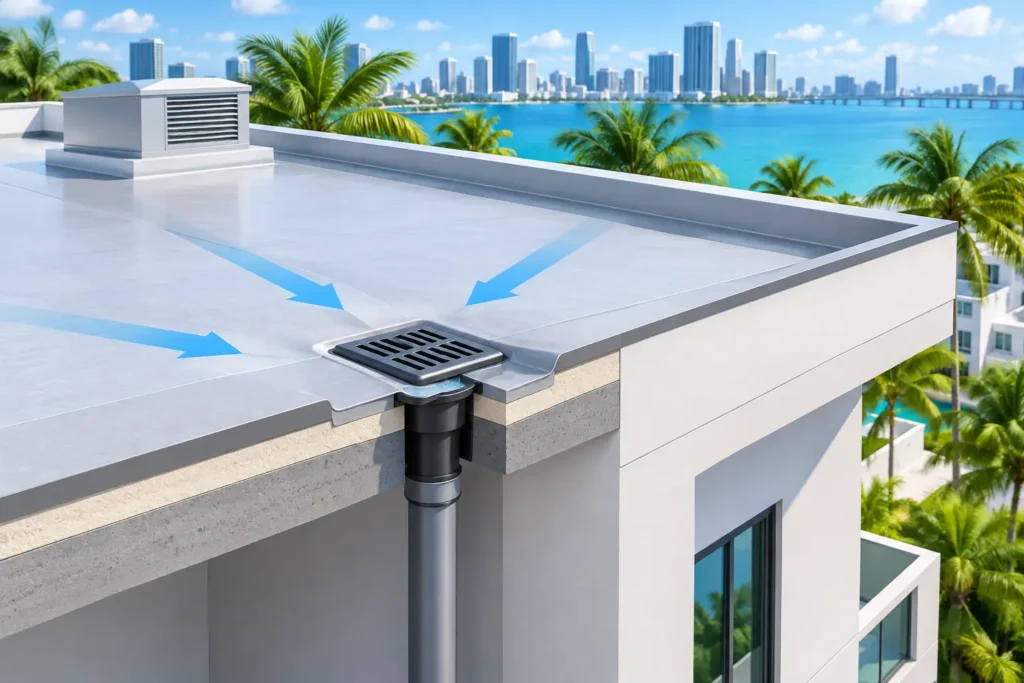
Miami’s rainy season runs May through October. Every week of delay adds risk. A flat roof with compromised waterproofing does not just leak. It traps moisture in the deck, grows mold behind walls, and drives up your FPL bill as saturated insulation loses its thermal value.
From single-family homes in Kendall to 20,000 square foot warehouses in we have waterproofed hundreds of flat roofs across Miami-Dade and the Keys. Whether your building needs a silicone coating, SPF, or we start with an honest assessment of what your roof needs.
30 years of roofing experience. 59 five-star Google reviews. Licensed for HVHZ work in Miami-Dade. Hablamos Espanol.
Disclaimer: All pricing provided is for informational purposes only. Actual costs will vary based on specific project requirements and property conditions. Reach out to us for a free, personalized estimate.