Hurricane proof roofing is the phrase every Miami-Dade homeowner types into Google in mid-May, and it is the phrase every honest local roofer pushes back on. No roof is fully hurricane-proof. The Florida Building Code rates materials. Hurricane proof roofing is a hurricane-rated system, installed inside the Miami-Dade High Velocity Hurricane Zone, that passed wind, water, and impact tests at a documented threshold.
Standing seam metal, concrete tile, impact rated shingles, and modified bitumen flat systems all have HVHZ paths. Each one performs differently under wind load. Each one carries a different cost-per-year-of-life. Here is what holds when the wind crosses 130 mph, what fails, and what 30 years of storm damage roof repair calls in Miami-Dade have taught us about choosing the right hurricane proof roofing for your specific home.
Why Hurricane Proof Roofing Has Limits
The Florida Building Code splits the state into wind zones. Miami-Dade and Monroe County sit inside the High Velocity Hurricane Zone. Inside HVHZ, every roofing product must carry a current Notice of Acceptance from Miami-Dade County before it can be permitted, inspected, or insured.
The Notice of Acceptance is the document that tells the building department a manufacturer tested their product to local wind, water, and impact thresholds and passed. HVHZ roofing requirements are the strictest in the country.
What HVHZ Tests Actually Measure
The HVHZ test bench looks for three failures. Uplift, which pulls a roof off the deck. Water intrusion under wind-driven rain. And missile impact, which simulates a 2-by-4 fired at the roof at 50 feet per second.
A product with an HVHZ NOA has survived all three at the rating printed on the document. Without an NOA, the product cannot be legally installed inside the zone.
Wind Rating Is a Lab Number, Not a Promise
A 160 mph rating does not mean the roof stays intact at 160 mph sustained wind on your specific home, deck, and underlayment. Ratings are laboratory numbers. Real-world survival depends on the install crew, the substrate, the age of the framing, and what the storm throws at the field.
How Andrew, Wilma, and Irma Reshaped the Code
Hurricane Andrew in August 1992 rewrote everything. The post-Andrew building code introduced wind-zone mapping and the HVHZ designation. It required NOA-approved products and mandatory hurricane straps at the roof-to-wall connection.
Wilma (2005) reinforced opening protection. Irma (2017) exposed the gap between code-built homes and pre-1994 homes. Every code update since 1994 traces back to a roof system that failed in one of those three storms.
Standing Seam Metal: The 160 mph Class
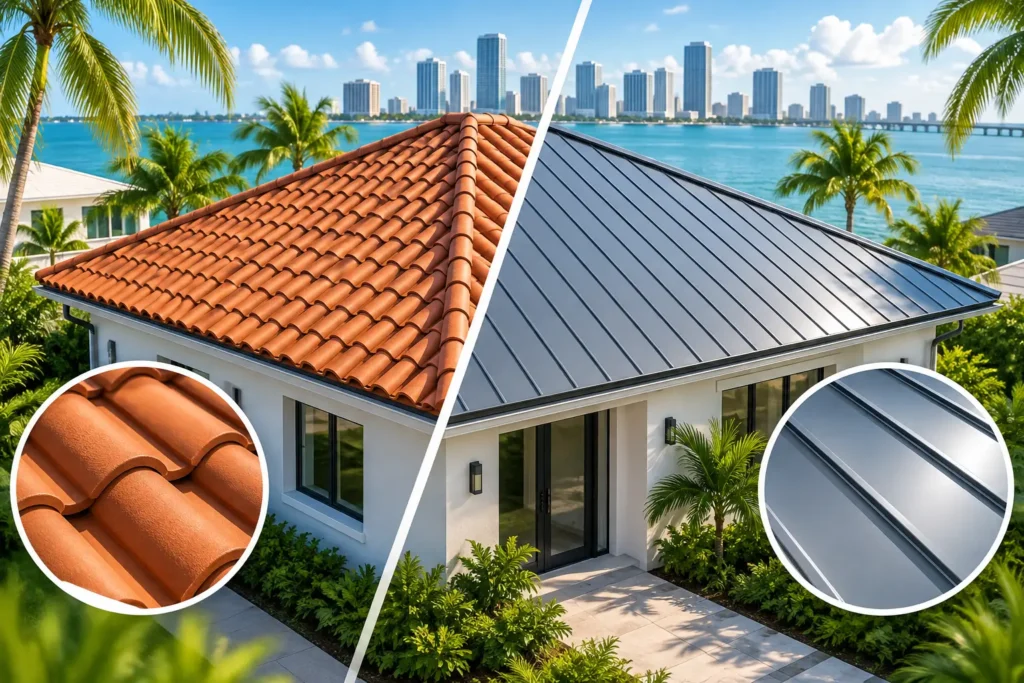
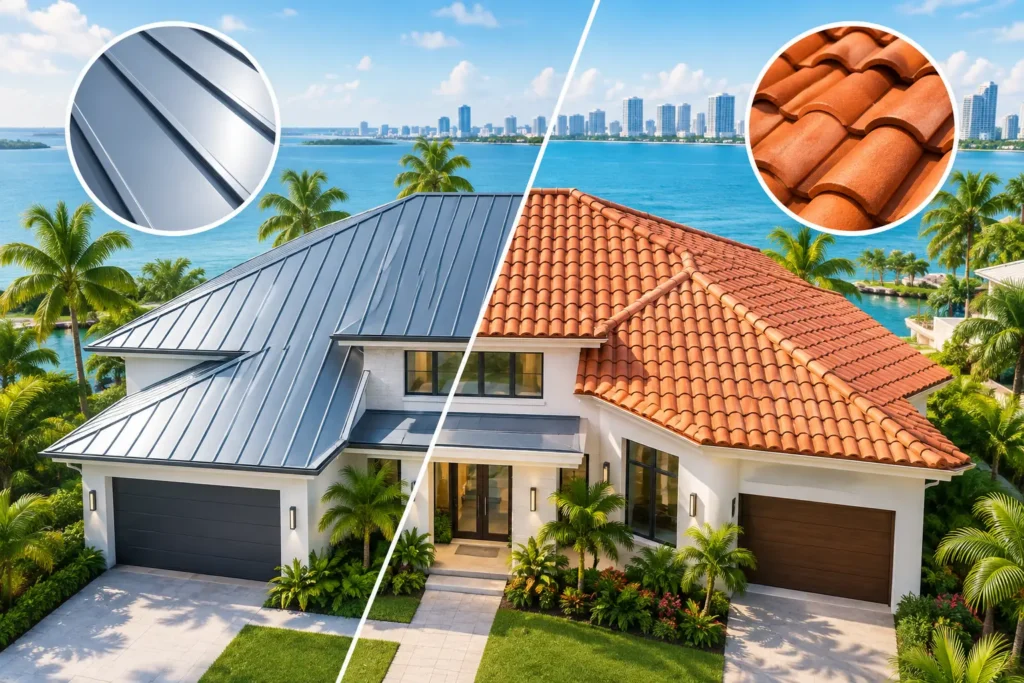
Standing seam is the highest-rated hurricane proof roofing system available under HVHZ. A hurricane rated metal roof in the leading product lines carries an NOA at 160 mph design pressure or higher. Some 24-gauge galvalume panels rate above 180 mph in specific configurations. For a homeowner serious about the windward face of their home, this is the conversation.
Concealed Fasteners Hold Where Exposed Fasteners Fail
Standing seam panels lock together at the rib. The clips that hold the panel down sit underneath. Nothing is exposed to wind, water, or UV.
Compare that to an exposed-fastener metal panel, which uses a neoprene-washered screw driven through the panel face. The screws back out over time. The washers compress and crack. The first sustained 100 mph gust pulls them loose.
In Cat 4 footage from Andrew, the metal panels that flew were almost universally exposed-fastener. The standing seam panels that stayed are still on those houses today.
NOA Approval and Your Insurance Underwriting
When you replace a roof in HVHZ, the closeout inspection requires the installer to file the NOA numbers for every component. That stack of paperwork follows your home into the insurance underwriting process.
A hurricane rated metal roof installed to NOA spec, with documented hurricane straps and a self-adhered secondary water barrier, scores strongly on the wind mitigation inspection that your insurer uses to set your premium. The OIR-B1-1802 wind mit form rewards systems built to current code. Standing seam usually checks the strongest credits on that form.
Where Metal Is the Right Call in Miami-Dade
Metal makes the most sense on simple roof shapes (hip, low-pitch, minimal penetrations) and in coastal exposure zones where salt-air and wind drive the highest material stress. It also fits homes where the owner plans to stay 20-plus years.
A standing seam roof installed correctly will outlive almost any other system. Properties on coastal Miami Beach properties take the worst of both salt and wind, and a hurricane rated metal roof is the answer there more often than not.
Concrete Tile: The Miami Standard, With Caveats
Concrete tile is the most common premium roofing material in Miami-Dade. Tile shrugs off heat. It looks right on Mediterranean Revival, Spanish Colonial, and tropical modern architecture. The material lifespan is 30 to 50 years when installed correctly.
The neighborhoods built around the Miami aesthetic (Coral Gables, Coconut Grove, Pinecrest, parts of Doral) are tile-heavy and have been for generations. That is concrete tile roofing as it exists today.
Why Tile Holds in Coral Gables and Pinecrest
Loose Tile as a Projectile
Here is the caveat homeowners do not hear enough. A tile roof installed before the post-Andrew code rewrite is not fastened the same way as a tile roof installed today. Pre-1994 tile installations relied on mortar or a single nail at the head of each tile. A 110 mph gust strips them.
Once a tile lifts in a storm, it becomes a projectile aimed at your neighbor’s window, your own gable end, or the next street over. If your tile roof is older than 30 years, the question is not whether the field is intact. The question is whether each tile is mechanically fastened to current HVHZ spec.
How HVHZ Tile Differs From a Pre-Andrew Roof
Current HVHZ tile installation requires every tile to be either screwed, foam-adhered, or both. A self-adhered underlayment goes beneath. Hip and ridge tiles are separately fastened. Battens (where used) attach to the deck at the spec spacing in the NOA.
The hardware count on a code-current tile reroof is two to three times what a 1985 install used. That hardware is what the price reflects. It is also why a current-code tile roof rarely fails the field even when shingles are flying across the street.
Impact Rated Shingles: The Mid-Range Path
Class 4 Impact Rating and What It Buys You
Class 4 is the highest impact rating UL gives an asphalt shingle. The shingle survived a 2-inch steel ball dropped from 20 feet without cracking.
In a hurricane, the projectile threat is bigger than that. Class 4 still handles the wind-driven debris that creates most of the cosmetic damage we see in post-storm inspections. Class 4 also unlocks insurance credits in Florida that lower-rated shingles do not, on most carriers.
Wind Uplift Numbers for HVHZ-Approved Shingles
HVHZ-approved asphalt shingle product lines rate to 110, 120, or 130 mph design pressure. The 130 mph products almost always require a six-nail pattern, NOA-approved starter strips, and a self-adhered underlayment beneath.
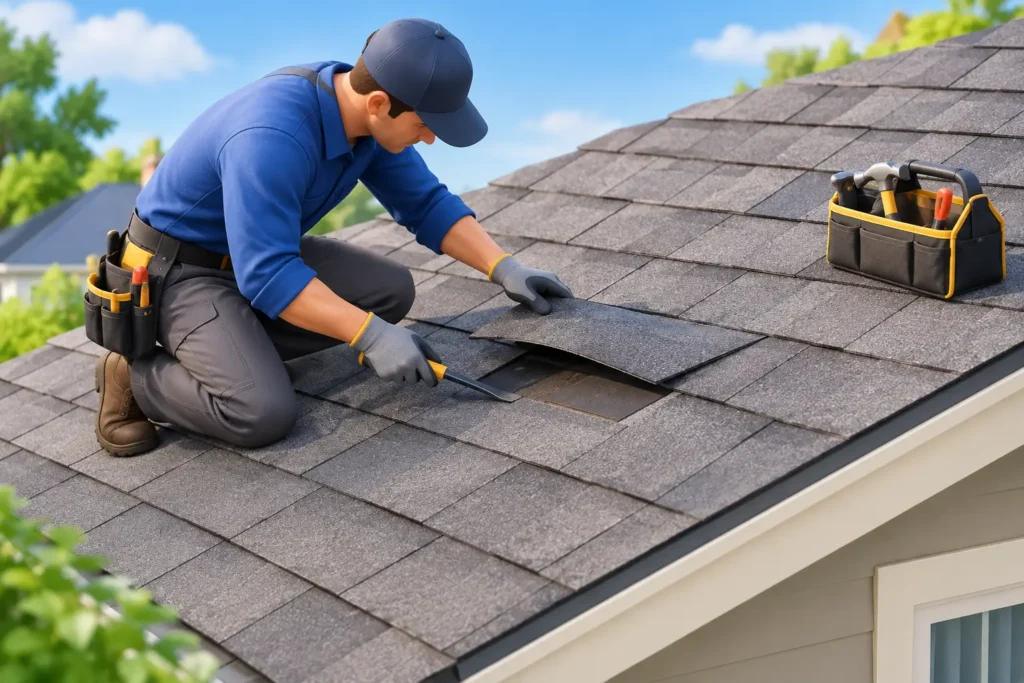
Skip any one of those and the warranty disappears along with the wind rating. Most shingles we pull off Miami roofs in storm damage roof repair calls came off because the install used four nails instead of six, or because the underlayment beneath was 30-pound felt instead of peel-and-stick.
When Shingle Is the Right Choice
Shingle makes sense on steeper roof pitches (where wind exposure is lower) and on inland properties (Kendall, parts of South Miami, west Doral). It also fits homes where the budget rules out metal or tile but the homeowner still wants a full HVHZ-current replacement with insurance credits in play.
Done right, impact rated shingles on a six-nail HVHZ install will hold to 130 mph and last 25 to 30 years.
Flat Roof Systems Under Hurricane Wind
Modified Bitumen, TPO, and EPDM Under Wind Load
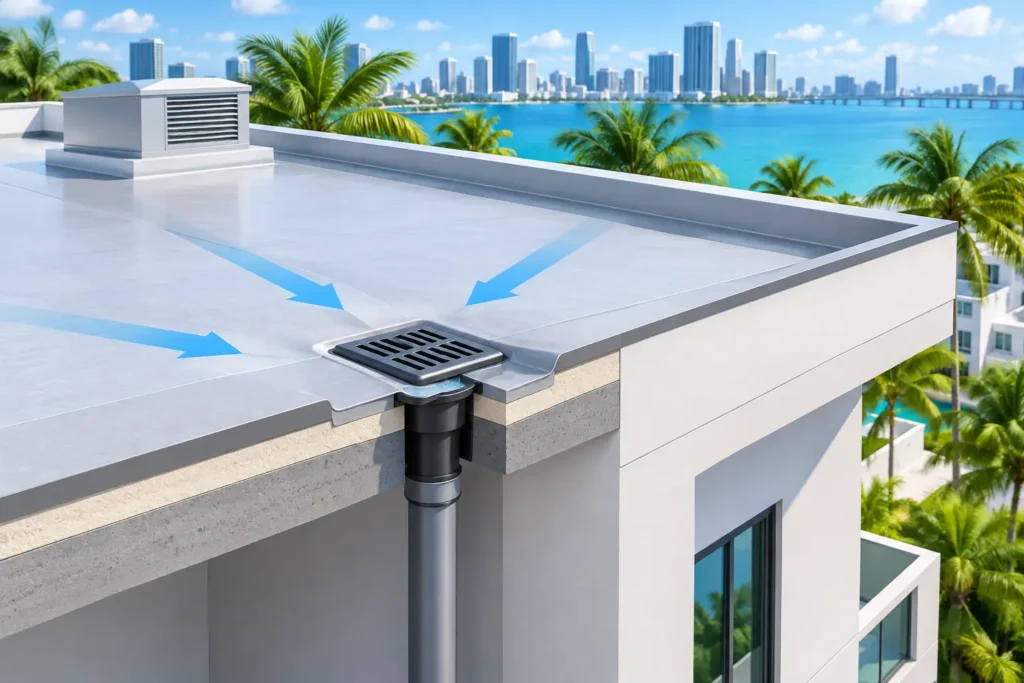
The three flat-roof families you will see in HVHZ are modified bitumen (the workhorse on residential flat roofs), TPO (single-ply white membrane, increasingly common on commercial), and EPDM (older single-ply, being replaced). All three carry NOAs and all three reach 130 mph or better when installed and edge-detailed to spec.
None of them survive a poor edge install. Reach the flat roofing systems for Miami homes deeper dive if you are weighing a re-cover versus a full tear-off.
Why Edge Detail Matters More Than the Field
Wind under a flat roof comes in from the edge. If the edge metal is loose, the gust gets under the membrane and peels it up like a sticker.
We have seen entire commercial roofs flap off in a Cat 1 because the perimeter termination was nailed with the wrong fasteners. The field of the roof was fine. The edge gave the wind a handhold.
Hialeah Warehouses and Doral Commercial
Commercial flat roofs in Hialeah and Doral are larger, with higher parapets and longer fastener runs. A commercial spec demands fully adhered membranes, reinforced edge metal, and attachment patterns that match the building’s wind zone. We design those installs to a different standard than a residential addition
How to Decide Before June 1
Roof Age and Code Compliance
If your roof is older than 25 years, or older than the 1994 code rewrite, replacement is the conversation regardless of what is on it now. Pre-code installs do not score on the wind mit inspection. They put your home, your insurer, and your neighbors at risk in any major event.
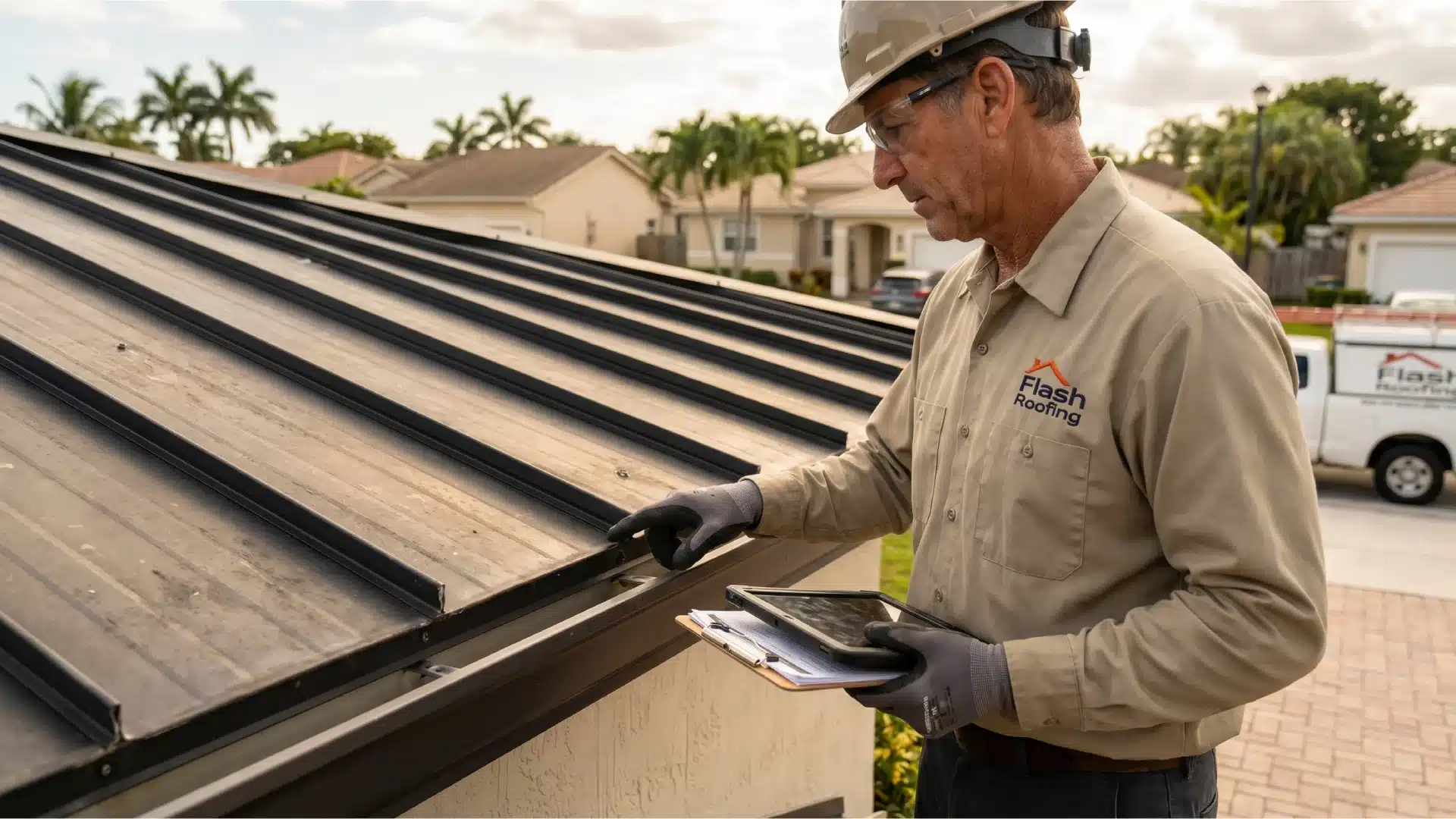
If your roof is 15 to 25 years old, schedule a pre-season roof inspection and let the data decide.
Hurricane Shutters vs Roof Reinforcement
Expert Insight
With over 30 years serving Miami-Dade homeowners on hurricane proof roofing, the pattern after every named storm is the same. The roofs that fail are the ones installed before the code caught up, or installed after the code with shortcuts on the fastening pattern.
The houses we built to current code came through Andrew, Wilma, and Irma. The wind damage roof repair calls came from earlier work where another contractor cut a corner or used the wrong nail. The biggest variable in whether your roof survives a Cat 4 is not the material on the brochure. It is whether the crew followed the NOA and whether the inspector caught the parts that mattered.
Frequently Asked Questions
What is the most hurricane-resistant roofing material for Miami-Dade homes?
Does HVHZ certification mean my roof is hurricane proof?
How much wind can a metal roof withstand in Miami?
Are concrete tile roofs better than metal in a hurricane?
Will hurricane proof roofing lower my Florida homeowners insurance premium?
Get Ahead of June 1
The hurricane proof roofing materials conversation is the simple part. The hard part is finding a Miami-Dade crew that has filed the NOAs, pulled the HVHZ roofing requirements paperwork, and walked the roofs in this zone long enough to know which fastener pattern matters and which corner the inspector checks first. That is the part 30 years of local experience earns you.
If you searched for a storm damage roofing contractor near me this season, or if you want to know where your current system actually scores on the wind mit inspection, this is the window. We walk the roof, document what we find, and give you a straight answer on whether replacement is the call or whether you have one more season in the current system.
For hurricane roof repair in Miami or a pre-season hurricane proof roofing assessment, call Flash Roofing at 786-237-9440. Licensed, insured, and on Miami-Dade roofs for over 30 years. 59 five-star Google reviews from your neighbors.
Disclaimer: All pricing provided is for informational purposes only. Actual costs will vary based on specific project requirements and property conditions. Reach out to us for a free, personalized estimate.