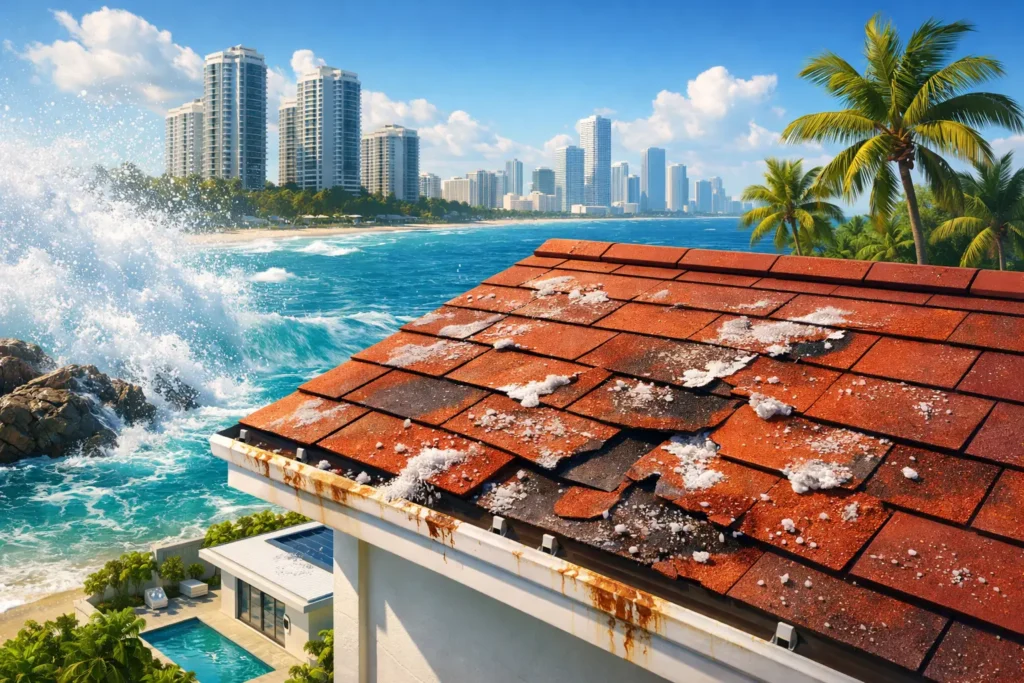

A roof can look fine from the street and still fail where it matters most: at the edges, fasteners, seams, flashing, or connections to the structure. This guide to hurricane roof codes explains what Miami-Dade property owners need to know before approving a repair, replacement, or new roof. The goal is not to turn you into a code inspector. It is to help you recognize whether a contractor is planning real hurricane-ready work or selling a patch that may not hold up when the wind starts pushing.
Miami roofs are not built for ordinary weather. Heat breaks down materials, salt air corrodes metal, afternoon storms test drainage, and hurricane winds pull upward on every exposed section of the roof. Local code requirements exist because the roof is a system, not just a surface.
Why Miami-Dade Roof Codes Are Different
Miami-Dade County sits in Florida’s High-Velocity Hurricane Zone, commonly called the HVHZ. That designation carries stricter roofing requirements than many other areas of Florida. A roofing system must be selected, installed, and inspected with hurricane wind forces in mind.
Wind does not hit every part of a roof equally. Corners and perimeter edges experience greater uplift than the middle of the roof. That is why a proper installation may require different fastening patterns, enhanced edge metal, or specific attachment methods in those high-pressure areas. A low bid that treats every section of the roof the same can leave the most vulnerable areas underprotected.
The code also considers the building itself. Roof height, shape, location, exposure, parapet walls, and surrounding structures can affect required design pressures. A flat commercial roof on an open site may face different wind demands than a low-slope roof sheltered by nearby buildings. There is no honest one-size-fits-all answer.
The Main Hurricane Roof Code Requirements to Understand
A good contractor should be able to explain the documents, materials, and inspections that apply to your project in plain language. You should not have to chase down answers after the work begins.
Permits and Required Inspections
Most roof replacements in Miami-Dade require a permit, and many significant repairs do as well. The exact threshold can depend on the scope of work, the roof type, and local permitting rules. Do not assume a permit is unnecessary just because the job is described as a repair.
Permitting creates a paper trail and requires inspections at key stages. For a replacement, that may include a dry-in inspection before the final roof covering is installed, followed by a final inspection. The inspection process helps verify that the roof deck, underlayment, flashing, fastening, and finished system are installed as approved.
A contractor offering to skip permits to save money is asking you to take on unnecessary risk. Unpermitted work can create trouble during an insurance claim, property sale, or future renovation. It can also leave you with no independent confirmation that hidden work was done correctly.
Approved Roofing Products
In the HVHZ, roofing materials and assemblies generally must carry the appropriate approval for their intended use. Depending on the product, this may mean a Florida Product Approval or a Miami-Dade Notice of Acceptance, often called an NOA.
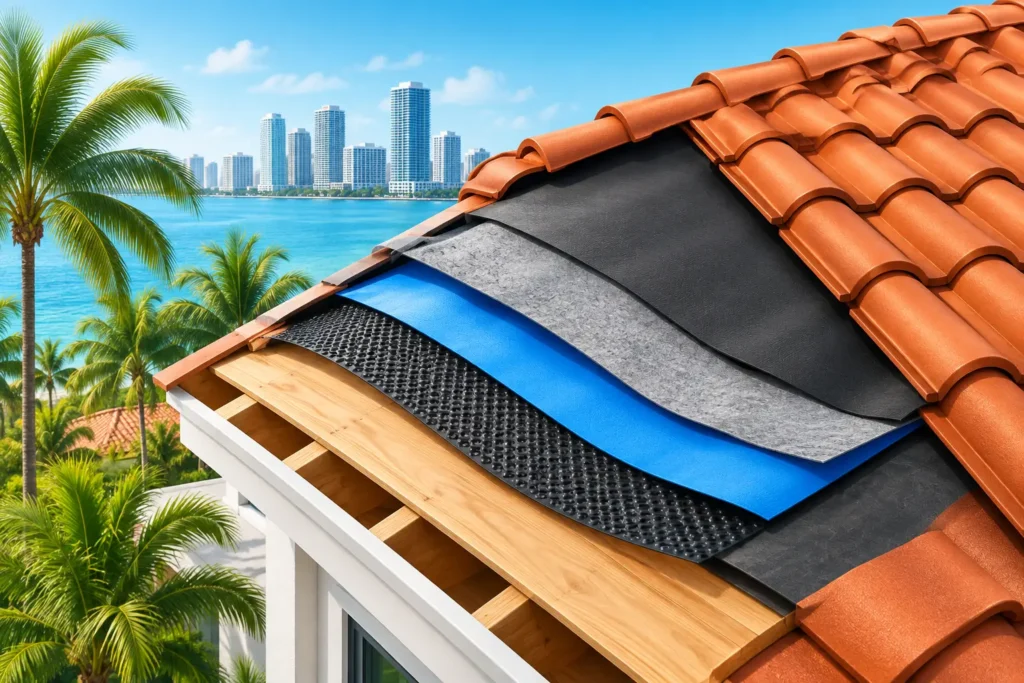
Approval is not just a label on a shingle, tile, membrane, or metal panel. It identifies a tested assembly and the conditions under which it can be used. For example, an approved membrane system may specify the exact insulation, fastener type, fastener spacing, adhesive, cover board, and edge detail required to achieve a certain wind rating.
This is where shortcuts often hide. A contractor may install an approved product but use it outside the approved assembly. The material itself may be legitimate, while the completed roof does not match the tested method. Ask what approval applies to your roof and whether the proposed installation follows it.
Wind Design Pressures and Attachment
Hurricane roof codes use design pressures to determine how strongly the roof system must resist uplift. In simple terms, these numbers tell the installer how much wind force a roof area is expected to handle.
For shingle, tile, metal, and flat roofing systems, attachment matters as much as the finish material. Fasteners must be the correct type, length, and spacing for the roof deck and approved system. On a low-slope roof, that may involve a specified fastening pattern for insulation boards and membrane sheets. On tile, it can involve approved mechanical attachment, foam adhesive, or a combination designed for the roof’s wind zone.
The roof deck must also be sound. If the wood deck is rotted, thin, split, or poorly attached, placing a new roof over it does not solve the root problem. During a tear-off, damaged decking should be identified, documented, and repaired before the new system goes down.
Edge Metal, Flashing, and Penetrations
Wind often starts peeling a roof at the perimeter. Drip edge, coping, gravel stops, termination bars, and other edge details need to be properly secured because they carry significant uplift pressure. These pieces may look minor, but their failure can allow wind-driven rain beneath the roofing system.
Flashing deserves the same attention. Chimneys, wall transitions, skylights, vents, curbs, pipes, and equipment penetrations are common leak points. A coating or surface patch may slow a leak for a while, but it cannot correct failed flashing, loose metal, or a bad transition detail underneath.
For commercial properties, rooftop HVAC units, drains, scuppers, and parapet walls add more complexity. The right detail depends on the roof assembly and drainage layout. This is one reason a commercial roof should be evaluated as a complete system, not quoted from a few satellite images.
Re-Roofing Rules and Existing Conditions
Florida code limits how many layers of roofing may remain on a structure in many situations. In practice, a second layer is not automatically a good option even when it may be allowed. Installing over an existing roof can hide wet insulation, deck damage, old leaks, failed flashings, and attachment problems.
A tear-off costs more upfront, but it gives the contractor access to the deck and underlying details. For an aging Miami roof with recurring leaks, that visibility is often worth it. The right choice depends on the existing roof, the building’s condition, the material proposed, and what the permit reviewer requires.
Older homes can raise additional questions. If the deck needs extensive repair or the project affects structural connections, further documentation or engineering may be needed. That is not a contractor creating extra work for no reason. It can be necessary to show that the roof and structure can meet current requirements.
Questions to Ask Before You Sign
You do not need a long list of technical terms to protect yourself. Ask whether the project requires a permit, which approved roofing assembly will be used, and what wind-pressure requirements apply to your property. Ask how the contractor will inspect and address damaged decking, flashing, and wet materials found after tear-off.
Also ask who will be on site, whether the contractor is licensed and insured, and how changes will be documented. Roofing can reveal hidden conditions. The problem is not that a change may be needed. The problem is finding out after the fact with no photos, no explanation, and no clear price.
A professional proposal should identify the roof system, major materials, scope of tear-off or repair, flashing approach, and permit responsibility. If the quote is vague, compare more than the bottom-line number. A cheaper proposal may exclude the parts of the job that keep water and wind from getting under the roof.
A Practical Guide to Hurricane Roof Code Compliance
The best way to approach code compliance is to treat it as protection for your property, not as paperwork that slows the job down. Start with a thorough roof inspection. The contractor should assess the visible roof, drainage, edges, penetrations, and signs of moisture or deck trouble. For repairs, the scope should address the reason the roof failed, not simply cover the stain on the ceiling.
Before materials arrive, confirm the permit plan and the approved assembly. During work, expect photo documentation of conditions that were hidden by the old roof, especially deck repairs and flashing issues. After completion, keep your permit records, final inspection information, warranty documents, and photos with your property files.
For Miami homeowners and building owners, hurricane-ready roofing is not about buying the most expensive material. It is about using the right approved system, attaching it correctly, and refusing shortcuts at the places wind and water exploit first. If you are unsure what your roof needs, a clear inspection and an honest explanation from a local contractor such as Flash Roofing & Sheet Metal can give you the facts before storm season makes the decision for you.