
A ceiling stain that appears two days after a storm is not a small problem that can wait for the next rainy season. In Miami, water can travel beneath tile, through insulation, or along a roof deck before it shows up indoors. Roof repair after storms starts with finding where the roofing system failed, not just where water became visible.
The right response protects your property, documents what happened, and prevents a minor opening from becoming wet insulation, mold, damaged drywall, or a larger roof failure. Whether you own a home, manage a condo building, or operate a commercial property, the first few days after severe weather matter.
Start With Safety, Not a Roof Climb
After high winds, lightning, and heavy rain, do not climb onto the roof to investigate. Wet tile, loose shingles, damaged metal panels, and slick flat roofing surfaces can turn a quick look into an injury. Downed power lines, broken branches, and unstable gutters add more risk.
Walk the property from the ground if conditions are safe. Look for missing or shifted tiles, lifted shingles, exposed underlayment, bent flashing, loose fascia, debris impacts, and sections of roof that appear uneven. On a flat roof, watch for standing water that remains after the weather clears, displaced coping metal, torn membrane edges, or clogged drains.
Inside, check ceilings, attic spaces, upper walls, and around vents or skylights. Take clear photos and note the date, time, and location of every sign of damage. If water is entering the building, move valuables, place containers beneath active drips, and keep electricity away from wet areas. A temporary tarp may be appropriate, but only when installed safely and secured in a way that does not create more damage.
Why Miami Storm Damage Is Different
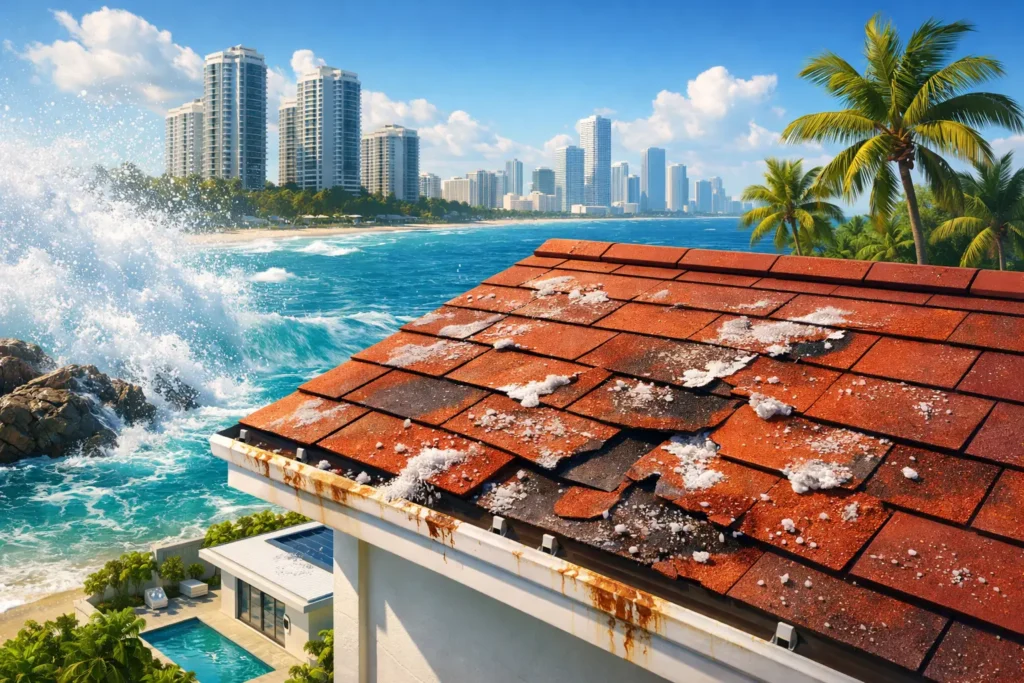
A Miami roof is not dealing with rain alone. It takes intense UV exposure, high humidity, salt air, wind-driven rain, tropical storms, and sudden temperature changes. Those conditions wear down roofing materials and the details that keep water out: flashing, sealant, fasteners, pipe boots, valley protection, drains, and edge metal.
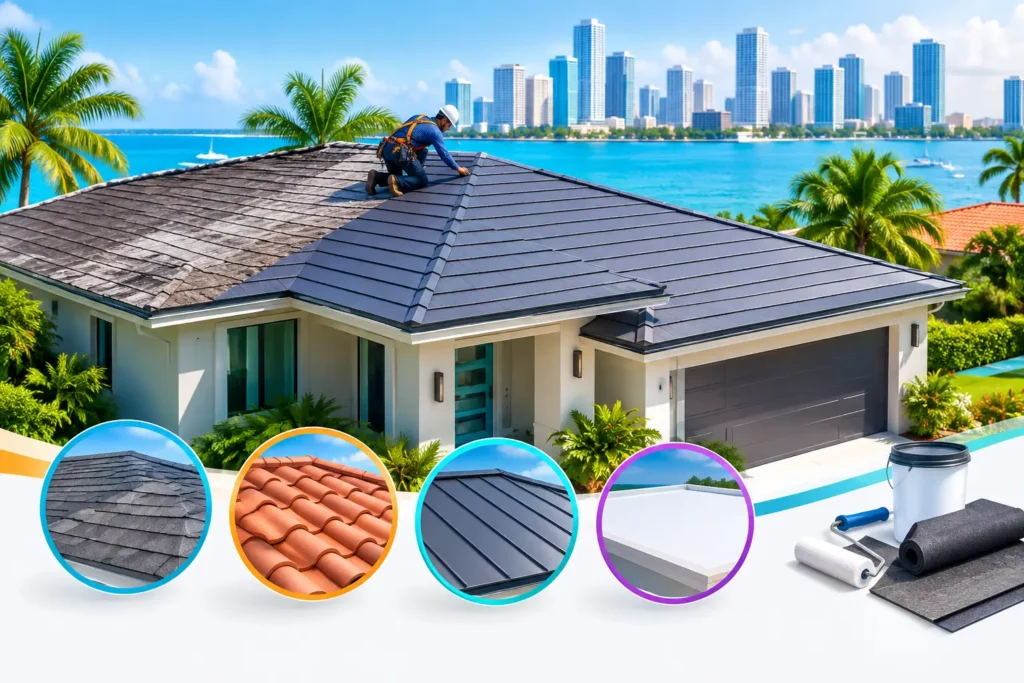
Wind-driven rain is especially revealing. A roof may look acceptable in ordinary rainfall but leak when wind forces water beneath lifted materials or through a weak flashing transition. Tile roofs can lose individual tiles or crack at attachment points. Shingle roofs may have creased, lifted, or missing tabs. Metal roofing can develop loosened fasteners, damaged seams, or corrosion around penetrations. Flat and membrane roofs can suffer punctures, open seams, ponding water, and separation at walls or curbs.
That is why a storm inspection should not be limited to the most obvious damaged area. The visible problem may be the result of a weakness several feet away.
What a Proper Storm Roof Inspection Should Show
A dependable inspection gives you evidence, not vague assurances. The contractor should identify the roof system, inspect the full surface where accessible, examine vulnerable transitions, and look for signs of moisture intrusion below the roofing material.
Photo documentation matters. It helps property owners understand what is damaged, gives managers a record for maintenance files, and can support an insurance claim when storm damage is covered. The photos should show both the close-up defect and its location on the roof whenever possible.
A clear inspection also separates storm-related damage from pre-existing wear. That distinction is important. A storm may have caused a broken tile, but a leak can also expose old underlayment that had already reached the end of its useful life. Honest contractors explain both conditions. They do not promise that a small patch will solve a larger aging-roof issue, and they do not push replacement when a targeted repair is the right answer.
Roof Repair After Storms Means Fixing the Cause
The fastest repair is not always the best repair. Covering a crack with sealant may slow a leak temporarily, but it will not correct wind-lifted materials, failed flashing, deteriorated underlayment, or water trapped under a membrane. In South Florida, superficial patches often fail when the next hard rain arrives.
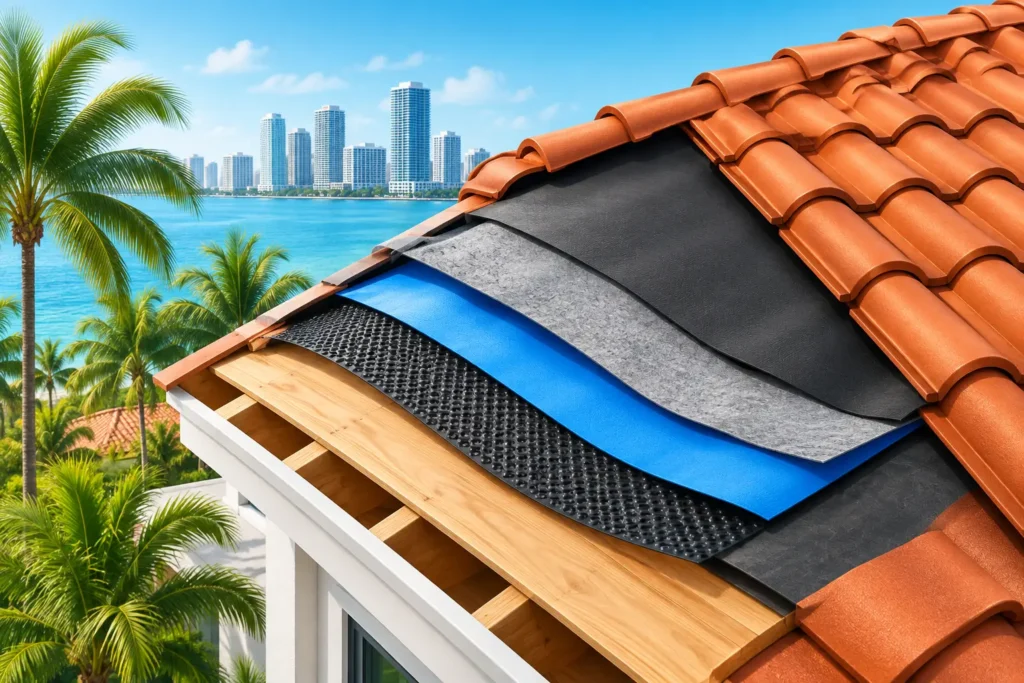
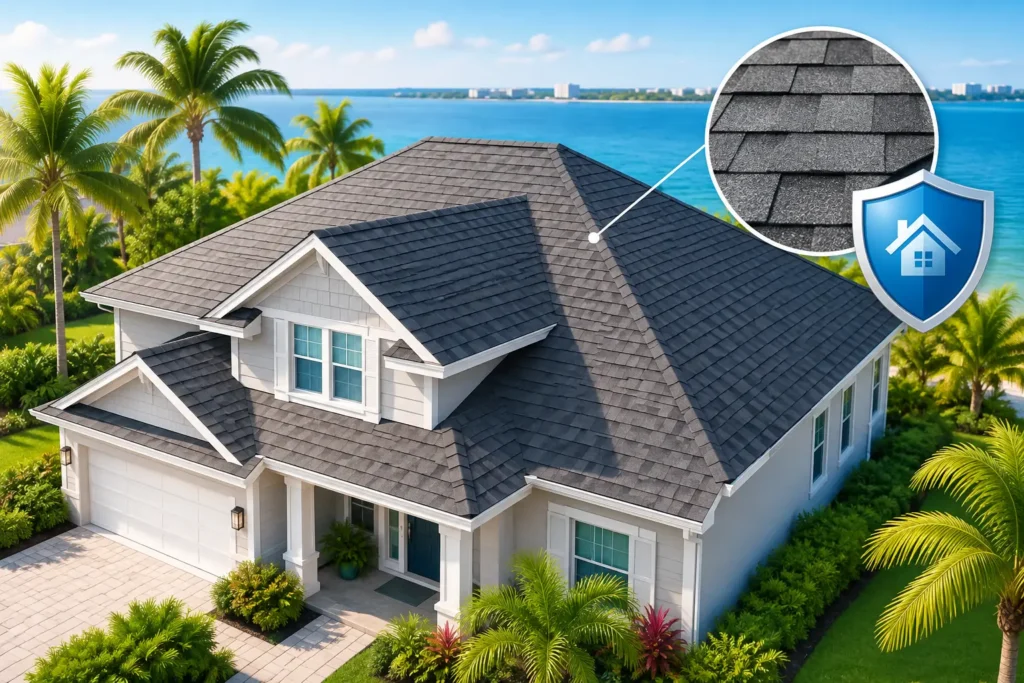
For a tile roof, a lasting repair may require replacing broken or displaced tiles, inspecting fasteners, and repairing the underlayment beneath the affected area. For shingles, the repair may include replacing damaged shingles and restoring the correct overlap and flashing details. For flat roofs, the work may involve patching compatible membrane material, resealing seams, correcting drainage issues, or rebuilding damaged flashing at penetrations and parapet walls.
Material compatibility matters. Not every coating, adhesive, or sealant belongs on every roof. Using the wrong product can create adhesion problems, trap moisture, or void a manufacturer warranty. The repair method should match the existing system and the condition of the roof deck below it.
Temporary Protection Versus Permanent Repair
Emergency protection has a purpose: stop additional water from entering while the property is assessed and permanent materials are scheduled. It is not the finished job. Tarps, temporary patches, and emergency sealant work can be necessary after a major storm, especially when widespread damage affects supply availability or access.
The trade-off is simple. Temporary work buys time, but it should come with a plan for follow-up. Ask what was done, what it is expected to hold, what condition still needs repair, and when the permanent work should be completed. No mystery fees and no unclear promises.
For commercial buildings, this is particularly important. Water can spread across insulation and deck areas far beyond the visible ceiling leak. A prompt temporary repair can protect operations, but moisture evaluation and permanent membrane repair should follow before the problem expands.
Document Damage Before You File a Claim
If you plan to contact your insurer, gather records early. Keep your photos and videos, save receipts for emergency mitigation, and write down when the storm occurred and when you first noticed the damage. Avoid throwing away damaged roofing materials until you have been advised that they are no longer needed for documentation.
Insurance coverage depends on your policy, deductible, prior roof condition, and the cause of loss. A roofing contractor can provide inspection findings and repair documentation, but should not guarantee claim approval or act as your public adjuster. Be cautious with anyone who promises a “free roof” before they have performed a real inspection.
A straightforward repair estimate should explain the scope of work, materials, affected areas, and whether hidden damage could change the scope once materials are opened. That clarity protects you from surprise charges and gives you a better basis for comparing proposals.
Do Not Ignore These Post-Storm Warning Signs
Some damage is visible right away. Other signs appear after the roof dries out or after the next rain. Call for an inspection if you see a new ceiling stain, bubbling paint, a musty odor, wet attic insulation, missing roofing material, loose flashing, water around interior vents, or repeated ponding on a flat roof.
You should also act if the leak stops. A leak that disappears after one storm can still mean water entered the roofing assembly. Heat and humidity can turn trapped moisture into deterioration quickly, particularly in enclosed attic or ceiling spaces.
For property managers, inspect roof drains and scuppers after debris-heavy storms. Blocked drainage can place unnecessary stress on a flat roofing system and create ponding that shortens its service life. Routine cleanup is inexpensive compared with repairing saturated insulation or a compromised roof deck.
Choosing a Miami Roofing Contractor
Storm conditions bring out rushed decisions and low-cost offers. Price matters, but a repair that fails in six months is not a bargain. Look for a licensed and insured contractor that understands Miami-Dade roofing conditions, can work with your specific roof type, and provides a written scope with photo evidence.
Ask direct questions. What caused the leak? Is the proposed work temporary or permanent? What materials will be used? Are damaged flashing and underlayment being inspected, not just the surface material? Will you receive photos of the completed repair? A qualified contractor should answer plainly.
Flash Roofing & Sheet Metal approaches storm work with that standard: inspect the whole system, show the evidence, explain the options, and repair the failure correctly the first time. A roof has to handle the next downpour, not merely look better when the crew leaves.
When the skies clear, do not wait for the stain to grow or the next storm to test a questionable repair. Get clear answers, keep good records, and give your roof the attention South Florida weather demands.