A roof that performs well in a mild, dry climate can fail early in Miami. Between relentless UV exposure, heavy afternoon rain, salt air, high humidity, and hurricane-force winds, material choice is not just about curb appeal. When weighing tile roof vs shingle, Miami property owners need to look past the initial price and ask a harder question: which system fits the building, the budget, and the conditions it will face for decades?
Tile and asphalt shingles can both be good roofing systems when they are properly designed and installed. The wrong choice, or poor workmanship on either one, can lead to recurring leaks, loose materials, and expensive repairs. Do it once, do it right starts with understanding the real trade-offs.
Tile Roof vs Shingle: The Main Differences
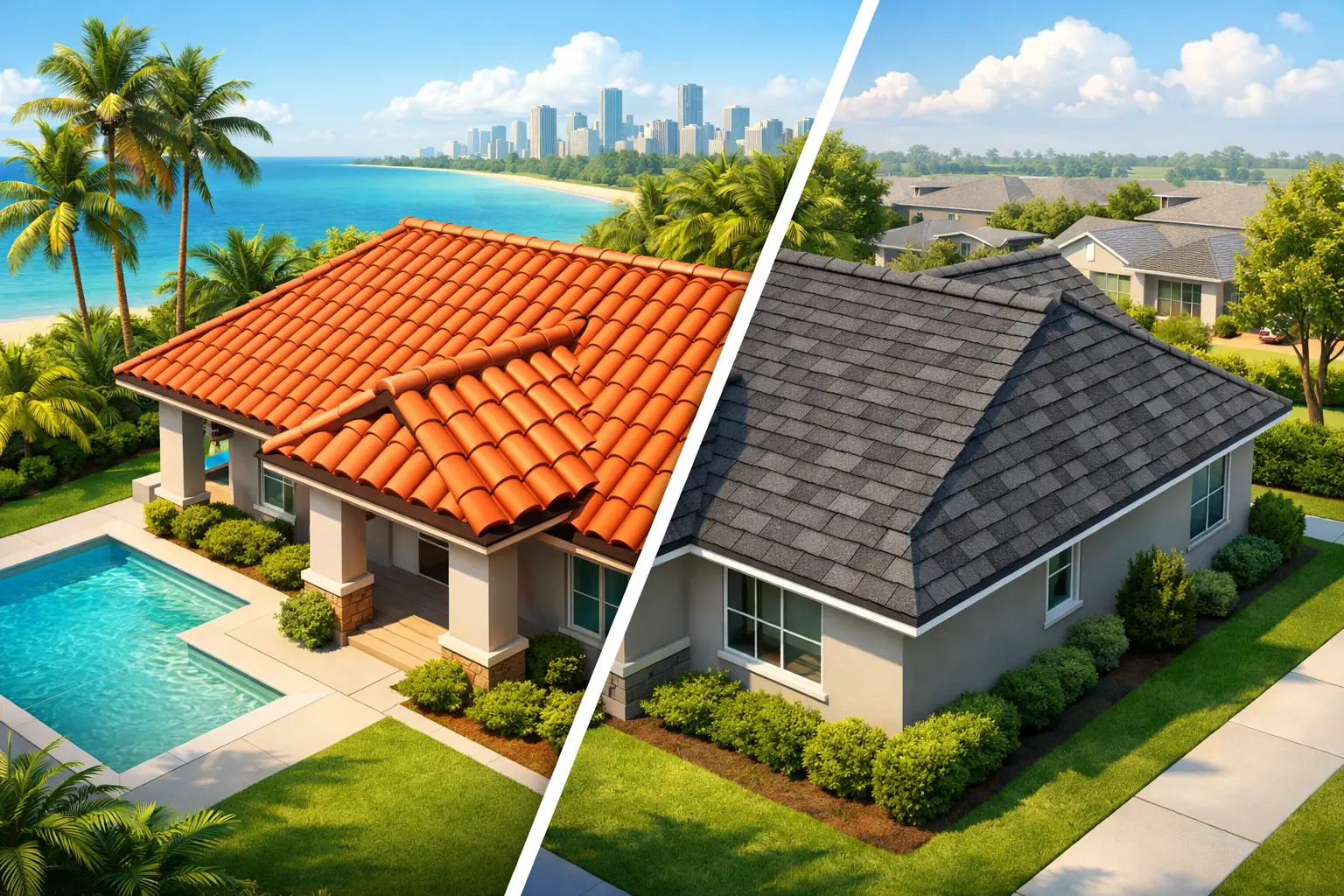
Tile roofs use individual concrete or clay tiles installed over an underlayment system. In South Florida, concrete tile is common because it offers a classic look, holds up well under heat, and comes in many profiles and colors. Clay tile can last even longer, but it generally costs more.
Asphalt shingle roofs use overlapping shingles fastened to a roof deck. Architectural shingles are the most common option for homes because they provide more dimension and better wind performance than basic three-tab shingles. They are lighter, faster to install, and usually less expensive upfront than tile.
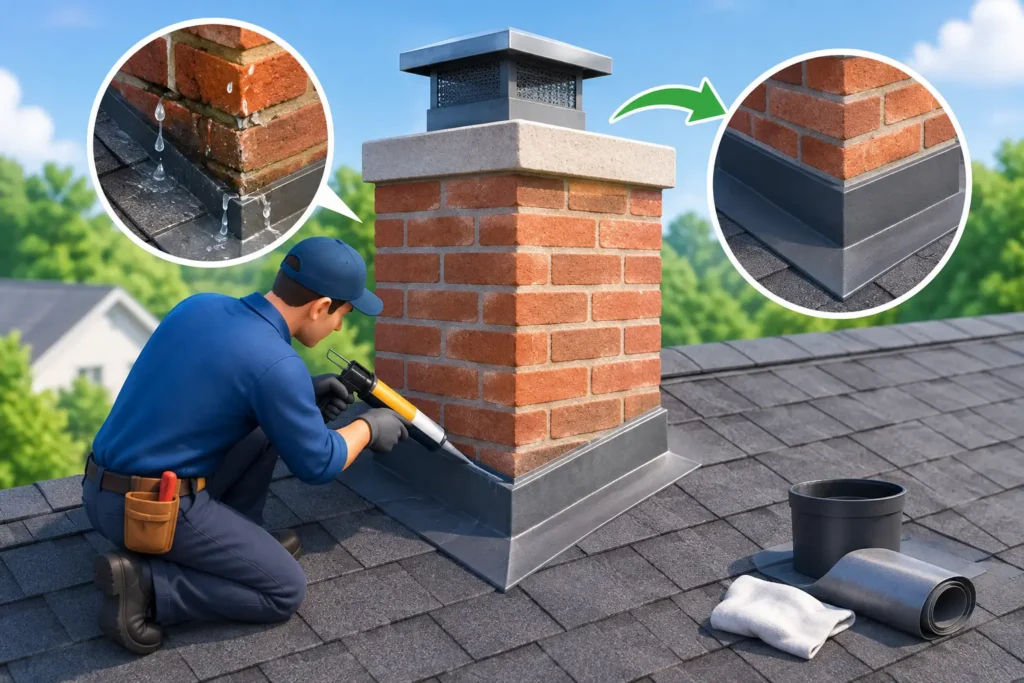
The visible material is only part of the system. Underlayment, flashing, deck condition, ventilation, fasteners, and drainage details matter just as much. A tile roof with failing underlayment can leak even when the tiles look fine. A shingle roof with poor flashing can leak around valleys, walls, vents, and chimneys long before the shingles wear out.
Cost: Upfront Price vs Long-Term Value
For most Miami homeowners, shingles have the lower initial installation cost. They require less labor, weigh far less than tile, and do not usually require the same level of structural review. If a roof replacement is urgent or the property is being prepared for sale, a quality architectural shingle roof may be the practical choice.
Tile costs more because the materials, installation labor, accessory pieces, and underlayment work are more involved. The roof structure may also need to be evaluated for the additional weight. That higher price can make sense for a long-term owner, especially on a home designed for tile and located in a neighborhood where tile roofing supports property value and appearance.
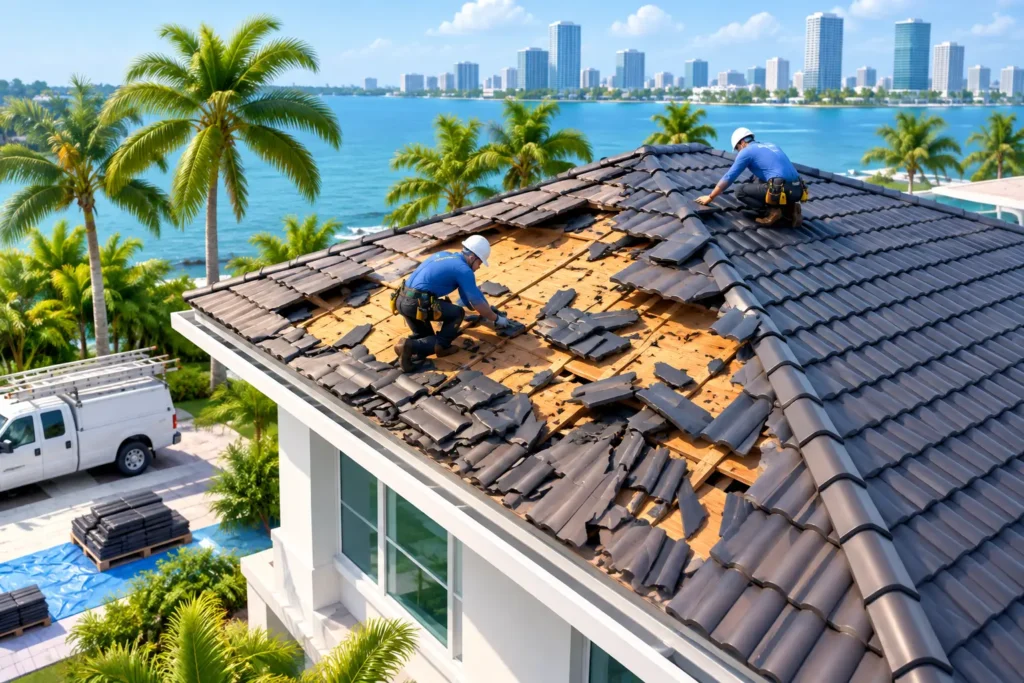
The catch is that tile’s long life does not mean every component lasts forever. Concrete or clay tiles may remain serviceable for decades, while the underlayment beneath them can require replacement sooner. When that time comes, the tiles often need to be carefully lifted, stored, and reinstalled. That is specialized work, and it is not a cheap patch job.
Shingles generally have a shorter expected service life in Miami’s heat and moisture. Still, replacement is more straightforward, and repairs can be less labor-intensive when matching materials are available. The best value depends on how long you expect to own the property and whether you are prepared for the future maintenance requirements of tile.
Hurricane Winds and Storm Performance
Miami-Dade roofing is built around wind resistance. Neither tile nor shingle automatically wins here. The result depends on the specific product rating, the roof design, the fastening method, and whether the installer follows current code requirements.
Tiles can perform very well in high winds when they are mechanically fastened and installed with the correct perimeter and field details. But individual tiles can crack, slide, or become displaced if fasteners corrode, adhesive is improperly applied, or earlier repairs were done carelessly. A few missing tiles after a storm may look minor, but they can expose the underlayment and allow water into the system.
High-quality architectural shingles can also be rated for strong winds. Their lighter weight is an advantage for some structures, but shingle performance depends heavily on correct nailing, starter courses, seal strips, and edge protection. A roof that is under-nailed or installed over a damaged deck is vulnerable when the wind starts lifting at the edges.
After any major storm, a visual check from the ground is not enough. Wind damage can hide beneath lifted shingles or shifted tiles. A professional inspection with photo documentation gives you proof of what is happening before a small issue turns into interior water damage.
Heat, Moisture, and Salt Air
Miami roofs take a daily beating from the sun. Tile has a natural advantage in heat management because its profile can create an airspace above the roof assembly. Light-colored tile can also help reduce heat absorption. That said, the energy performance of a home still depends on attic insulation, ventilation, air sealing, and the condition of the full roofing system.
Shingles absorb more heat, particularly in darker colors. Constant UV exposure can cause them to dry out, lose protective granules, curl, or become brittle as they age. Choosing a lighter shingle color may help, but it will not change the fact that shingles tend to age faster in South Florida than in cooler parts of the country.
Humidity and salt air add another layer of concern. Metal flashing, fasteners, and roof accessories must be selected and installed with corrosion resistance in mind. This matters on both roof types, especially closer to the coast. A good-looking roof can still have a serious weak point if its flashing or fasteners are deteriorating underneath.
Weight and the Condition of Your Roof Structure
This is one of the biggest practical differences between tile and shingle. Tile is substantially heavier. Before converting a shingle roof to tile, the roof framing and deck should be assessed to confirm they can support the load. Older homes, additions, and properties with previous structural changes deserve extra attention.
Shingles are much lighter and can be a better fit where structural capacity is limited. They can also be a sensible option on a complex roof with many slopes, transitions, skylights, and penetrations. Tile can be installed on complex designs, but more cuts and details mean more labor and more places where workmanship must be exact.
Do not assume that an existing tile roof means the structure is automatically problem-free. Water intrusion, termites, and age can affect decking and framing over time. During replacement, the deck needs to be inspected and damaged areas need to be addressed before new materials cover them.
Maintenance and Repairs: What Owners Should Expect
Tile is durable, but it is not maintenance-free. Foot traffic can crack tiles, especially if someone who is not trained to walk a tile roof is servicing an air conditioner, solar equipment, or satellite hardware. Fallen branches can break individual tiles. Debris buildup in valleys can slow drainage during heavy rain.
Shingles need attention as they age, too. Look for granules in gutters, curled edges, missing tabs, exposed nail heads, and dark streaking. Repairs are often more direct than tile repairs, although color matching becomes harder as shingles fade.
For either roof, regular inspections are cheaper than waiting for a ceiling stain. The right inspection looks for the source of a problem, not just the visible symptom. That includes checking flashing, penetrations, valleys, drainage paths, sealants, fasteners, and signs of trapped moisture.
Which Roof Is Right for Your Miami Property?
Choose tile when the structure is designed to carry it, you want a long-lasting architectural look, and you are willing to invest more at the start and maintain the underlayment system over time. Tile is often an excellent fit for South Florida homes, but only when the installation details are built for local weather.
Choose architectural shingles when budget, lighter weight, or a simpler replacement process is the priority. A properly installed, wind-rated shingle system can be a dependable Miami roof. It is not a low-quality choice simply because it costs less than tile.
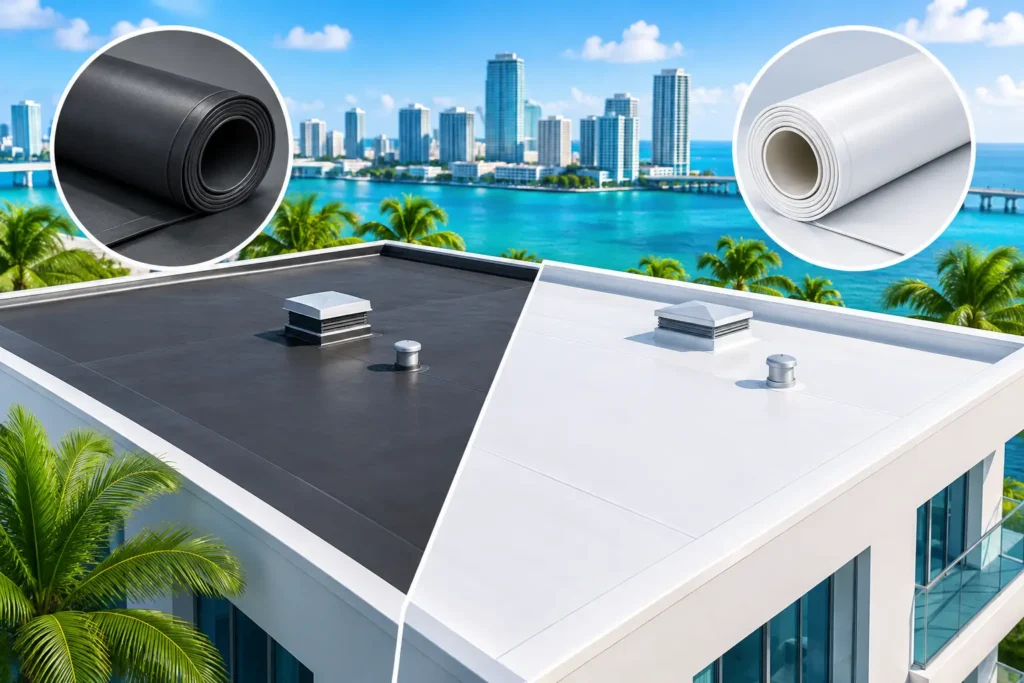
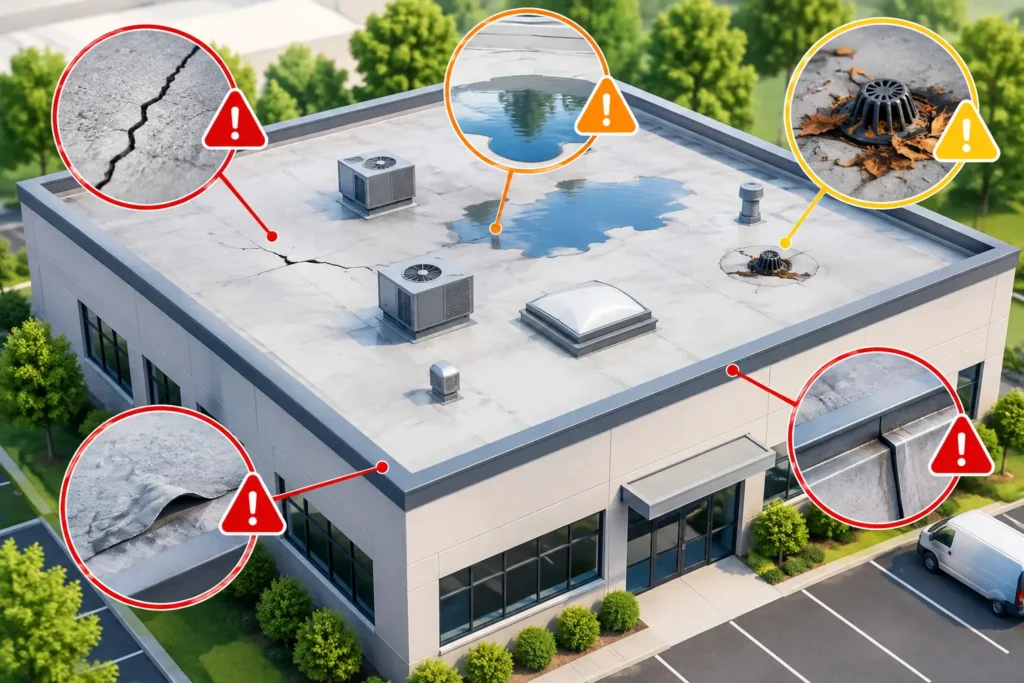
For commercial buildings and low-slope additions, neither may be the right answer. Flat and low-slope areas often require membrane, modified bitumen, metal, or another system designed for drainage and ponding-water conditions. Mixing materials without a clear plan is how leak problems begin.
Before making the call, get an honest assessment of your roof deck, slope, drainage, existing damage, insurance needs, and long-term plans for the property. Flash Roofing & Sheet Metal approaches that decision with photos, clear explanations, and no mystery fees. The best roof is the one that is correctly matched to your building and installed to stand up to the next Miami storm.