
A reroof is not just old material coming off and new material going on. In Miami-Dade, it is a code-controlled project tied to wind resistance, product approvals, fastening details, and inspections. This guide to Miami-Dade reroof permits explains what property owners should expect before work starts, so a leaking roof does not turn into a stalled job, failed inspection, or expensive correction.
When a Miami-Dade Reroof Permit Is Required
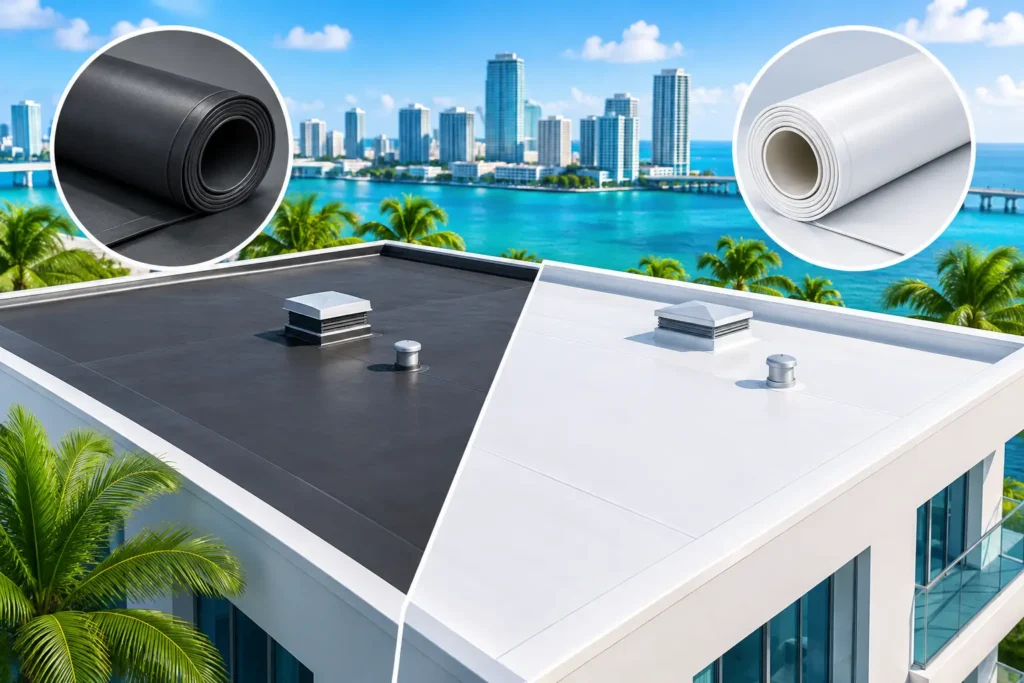
A full roof replacement generally requires a permit. That applies whether the new roof is asphalt shingle, tile, metal, modified bitumen, TPO, PVC, or another approved system. The permit process gives the local building authority a way to verify that the roof assembly is designed and installed for South Florida conditions – intense UV exposure, driving rain, humidity, salt air, and hurricane-force winds.
Repairs are different. A small, localized repair may have different requirements than a reroof, but the answer depends on the scope of work, the roofing system, the property location, and the local jurisdiction. Do not assume that calling a project a “repair” removes permit requirements. If damaged areas are widespread, the deck is exposed, or the work becomes a replacement in practice, permitting may be required.
One detail homeowners often miss: Miami-Dade County is not always the permitting authority. Many cities within the county operate their own building departments. The job address determines where the permit is filed and which local procedures apply. The core building-code standards are demanding throughout the area, but submittal steps, fees, scheduling, and documentation can vary by municipality.
What the Permit Office Needs to See
A permit application is not simply a form with a roofing price attached. The building department needs enough information to confirm that the proposed roof is an approved system and that its installation matches the tested assembly.
For a typical reroof, the submittal package may include the contractor’s license and insurance information, a detailed scope of work, roofing material specifications, product approvals, fastening or attachment details, and a roof plan. Depending on the system and building, the file may also need signed and sealed documents from a design professional, especially where structural changes, complex assemblies, or commercial conditions are involved.
Miami-Dade product approvals matter because materials must be tested and approved for their intended use. A shingle, tile profile, underlayment, adhesive, metal panel, membrane, or fastening method cannot be selected based on appearance alone. The approval has to match the roof type, slope, deck, wind design, and installation method. Mixing approved components in an unapproved way is one of the fastest paths to an inspection problem.
The roof deck can change the scope
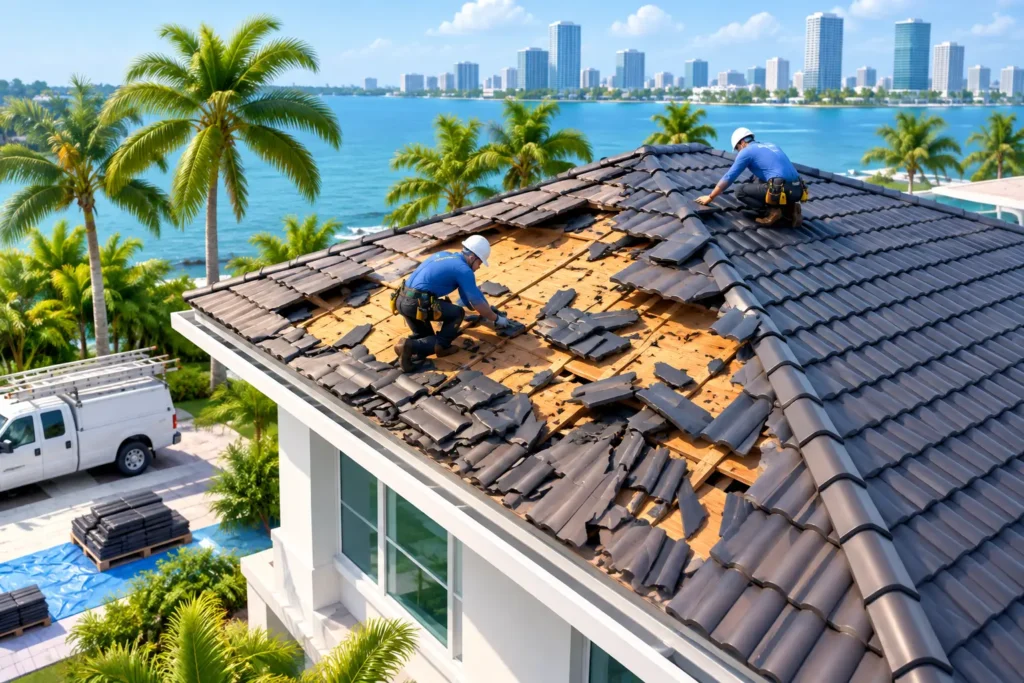
A reroof permit does not guarantee that the existing deck is sound. Once old roofing comes off, contractors may find deteriorated plywood, corroded metal, wet insulation, termite damage, or damaged framing. South Florida moisture has a way of hiding problems until the roof is opened.
Deck repairs can require additional documentation or inspection. That is not a contractor creating extra work for no reason. New roofing cannot perform correctly over a weak or compromised substrate. A trustworthy quote should explain how concealed damage is handled, what work is included, and how any necessary change is documented before it moves forward.
The Reroof Permit Process, Step by Step
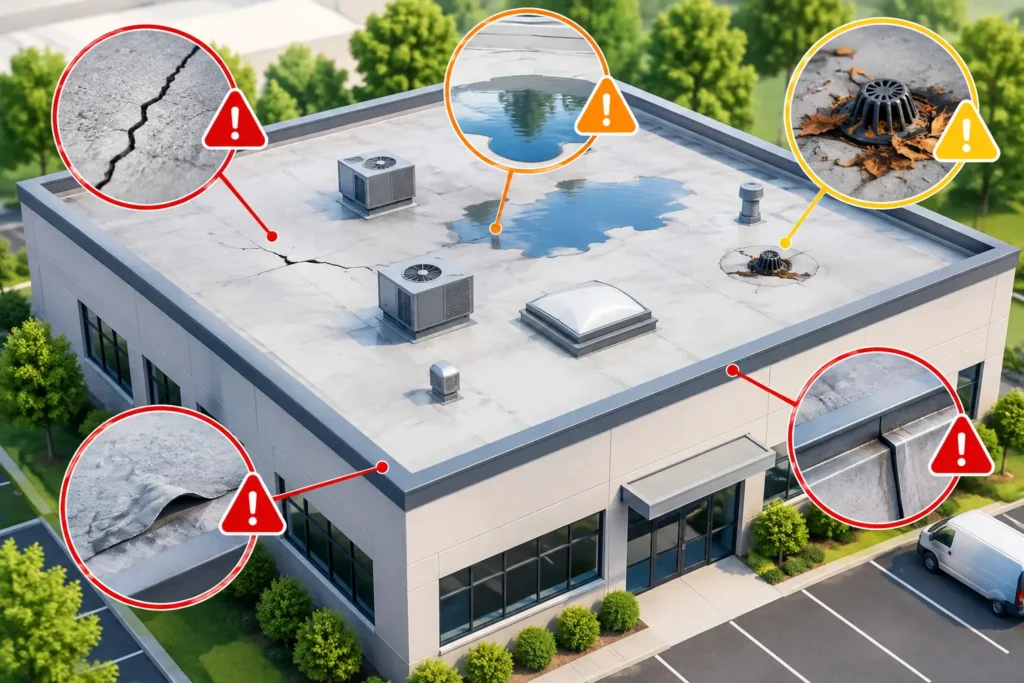
The cleanest projects start with an accurate inspection. A contractor should identify the roof system, visible failure points, drainage conditions, penetrations, edge details, and likely deck concerns. For commercial flat roofs, that also means reviewing drains, scuppers, curbs, flashing transitions, and equipment supports. A low bid that skips these details can become expensive after tear-off.
Next comes the proposed roofing assembly. This is where material selection meets local code. The right system depends on the building and its exposure. Tile may suit a steep-slope residential roof, while a properly detailed membrane system may be the better choice for a low-slope commercial property. Cost matters, but so do wind performance, maintenance needs, drainage, corrosion resistance, and the ability to repair the system later.
After the documents are prepared, the permit is submitted to the correct county or municipal building department. Review times vary. Straightforward applications can move faster than projects involving structural work, incomplete paperwork, unusual roof designs, or corrections from plan review. No contractor can honestly promise a specific approval date when the schedule is controlled by the reviewing authority, but organized paperwork prevents avoidable delays.
Once the permit is issued, work can begin. The permit should be posted or otherwise available as required by the jurisdiction. The contractor should follow the approved scope, not substitute materials or change installation methods without confirming that the change is acceptable. What looks like a minor field decision can affect the approval, warranty, and inspection result.
Inspections Are Proof, Not Red Tape
Roof inspections protect the property owner as much as they protect the public. They create an independent checkpoint between “the crew says it is done” and “the roof meets the approved requirements.” Exact inspection stages vary by jurisdiction and roofing system, but reroof work commonly involves inspection after tear-off or deck repair, inspection of dry-in or underlayment, and a final inspection.
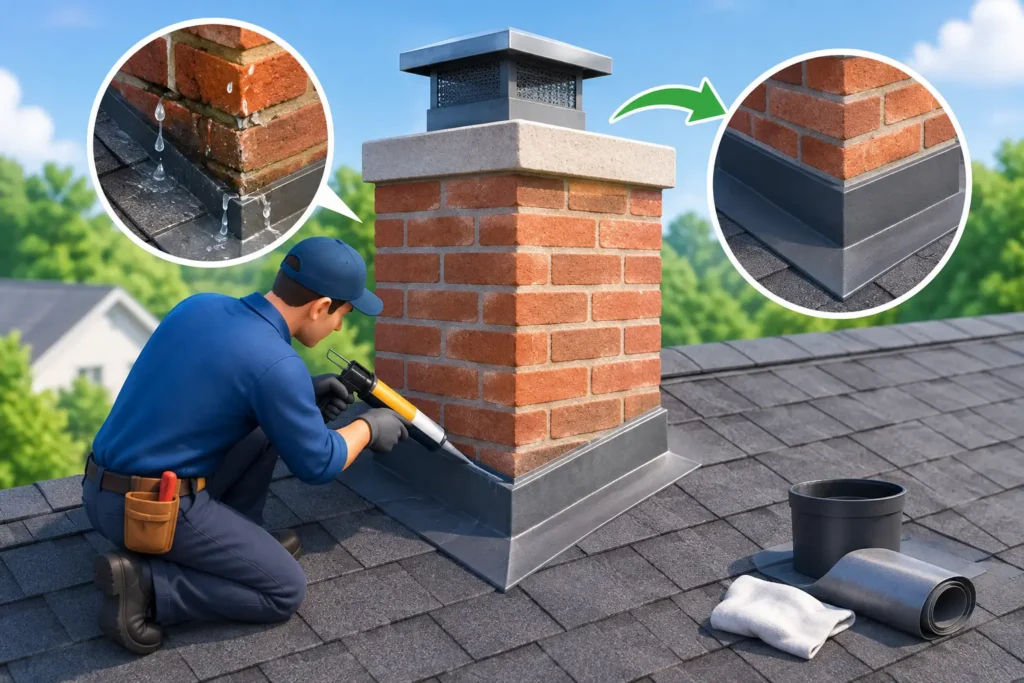
The dry-in stage is especially important on many residential reroofs. It is the layer that helps protect the structure beneath the finished roof covering. The inspector may check deck condition, underlayment installation, flashing, fasteners, and other details before they are covered. On a flat roof, inspectors may focus on insulation attachment, membrane installation, seams, terminations, and drainage-related details.
Do not let anyone tell you inspections are optional because the crew is experienced. Experience matters, but Miami’s weather does not give passes for shortcuts. A roof that looks good from the street can still have weak flashing, incorrect fastener spacing, poor transitions, or uncovered permit issues that surface when a storm hits or the property is sold.
Common Reasons Reroof Jobs Get Delayed
Most permit delays are preventable. Incomplete applications, missing product approvals, a contractor whose licensing does not match the work, unclear roof plans, and mismatched materials are common problems. So is filing under the wrong jurisdiction.
Field changes create another problem. If the original material is unavailable, a contractor may need to confirm that a replacement product has the right approval and is compatible with the submitted assembly. This is particularly relevant with tile, metal, adhesives, underlayments, and commercial membrane systems. “Similar” is not always equivalent in a code file.
Property owners can also slow down a project by waiting until the last minute to make material decisions, approve change orders, or provide access to gated communities and commercial sites. Clear communication prevents this. Before signing, ask who pulls the permit, whose name it is issued under, what inspections are anticipated, and who is responsible for scheduling them.
Questions to Ask Before You Hire a Reroof Contractor
A legitimate Miami-Dade roofing contractor should be comfortable answering direct questions. You are not being difficult by asking. You are protecting a major asset.
Ask these questions before work starts:
- Will you pull the reroof permit under the proper license and confirm the correct permitting jurisdiction?
- Which approved roofing assembly will you install, including underlayment, attachment method, flashing, and finish material?
- What happens if tear-off reveals damaged decking, wet insulation, or other concealed conditions?
- Which inspections are expected, and who schedules them?
- Will I receive photos of the work, permit records, inspection results, and final closeout documentation?
The answers should be plain and specific. Watch for vague promises, pressure to avoid permits, cash-only pricing, or a quote that describes the roof as a single line item with no material or scope detail. Those are not signs of a simple job. They are signs that you may be left with questions when it is time to inspect, insure, maintain, or sell the property.
Residential and Commercial Reroofs Need Different Planning
Residential reroofs often center on roof covering, underlayment, flashing, ventilation where applicable, and wind-rated attachment. Commercial projects can be more involved because roof performance is tied to drainage, insulation, equipment curbs, foot traffic, parapet walls, and large membrane seams. A commercial owner may also need to coordinate tenants, deliveries, interior protection, and operating hours while the permit and construction work move forward.
For either property type, the goal is the same: build the complete roof system correctly, not just install the visible top layer. Flash Roofing & Sheet Metal approaches reroof planning with that South Florida reality in mind, documenting conditions and addressing the source of failure instead of covering it with a short-lived patch.
Keep the Permit File After Final Approval
When the final inspection is approved, keep the permit number, final approval record, contract, material information, warranties, and project photos together. These records can help with future maintenance, insurance questions, property sales, and storm-related claims. They also give the next roofing professional a clearer picture of what is on the building.
A permitted reroof takes planning, but that planning is part of doing the job once and doing it right. The right contractor will make the process understandable, keep the paperwork honest, and leave you with proof that your new roof was built for Miami-Dade weather.