
A commercial roof can look fine from the parking lot while water is already moving beneath the membrane, soaking insulation, corroding metal components, or staining ceilings below. This guide to commercial roof inspections is built for Miami-Dade property owners and managers who need clear answers before a small roofing problem turns into an expensive disruption.
South Florida roofs work harder than roofs in most parts of the country. UV exposure dries and weakens materials. Heavy rain tests every drain and seam. Salt air speeds up corrosion near the coast. Then hurricane season adds wind uplift, flying debris, and driven rain that can force water into openings a normal shower would never expose.
A good inspection is not a quick walk across the roof with a clipboard. It is a documented evaluation of the roof system, drainage, flashings, penetrations, edge details, and signs of moisture below the surface. The goal is simple: find the root cause, document it clearly, and make a practical plan.
When a Commercial Roof Inspection Makes Sense
Annual inspections are a smart baseline for most commercial properties, especially low-slope roofs with membrane systems. In Miami, many buildings benefit from inspections twice a year: once before hurricane season and once after the heaviest summer weather has passed.
You should also schedule an inspection after a named storm, a major wind event, rooftop equipment work, or any report of a ceiling stain or active leak. Do not wait for water to drip onto the floor. By that point, the leak may have traveled far from where it entered, and wet insulation may already be reducing the roof’s performance.
Age is another reason to inspect. A roof approaching the latter part of its expected service life does not automatically need replacement. It does need an honest assessment. Some systems can be restored or coated if the substrate is sound. Others have widespread moisture, failing seams, or deteriorated components that make repeated patching a poor investment.
What a Commercial Roof Inspector Should Check
Commercial roof inspections should follow the actual system on the building. A metal roof, modified bitumen roof, TPO roof, PVC roof, built-up roof, and tile-over-low-slope assembly each fail in different ways. Still, several inspection areas apply to almost every commercial property.
The Roof Surface and Field Membrane
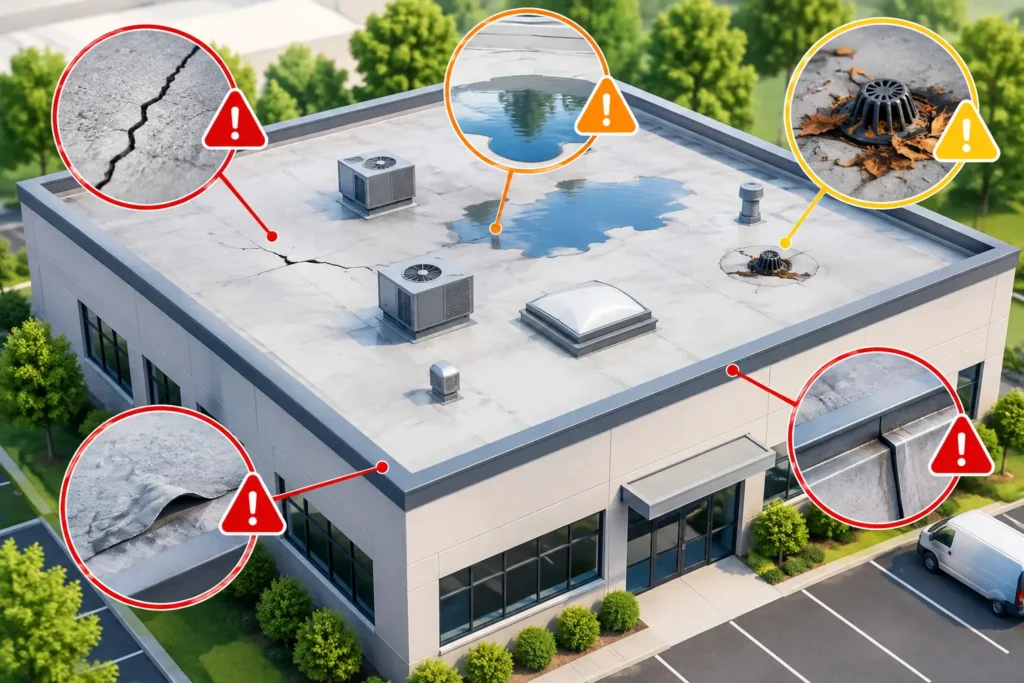
The field of the roof is the broad, exposed area between edges and penetrations. Inspectors look for punctures, open seams, blisters, cracks, shrinkage, worn granules, exposed reinforcement, and areas where the membrane has pulled away from the substrate.
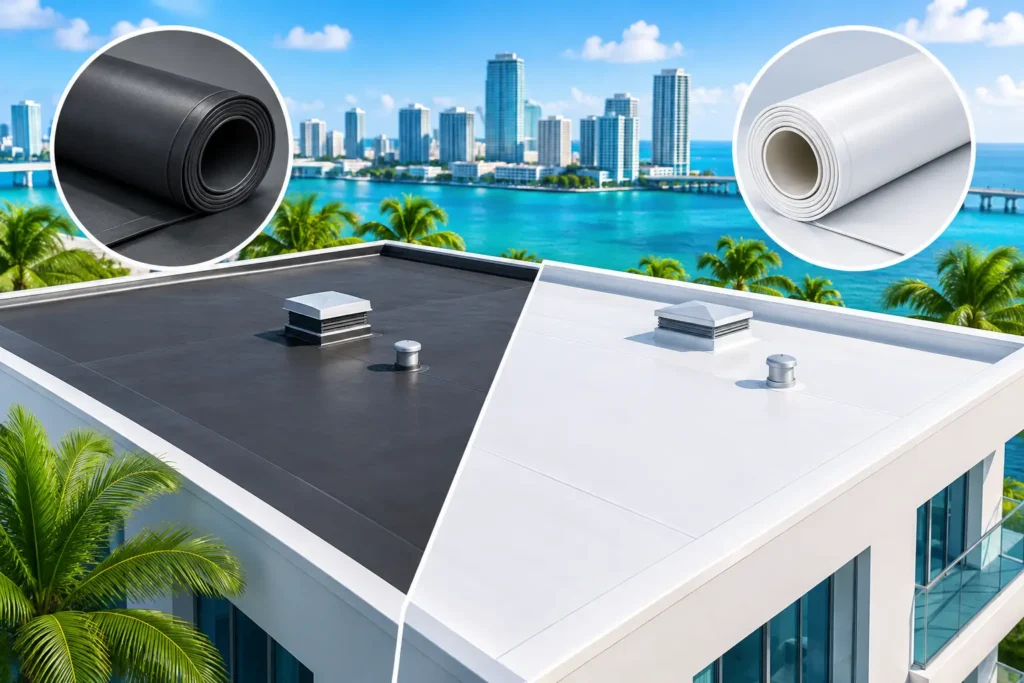
On white reflective roofs, dirt and ponding water can hide trouble. On older dark systems, heat can accelerate aging and make brittle materials more vulnerable to cracking. Foot traffic around HVAC units and service paths deserves close attention. A membrane may be sound across most of the roof but damaged repeatedly in the few places technicians cross it.
Seams, Flashings, and Roof Penetrations
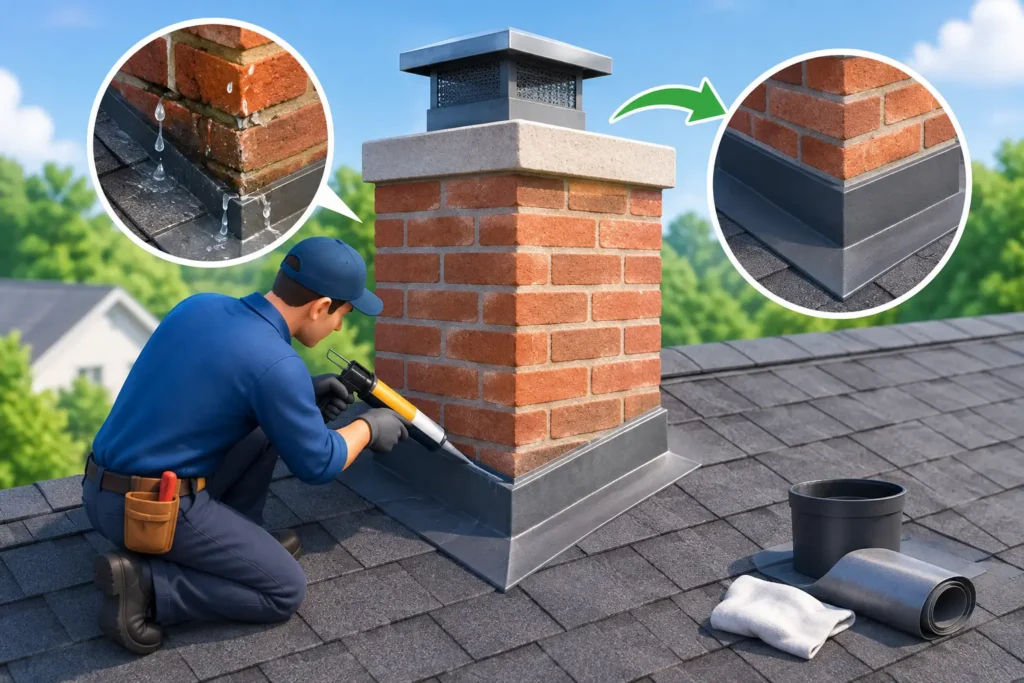
Most commercial leaks begin at transitions, not in the middle of an open roof field. That means seams, parapet walls, curbs, vents, pipes, drains, skylights, and expansion joints need careful review.
Inspectors should check whether flashings are loose, split, poorly sealed, or separating from vertical surfaces. On mechanically attached membrane roofs, fastener back-out and stressed seams can be early signs of wind-related movement. On metal roofs, loose screws, failed washers, open laps, and rusted panels can create entry points for water.
Miami’s wind and rain conditions make edge details especially important. Wind pressure is often strongest around corners and perimeter zones. If coping, gravel stops, fascia, or termination bars are loose, the problem is more than cosmetic. These components help keep the roofing system secure when conditions turn severe.
Drainage and Ponding Water
Water must leave the roof quickly and predictably. Ponding water is one of the clearest warning signs on a low-slope commercial roof, particularly if it remains 48 hours after normal rainfall has stopped.
An inspection should identify clogged drains, undersized drainage, blocked scuppers, damaged strainers, poor slope, and areas where the deck may have sagged. Standing water adds weight, accelerates membrane wear, attracts debris, and exposes weak seams. It can also point to a larger structural or drainage design issue.
Do not treat every puddle as an emergency or every drain cleaning as a complete fix. The right repair depends on why the water is collecting. Sometimes cleaning and routine maintenance solve it. Other times, tapered insulation, drain improvements, or localized reconstruction may be necessary.
Moisture Below the Surface
Visible damage tells only part of the story. A professional inspection may include moisture detection methods to identify wet insulation or trapped water beneath the membrane. This matters because a roof can appear repairable on top while moisture below is spreading through the assembly.
Infrared scanning can help locate temperature differences that may indicate wet areas, although it must be performed under the right weather conditions and confirmed through additional testing. Core samples and other diagnostic methods may be appropriate when the scope of moisture damage will affect repair versus replacement decisions.
This is where photo documentation and plain explanations matter. Building owners should be able to see the damaged areas, understand what was found, and know whether the recommendation is a targeted repair, a restoration option, or a replacement plan.
A Practical Commercial Roof Inspection Checklist
A thorough inspection report should document roof conditions rather than rely on vague statements such as “roof is bad” or “needs attention.” At a minimum, expect the contractor to record the roof type and approximate age, visible damage and likely causes, drainage conditions, flashing and penetration details, evidence of past repairs, safety concerns, and recommended next steps.
Photos should be labeled or organized well enough that a property manager can identify where each issue is located. If repairs are recommended, the proposal should distinguish between urgent leak-stopping work and maintenance items that can be planned. No mystery fees, no pressure to replace a roof that can be responsibly repaired.
For larger facilities, it also helps to keep a roof history. Save inspection reports, repair records, warranty documents, photos after storms, and notes from HVAC or solar contractors. A pattern of recurring leaks near one curb or drain often reveals more than a single service call can.
Common Mistakes That Make Roof Problems Worse
The most expensive mistake is treating every leak as an isolated event. A patch may stop the visible water, but it will not correct failed drainage, widespread seam deterioration, loose edge metal, or wet insulation beneath the roof.
Another mistake is allowing other trades to penetrate the roof without proper coordination. New conduit, equipment supports, vents, and cable runs can compromise a roofing system when they are installed with makeshift sealants or improper flashings. Any rooftop modification should be reviewed by a qualified roofing professional.
Property owners also get burned by quotes that lack detail. A low price is not a saving if it covers only surface caulking while leaving the actual failure point untouched. Ask what caused the problem, what material will be used, how the repair integrates with the existing roof, and what documentation will be provided when the work is complete.
Repair, Restoration, or Replacement: How Inspection Findings Guide the Decision
Inspection results should lead to the right scope of work, not a one-size-fits-all sales pitch. Localized punctures, limited seam failures, and minor flashing issues can often be repaired when the rest of the roof remains dry and stable.
Restoration or coating may be worth considering when the existing roof is generally sound, properly adhered, and free of widespread trapped moisture. Coatings can help manage UV exposure and extend service life, but they are not a cure for saturated insulation, active leaks, or failing structural details.
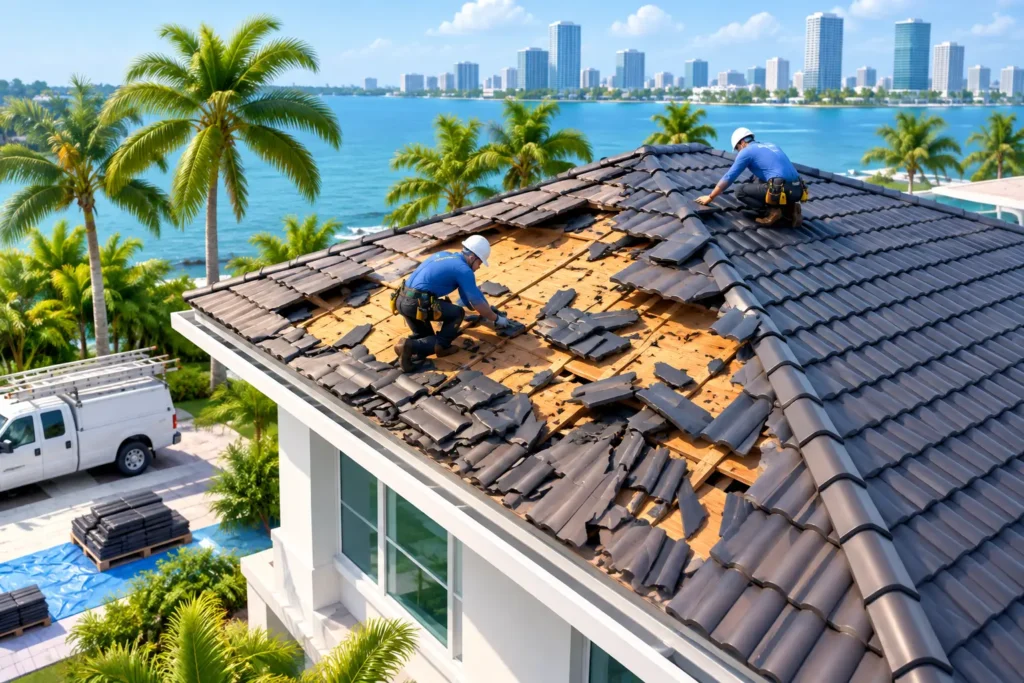
Replacement becomes more practical when leaks are widespread, repairs are recurring, insulation is heavily compromised, or the system has reached the end of its useful life. For Miami commercial properties, the replacement design should account for wind requirements, drainage, rooftop traffic, corrosion resistance, and the building’s day-to-day operations.
Choose Documentation Over Guesswork
A commercial roof inspection should leave you with evidence, priorities, and a workable next step. Flash Roofing & Sheet Metal approaches commercial roofs with the conditions Miami buildings actually face – heat, humidity, salt, severe rain, and hurricane-force winds – not generic recommendations copied from another climate.
If your roof has not been inspected since the last major storm, or if you are seeing stains, ponding water, loose metal, or repeated leak repairs, do not wait for the next downpour to provide the answer. Get the roof evaluated while you still have choices, and insist on clear photos, honest findings, and work that fixes the cause the first time.