A roof can look fine from the street and still be one hard rain away from a leak. In Miami, that is not unusual. When property owners ask, “why do roofs fail early,” the answer is rarely just age. More often, it is a combination of South Florida weather, poor installation details, neglected maintenance, and repairs that covered the symptom without fixing the cause.
A roof is a system, not just a surface. The membrane, tiles or shingles, flashing, fasteners, underlayment, drains, vents, sealants, and attachment methods all have to work together. If one weak point is ignored, heat, wind, and water will find it.
Why Do Roofs Fail Early in Miami?
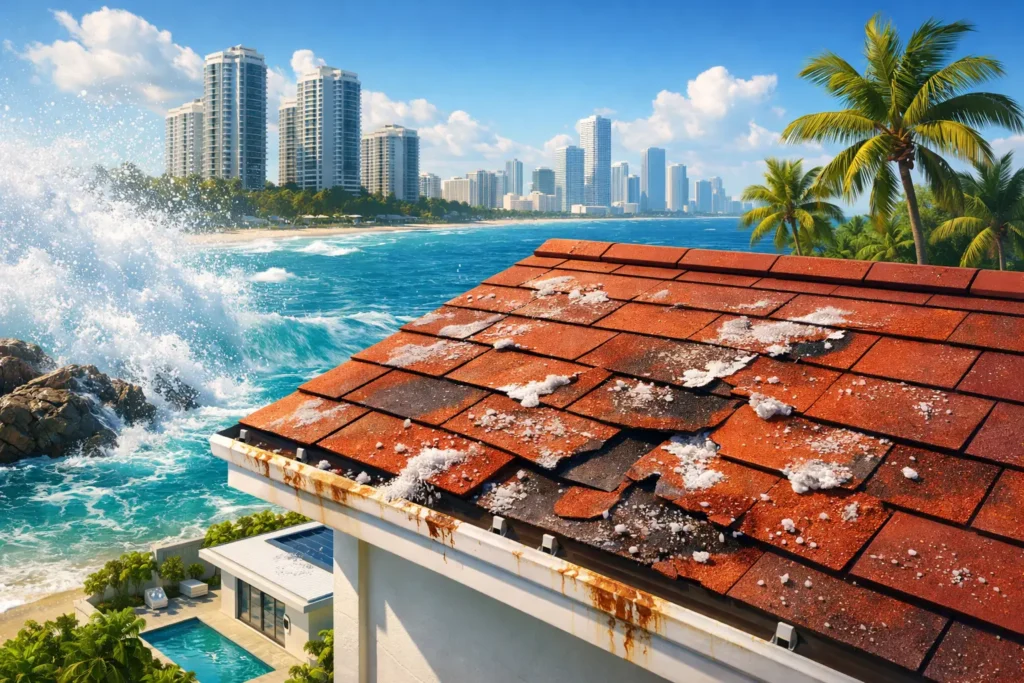
South Florida puts roofing materials under constant pressure. UV exposure bakes the roof almost every day. Humidity keeps materials from fully drying. Salt in the air speeds up corrosion near the coast. Then hurricane season brings wind-driven rain that can force water into places a normal rainstorm never reaches.
A roof installed for a mild climate may not hold up here. Even a quality system can lose years of service life when the materials, installation method, or maintenance plan do not match the building and its exposure.
The good news is that early failure is often preventable. It starts with knowing where roofs actually break down.
Poor Installation Creates Problems That Stay Hidden
The fastest way to shorten a roof’s life is to install it incorrectly. This does not always mean the whole roof looks bad on day one. Many workmanship problems stay concealed until the first major storm or until moisture has had months to move beneath the surface.
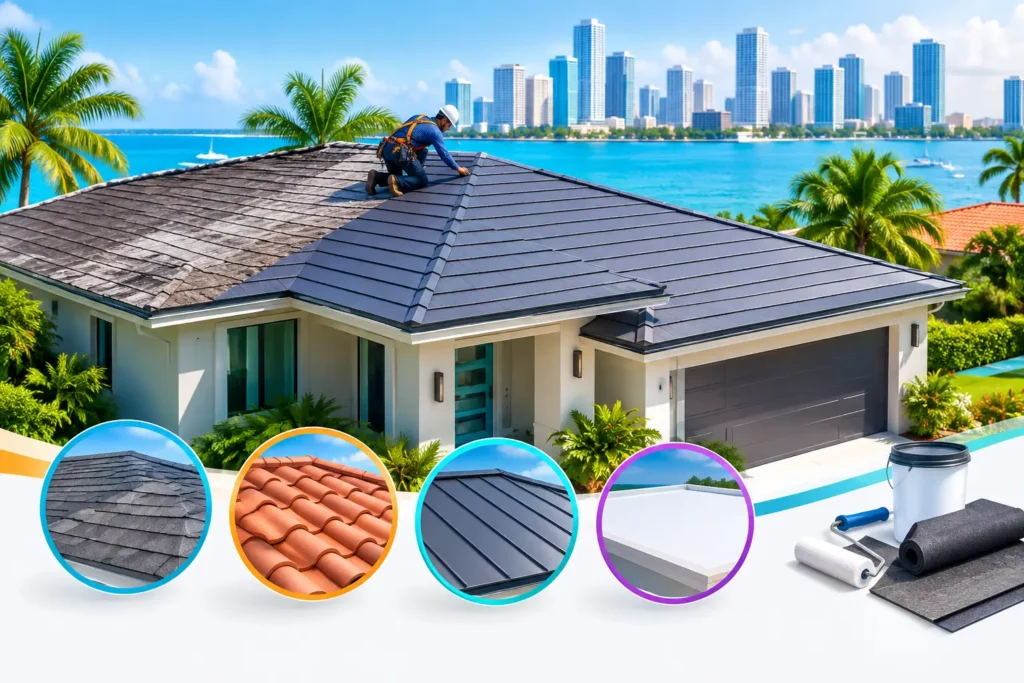
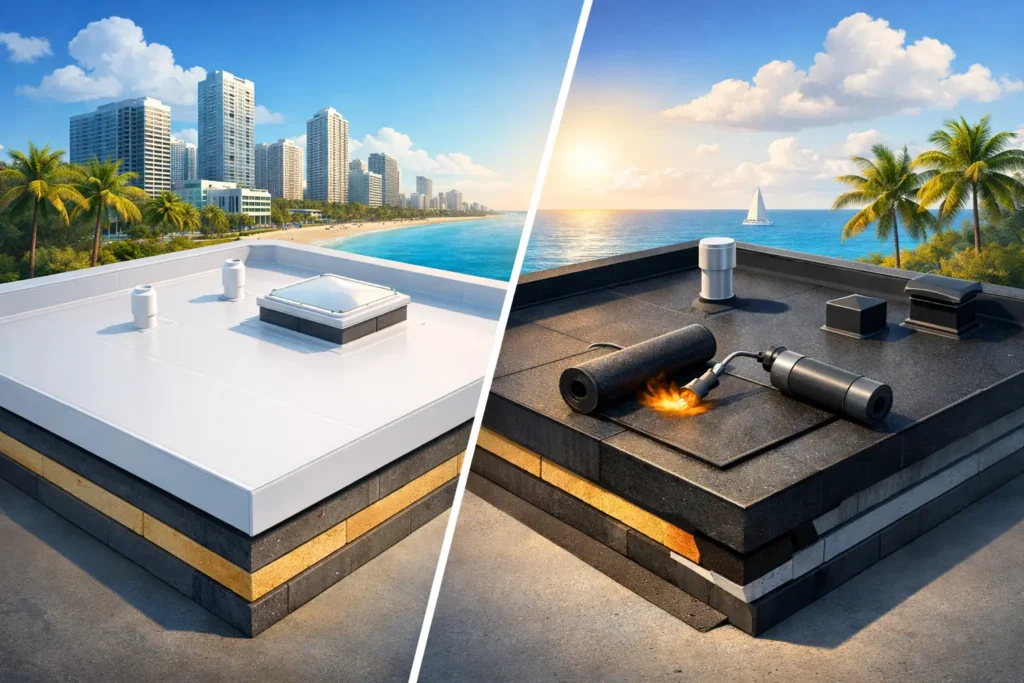
On shingle and tile roofs, common issues include improper underlayment, poorly secured edge materials, incorrect flashing around walls and penetrations, and fasteners placed where water can reach them. On flat and low-slope roofs, seams, drains, transitions, curbs, and termination points require precise detail work. A membrane can be new and still leak if those areas were rushed.
Miami-Dade roofing also has demanding wind requirements. A roof must be attached and detailed to handle uplift, not simply placed on the building. Cutting corners on fasteners, adhesives, flashing, or perimeter securement may save money upfront, but it can lead to expensive failures when strong winds arrive.
This is why the lowest quote is not always the best value. It depends on what is included: preparation, replacement of damaged decking, flashing work, permit requirements, material specifications, and cleanup. A vague quote leaves too much room for shortcuts and surprise charges later.
Heat and UV Exposure Wear Materials Down Fast
Miami sun is hard on every type of roof. UV radiation dries out asphalt-based materials, weakens exposed sealants, fades protective coatings, and can make some membranes more brittle over time. Dark roofs also absorb significant heat, which causes daily expansion and contraction.
That movement may sound minor, but it adds up. Sealant around pipe boots can crack. Flashing joints can open. Membrane seams can become stressed. On a flat roof, standing water and solar heat create an especially rough combination because the surface stays wet longer and experiences higher temperatures.
Roof coatings can help in the right situation by reflecting heat and protecting an existing system. But coating is not a cure-all. If the roof has trapped moisture, failing seams, deteriorated insulation, or active leaks, applying a coating over the top can hide the issue temporarily while the damage continues below. The roof needs a proper inspection first.
Salt Air and Corrosion Attack the Details
Salt exposure is a major reason roofs near the coast can age faster than expected. It does not only affect metal roofs. Salt-laden air can corrode fasteners, flashing, metal edge components, vents, and equipment supports across many roofing systems.
Once a fastener rusts or a flashing edge deteriorates, water has an entry point. The problem may begin as a small stain on a ceiling or a loose metal section, but moisture can travel farther than the visible damage suggests. By the time a leak becomes obvious indoors, wet insulation, damaged decking, or mold conditions may already be present.
Material selection matters here. The right metal type, coating, fasteners, and compatible components should be chosen for the property’s location and roof design. Mixing incompatible metals or using low-grade hardware on a coastal property is an avoidable mistake.
Water Does Not Need a Big Opening
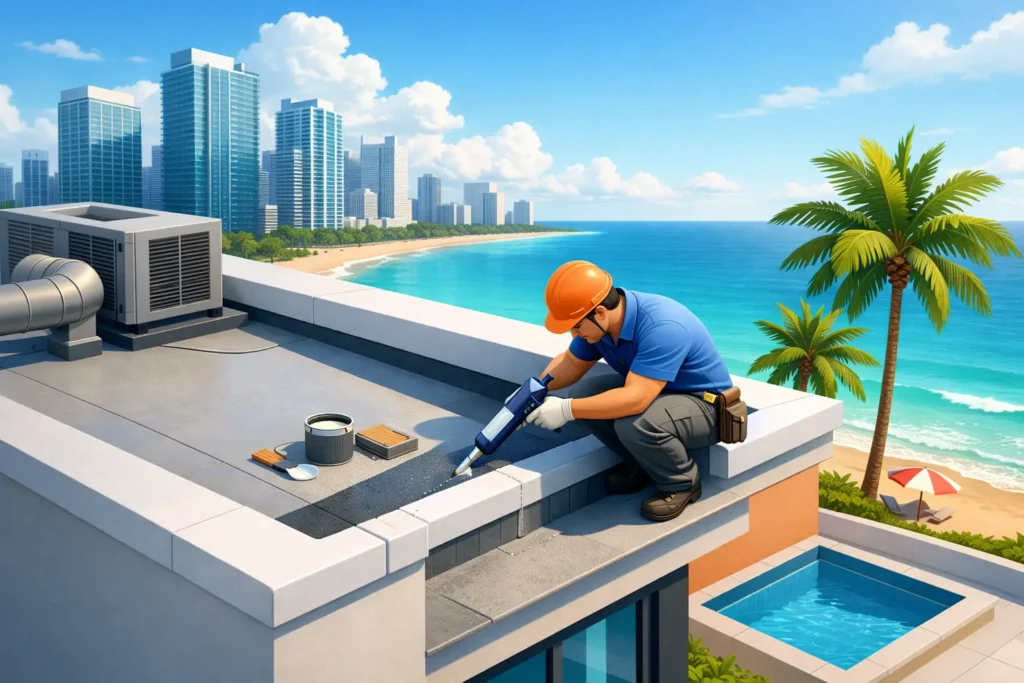
Many people expect roof leaks to come from a dramatic hole. Usually, they do not. Water enters through small failed details around drains, skylights, HVAC curbs, vents, valleys, parapet walls, and roof-to-wall transitions.
Flat commercial roofs are especially dependent on drainage. If a drain is clogged or the roof holds water for long periods, the added weight and constant moisture accelerate deterioration. Ponding water can expose weak seams and eventually work its way into the building envelope.
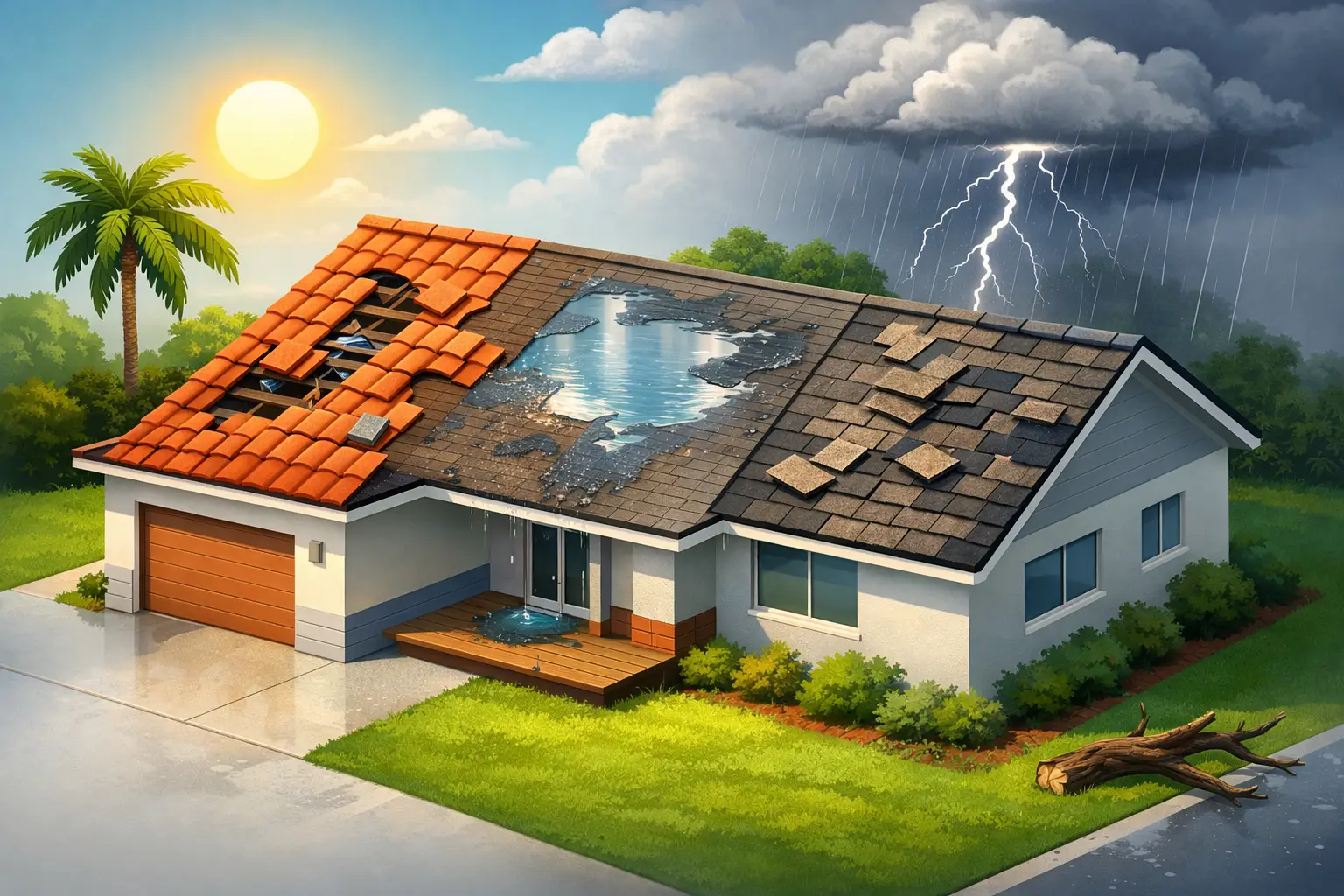
Residential roofs have their own trouble spots. Broken or displaced tiles, lifted shingles, cracked pipe boots, loose ridge materials, and failing valley flashing can all allow water beneath the visible roof covering. Replacing one damaged tile is useful only if the underlayment and flashing beneath it are still sound.
That is the difference between a patch and a real repair. A real repair identifies how water got in, checks the surrounding materials, and corrects the weak detail so the same leak does not return during the next storm.
Storm Damage Is Not Always Obvious
Hurricane-force winds and wind-driven rain can damage roofs without tearing off large sections. Wind may loosen fasteners, lift edges, shift tiles, crack sealants, or compromise flashing. A roof can remain mostly intact while its water resistance has been reduced.
After a major storm, look for interior stains, missing or cracked materials, loose metal, granules around downspouts, lifted edges, and water collecting where it did not before. But do not rely only on a ground-level visual check. The most important damage is often at penetrations, transitions, and concealed edges.
A documented inspection gives property owners a clearer picture of the roof’s condition. Photos of problem areas, straightforward explanations, and a written scope of work make it easier to decide whether the roof needs a targeted repair, restoration, or replacement.
Delayed Maintenance Turns Small Repairs Into Big Ones
Roofs rarely fail without warning. The warning signs are just easy to postpone when the building is not leaking yet. A small crack in sealant, a clogged drain, a loose flashing section, or a few damaged tiles may seem minor. In Miami’s wet season, those minor issues can become active leaks quickly.
Regular inspections are particularly valuable for older roofs, flat roofs, commercial properties with rooftop equipment, and homes near saltwater. A practical schedule is an inspection before hurricane season, another after major storms, and a professional review whenever you see staining, bubbling paint, musty odors, or unexplained moisture.
Maintenance does not always mean replacement. In some cases, cleaning drains, resealing details, replacing damaged components, or restoring a weathered surface can extend service life. In other cases, repeated repairs are a sign that the system has reached the point where replacement is the more honest investment. The condition of the decking, insulation, seams, and flashing matters more than a calendar date alone.
Choose Repairs Based on Evidence, Not Guesswork
A contractor should be able to show you what is wrong, explain why it happened, and tell you what the repair will and will not solve. Be cautious of anyone who recommends a full replacement without evaluating the system, or promises a quick patch will fix widespread deterioration.
Flash Roofing & Sheet Metal approaches Miami roofs with that standard: inspect the full system, document the findings, and address the root cause. No mystery fees, no pressure, and no cosmetic repair presented as a permanent solution.
If your roof has been through years of sun, salt, heavy rain, or storm exposure, do not wait for a ceiling stain to make the decision for you. A clear inspection now can give you time to plan the right repair and do it once, do it right.