A roof can look tired long before it is truly finished. In Miami, that distinction can save a property owner real money. The choice between roof coating vs replacement is not about choosing the cheaper option on paper. It is about finding out whether the existing roof system is still structurally sound enough to protect your property through heat, rain, salt air, and hurricane season.
A coating can be a smart restoration strategy for the right roof. It can also become an expensive delay if leaks, trapped moisture, failing seams, or damaged materials are hiding underneath. The only honest answer starts with a full inspection, not a quick look from the driveway.
When Roof Coating Is the Right Call
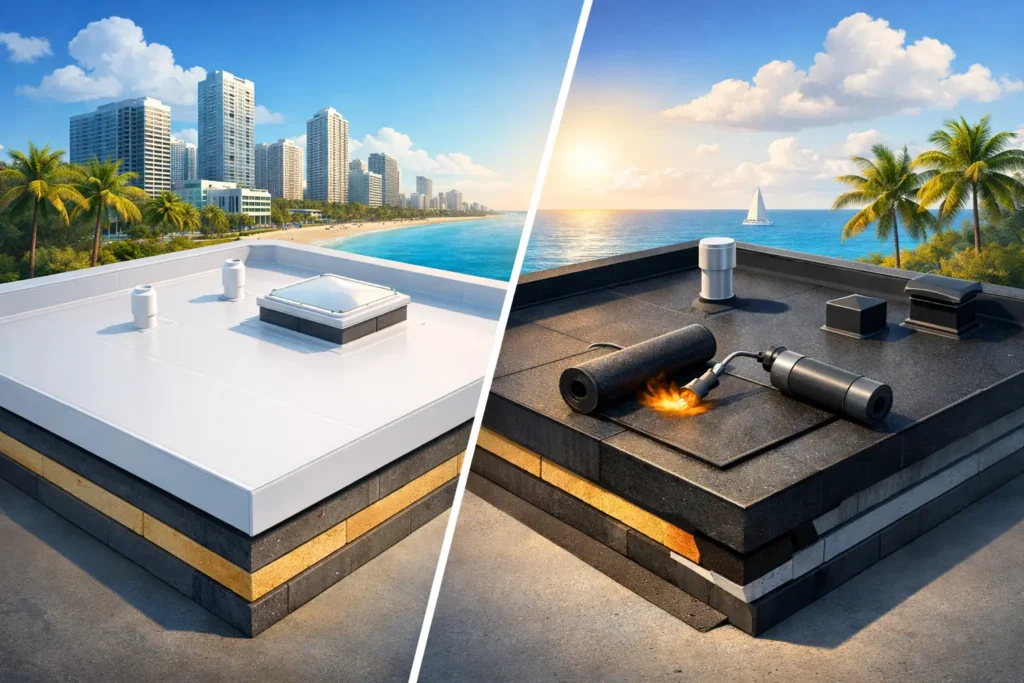
Roof coatings are liquid-applied systems designed to create a protective, continuous surface over an existing roof. They are commonly used on low-slope commercial roofs, flat roofs, metal roofs, and certain membrane systems. Depending on the product and roof condition, a coating can improve UV resistance, reduce surface heat, seal minor weathering, and extend the working life of the existing system.
In South Florida, UV exposure is relentless. That sun breaks down exposed roof surfaces, dries out some materials, and accelerates cracking around penetrations and seams. Heavy rain then finds every weak point. A properly specified coating helps protect a roof that is still fundamentally doing its job but needs another layer of defense.
Coating is usually worth considering when the roof deck is dry and solid, the insulation has not been saturated, and active leaks are limited to repairable details. The existing membrane or metal panels must still be well attached. On a metal roof, for example, surface rust may be treatable after proper preparation, while widespread corrosion around fasteners or panel laps may point to a larger problem.
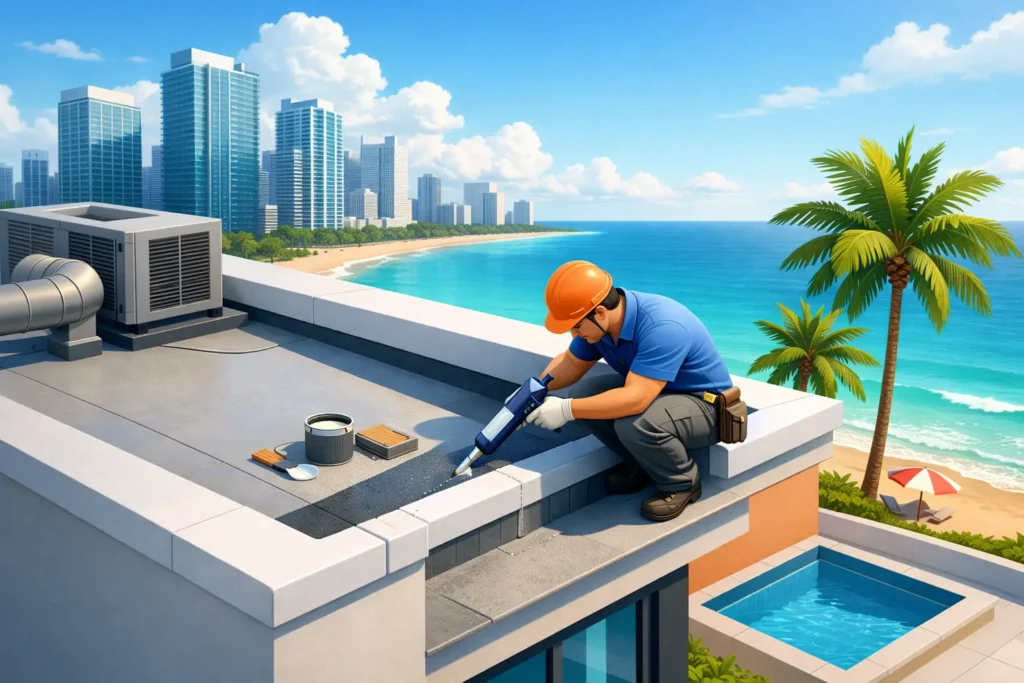
The preparation work matters as much as the coating itself. A roof must be cleaned, repaired, dried, and primed where required. Loose materials, open seams, deteriorated flashing, and ponding-water areas need to be addressed first. Applying coating over unresolved damage is not restoration. It is a superficial patch that can fail when the next hard storm hits.
What a Coating Can and Cannot Do
A quality roof coating can reflect heat, improve waterproofing at the surface, and delay the cost of a full replacement. For commercial property owners, it may also reduce disruption because the existing roof system stays in place. For homeowners with eligible flat or low-slope sections, it can be a practical way to gain more service life without immediately taking on a full reroof.
What it cannot do is repair rotten decking, dry out wet insulation, correct poor roof slope, or restore a roof that has reached the end of its serviceable life. It cannot make hurricane-damaged attachment systems reliable again. It also cannot replace properly installed flashing, edge metal, drains, scuppers, or roof penetrations.
A coating is a system, not a bucket of white material. Thickness, adhesion, compatibility, drainage, and the condition of the roof below all affect whether it performs.
When Full Roof Replacement Makes More Sense
Replacement is the right investment when the underlying roofing system has widespread failure. That may mean recurring leaks in multiple areas, extensive blistering, saturated insulation, brittle membrane material, corroded metal, broken tile components, or storm damage that compromises the roof assembly.
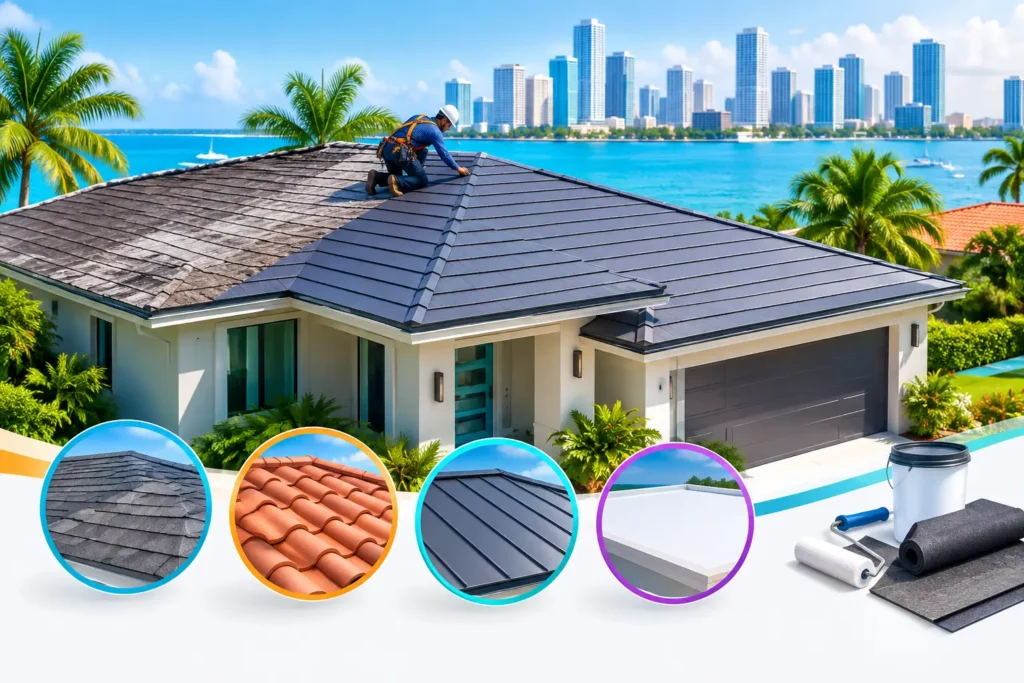
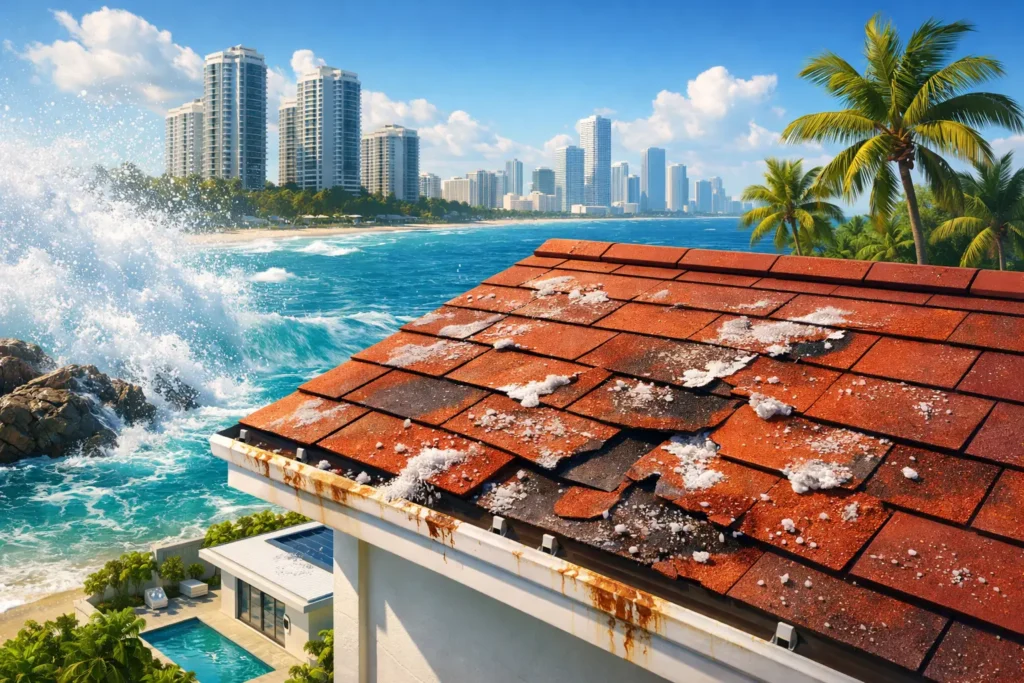
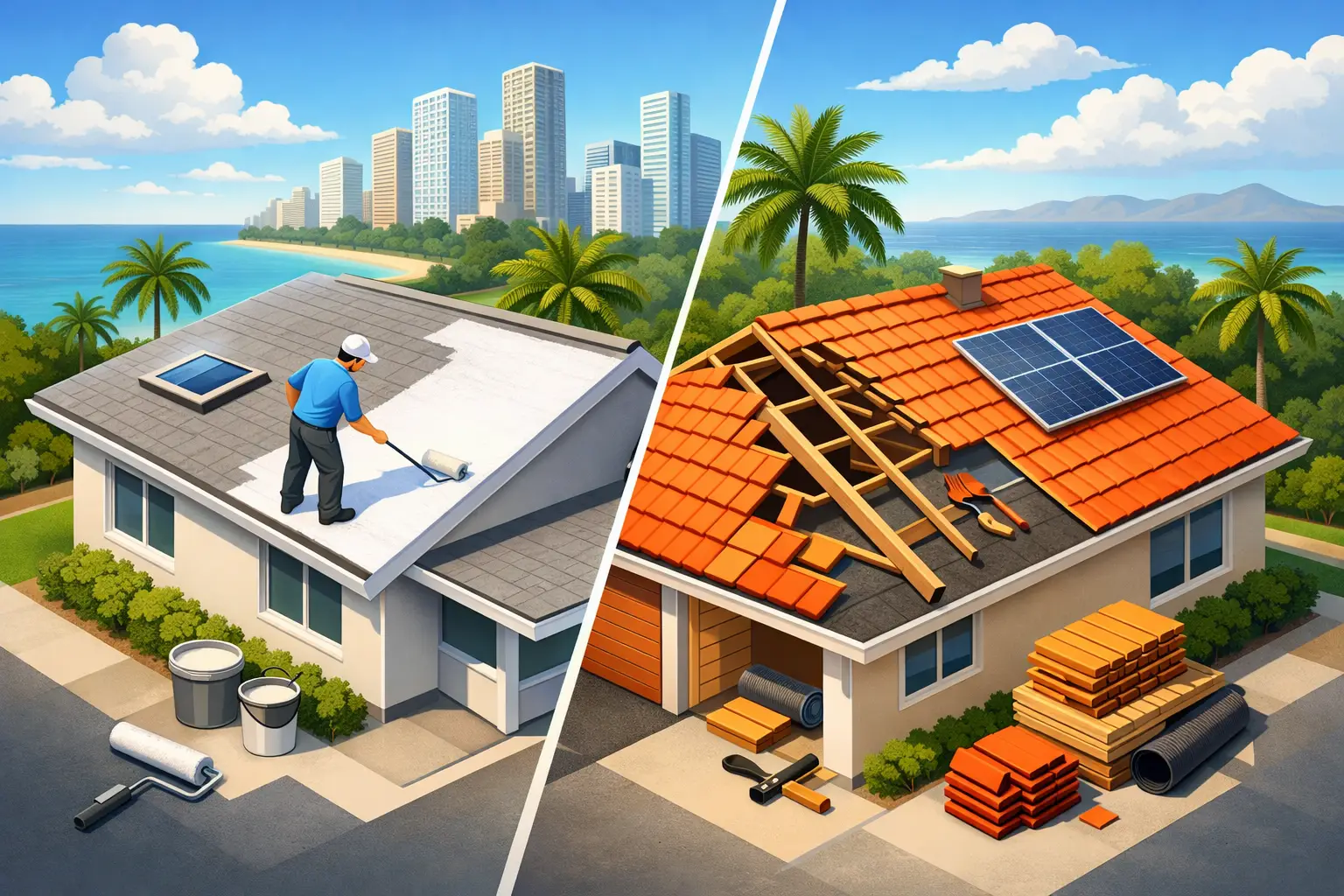
For a residential shingle or tile roof, coating is generally not a substitute for replacement. Shingles that are curling, losing granules, or lifting in wind need a roofing solution designed for that system. Cracked tiles may be individually repairable, but widespread failure in the underlayment beneath tile often requires a larger scope of work. The visible roof covering is only part of the system protecting the home.
On flat and commercial roofs, the strongest reason to replace is moisture below the surface. Wet insulation loses performance and can contribute to deck deterioration, mold concerns, and ongoing leaks. A coating may temporarily cover the symptoms while moisture continues to cause damage below. That is not a good trade in Miami, where rain can be heavy, frequent, and wind-driven.
Replacement also gives you the opportunity to correct problems that have been built into the roof for years. That may include inadequate drainage, weak flashing details, old penetrations, poor transitions between roof sections, or materials that were never suited to South Florida exposure. A new roof installed to current code and hurricane-zone requirements is a different level of protection than another patch over an aging system.
Roof Coating vs Replacement: The Cost Question
Upfront cost is where many owners get stuck. Roof coating typically costs less than a full replacement because it uses the existing roof as a base and avoids tear-off in many cases. If the roof is a good candidate, that lower cost can be a responsible decision.
But price only makes sense when it is measured against expected service life and risk. A lower-cost coating that lasts several years on a sound roof can be excellent value. A coating installed over a roof with wet materials, loose seams, or chronic leaks may need repairs soon after application. Then the owner pays for the coating and still faces replacement.
The more useful question is not, “Which option is cheaper?” Ask, “What condition is the roof in, what problem are we solving, and how long should this solution reasonably last?” A clear inspection should answer those questions with photos, documented findings, and a straightforward scope of work.
Be cautious with quotes that promise a coating solution without discussing preparation, repairs, warranty terms, or existing moisture. No mystery fees is good. No mystery scope is even better.
Miami Conditions Change the Decision
Roofing advice from a dry inland market does not always apply here. Miami roofs deal with high UV levels, humidity, intense afternoon storms, tropical systems, airborne salt, and strong winds. Those conditions affect both how roofs fail and how restoration work should be performed.
Salt exposure can speed corrosion on metal components, fasteners, and rooftop equipment areas. Humidity makes it critical to confirm that a roof is dry before coating work begins. Hurricane winds put added pressure on edges, flashings, seams, and attachment points. A roof may have a clean-looking field surface while its perimeter details are no longer secure enough for another season.
Drainage is another local concern. Flat roofs should not hold water for long periods after rain. Ponding water stresses coatings and membranes, gathers debris, and can expose weak areas. Before recommending either coating or replacement, a roofer should look at drains, scuppers, gutters, slopes, and any areas where water repeatedly collects.
What a Proper Inspection Should Reveal
A real roof evaluation is more than identifying the location of a drip inside the building. The visible leak is often some distance from where water entered. Water can travel along a deck, insulation, framing member, or membrane seam before it appears indoors.
A thorough inspection should examine the roof surface, seams, flashing, penetrations, perimeter edges, drainage points, and signs of moisture damage. For commercial and low-slope roofs, the inspector should also consider whether the roof has previous coatings and whether a new material will properly adhere to that surface.
Photo documentation helps property owners see what the contractor sees. It makes the recommendation easier to verify and helps separate necessary work from optional upgrades. If replacement is recommended, you should understand why coating is not a reliable option. If coating is recommended, you should know which repairs and preparation steps are included before application.
Choose the Repair That Protects the Building
There is no one-size-fits-all answer. A well-maintained membrane roof with minor surface weathering may be an excellent coating candidate. An aging roof with hidden moisture, failing details, and repeated leaks is usually better served by replacement. The right decision depends on the roof system, the damage, the building’s use, and how much risk the owner can reasonably accept.
Flash Roofing & Sheet Metal approaches that decision the same way it approaches every roof in Miami-Dade: inspect the root cause, document the condition, and recommend the work that gives the property a dependable result. Whether your roof needs restoration or a full replacement, the goal is simple: do it once, do it right before small damage turns into a larger building problem.