A flat roof in Miami takes a beating that a roof in a milder climate may never see: hard UV exposure, daily humidity, wind-driven rain, salt air, and hurricane-season uplift. TPO versus modified bitumen roofing is not a simple question of which material costs less. The right answer depends on your building, drainage, roof traffic, existing deck, and whether the installation details are designed for South Florida weather.
Both systems can perform well when they are specified correctly and installed by a qualified crew. Both can also fail early when a contractor cuts corners at seams, drains, penetrations, parapet walls, or edge metal. The membrane matters, but the workmanship and the complete assembly matter just as much.
TPO Versus Modified Bitumen Roofing: The Main Difference
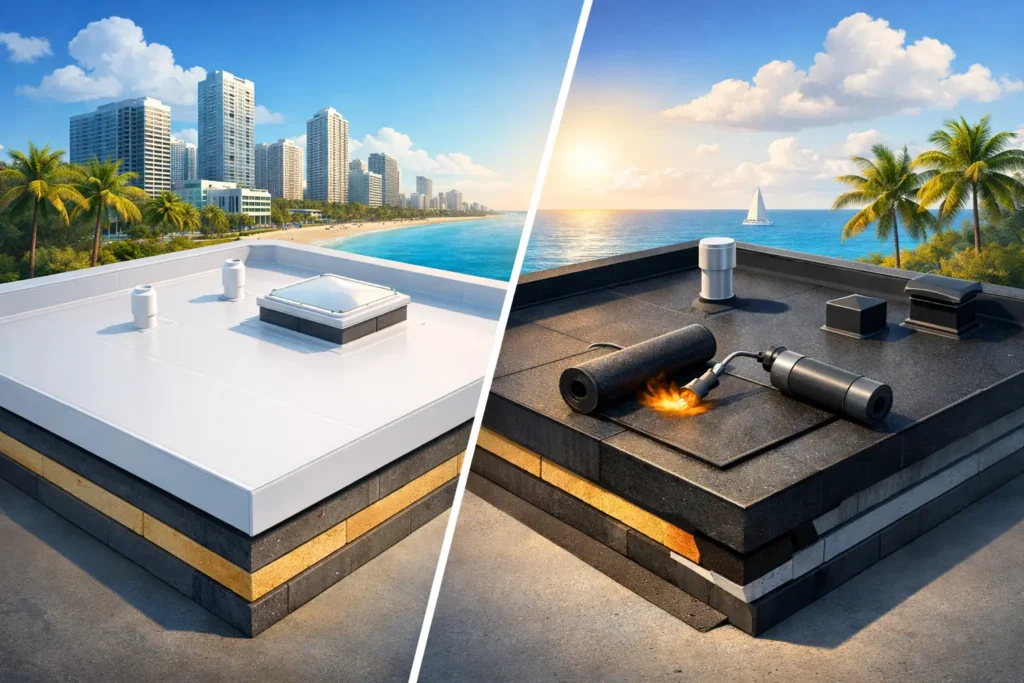
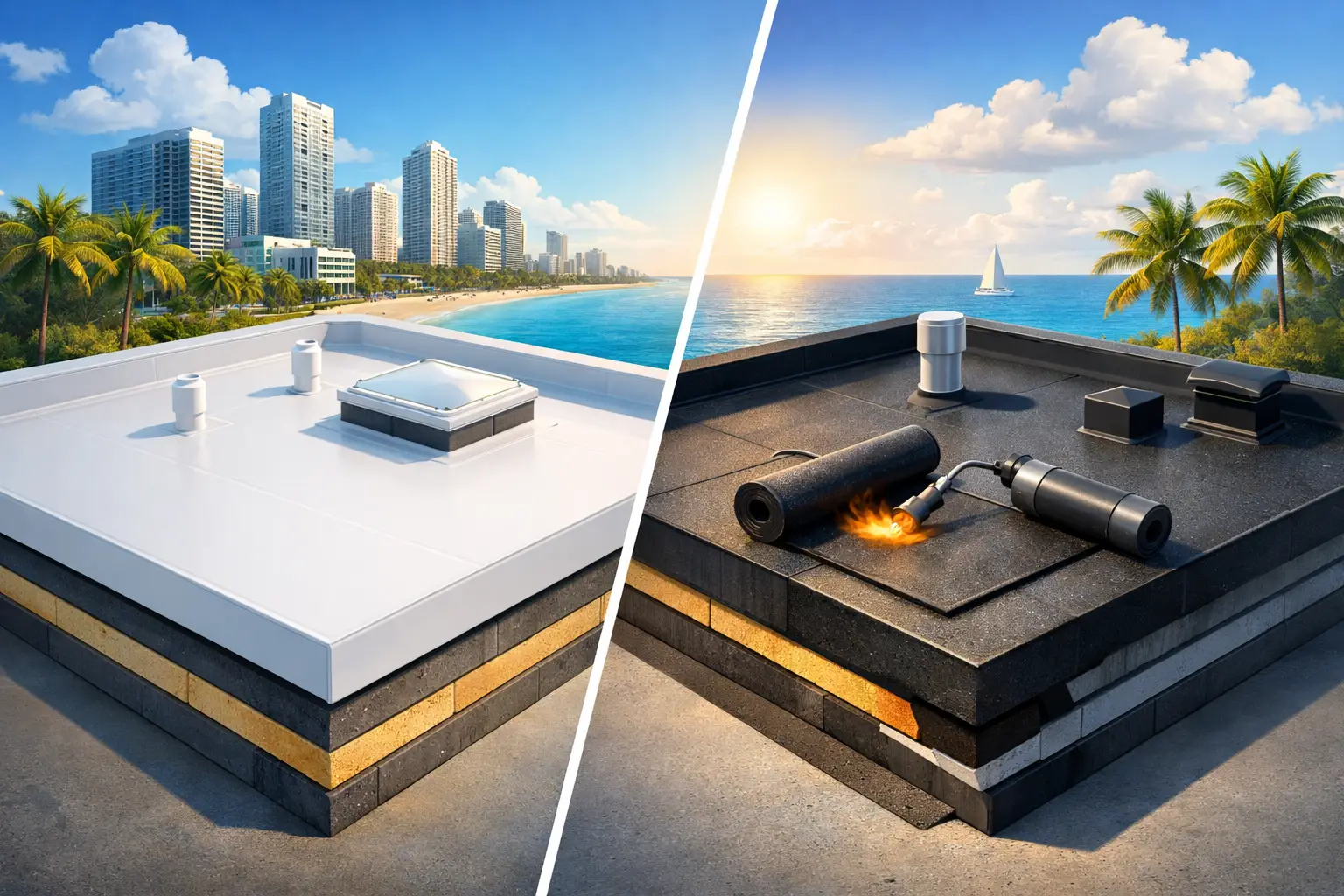
TPO, short for thermoplastic polyolefin, is a single-ply roofing membrane. It is commonly installed in white and comes in different thicknesses, often 45, 60, or 80 mil. The membrane sheets are joined with hot-air welding, creating fused seams that can be very strong when welded properly.
Modified bitumen is an asphalt-based membrane system reinforced with polyester or fiberglass and modified with polymers for flexibility and durability. It is usually installed in multiple layers, including a base sheet and a granulated cap sheet. Depending on the product, the sheets may be adhered with cold adhesive, self-adhered, heat-welded, or installed with other approved methods.
That construction difference drives much of the decision. TPO is a lighter, reflective single-ply system with welded seams. Modified bitumen is a layered system that provides redundancy and a tougher surface, especially where people regularly walk on the roof.
Where TPO Makes Sense in Miami
TPO is often a strong choice for commercial buildings, warehouses, offices, and larger low-slope roofs where energy performance and broad, open roof areas are priorities. Its white surface reflects a significant amount of sunlight, which can help reduce heat absorbed through the roof assembly. In Miami, where air-conditioning demand is high for much of the year, that can be a meaningful benefit.
The welded seams are another major advantage. Unlike seams that rely only on adhesive, a properly heat-welded TPO seam becomes fused together. That is valuable in heavy rain, but it also raises the stakes on installation quality. Seam temperature, speed, pressure, and testing all need to be right. A seam that looks finished but was not welded correctly is a weak point waiting for the next hard storm.
TPO is also relatively lightweight. That can be helpful when structural loading is a concern or when a roof replacement requires careful planning around an existing building. It can be installed with mechanical fastening or adhesive systems approved for the roof deck and wind zone.
The trade-off is that TPO can be vulnerable to punctures from dropped tools, sharp equipment feet, careless service work, and frequent foot traffic. A roof with HVAC units, solar equipment, or technicians walking the same paths needs designated walk pads and durable detailing. A low price on thin membrane with minimal protection is not a bargain if maintenance traffic damages it within a few years.
Where Modified Bitumen Has an Edge
Modified bitumen has a long track record on Miami-area residential flat roofs, multifamily properties, and commercial roofs with a lot of detail work. Because it is commonly built in layers, it offers more redundancy than a single-ply system. If the cap sheet is damaged, there may still be protection beneath it. That layered design can be reassuring on roofs with complicated penetrations, transitions, and wall flashings.
It is also a practical choice for roofs that see regular foot traffic. The granulated cap sheet creates a more rugged walking surface than an exposed single-ply membrane. That does not mean the roof should be treated like a walkway, but it can handle routine access better when installed with the right protection and maintenance plan.
Modified bitumen is especially useful on smaller roofs with many corners, drains, pipes, curbs, and tie-ins. Experienced roofers can detail these areas effectively, but the system still needs careful application. Poor lap work, trapped moisture, weak flashings, and improperly terminated edges can cause leaks regardless of how many layers the roof has.
The main downside is heat. Traditional dark cap sheets absorb more solar energy than white TPO, which can increase roof-surface temperatures. White or reflective cap sheet options are available and may improve reflectivity, but product selection should be based on the full roof assembly, local approvals, and the building’s needs. Modified bitumen systems are also generally heavier and can take more labor to install.
Hurricane Resistance Is About the Assembly
Miami property owners often ask which material is better for hurricanes. The honest answer is that neither membrane alone makes a roof hurricane-ready. Wind performance comes from the complete tested assembly: the deck condition, insulation attachment, fastener pattern, adhesive coverage, perimeter details, edge metal, flashing, and drainage components.
Wind pressure is not the same across every part of a roof. Corners and perimeters experience higher uplift forces than the center field of the roof. That means fastening patterns and attachment methods may need to change by roof zone. A contractor should not use one generic layout for every building.
Product approvals also matter. Florida Building Code requirements, Miami-Dade approvals where applicable, and manufacturer specifications are not paperwork to ignore. They are part of selecting a roof system that has been evaluated for the conditions it will face. Before work begins, confirm that the proposed assembly is appropriate for your property, not simply that the membrane brand is familiar.
Drainage and Existing Moisture Can Change the Answer
No membrane is meant to cover up serious drainage problems. Standing water, clogged drains, failed scuppers, and poor slope will shorten the life of nearly any flat roof. TPO can handle normal wet conditions, while modified bitumen is known for its durability, but neither is a substitute for correcting a roof that routinely holds water.
Before choosing a system, the roof should be inspected for wet insulation, deteriorated decking, soft spots, and hidden leak paths. Installing a new membrane over moisture can trap a problem inside the roof assembly. It may look clean on day one, then create insulation damage, deck deterioration, and interior leaks later.
This is where photo documentation makes a difference. You should be able to see the areas that need replacement, understand why they need replacement, and receive a quote that separates necessary repairs from optional upgrades. No mystery fees and no vague claims that everything must be replaced without proof.
Cost: Look Beyond the Price Per Square Foot
TPO is often less expensive than a multi-layer modified bitumen system on large, simple roof areas. However, the final cost changes quickly with membrane thickness, insulation, tear-off requirements, deck repairs, parapet-wall flashing, drains, curbs, and wind-uplift requirements.
Modified bitumen may cost more in labor and materials, particularly when multiple plies and detailed flashing are involved. On a small roof with difficult transitions, though, its ability to conform to details can make it a sensible long-term value. Comparing only the lowest price per square foot leaves out the work that prevents future leaks.
Ask every contractor to explain what is included. Find out the membrane thickness or ply count, attachment method, insulation work, flashing material, edge-metal scope, drain details, warranty terms, and whether damaged substrate is included as an allowance or billed separately. A clear proposal protects you from surprises after the tear-off begins.
Which Roof Is Right for Your Property?
Choose TPO when you have a larger low-slope roof, want a highly reflective surface, have limited foot traffic, and can invest in a properly engineered fastening or adhesive system. It is often an efficient solution for commercial properties that need energy-conscious performance and clean seam technology.
Choose modified bitumen when roof traffic is frequent, the roof has complex details, or you want the added redundancy of a layered asphalt-based system. It remains a dependable option for many Miami homes, multifamily buildings, and commercial properties, especially when a crew has the experience to install every lap and flashing correctly.
For some properties, the best path is not a full replacement at all. If the roof is still structurally sound and the issue is isolated, a targeted repair or restoration may be the more honest recommendation. Flash Roofing & Sheet Metal starts with the condition of the roof, not a one-size-fits-all sales pitch.
A roof decision should hold up after the first tropical downpour, not just look good when the job is complete. Get a professional inspection, review the photos, ask direct questions about the assembly, and choose the system that fits your building and Miami’s weather for the long haul.