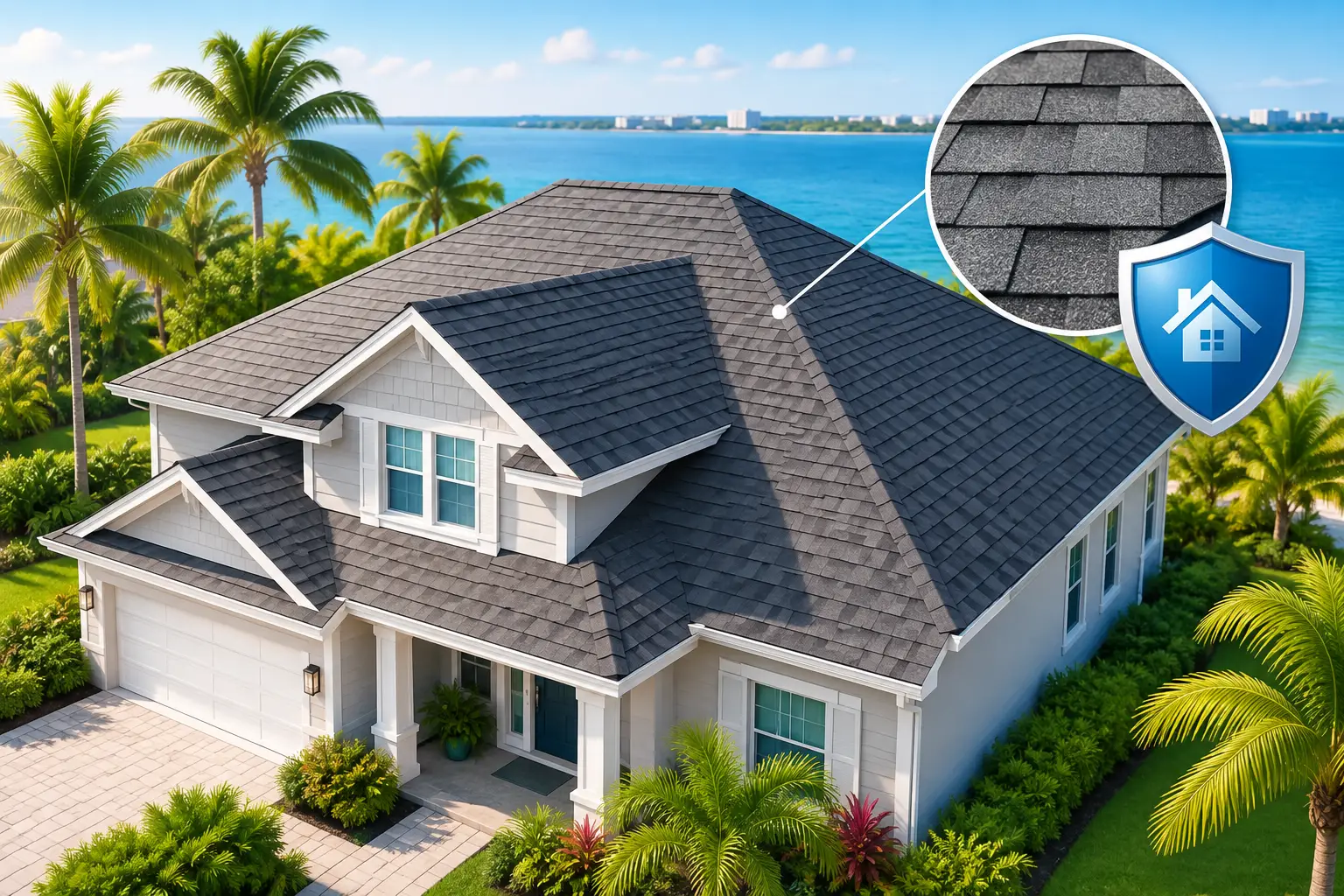
A shingle roof can look fine from the driveway and still be nearing the end of its useful life. When homeowners ask about shingle roof lifespan Florida conditions can allow, the honest answer is usually shorter than the manufacturer’s headline warranty. Miami sun, year-round humidity, salt air, heavy rain, and hurricane winds put constant pressure on every layer of the roof – not just the shingles you can see.
For a typical asphalt shingle roof in South Florida, a realistic service life is often 15 to 20 years with quality materials, proper installation, ventilation, and routine maintenance. Some roofs need major work sooner. Others last longer. The difference comes down to how the roof was built, what it has endured, and whether small failures were addressed before water reached the decking.
What Affects Shingle Roof Lifespan in Florida?
A shingle roof is a system. The shingles matter, but so do the underlayment, flashing, fasteners, roof deck, ventilation, and drainage. One weak detail around a vent, chimney, valley, or wall transition can allow water under otherwise serviceable shingles.
Sun and UV exposure
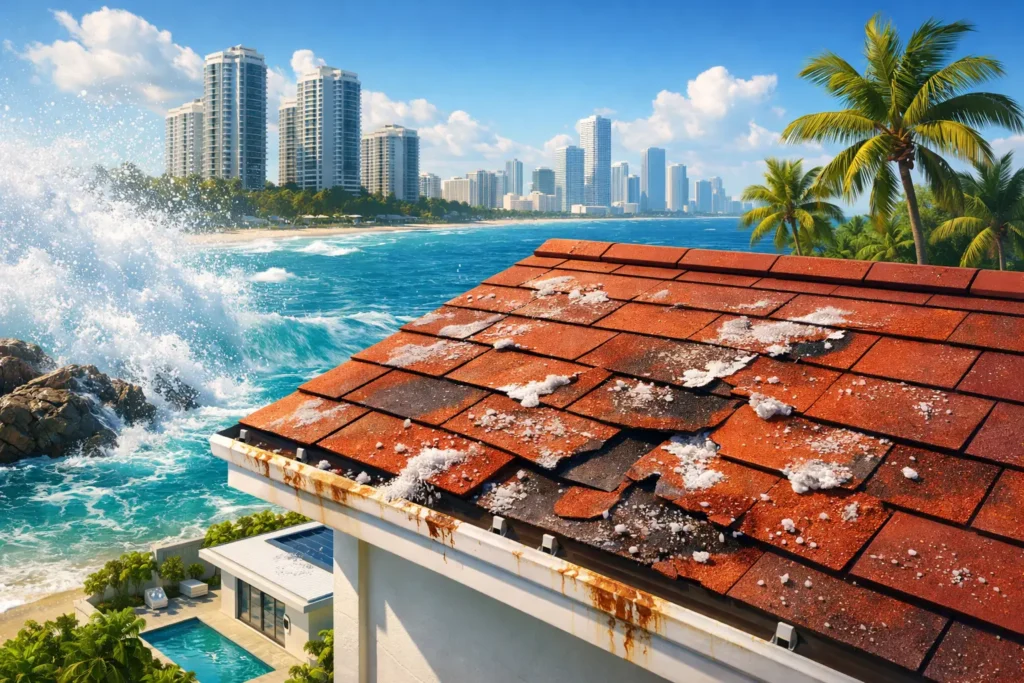
South Florida’s heat does not take a season off. Strong UV exposure dries the oils in asphalt shingles over time, making them less flexible and more likely to crack, curl, or lose protective granules. Darker roofs can run hotter, but every shingle color is dealing with intense sun for much of the year.
Granule loss is more than a cosmetic issue. Those granules protect the asphalt layer below from ultraviolet damage. A few loose granules after installation or a hard rainstorm are not necessarily alarming. Widespread bare spots, however, are a sign the roof is aging and losing protection.
Humidity, rain, and trapped moisture
Miami roofs face frequent rain, high humidity, and long wet periods. If flashing is loose, a pipe boot is cracked, or shingles have lifted at the edge, water can work beneath the surface. Once moisture reaches the underlayment or deck, it may spread farther than the visible ceiling stain suggests.
Poor attic ventilation can make the problem worse. Heat and moisture trapped below the roof can accelerate shingle wear and contribute to condensation issues. Ventilation is not a cure for storm damage or a bad installation, but it is part of a roof that can perform as designed.
Wind and hurricane exposure
Hurricane-season damage is not always obvious. High winds can break the seal between shingles, lift tabs, loosen ridge materials, and create entry points for wind-driven rain. A roof may not leak during the first storm after damage, then begin leaking months later when the next hard rain finds the weak spot.
Wind resistance depends heavily on installation details. Correct fastener placement, proper nail quantity, sealed edges, and secure flashing are not optional in a hurricane-prone area. A low quote that cuts corners on these details can become an expensive roof much sooner than expected.
Salt air near the coast
Salt air affects more than metal roofs. On shingle roofs, it can speed up corrosion on exposed fasteners, flashing, vents, and other metal components. A shingle field may still have useful life, while rusting flashing around penetrations creates leaks that require prompt repair.
This is one reason a roof inspection should look beyond the shingles. The details around the shingles are often where South Florida roofs first show trouble.
How Long Should an Asphalt Shingle Roof Last?
Most Florida homeowners should plan around a 15- to 20-year window for a properly installed architectural shingle roof. A basic three-tab roof may have a shorter practical lifespan, especially on a home with full sun exposure and repeated storm impacts. Premium architectural shingles can offer better thickness and wind ratings, but no shingle is immune to Miami’s climate.
Manufacturer warranties can be useful for comparing products, yet they should not be treated as a guarantee that the roof will remain trouble-free for 25, 30, or 50 years. Warranties often have conditions related to installation, ventilation, maintenance, wind events, and material defects. They also do not erase the effects of hurricane debris, aging flashing, or water intrusion caused by a separate component.
For property managers and commercial owners, the same principle applies to shingle-covered residential-style buildings, offices, and multifamily properties. Age matters, but the roof’s present condition matters more. A 12-year-old roof with recurring leaks deserves attention. A 17-year-old roof with sound materials and no active issues may still have time left with targeted maintenance.
Signs Your Shingle Roof May Be Near Replacement
Age alone does not automatically mean replacement, but an older shingle roof should be inspected more closely. Warning signs include widespread curling or cracking, bald spots from granule loss, brittle shingles that break during minor repairs, recurring leaks, soft areas in the roof deck, and multiple patched sections.
Look inside as well. Water stains on ceilings, peeling paint near exterior walls, musty attic odors, or daylight visible in the attic can indicate a roof problem. Do not assume the stain is directly below the leak. Water can travel along framing before it shows itself indoors.
After a major storm, check from the ground for missing shingles, lifted edges, fallen flashing, or debris impact. Avoid walking on the roof yourself. Older shingles can crack under foot traffic, and a visual check cannot confirm whether wind has broken seals or damaged concealed components.
Repair or Replace? Make the Decision on Evidence
A repair is often the right choice when the problem is isolated: a failed pipe boot, damaged flashing, a small section of wind-lifted shingles, or localized storm damage on a roof with plenty of remaining life. Good repairs address the source of water entry, not just the ceiling stain below it.
Replacement becomes the more responsible choice when deterioration is widespread, leaks keep returning in different areas, the deck has moisture damage, or matching shingles are no longer available and repairs would turn into repeated patchwork. It can also make sense before the roof becomes an insurance concern or fails at the worst possible time during storm season.
The key is documentation. A professional inspection should identify the condition of shingles, flashing, penetrations, valleys, edges, underlayment where visible, and any signs of deck damage. Photos help homeowners see what is being recommended and why. There should be no mystery fees and no pressure to replace a roof that can still be repaired correctly.
How to Help a Florida Shingle Roof Last Longer
Maintenance will not make worn-out shingles new again, but it can prevent minor issues from becoming structural damage. Have the roof checked at least once a year and after significant wind events. Clear loose debris from valleys and gutters so water can drain instead of backing up beneath the shingles.
Keep nearby trees trimmed back from the roof. Branches can scrape granules away, drop debris that holds moisture, and become impact hazards in high winds. If you notice a leak, missing shingle, or exposed flashing, schedule an inspection promptly. Waiting through another rainy season often turns a manageable repair into damaged insulation, drywall, and decking.
Also be cautious with quick coatings or surface patch products marketed as universal fixes. A coating may have a role on certain roofing systems, but it is not a reliable answer for a failing shingle roof with compromised flashing, brittle shingles, or wet decking. The roof needs a diagnosis before it needs a product.
A Miami Roof Needs a Miami-Level Inspection
Florida roofing decisions should be based on the roof in front of you, not a generic lifespan chart. Flash Roofing & Sheet Metal evaluates the full system for the damage South Florida properties actually face: UV wear, wind lift, salt exposure, moisture intrusion, and installation failures that hide beneath the surface.
If your shingle roof is approaching the 15-year mark, has been through several major storms, or has started showing repeat issues, get clear evidence before deciding on the next step. A documented inspection can tell you whether a focused repair will protect the roof or whether replacement is the safer long-term move. Do it once, do it right – before the next hard rain makes the decision for you.