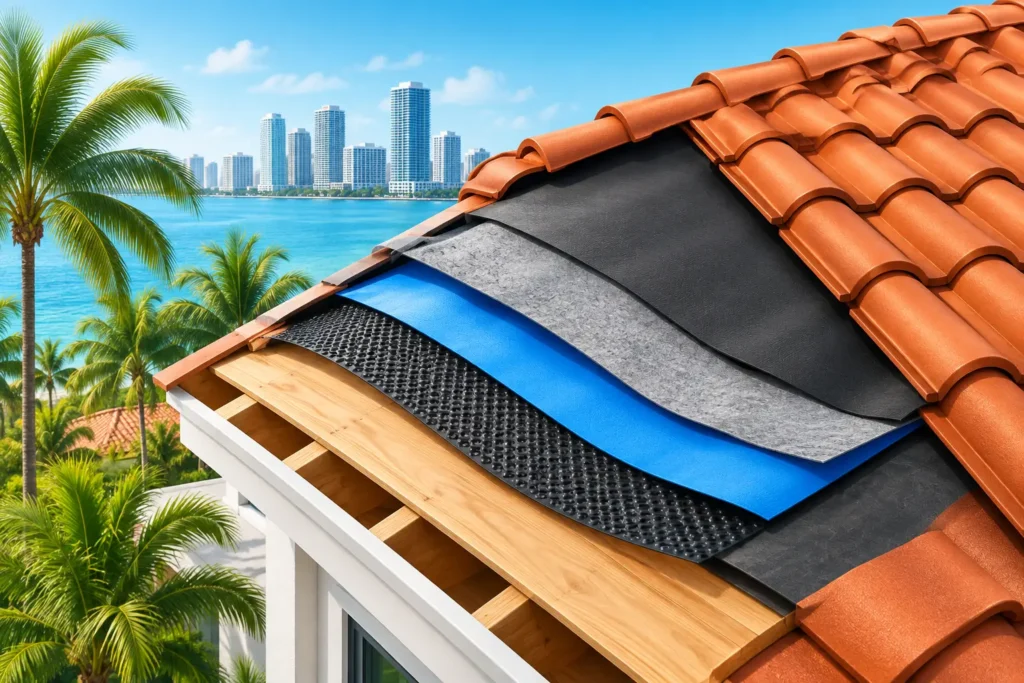
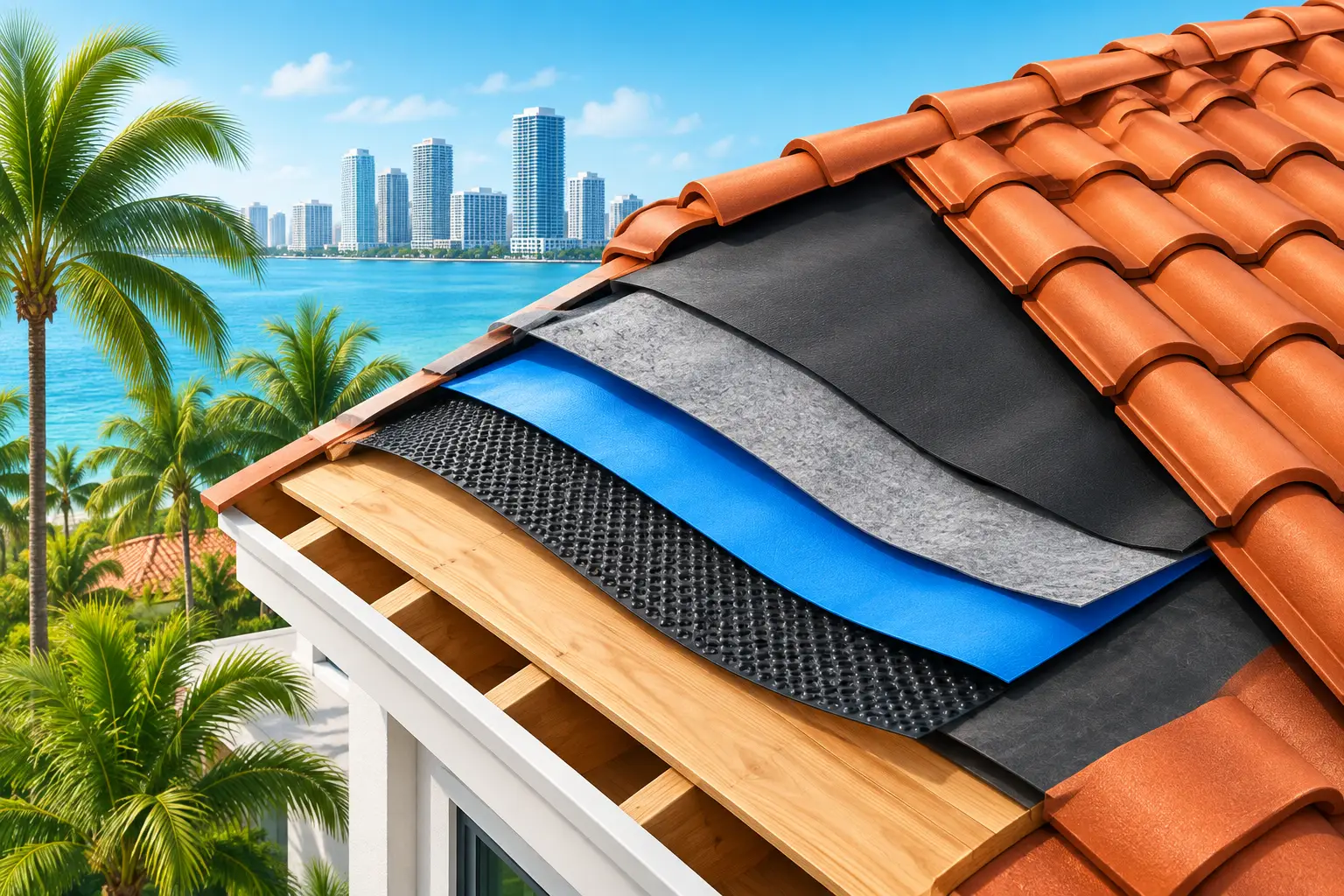
A tile roof can still leak even when the tiles look intact. In Miami, the tile is the visible armor, but the underlayment beneath it is the water-shedding layer that does the real day-to-day work. Choosing the best tile underlayment options means looking past price per roll and considering heat, humidity, wind-driven rain, salt air, roof slope, and how long you expect the system to last.
For many South Florida homes, replacing failed underlayment is the real reason for a tile roof project. The tiles may be reusable, but cracked, brittle, or poorly installed underlayment can allow water into the deck, attic, and interior finishes. Do it once, do it right: select a system designed for Miami conditions and install it according to the approved assembly, not a shortcut that looks good only on estimate day.
Why Tile Roof Underlayment Matters in Miami
Concrete and clay tiles are durable, but they are not a waterproof roof covering by themselves. Wind-driven rain can move beneath tile laps. Condensation, debris, and occasional broken tiles can also expose the layer below. The underlayment is the backup barrier that protects the roof deck when water gets under the tile.
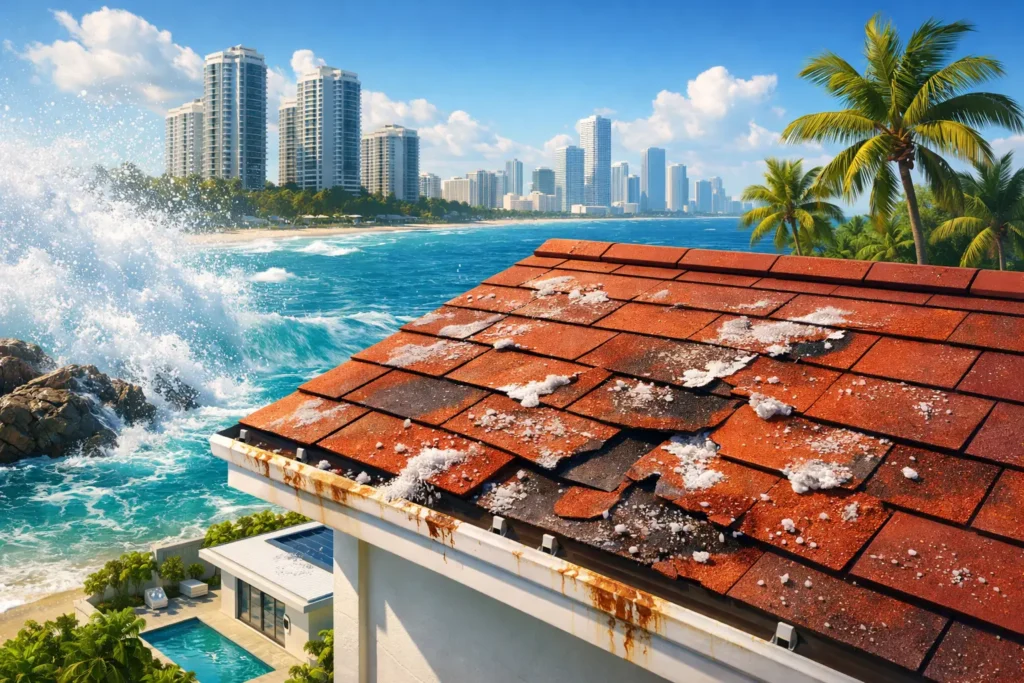
Miami roofs face more punishment than roofs in mild climates. High UV exposure cooks lower-grade materials. Humidity and heavy rain test seams and laps. Hurricane-force winds can lift tiles or drive water into openings that would never leak during a light shower. Near the coast, salt air adds another concern for fasteners and metal details.
That is why the cheapest underlayment is rarely the best value. A lower-cost material can save money at installation, then force an expensive tile removal and reset years earlier than expected. Tile work is labor-intensive. Paying to remove and reinstall tiles twice because the underlayment failed early is not a bargain.
Best Tile Underlayment Options for South Florida
The right choice depends on the roof design, tile type, attachment method, and budget. It also depends on whether the roof has valleys, walls, skylights, solar equipment, or other details where water management becomes more demanding.
Self-Adhered Modified Bitumen
High-temperature self-adhered modified bitumen is often one of the strongest choices for tile roofs in Miami-Dade. This membrane bonds directly to a properly prepared roof deck and creates a continuous water-resistant layer beneath the tile system.
Its biggest advantage is protection at laps and around penetrations. Because it adheres to the deck, it is less likely to shift or allow water to travel beneath the material than a loosely applied sheet. Quality products made for high heat also hold up better under hot concrete or clay tile roofs, where trapped heat can be extreme.
This option costs more than basic felt or entry-level synthetics, but it can be a smart investment for homeowners planning to stay in the property. It is especially well suited to complex roofs with valleys, dormers, chimneys, or low-slope areas where water can move slowly and find weak points.
Installation quality matters. The deck must be clean, dry, and properly primed when required by the manufacturer. Poor adhesion, unsealed laps, or careless flashing work can defeat the purpose of a premium membrane. The material is only as good as the crew installing it.
Two-Ply Modified Bitumen Systems
A two-ply modified bitumen assembly uses multiple layers to provide redundancy. In simple terms, if one layer is compromised, the second layer offers another line of defense. For certain tile roof assemblies, this is a durable, proven approach with a long track record in Florida.
This system can be an excellent fit when a property owner wants maximum protection under a high-value tile roof. It is also worth considering on roofs with complicated geometry, multiple transitions, or areas prone to ponding and water concentration.
The trade-off is cost and labor. A two-ply system uses more material, more installation time, and careful detailing at every transition. It may not be necessary for every home, but it should be part of the conversation when long-term durability matters more than getting the lowest quote.
High-Temperature Synthetic Underlayment
Synthetic underlayment is lightweight, tear-resistant, and easier for installers to handle than traditional asphalt felt. Better synthetic products are made to tolerate higher temperatures and can perform well beneath tile when installed as part of an approved roof assembly.
For some projects, a high-quality synthetic is a practical middle ground. It can offer good performance at a lower cost than self-adhered or two-ply systems, particularly on straightforward roof layouts with adequate slope and limited penetrations.
But not all synthetic underlayments are equal. Some are designed for shingle roofs, not tile roofs. Others may not have the heat rating, fastening pattern, or product approval needed for the local application. A roll labeled “synthetic” is not automatically a Miami-ready tile underlayment.
Ask what specific product is being proposed, how it will be fastened, and whether it is approved for the roof system being installed. Clear answers now prevent mystery problems later.
Traditional Asphalt Felt
Asphalt-saturated felt has been used under tile for decades, and it is still familiar to many property owners. It is generally inexpensive and available. That said, basic felt is often the least attractive option for a long-term tile roof replacement in South Florida.
Heat can dry it out and make it brittle over time. Moisture can affect it during installation, and it does not offer the same adhesion or redundancy as premium self-adhered systems. It may have a place in limited circumstances where the approved assembly allows it, but it should not be selected simply because it is the lowest line item on a proposal.
If one contractor recommends felt and another recommends a high-temperature self-adhered membrane, those bids are not equal. Compare the full system, expected service life, warranty terms, flashing details, and tile attachment method before comparing totals.
What Changes the Right Choice
Underlayment should never be selected in isolation. The roof deck condition comes first. Rotten plywood, loose decking, deteriorated fascia, and damaged flashing must be repaired before any membrane goes down. Covering a bad substrate with premium material is still a bad roof job.
Roof slope also matters. Steeper roofs move water quickly, while lower slopes demand more attention to waterproofing and drainage details. Valleys, roof-to-wall intersections, scuppers, chimneys, and vents need reinforced treatment because they handle concentrated water flow.
Tile type and attachment matter too. Concrete tile, clay tile, barrel tile, and flat tile can have different weight, profile, and installation requirements. In hurricane-prone areas, the fastening pattern and approved assembly are every bit as important as the underlayment itself. A quality membrane cannot compensate for tiles that are improperly attached.
Local code and product approvals should guide the final system. Miami-Dade has strict requirements for a reason. The roof assembly must be built for high-wind conditions, not based on a generic detail from another market. A licensed contractor should be able to explain what is being installed, why it fits the roof, and how the work will be documented.
Questions to Ask Before You Sign a Tile Roof Proposal
A good proposal should make the underlayment clear, not bury it in vague language. Ask whether the estimate identifies the manufacturer and product type, whether the material is rated for tile and high temperatures, and whether the installation follows the applicable approved assembly.
Also ask how valleys, wall flashing, pipe penetrations, and deck repairs will be handled. Those details cause many of the leaks that show up after a roof replacement. Photos before, during, and after installation provide proof that the work behind the tiles was done correctly.
Be careful with quotes that use phrases like “premium underlayment” without naming the product. Premium is not a specification. A clear scope of work should tell you what layer is being installed, how many layers are included, and what preparation is required before installation begins.
Choose the System, Not Just the Price
For many Miami tile roofs, high-temperature self-adhered modified bitumen offers a strong balance of protection and long-term value. Two-ply modified bitumen can provide added redundancy for demanding roof designs, while quality synthetic underlayment may be a sensible choice for the right roof and budget. Basic felt may cost less upfront, but it often asks homeowners to accept more risk under one of the most expensive roof coverings to remove and reinstall.
The right underlayment is the one that fits your roof’s approved design, local conditions, and expected service life. Before tiles go back on, make sure you know exactly what is protecting the deck underneath. That hidden layer is where a tile roof earns its years of service.