A commercial roof can look fine from the parking lot and still be taking on water. In Miami, the top commercial roof warning signs often show up after a hard afternoon storm, during a heat-heavy stretch, or when salt air has had years to work on metal details. Waiting for a visible ceiling leak is usually the expensive move. By then, moisture may already be in the insulation, deck, walls, or electrical areas below.
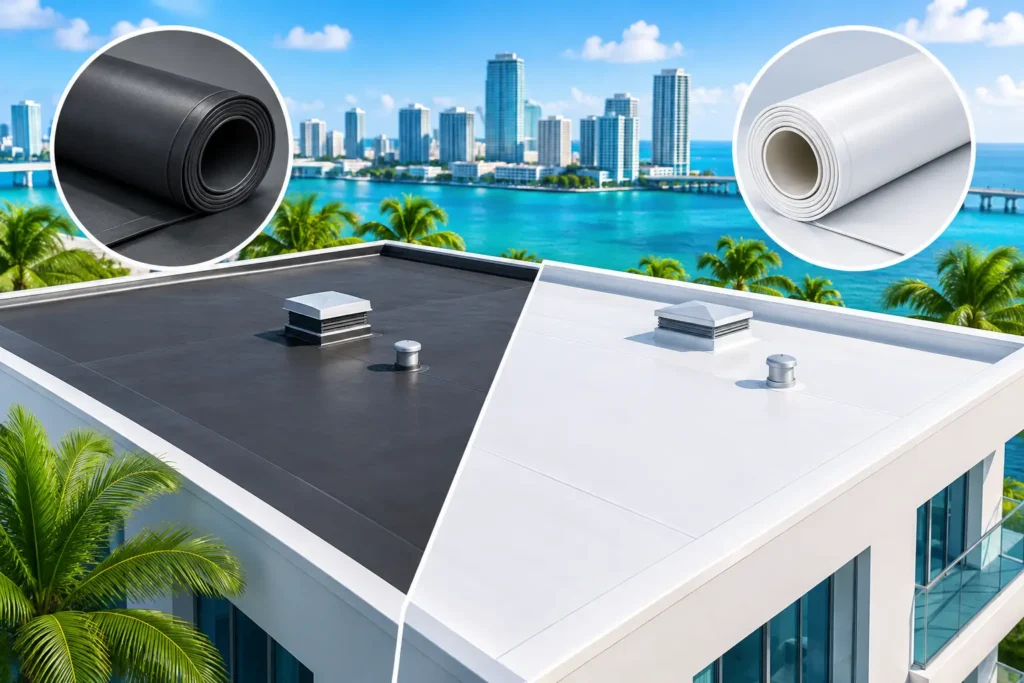
Commercial properties depend on roofs that can handle intense UV exposure, heavy rain, standing humidity, and hurricane-force wind. Whether your building has a modified bitumen, TPO, PVC, metal, built-up, or other flat-roof system, early evidence matters. A small failed seam can become a large wet area fast.
Top Commercial Roof Warning Signs Miami Owners Should Watch
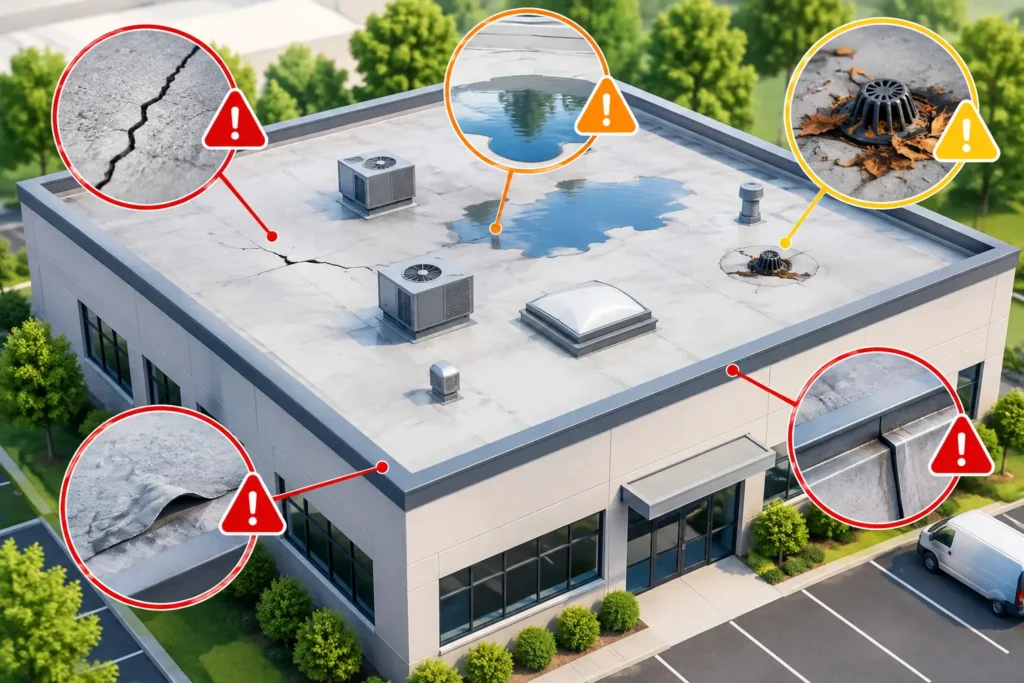
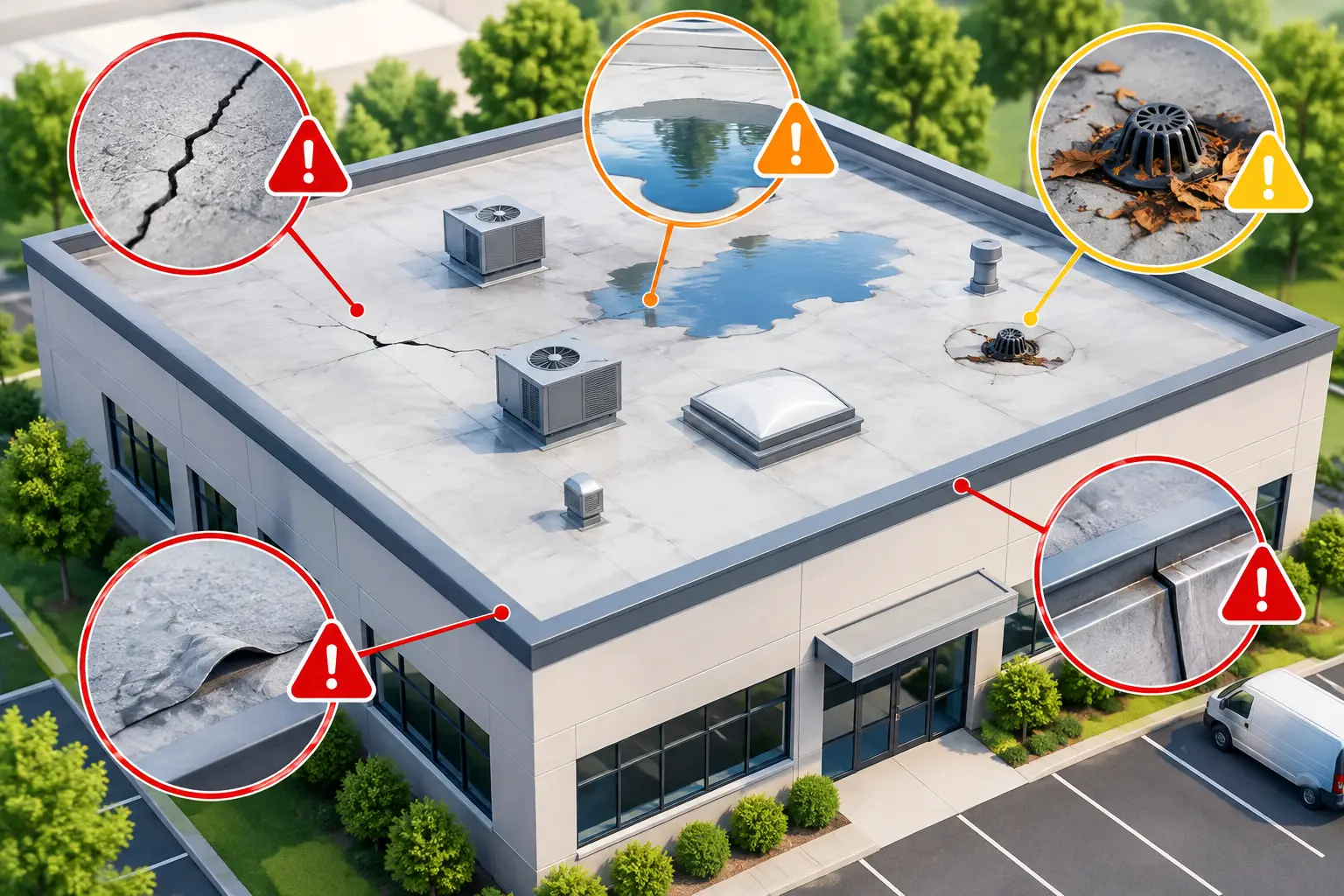
1. Water ponding that stays after the storm
Some water on a low-slope roof right after rain is normal. Water still sitting there 48 hours later is not something to ignore. Persistent ponding adds weight, breaks down coatings, stresses seams, and gives UV exposure more time to damage the membrane below the waterline.
Ponding is often a drainage problem, but the cause can vary. A blocked drain may be the simple answer. Other times, the roof has settled, insulation has compressed, or an area around a rooftop unit was not properly tapered. The right repair depends on what is causing the water to stay there, not just on sweeping it off after every storm.
2. Cracks, blisters, bubbles, or exposed membrane
South Florida sun is unforgiving. On membrane systems, heat can dry out surface materials, weaken protective coatings, and cause cracking over time. Blisters and bubbles may indicate trapped moisture or poor adhesion between roofing layers. They do not always mean the entire roof has failed, but they deserve a close inspection before they split open.
Look especially near parapet walls, roof edges, walk pads, and areas where workers regularly service HVAC equipment. Foot traffic can wear away granules or protective surfacing faster than owners expect. Once the waterproof layer is exposed, the roof becomes far more vulnerable during the next heavy rain.
3. Open seams and failing flashing
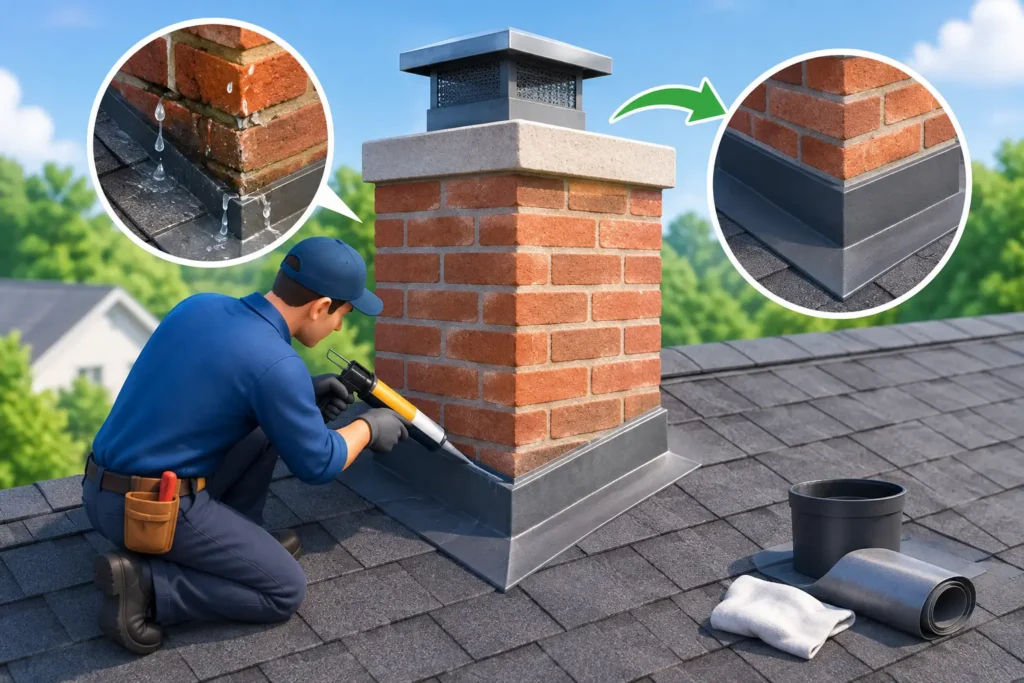
Commercial roofs have many transition points: walls, drains, curbs, vents, skylights, pipes, HVAC stands, and expansion joints. Those details are common leak locations because they must move, shed water, and stay sealed through constant heat cycles and wind pressure.
A lifted seam, cracked sealant line, or loose piece of flashing may look minor. It can still allow water beneath the membrane, where it travels before showing up inside the building. That is why the stain on a ceiling is often not directly below the actual roof opening.
Sealant alone is not always the answer. A quick patch may be appropriate for a small, isolated issue on an otherwise sound roof. If multiple seams are opening or flashing is failing across the roof, the system may need a broader repair plan or restoration work.
4. Interior stains, peeling paint, or a musty odor
A brown ceiling stain is the warning sign most building owners recognize, but it is not the first one to appear. Watch for peeling paint, swollen drywall, discolored ceiling tiles, rusting metal components, damp insulation, or a musty smell in upper-floor spaces.
Do not assume an active indoor leak only happens during rain. Condensation from poorly insulated roof areas, HVAC problems, and slow moisture entry can produce similar symptoms. A proper inspection should trace the source instead of guessing based on the nearest visible stain.
If water is near electrical panels, tenant spaces, inventory, or sensitive equipment, treat it as urgent. Protect the area, document the damage, and get the roof assessed before another weather event makes the problem worse.
5. Clogged drains, scuppers, and gutters
Roof drainage is part of the roofing system, not an afterthought. Leaves, debris, loose granules, and windblown material can block drains and scuppers quickly. On a flat commercial roof, one obstructed drain can leave a large section holding water.
There is a trade-off here. Routine cleaning is simple maintenance, but repeated drain blockages may point to a larger concern, such as deteriorating roof surfacing, poor drainage design, or debris coming from nearby trees. Clearing the drain restores flow. Identifying why it keeps clogging helps prevent the same problem next month.
6. Rust, corrosion, or loose metal at the edges
Miami-Dade properties near the coast face a tougher combination of moisture and salt exposure. Rust on metal coping, fasteners, roof panels, equipment curbs, or flashing can weaken the roof’s wind-resistance details over time.
Corrosion is not purely cosmetic. When fasteners loosen or metal edges lift, wind can get underneath roofing materials. During a hurricane or strong thunderstorm, that opening can spread quickly. Check for orange staining, pitted metal, missing screws, separated edge metal, and areas where sealant has pulled away from the metal.
7. Roof areas that feel soft, sag, or show uneven surfaces
Soft spots and visible depressions can signal wet insulation, deteriorated decking, or long-term water intrusion. These conditions are more serious than a surface-level crack because the structure below the waterproof membrane may be affected.
Never send untrained staff onto a roof to test questionable areas. A roof surface can appear stable while supporting materials have weakened underneath. A licensed roofing professional can assess the area safely and determine whether the problem is localized or part of a larger moisture issue.
8. Higher cooling costs or uncomfortable upper-floor spaces
A sudden increase in cooling demand can have several causes, including aging HVAC equipment. But a worn roof assembly can be part of the problem. Damaged insulation, gaps around penetrations, and failing reflective coatings can allow more heat into the building.
This sign is worth investigating when it appears alongside cracking, ponding, or indoor moisture. A roof coating or restoration may improve surface protection and energy performance when the existing roof is still structurally sound. It is not a cure for saturated insulation, failing seams throughout the roof, or deck damage. Honest recommendations start with the actual condition of the system.
What a Commercial Roof Inspection Should Answer
A useful inspection does more than say a roof is “good” or “bad.” It should identify the roofing system, locate active and developing issues, evaluate drainage and perimeter details, and explain what is causing each problem. Clear photo documentation matters because it lets property managers and owners see the conditions being discussed without relying on vague descriptions.
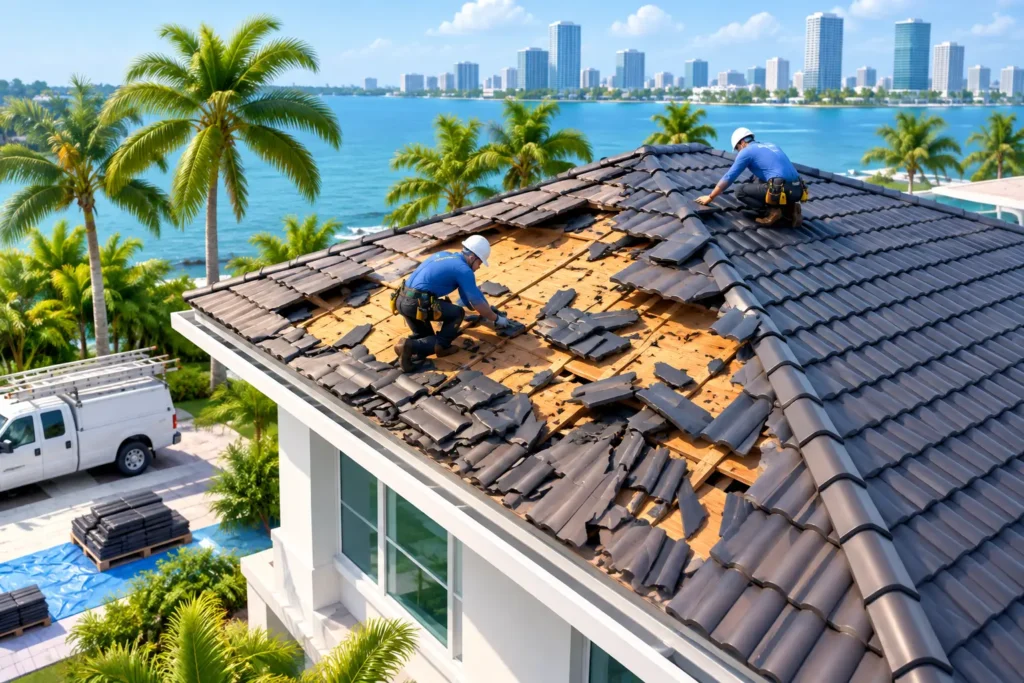
For a building with a leak, the priority is stopping water entry and protecting the property. After that, the bigger question is whether the failure was isolated. A roof with one damaged pipe boot may need a targeted repair. A roof with widespread membrane aging, recurring ponding, and moisture below the surface needs a more comprehensive plan.
At Flash Roofing & Sheet Metal, the goal is to address the root cause, explain the options plainly, and provide an honest quote with no mystery fees. That may mean repair, restoration, coating, or replacement depending on what the roof can realistically support.
Do Not Let a Small Roof Issue Set the Maintenance Schedule
The best time to inspect a commercial roof is before a tenant reports water coming through the ceiling. Schedule regular checks before hurricane season, after major wind events, and whenever you see one of these warning signs. Keep drain areas clear, limit unnecessary foot traffic, and document any interior moisture as soon as it appears.
A roof does not need to be at the end of its life to need attention. Acting early gives you more repair options, helps control costs, and keeps a manageable issue from disrupting your building, tenants, or business operations.