A roof can look solid from the ground and still be developing a problem beneath its surface. Knowing how to identify roof blistering gives Miami property owners a chance to address trapped moisture, failing adhesion, or heat damage before the roof opens up during the next heavy storm.
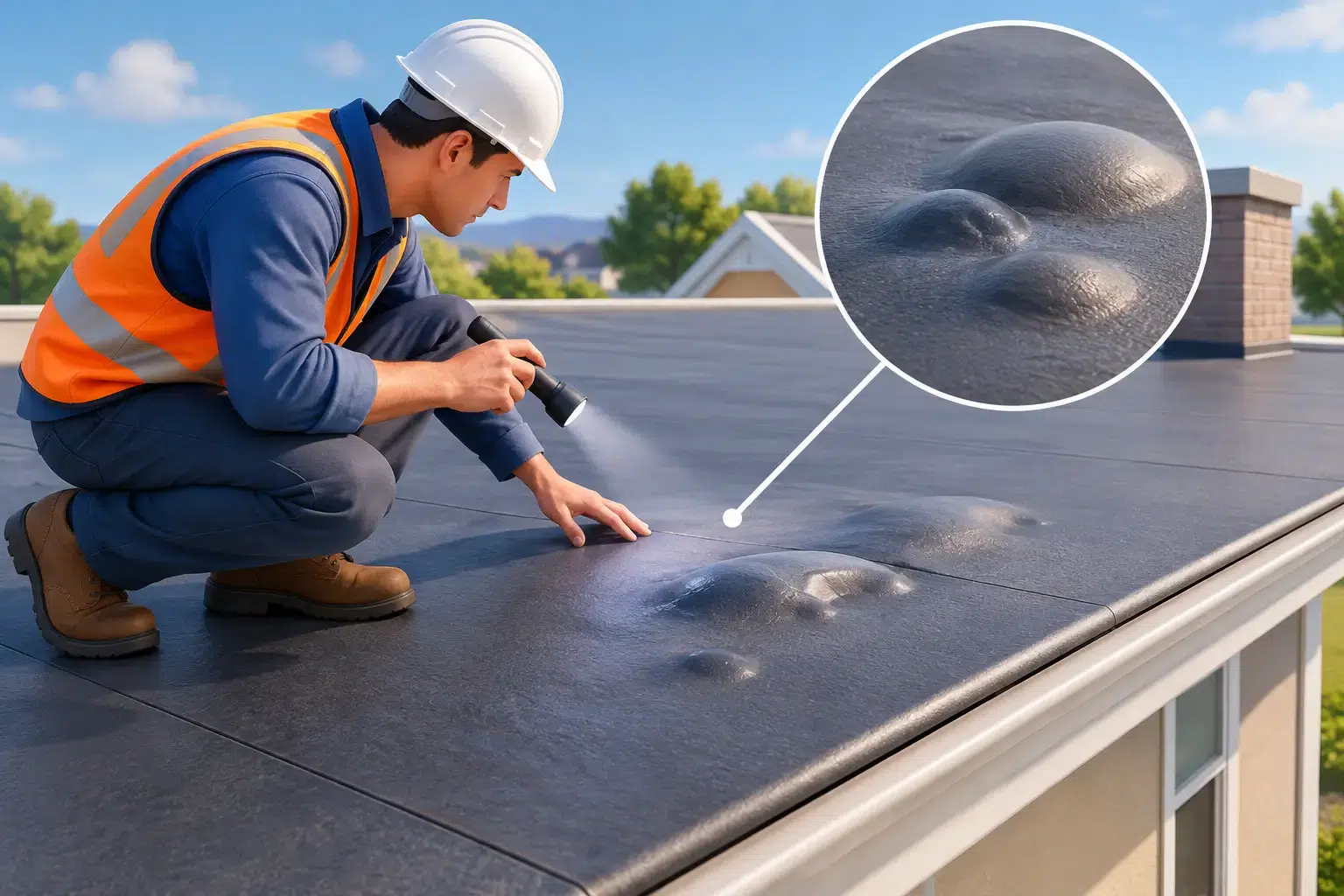
Roof blisters are raised bubbles or dome-shaped areas in a roofing membrane. They are most common on low-slope commercial roofs and residential flat roofs with built-up roofing, modified bitumen, or certain coated systems. They can range from a small soft bump to a large raised area several feet wide.
A blister is not automatically a leak. But it is never something to ignore. In South Florida, relentless UV exposure, humid air, standing water, and sudden rainstorms can turn a minor membrane defect into a failed seam or puncture quickly.
How to Identify Roof Blistering Safely
Start with a visual inspection from the ground or from a safe access point. A blister usually appears as a rounded lift in an otherwise flat roof surface. It may look like a bubble under the roofing material, and it can cast a noticeable shadow during early morning or late afternoon sun.
Do not walk across a suspected blister. Its surface may be stretched thin, and your weight can break the membrane. On a flat roof, one unnecessary footstep can turn a repairable condition into an active leak.
Look for these signs when inspecting a low-slope or membrane roof:
- Rounded bumps, bubbles, or raised pockets in the membrane or roof coating
- Cracking, wrinkling, or splitting around the edge of a raised area
- Soft spots that appear depressed around a raised section
- Blisters that have opened, exposing dark roofing layers or damp insulation
- Water stains on ceilings directly below a suspected roof area
A true blister generally has a smooth, rounded shape because air, moisture, or vapor pressure has pushed roofing layers apart. A wrinkle, by comparison, often runs in a line and may be caused by poor installation or movement in the membrane. Ponding water is another separate issue, although standing water can make blistering worse over time.
What an Open Blister Looks Like
Once a blister breaks open, the warning sign is easier to see but the risk is higher. You may notice cracked edges, loose roofing material, exposed felt or reinforcement, or a shallow crater where the bubble collapsed. The inside can be dry, but it can also contain moisture that has been trapped below the roof surface.
Avoid sealing an open blister with caulk or coating from a hardware store. That type of patch may hide the symptom while trapping moisture underneath. A proper repair depends on the roofing system, the condition of the surrounding material, and whether water has reached the insulation or roof deck.
Why Roof Blisters Form in Miami
Most roof blisters form when moisture or air becomes trapped between roofing layers. As the roof heats up, that trapped material expands. Miami roofs experience intense solar heat for much of the year, followed by heavy rain and high humidity. That repeated expansion and contraction puts stress on every seam, adhesive layer, and coating.
Installation conditions matter too. If a membrane is installed over a damp surface, if adhesives do not cure correctly, or if layers are not fully bonded, voids can remain below the surface. Those voids may not show up right away. Months later, heat exposure can make them visible as blisters.
On older roofs, water can enter through damaged flashing, failed seams, punctures, or cracks at penetrations. It then migrates beneath the membrane. The visible bubble may be several feet from the actual entry point, which is why surface patching without inspection often fails.
Salt air adds another concern near the coast. It can accelerate corrosion at metal details, fasteners, drains, and flashing components. If those areas begin to fail, moisture can work into the roof assembly and contribute to blistering from below.
Not Every Raised Area Is a Roof Blister
Roofing materials react differently, so diagnosis depends on the system. On modified bitumen and built-up roofs, blisters often form between plies or beneath the cap sheet. On a single-ply membrane roof, a raised area may indicate loose adhesion, trapped moisture, seam stress, or insulation problems rather than a traditional multi-ply blister.
Tile and shingle roofs can also have raised, curled, or uneven sections, but those are usually not called blisters. Curled shingles may point to age, poor ventilation, excessive attic heat, or product deterioration. Lifted tiles may result from broken fasteners, failed underlayment, wind damage, or improper installation. The protective layer below the visible roof covering is often where the real problem sits.
Roof coatings can develop bubbles as well. In that case, the coating may have been applied over a damp substrate, contaminated surface, or incompatible existing material. A coating bubble is not always a sign that the entire roof has failed, but it deserves close attention because it can split and expose the membrane underneath.
When Blistering Needs Immediate Repair
A small, intact blister in a dry area may be monitored briefly by a qualified roofer. That does not mean it should be ignored until hurricane season. The decision to repair now or plan a larger restoration depends on the blister’s size, location, roof age, membrane condition, and evidence of moisture below the surface.
Prompt professional attention is the right move when a blister is open, growing, soft underfoot, close to a drain or flashing, or located where water tends to pond. Repairs are also more urgent if you see interior staining, musty odors, peeling paint, or dripping after rain.
For commercial properties, blisters near rooftop equipment deserve special attention. Foot traffic from HVAC service, vibration, and concentrated drainage can damage a weakened membrane faster than a quiet section of roof. Property managers should document the location with photos and include it in their maintenance records.
Why Drilling or Cutting the Bubble Yourself Can Backfire
Some property owners see a bubble and assume they should puncture it to release pressure. That can create a direct path for rainwater into the roof system. It can also damage reinforcement layers and void a manufacturer warranty.
A roofer may cut, dry, re-adhere, reinforce, or replace a blistered section, but only after determining what is beneath it. If the insulation is wet or the membrane is broadly failing, a small patch may not be the honest solution. Good roofing work starts with finding the moisture path and checking the surrounding assembly, not simply flattening the bump.
What a Professional Roof Inspection Should Confirm
A thorough inspection should identify whether the raised area is surface-level or tied to moisture below the membrane. The roofer should inspect seams, flashings, drains, penetrations, coping, roof edges, and nearby areas where water may enter.
On a larger flat roof, moisture detection tools can help identify whether wet materials extend beyond the visible blister. The goal is to avoid replacing sound roofing unnecessarily while also avoiding a patch that leaves hidden wet insulation in place. Photo documentation should show the affected area, the cause if it is visible, and the recommended repair scope.
At Flash Roofing & Sheet Metal, that means explaining what the roof is doing, what is causing it, and what repair actually makes sense for Miami weather. No mystery fees, no pressure to replace a roof that can be repaired correctly.
Protect the Roof Before the Next Storm
Roof blistering rarely improves on its own. Heat keeps working on the membrane, rain keeps testing weak edges, and hurricane winds can catch any loose or cracked material. A quick look after major storms and before the wet season can catch changes while the repair is still manageable.
If you spot a raised bubble, an open split, or a soft area on a flat roof, take a clear photo from a safe position and have it evaluated. The right repair is not always the biggest repair, but it should address the root cause so your roof is ready for the weather Miami delivers.