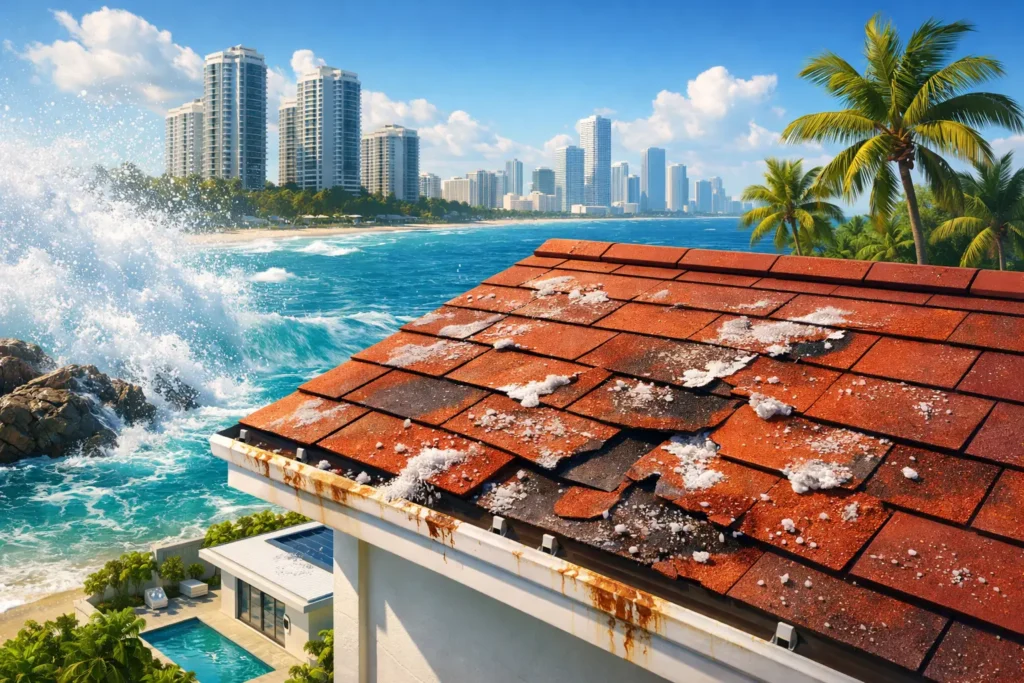
A roof that looks worn out can create pressure to choose the fastest, cheapest replacement option. But when comparing roof overlay versus tearoff, the lower upfront price is only part of the story. In Miami, where roofs face punishing UV exposure, wind-driven rain, humidity, salt air, and hurricane-force winds, what is hidden beneath the surface matters just as much as the new material installed on top.
An overlay can be appropriate in limited situations. A full tearoff is often the more reliable choice when there are leaks, saturated materials, damaged decking, or concerns about how the roof will perform in the next major storm. The right answer starts with an honest inspection, not a sales pitch.
What Is a Roof Overlay?
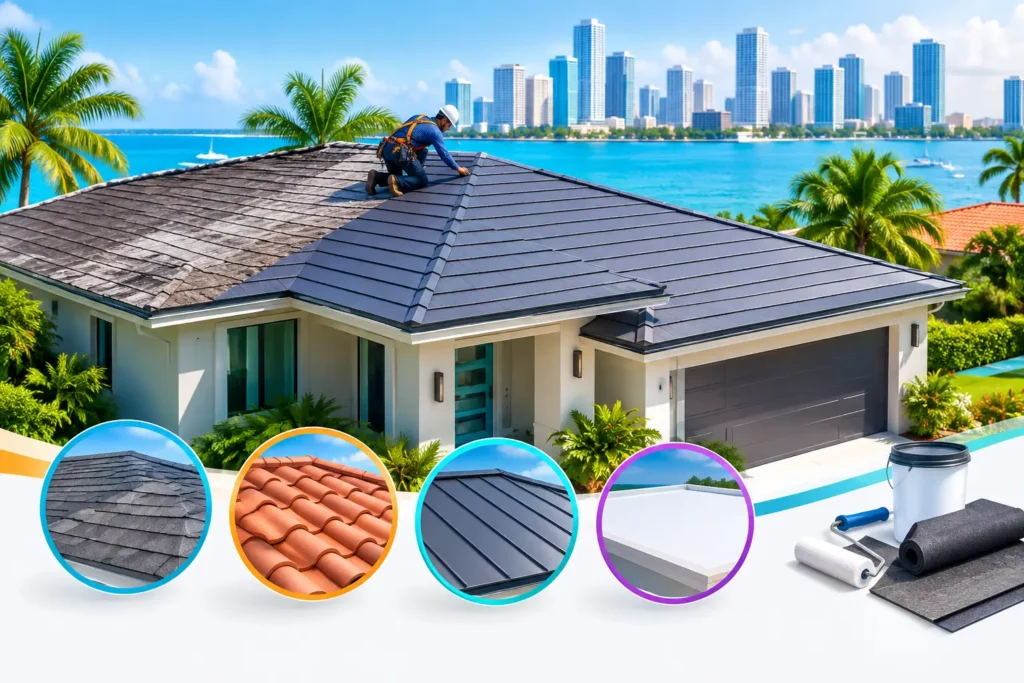
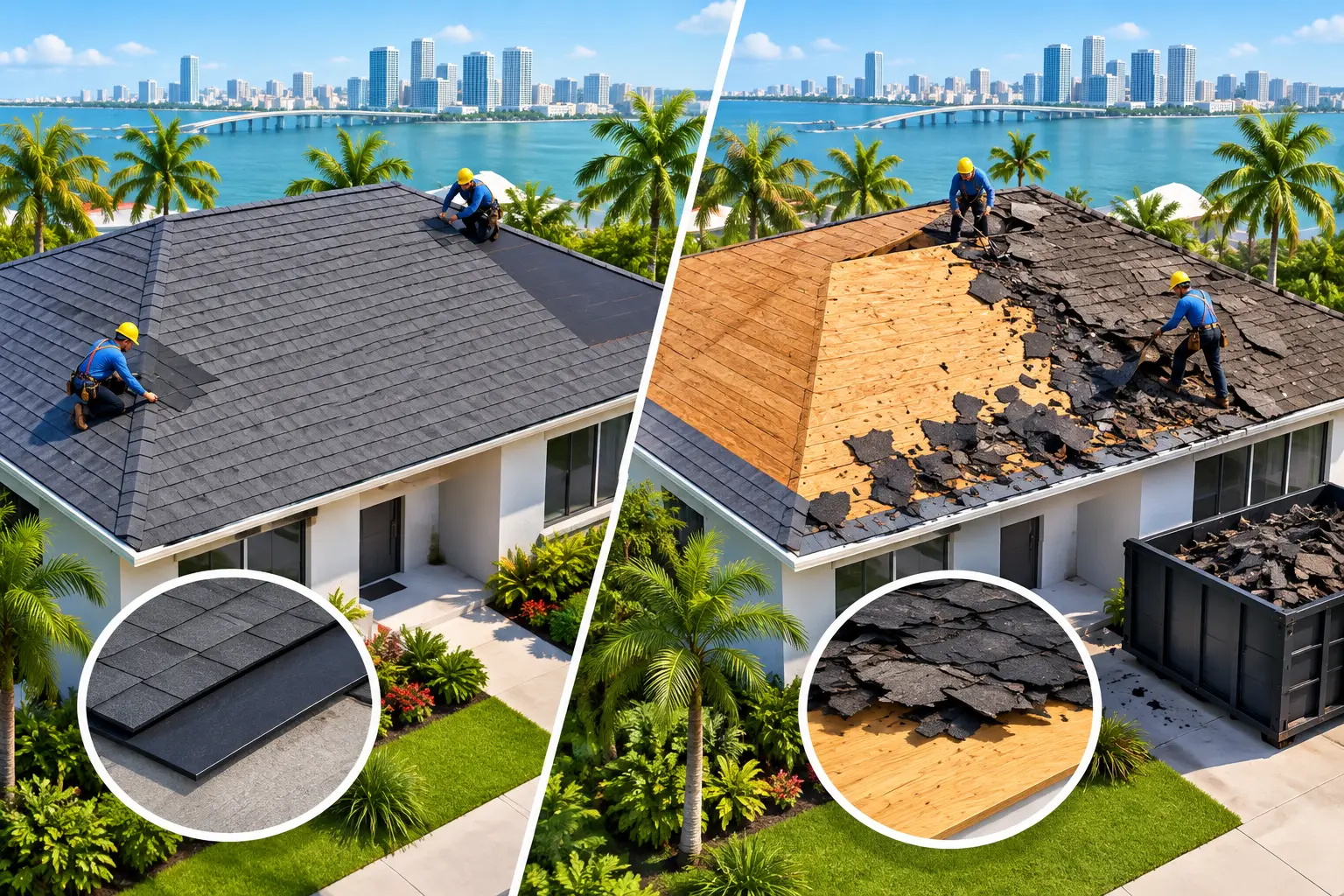
A roof overlay, sometimes called a recover, means installing a new roofing layer over an existing one rather than removing the old roof first. On some residential shingle roofs, this may mean adding a second layer of shingles. On certain commercial low-slope roofs, a recover system may involve installing approved insulation, cover board, or membrane materials over a qualifying existing roof assembly.
The attraction is clear: less demolition, less disposal, and often a lower initial cost. For a property owner trying to control expenses, that can sound like a smart shortcut.
But an overlay does not erase the condition of the original roof. It covers it. If the existing roof has trapped moisture, soft areas, failing flashing, deteriorated insulation, or deck damage, those problems can continue underneath the new system. Miami’s heat and moisture can make that hidden deterioration worse.
What Does a Full Tearoff Involve?
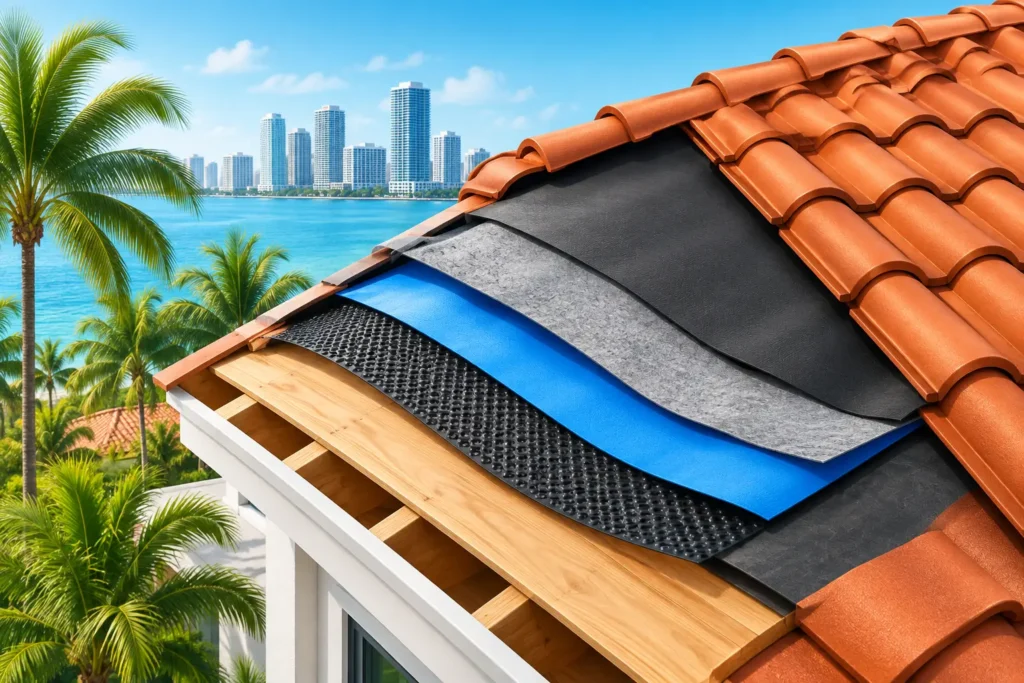
A tearoff removes the existing roofing materials down to the roof deck or structural substrate. This gives the contractor a clear view of the condition below the finished roof surface. Damaged plywood, rusted metal decking, wet insulation, loose fasteners, and compromised flashing can be identified and addressed before the new system goes on.
For residential work, a tearoff allows the installation of new underlayment, properly detailed flashing, and a roofing system designed for the home’s current needs. For commercial flat roofs, it provides the opportunity to correct drainage concerns, replace saturated insulation, and rebuild the roof assembly with the right membrane and attachment method.
A full tearoff costs more at the beginning because it includes labor, disposal, and possible deck or substrate repairs. It also takes more time. Still, it is often the only way to confirm that the roof is sound from the deck up.
Roof Overlay Versus Tearoff: The Real Differences
The biggest difference is not just price. It is how much certainty you get about the roof underneath.
An overlay may reduce labor and material disposal costs, but it adds weight to the structure and leaves the existing layer in place. That can make future leak detection more difficult. Water may travel between layers before showing up inside the building, which means the visible stain or drip is not always close to the actual entry point.
A tearoff gives you a clean starting point. It makes it easier to repair damaged decking, install a continuous water-resistant barrier, and ensure flashing details are correctly integrated. That matters around vents, skylights, parapet walls, roof-to-wall transitions, drains, and penetrations – the areas where many leaks begin.
There is also a future cost question. An overlay can save money now, but the next replacement may be more involved because multiple layers must be removed. If the first roof layer is already failing from below, paying for a second layer can become an expensive delay rather than a lasting solution.
When an Overlay May Make Sense
An overlay is not automatically bad work. It can be a reasonable option when the existing roof is dry, securely attached, structurally sound, and allowed by applicable building requirements. The roof must also be suitable for the new system being installed.
For example, a commercial roof with a dry, stable existing membrane and no major drainage or insulation issues may qualify for a properly designed recover system. The condition needs to be verified, not guessed. A professional inspection may include visual review, test cuts, moisture testing, and an assessment of seams, flashing, fasteners, and drainage.
A recover can be useful for an owner who needs to extend the roof’s service life with less disruption to tenants or operations. Even then, it should not be treated as a one-size-fits-all fix. Roof type, existing layers, building use, wind exposure, and permit requirements all affect whether it is a responsible choice.
When a Tearoff Is Usually the Better Call
A tearoff is generally the stronger long-term option when the existing roof has active leaks, widespread deterioration, storm damage, soft spots, or visible signs of trapped moisture. It is also the safer path when the property has already had a previous overlay or when the roof deck needs inspection.
In South Florida, repeated water intrusion is a serious warning sign. Heavy rain can push water beneath damaged shingles, lifted membrane seams, failed sealant, or compromised flashing. Once water reaches insulation or decking, simply covering the old roof may hide the symptom while leaving the cause in place.
Tearoff is also often the better decision for roofs exposed to high wind loads and coastal conditions. Miami-area roofs need more than a clean appearance. They need properly installed components, secure attachments, correctly detailed edges, and materials suited to intense sun, rain, and salt exposure.
If there is any doubt about the deck, insulation, or existing roof assembly, removing the old materials is the honest way to see what needs repair.
Warning Signs You Should Not Cover Up
Some conditions call for a closer look before anyone recommends an overlay. These include recurring leaks, bubbling or blistering on a flat roof, sagging areas, soft spots underfoot, rust stains around metal components, interior ceiling damage, moldy odors, lifted shingles, and ponding water that remains after rain.
None of these signs automatically means a full replacement is required. A targeted repair may be enough in some cases. But they do mean a contractor should investigate the roof’s condition below the surface before proposing a recover system.
Miami Code, Permits, and Wind Performance
Roofing work in Miami-Dade is not a place for assumptions. Local permitting and code requirements can affect whether an overlay is allowed, how many layers may remain, which materials can be used, and how the roof must be attached.
The roof system also needs to meet the demands of a high-wind region. Wind resistance depends on more than the shingle, tile, metal panel, or membrane chosen. It depends on the complete assembly: deck condition, fasteners, underlayment, edge metal, flashing, adhesive coverage, seams, and installation details.
A contractor should review the property, roof type, and intended scope before presenting an answer. If someone recommends covering an old roof without discussing moisture, existing layers, drainage, wind requirements, or permit considerations, that is a reason to slow down.
Cost: Upfront Savings Versus Long-Term Value
An overlay is typically less expensive because it avoids full demolition and disposal. That can make a meaningful difference, especially on a large commercial roof. But the lowest quote is not always the lowest cost over the life of the roof.
A tearoff costs more because it exposes the full condition of the roof and creates room for repairs that may be necessary. That can feel inconvenient during the estimate stage, but it prevents the contractor from pricing a job based on what they hope is underneath.
For homeowners, the best value is often the option that reduces the chance of repeated leaks, interior damage, and another major roofing decision too soon. For property managers and commercial owners, value also includes tenant disruption, maintenance demands, energy performance, warranty considerations, and the ability to plan capital expenses with fewer surprises.
Flash Roofing & Sheet Metal approaches this decision with photo documentation and a clear explanation of what the roof is showing. No mystery fees, no pressure to choose a bigger project than the roof needs, and no covering up conditions that should be repaired correctly.
Ask These Questions Before You Decide
Before approving an overlay or tearoff, ask whether the existing roof has been tested for moisture, whether there are already multiple layers, and whether the roof deck or insulation can be evaluated. Ask how drainage, flashing, edge details, and wind resistance will be handled.
You should also ask what the estimate includes if hidden damage is found. A trustworthy contractor will explain the possible conditions, document what is visible, and put the scope in plain language. Roofing has variables, but the process should not feel vague.
The right roof decision is the one that matches the actual condition of your building, not the one that simply produces the fastest quote. When the roof is dry, stable, code-compliant, and suitable for recovery, an overlay may offer practical value. When water, damage, age, or uncertainty is hiding below, a tearoff gives your new roof the clean foundation it needs to do its job when Miami weather turns rough.