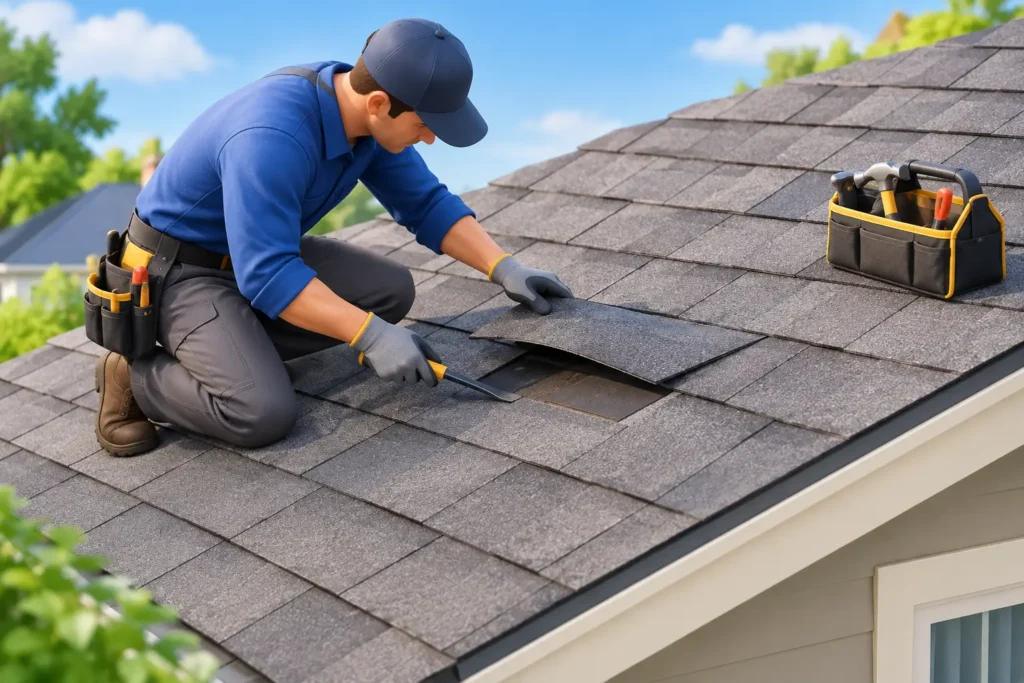
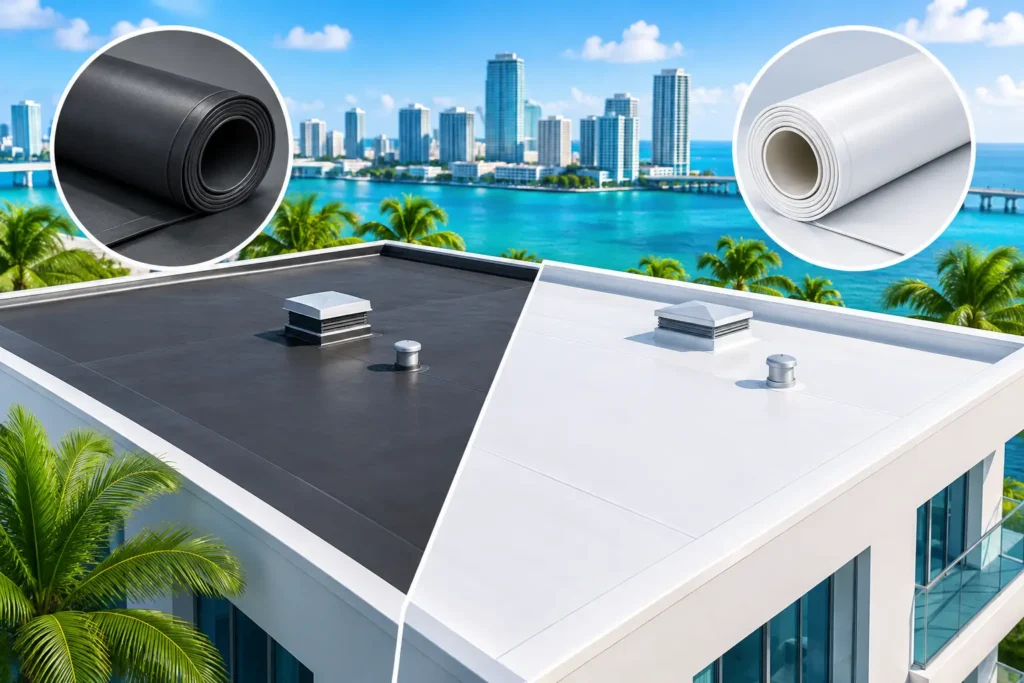
Water travels. That stain on your living room ceiling is rarely directly below the leak on your roof. After 30 years of diagnosing roof leaks across Miami-Dade and the Florida Keys, this is the first thing we tell every homeowner who calls: where the water shows up inside your house and where it enters your roof are usually two different spots.
Most roof leaks in Miami trace to flashing failures, deteriorated pipe boots, or ponding water on flat roofs. The roofing material itself is rarely the problem. In a city that gets 62 inches of rain per year with wind-driven storms pushing water sideways and upward, the weak points are always the seams, transitions, and penetrations.
If your roof is leaking right now, skip the reading. Call Now
What Causes Most Roof Leaks in Miami?
Per NOAA data, Miami-Dade averages 62 inches of annual rainfall with summer storms that push rain sideways at 40+ mph. Every weak point on your roof gets tested constantly. Here are the causes we see most often on leak calls:
Flashing failure at transitions is the number one cause of roof leaks we diagnose. Where your roof meets a wall, chimney, skylight, or second-story addition, metal flashing channels water away from the joint. When flashing separates, corrodes, or was never installed correctly, water gets behind the roofing material and into the deck. A homeowner in Homestead called us after a summer thunderstorm last July when water started dripping through the kitchen ceiling light fixture. The tile roof looked untouched from the ground. Up on the roof, a 6-inch section of flashing at a second-story addition wall had separated. The previous contractor had used caulk instead of step flashing. One storm with wind-driven rain found the gap
Pipe boot deterioration is the second most common. The rubber gaskets around plumbing vent pipes crack and split after 8 to 12 years in Miami’s UV. The pipe is fine. The boot around it fails. This is a $150 to $400 fix that prevents thousands in water damage
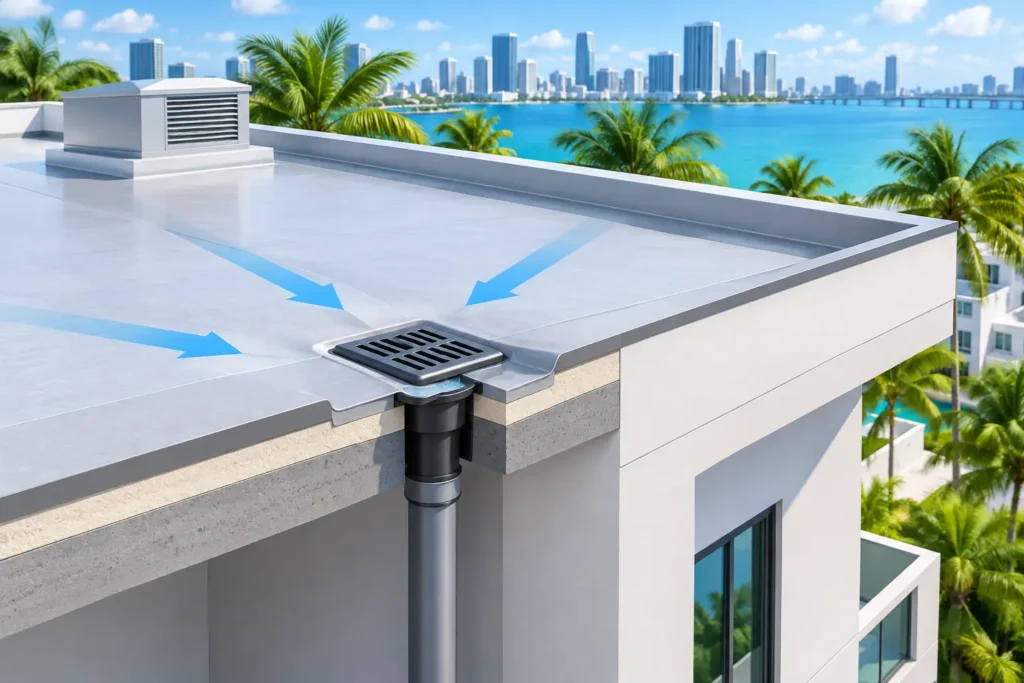
Flat roof ponding happens when drains clog or the roof surface settles unevenly. Standing water that sits for 48+ hours after rain breaks down membrane material and finds every seam. We see this constantly on commercial buildings and flat roofing residential systems across Miami-Dade
Wind-lifted shingles from improper nail patterns. Miami-Dade HVHZ code requires 6 nails per shingle. Four nails meets code in most of Florida, but not here. Once wind lifts a tab, rain gets underneath and saturates the deck
Cracked tile underlayment is the hidden one. The tiles look perfect from the street, but the waterproof membrane beneath them has a shorter lifespan. We replace underlayment on tile roofs that are 20 to 25 years old while the tiles themselves have decades left
The pattern is consistent: the roof repair is almost never the roofing material. It is the seams, seals, and transitions around it.
Can You Repair a Roof Leak From Inside?
We get this question every hurricane season. The short answer: you can manage the damage temporarily from inside, but the actual fix has to happen on the exterior.
Here is what you can safely do from inside while you wait for a roofer:
- Place buckets or containers under active drips. If the ceiling is bulging with trapped water, poke a small hole in the center of the bulge with a screwdriver to relieve pressure and control where the water drains. A controlled drip into a bucket is better than a ceiling collapse
If you have attic access, go up with a flashlight and look for where water is entering. Mark the spot with chalk or tape. Water runs along rafters and sheathing before dripping down, so trace the moisture trail upward to find the entry point
- Move furniture and electronics away from the affected area. Lay plastic sheeting over anything you cannot move
What you should not do: climb onto a wet roof during a storm, apply sealant from the inside and assume the leak is fixed, or ignore a small drip because it seems minor. Small leaks in Miami’s humidity turn into mold problems within 48 to 72 hours.
Every interior measure is temporary. The source is on the outside.
How Much Does It Cost to Repair a Roof Leak?
Roof leak repair in Miami-Dade costs $300 to $1,500 for minor repairs and $1,500 to $5,000 or more when structural damage is involved, as of 2026. The range depends on what failed and how long the leak has been active.
Here is what common repairs run:
Pipe boot replacement: $150 to $400. The most affordable roof repair and one of the most common
Flashing repair or replacement: $300 to $800. Depends on how many transition points need work and whether the underlying deck is damaged
Valley repair: $500 to $1,500. Valley channels concentrate water, so when they fail, the damage spreads quickly
Flat roof membrane patch with coating: $400 to $1,200. Small patches are straightforward. Larger areas with seam failure cost more
Deck repair (water-damaged plywood): $1,500 to $4,000+. This is where delayed repairs get expensive
Add $200 to $500 for the Miami-Dade permit depending on scope. That is the county, not the contractor.
Here is why timing matters: we inspected a flat-roofed building in Coral Gables where the owner had been mopping up a slow leak in the back office for two years. He thought it was minor. When we got on the roof, we found 3 inches of standing water in a low spot where the drain had partially clogged. The membrane underneath had deteriorated through to the deck. What should have been a $600 drain clearing and membrane patch two years earlier turned into a $4,200 deck and membrane replacement.
We break down the exact cost for your roof during every free inspection. No guesswork, no pressure.
Should I Replace My Roof If It Is Not Leaking?
The most expensive roof repairs we do are on roofs that “were not leaking.” They were. The homeowner just had not found the damage yet.
A roof past 20 years in Miami may be failing without a single visible drip inside. Granule loss on shingles, soft spots when you walk the deck, cracked underlayment beneath tiles, and moisture trapped in the attic insulation are all signs the roof is approaching end of life. By the time water shows up on your ceiling, it has usually been saturating the deck and insulation for months.
Per Florida Building Code, any HVHZ roof replacement must meet current wind uplift standards. That means if you wait until a catastrophic failure, you are doing an emergency job instead of a planned one. Emergency pricing, limited material availability during storm season, and potential mold remediation on top of the roof cost.
For a breakdown of how long your specific roofing material should last, see our roof lifespan by material guide. If your roof is within 5 years of those numbers and showing wear signs, get an inspection now while you have time to plan.
What Type of Roof Leak Repair Do You Need?
Different roofing systems fail differently. The diagnosis and repair process changes depending on what is on your roof.
Shingle Roof Leaks
Lifted tabs, missing shingles, and nail pops are the most common shingle leak sources. In Miami’s HVHZ zone, shingles installed with fewer than 6 nails per shingle are vulnerable to wind uplift that exposes the deck to rain. We check shingle roofing nail patterns on every inspection because installation quality causes more leaks than material failure.
Flat Roof Leaks
Ponding water, membrane seam separation, and failed flashing at parapet walls. Flat roofs need annual inspections because problems develop where you cannot see them from the ground. If water sits on your flat roof for more than 48 hours after rain, the drainage is compromised and the membrane is under stress.
Metal Roof Leaks
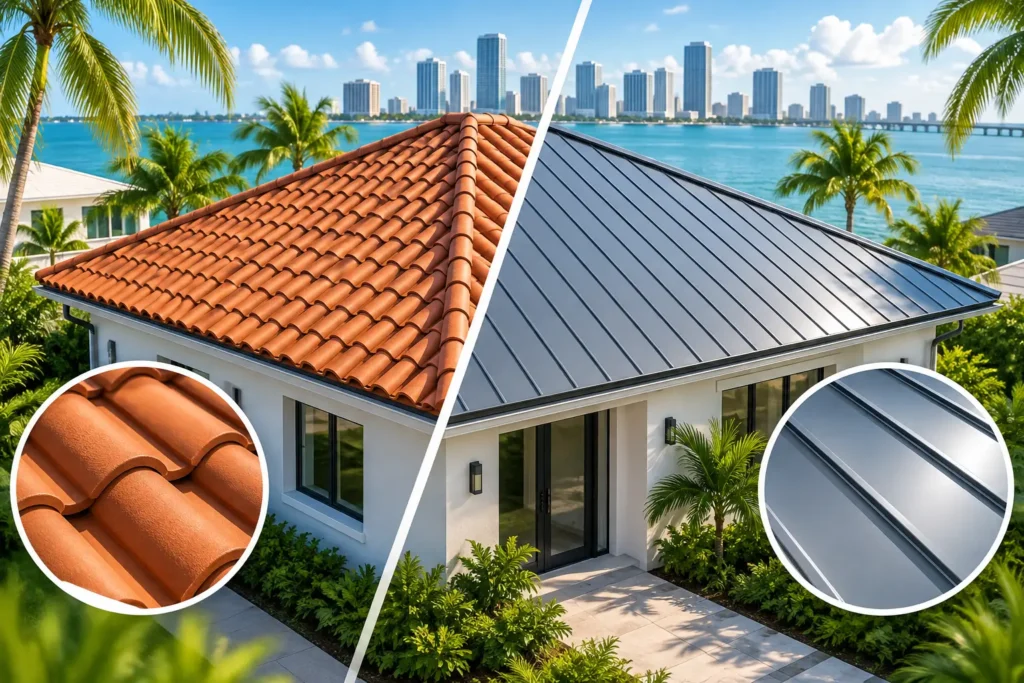
Standing seam metal rarely fails structurally, but the fasteners, sealant, and flashing around it can. A condo association in Miami Beach called us about recurring leaks in three top-floor units. The metal roofing was only 8 years old and the panels were in perfect condition. The problem: the original installer had used standard galvanized flashing at every roof penetration. Eight years of salt air had corroded every piece. We replaced all the flashing with marine-grade stainless steel and the leaks stopped. The metal roof itself had decades of life left.
We repair all three every week across Miami-Dade. The diagnosis process is different for each, which is why a proper inspection matters before any repair starts.
FAQs
Stop the Leak Before It Stops You
A roof leak does not get cheaper to fix. Every week it sits, the damage spreads from the entry point into decking, insulation, and drywall. The earlier you catch it, the simpler and less expensive the repair.
When we come out, we walk the roof, trace the water path, identify the actual source, and give you a straight answer on what it will take to fix. No guesswork. No upselling.
30 years of combined roofing experience across Miami-Dade and the Florida Keys. 59 five-star reviews on Google. Hablamos Espanol.
For active leaks or storm damage, call our emergency roof repair line.