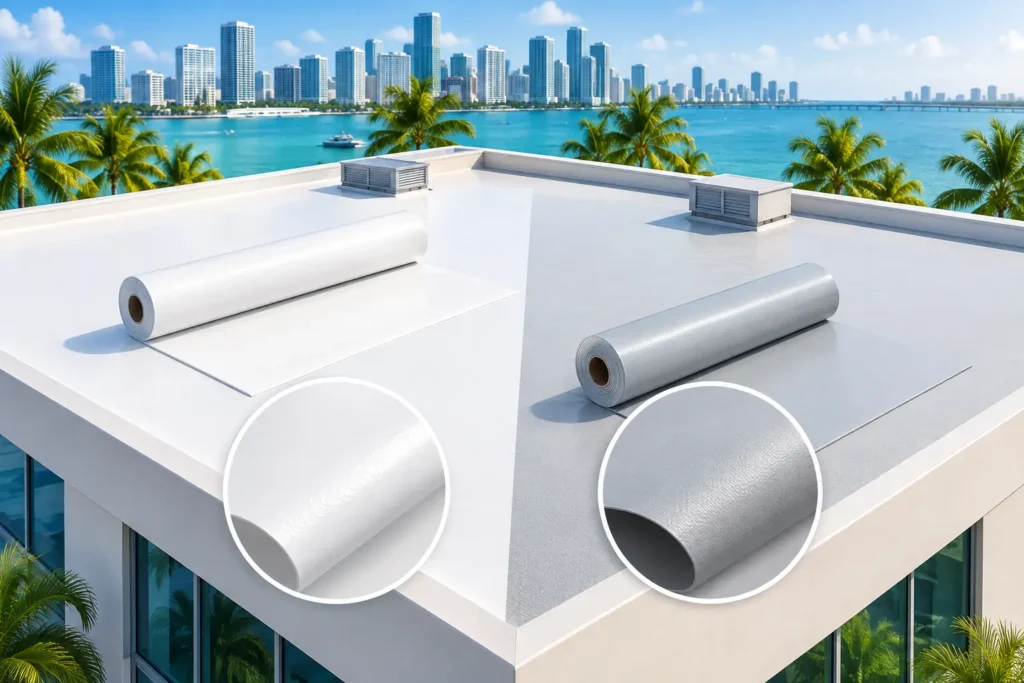
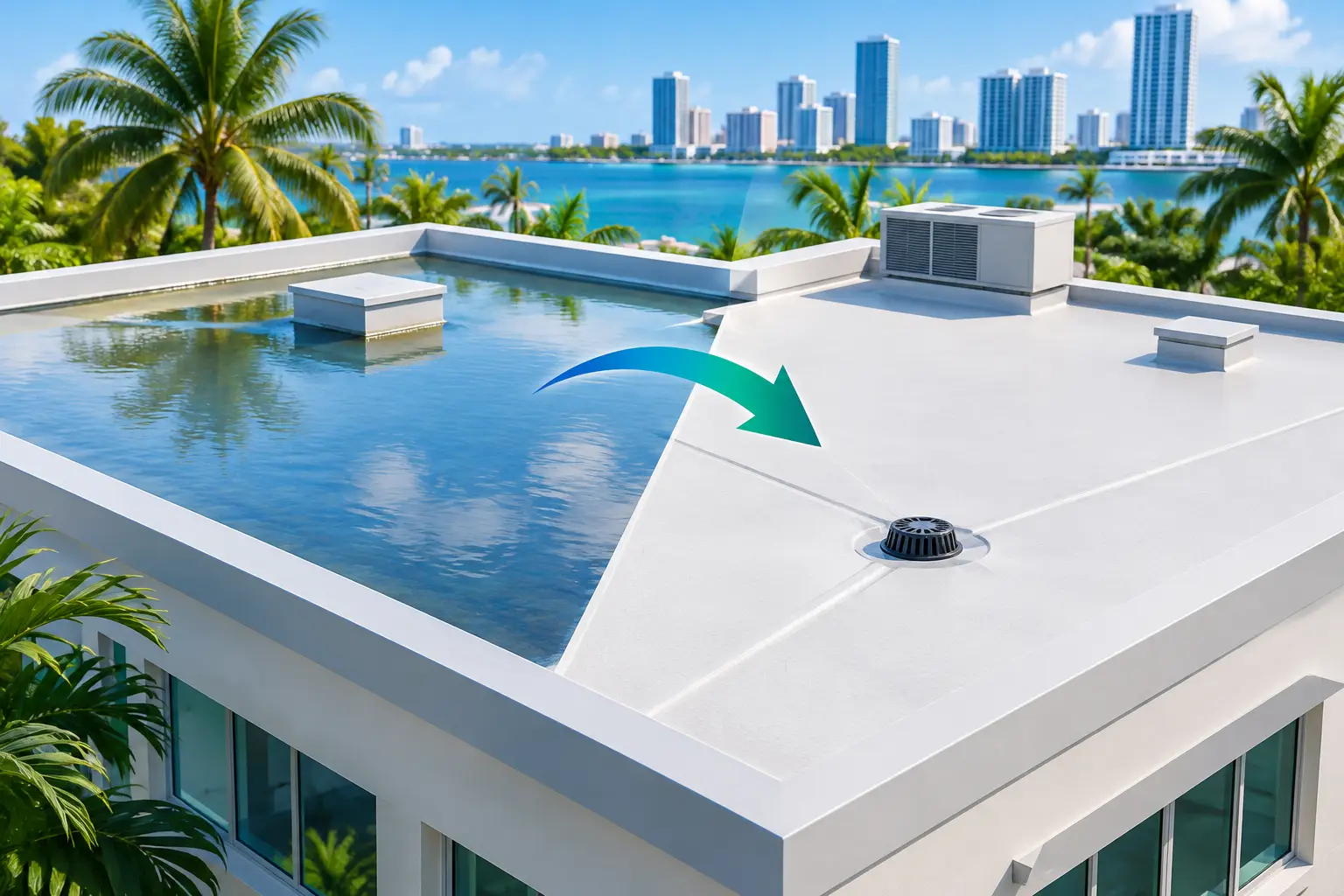
A flat roof should shed water, not hold it. After one of Miami’s hard afternoon downpours, a few shallow puddles may be visible at first. But water that remains for 48 hours or keeps returning to the same areas is a warning sign. To prevent roof ponding, you need more than a quick patch at the low spot. You need to identify why water is being trapped and correct the drainage problem at its source.
For homeowners, property managers, and commercial building owners, ponding water can turn a manageable maintenance issue into membrane deterioration, leaks, interior damage, and premature roof replacement. South Florida’s intense sun, heavy humidity, wind-driven rain, and debris from tropical weather put extra pressure on every drain, seam, and surface.
Why Roof Ponding Is More Than a Puddle
Ponding water adds weight to the roof assembly and keeps roofing materials wet long after a storm has passed. That standing water accelerates wear on many flat and low-slope roofing systems. On older roofs, it can expose weak seams, small punctures, deteriorated flashing, and areas where the deck has started to sag.
The damage is not always obvious from inside the building. A roof can hold water in one section while moisture slowly works beneath the membrane somewhere else. By the time a ceiling stain appears, the repair may involve wet insulation, damaged decking, or a larger section of roofing than expected.
Miami heat makes the cycle tougher. Water heats up under direct sun, then roofs cool rapidly during a storm. Repeated expansion and contraction can stress seams and coatings. Salt air also speeds up corrosion around metal drains, scuppers, fasteners, and flashing. A roof that only drains “well enough” in mild weather may fail when a tropical system drops inches of rain in a few hours.
Find the Real Cause Before You Repair It
The right fix depends on what is causing the water to collect. Ponding is not one problem with one universal solution. A qualified roof inspection should look at the entire drainage path, not just the visible puddle.
Clogged Drains, Scuppers, and Gutters
Blocked drainage is one of the most common and most preventable causes. Leaves, seed pods, roofing granules, loose ballast, and storm debris can plug roof drains and scuppers. On commercial roofs, one blocked drain can leave a large area underwater after a storm.
Drain covers and strainers need attention too. If they are crushed, missing, or poorly fitted, debris can enter the drain line. Gutters and downspouts also matter on low-slope residential roofs. If water cannot exit the system quickly, it may back up onto the roof edge and find its way under flashing.
Poor Slope or Settling in the Roof Deck
Flat roofs are not truly flat. They need a planned slope that directs water toward drains, scuppers, or roof edges. When the original installation did not create enough slope, water naturally settles in low areas.
Settling can create the same result years later. Wet insulation may compress, structural components can shift, and older decks can develop depressions. Simply applying more coating over a low spot may cover the symptom without restoring drainage. The water will still be there after the next storm.
Damaged Membranes and Failed Details
A worn membrane may not cause ponding, but ponding will make its weak points worse. Blisters, open seams, cracks, loose flashing, punctures, and deteriorated sealant all deserve close attention. Water can enter through a small defect and travel beneath the roofing material before showing up inside.
This is why photo documentation matters. A proper inspection should show you the blocked drain, low area, damaged seam, or failed transition being discussed. No mystery fees and no vague explanation about “roof issues.” You should know what failed, why it failed, and what repair will correct it.
Practical Ways to Prevent Roof Ponding
Regular maintenance is the first line of defense, especially before and after hurricane season. Roof drains, scuppers, gutters, and downspouts should be cleared before debris has a chance to compact and create a blockage. Property managers should also confirm that rooftop equipment, drain covers, and service traffic have not damaged the membrane or restricted water flow.
After a major rain event, inspect the roof from a safe location or have a licensed roofer document conditions. Note where water remains after 24 to 48 hours. Take photos from the same locations over time. A recurring puddle tells you far more than a one-time stormwater collection point.
It also helps to keep nearby trees trimmed back from the roof. This does not eliminate maintenance, but it reduces leaves and branches that clog drainage components. For buildings with frequent debris accumulation, more frequent cleaning may be less expensive than responding to emergency leaks.
Do not pressure wash a roof unless the roofing system and manufacturer guidance allow it. High-pressure water can damage seams, dislodge granules, force water beneath flashing, and create problems that were not there before. The same goes for applying caulk or roof cement everywhere water sits. Those shortcuts can trap moisture and make a later repair harder to diagnose.
Choose the Fix That Matches the Roof
Minor ponding caused by blocked drains may only require professional cleaning, repairs to drain components, and a maintenance schedule. That is the best-case scenario, and it is why early inspection pays off.
When the problem is slope, the repair may require tapered insulation, a localized cricket, a new drain location, or reworking part of the roof system to direct water correctly. A cricket is a raised, sloped section designed to divert water around an obstruction or toward a drain. On larger commercial roofs, improving drainage may involve a more detailed design because changing one area can affect how the rest of the roof sheds water.
If the membrane is worn or the roof has multiple low spots and recurring leaks, restoration or replacement may be the more honest recommendation. There is a trade-off. A targeted repair costs less upfront, but it may not make sense if the roof has widespread moisture damage or has reached the end of its service life. The goal is not to sell more work. It is to avoid paying repeatedly for repairs that cannot solve the root cause.
Roof coatings can be useful on qualifying systems. They can help protect a roof from UV exposure and extend service life when the substrate is dry, sound, and properly prepared. But a coating does not automatically fix ponding. Some coatings are rated for intermittent ponding water, while others are not. More importantly, coating over a drainage defect does not create slope or repair a sagging deck.
Miami Conditions Demand a Local Approach
A drainage plan that performs adequately in another climate may not be enough in Miami-Dade. Here, roofs deal with intense ultraviolet exposure, long stretches of humidity, sudden heavy rain, salt exposure near the coast, and hurricane-force wind conditions. Drains, edge metal, scuppers, and flashing must be installed and maintained with those conditions in mind.
Commercial property owners should be especially careful after storm season. Wind can move debris across the roof, damage strainers, loosen edge details, and create punctures near equipment. Homeowners with low-slope additions, patios, garages, or modified bitumen roofs should not assume a small puddle is harmless simply because the main roof is pitched.
Flash Roofing & Sheet Metal evaluates ponding with the full South Florida environment in view. That means looking past the surface water to the drainage layout, roofing material, roof age, deck condition, and storm-related wear that may be contributing to the problem.
When to Schedule a Roof Inspection
Schedule an inspection if water remains on the roof for more than 48 hours, if the same area ponds after every storm, or if you notice bubbling, staining, soft spots, moldy odors, or drips inside the building. You should also call after a major storm if drains overflowed or rooftop debris was visible.
A roof inspection is most valuable before water reaches the interior. Ask for clear photos, a plain-language explanation, and repair options that distinguish urgent work from work that can be planned. A contractor who understands the system should be able to explain whether cleaning, drainage correction, membrane repair, restoration, or replacement makes the most sense.
Water always follows the easiest path. Give it a clear route off the roof now, and you are far less likely to be dealing with a leak when the next Miami storm rolls through.