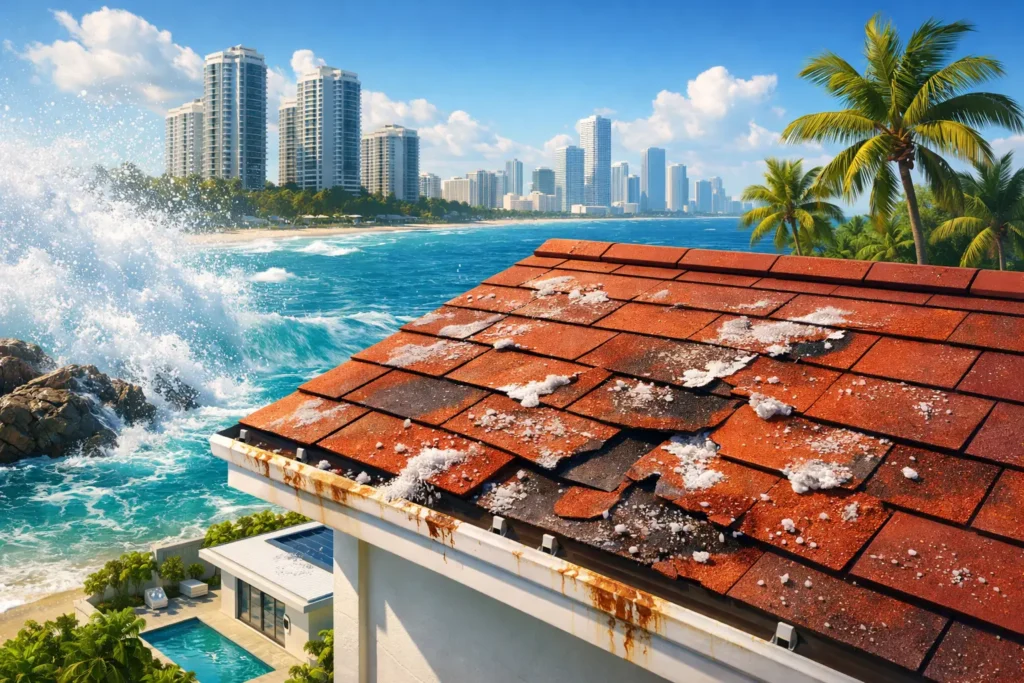

A roof can look acceptable from the street and still be nearing the end underneath. In Miami, trapped moisture, sun-baked materials, salt air, and repeated storms can wear down a roofing system long before a major leak shows up indoors. That is why roof replacement cost is not one fixed number. A real price has to reflect the roof you have, the system you need, and the work required to make it perform in South Florida.
A low quote may sound good until it leaves out tear-off, permits, rotten decking, flashing, or required wind upgrades. A higher quote is not automatically better either. The right estimate is detailed, honest, and clear about what is included before work begins. No mystery fees. No vague promises.
What Is Included in Roof Replacement Cost?
A full roof replacement is more than putting new shingles, tile, or membrane over an old surface. The existing roof must be evaluated from the top down, including the covering, underlayment, flashing, drainage details, penetrations, and roof deck.
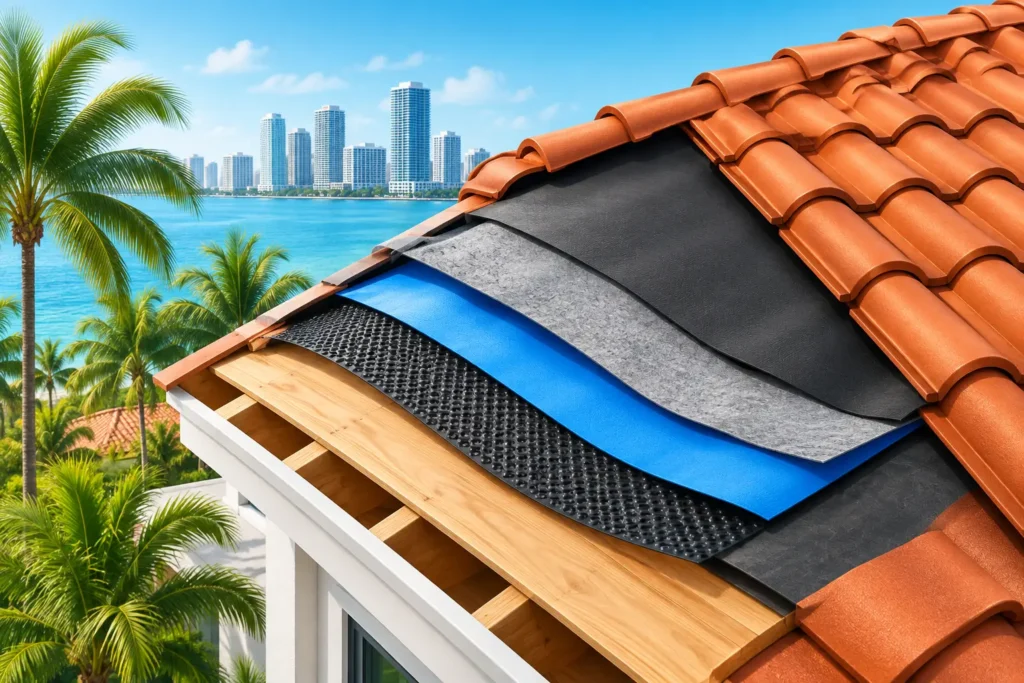
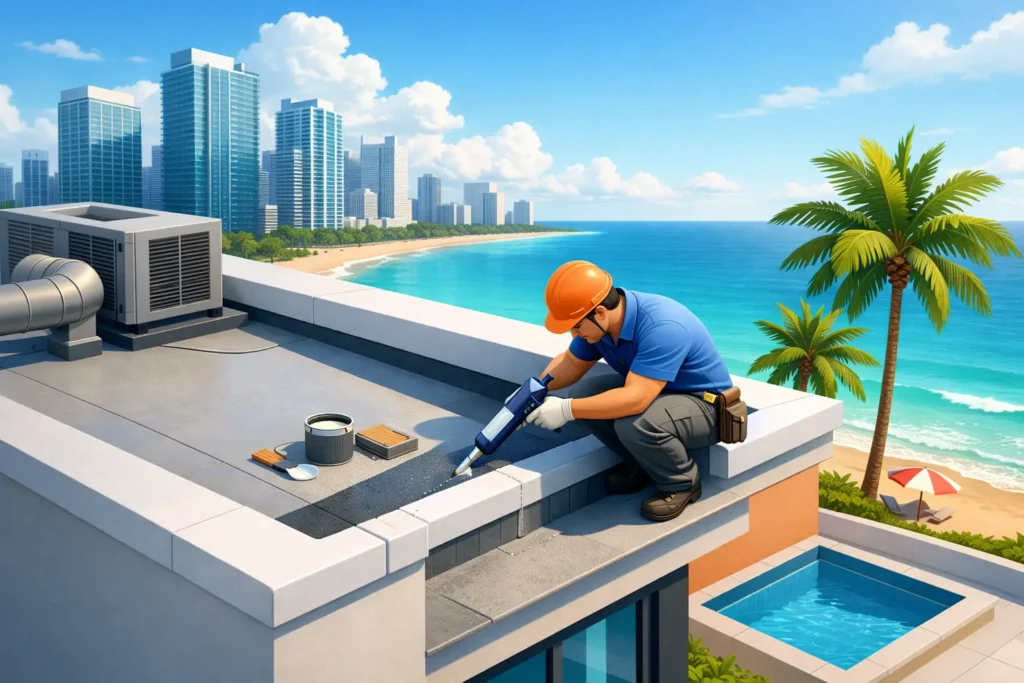
For a typical replacement, the price may include removing old roofing materials, disposing of debris, preparing or repairing the deck, installing underlayment, adding the new roof system, replacing flashing where needed, and handling permit and inspection requirements. On a flat commercial roof, the scope may also include insulation, tapered drainage design, edge metal, scuppers, drains, and termination details.
The best way to compare quotes is to compare the scope line by line. If one contractor says “complete replacement” but does not specify materials, deck repairs, permit fees, or disposal, you do not yet have enough information to compare it fairly.
The Biggest Factors That Change the Price
Roof size and shape
Roofing is commonly measured in squares, with one square equal to 100 square feet of roof surface. But the footprint of your home is not necessarily the same as the actual roof area. Slopes, hips, valleys, overhangs, parapet walls, and multiple levels add material and labor.
A simple low-slope roof on a rectangular building is generally more straightforward than a tile roof with steep sections, skylights, chimneys, and several valleys. Access matters too. Tight lots, limited parking, high-rise work, and occupied commercial properties can require extra planning and safety measures.
Roofing material and system
Material selection has a major effect on roof replacement cost, but the cheapest material is not always the lowest-cost choice over the life of the roof. Miami property owners need a system that can stand up to heat, UV exposure, wind-driven rain, moisture, and salt exposure near the coast.
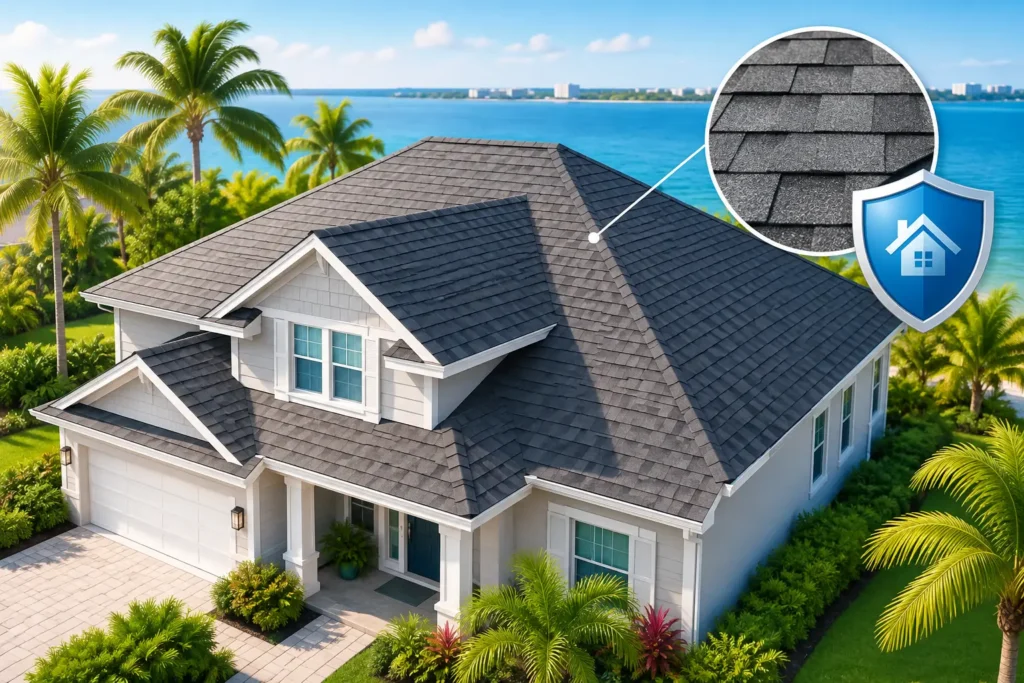
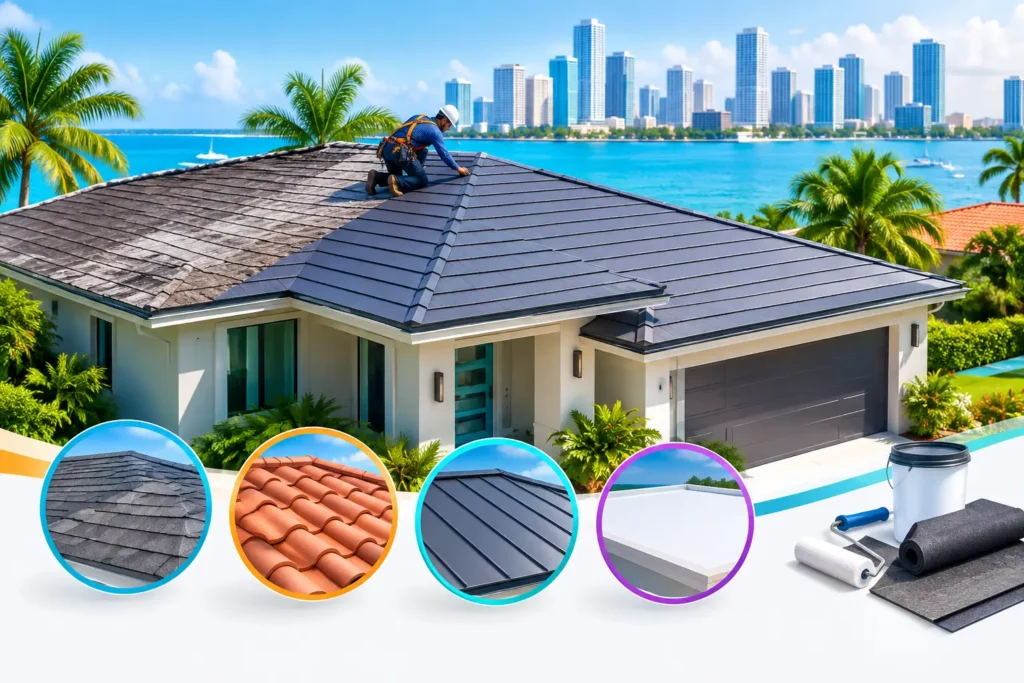
Asphalt shingles can be a practical option for many homes, especially when installed with the correct underlayment and wind-rated fastening pattern. Concrete or clay tile offers a distinctive South Florida look and long service life, but it is heavier, more labor-intensive, and often requires careful attention to the structure and attachment system.
Metal roofing can provide excellent durability and wind performance, though panel type, coating quality, roof complexity, and corrosion resistance all affect the final number. For low-slope residential and commercial roofs, membrane systems such as modified bitumen, TPO, PVC, or other appropriate assemblies may be recommended based on drainage, building use, and existing conditions.
The material is only part of the system. A premium roof covering installed over poor flashing or damaged decking will not deliver premium performance.
Tear-off, deck condition, and hidden damage
A roof replacement often reveals what a surface inspection cannot fully show. Once old materials come off, contractors may find soft or deteriorated wood decking, corroded metal components, wet insulation, failed flashing, or damage around vents and penetrations.
This is not a reason for a contractor to surprise you with an open-ended bill. It is a reason to discuss likely contingencies before the job starts. A clear proposal should explain how deck repairs are priced, what conditions could require additional work, and how approval will be handled if concealed damage is found.
In South Florida, recurring leaks can cause more than cosmetic ceiling stains. Moisture can damage the roof deck and create conditions for mold inside attic or ceiling spaces. Replacing the roof without correcting the source of water intrusion is a shortcut that can cost more later.
Permits, code, and hurricane-zone requirements
Miami-Dade roofing work must meet strict building requirements. Permitting, inspections, wind ratings, attachment methods, and product approvals are not optional details to ignore when shopping for a price.
Code-compliant work can affect material choices, fastening schedules, underlayment requirements, flashing, and how the roof transitions at walls and edges. These details matter most when the weather is at its worst. A roof should not merely look finished on installation day. It should be built to resist the conditions this area actually gets.
Ask whether the quote includes permit costs and inspections. Also ask whether the proposed system is appropriate for your building type and local wind-zone requirements. A contractor who cannot explain this clearly is not giving you the full picture.
Drainage and roof details
Water that stays on a roof is a warning sign, especially on low-slope systems. Ponding water can accelerate deterioration, stress seams, and expose weak spots around drains and penetrations. On tile and shingle roofs, valleys, wall flashings, vent boots, and transitions are common places for leaks to begin.
Drainage corrections can add to the project cost, but they may be necessary to protect the new roof. The same goes for replacing deteriorated fascia, improving edge metal, or correcting poorly installed flashing from an earlier job. These are root-cause repairs, not extras added for appearance.
How Miami Weather Affects the Long-Term Value
Miami roofs work harder than roofs in many other parts of the country. UV exposure can dry and degrade materials. Humidity and heavy rainfall test underlayment and drainage. Salt air can corrode exposed metal. Hurricane-force winds put pressure on every fastener, edge, seam, and flashing detail.
That is why a replacement decision should consider service life and maintenance, not just the installation price. A properly specified system may cost more upfront but reduce repair calls, water damage risk, and premature replacement. For a commercial owner, fewer disruptions and better protection for tenants or inventory can matter as much as the initial invoice.
There is no single best roofing material for every Miami property. A home near the water, a warehouse with a broad flat roof, and a townhouse with concrete tile have different needs. The right recommendation starts with an inspection, not a sales pitch.
How to Get a Quote You Can Trust
A useful roof estimate should tell you what roofing system is proposed, how much existing material will be removed, what underlayment or membrane will be installed, and how flashings and penetrations will be handled. It should also identify permits, debris disposal, warranty terms, and the process for addressing concealed damage.
Before choosing a contractor, ask for proof of licensing and insurance, photo documentation of the current roof condition, and a plain-language explanation of the proposed work. You should know whether the problem is limited to the roof covering or whether deck, drainage, or flashing failures need to be addressed at the same time.
Do not make a decision based on a single number at the bottom of a page. A quote that is thousands less may be missing work your roof actually needs. On the other hand, a contractor should be able to justify every part of the price without pressure or confusing jargon.
Flash Roofing & Sheet Metal approaches replacements with that standard: inspect the full system, document what is there, explain the options, and price the work honestly. The goal is not to sell the most expensive roof. It is to install the right roof for the building and do it correctly the first time.
If your roof is aging, leaking, or showing storm damage, get the facts before the next heavy rain makes the decision for you. A careful inspection and a detailed written scope can turn roof replacement from a stressful unknown into a plan you can act on with confidence.