
A roof quote can look low because it is efficient, or because critical work has been left out. In Miami, that difference matters fast. Roofing quote red flags are often hiding in plain sight: vague language, missing permit details, cheap materials with no specifications, or a price that does not account for hurricane exposure, salt air, and heavy rain.
A good estimate should help you understand what is being fixed, how it will be fixed, and what you are paying for. It should not leave you guessing whether the contractor plans to address the source of a leak or simply cover the visible damage.
Roofing Quote Red Flags That Cost More Later
1. The quote is only a number
“Roof repair: $2,500” is not a real scope of work. Neither is “replace roof as needed.” A legitimate quote should identify the roofing system, the affected area, the materials to be used, and the work included in the price.
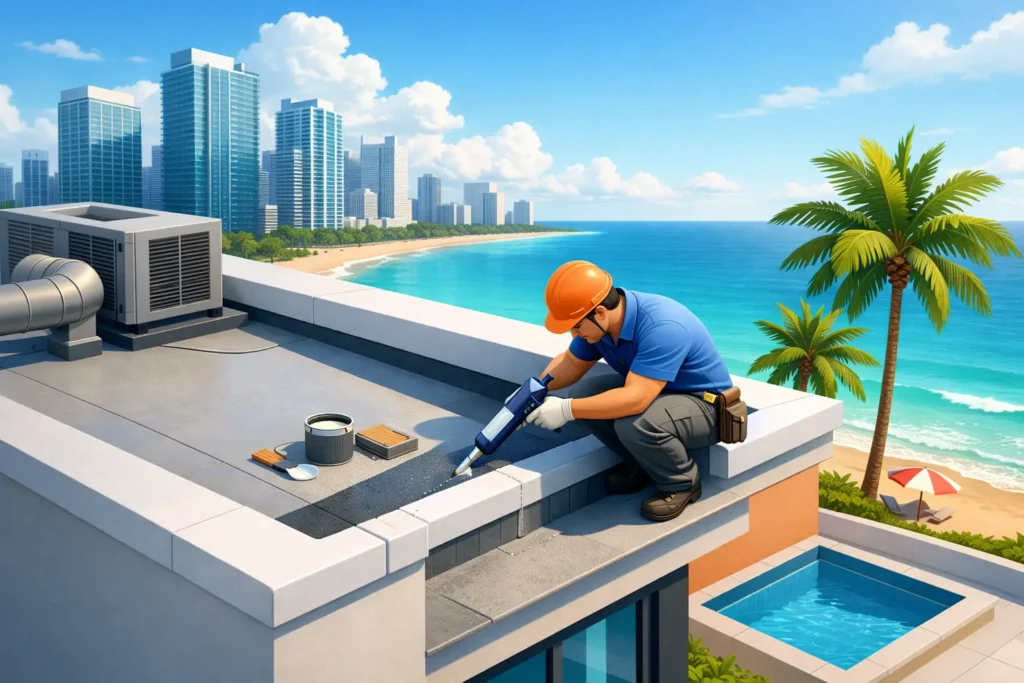
For a repair, that may mean identifying damaged flashing, failed underlayment, cracked tile, deteriorated membrane seams, wet insulation, or corroded fasteners. For a replacement, it should explain tear-off or recovery work, deck repairs if needed, underlayment, flashing, ventilation details, and disposal.
Some unknowns are normal. Hidden deck damage cannot always be confirmed until old roofing is removed. But the quote should say how that possibility will be handled, including the unit price or approval process for additional work. No mystery fees means the contractor explains the variables before the job starts.
2. There is no mention of permits, code, or wind requirements
Miami-Dade roofing work is not generic roofing work. The roof must perform under intense UV exposure, wind-driven rain, high humidity, and hurricane-force conditions. Depending on the project, permitting, inspections, product approvals, and fastening requirements may apply.
A quote that ignores these details deserves a direct question: Is a permit required for this work, and who is responsible for pulling it? For replacement projects, ask how the proposed system meets current local code and high-wind requirements.
There are limited repairs that may not require a permit, so the answer depends on the scope. The problem is not a contractor saying a permit is unnecessary when it truly is not. The problem is a contractor who cannot clearly explain why, or who suggests skipping required permitting to keep the price down.
3. The materials are described as “standard” or “premium”
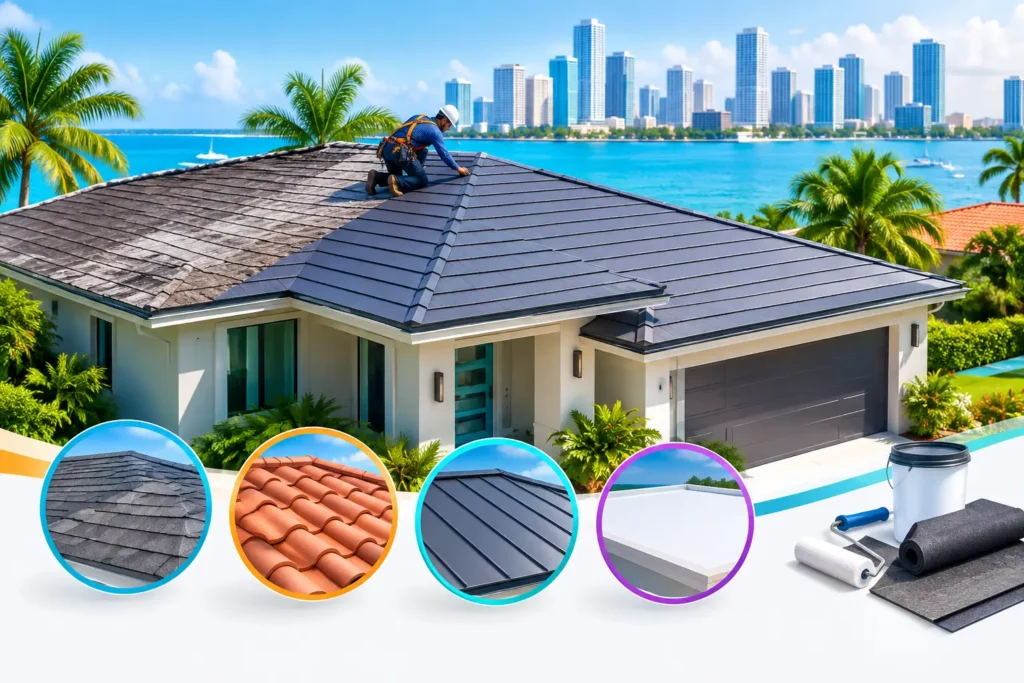
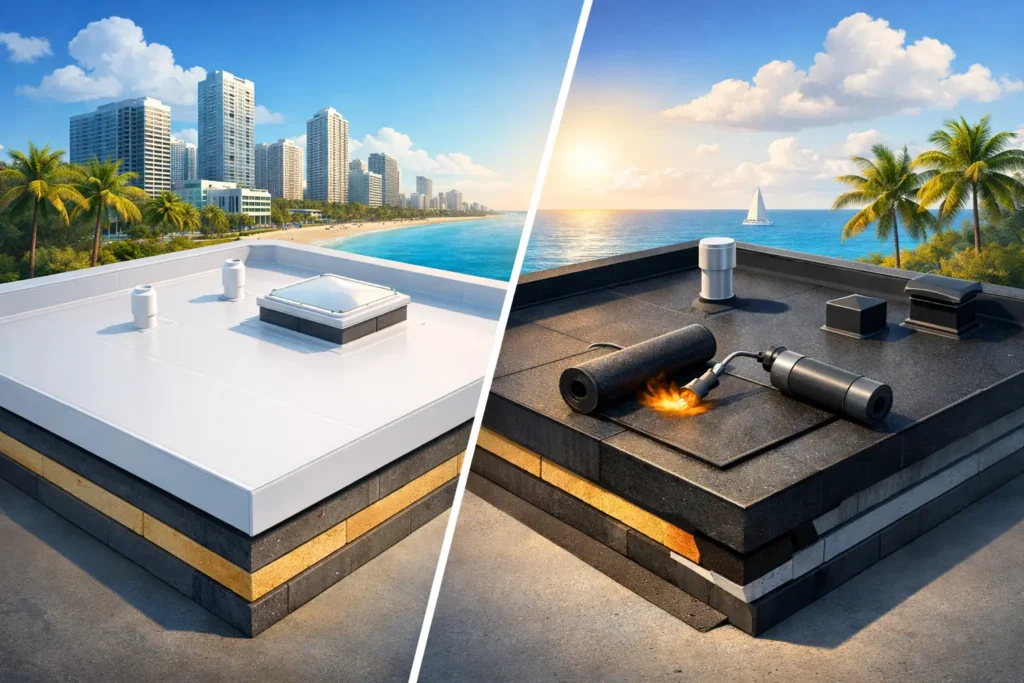
Those words do not tell you what is going on your roof. A useful estimate names the manufacturer and product type whenever possible. On a flat roof, that might include the membrane type and thickness, insulation approach, coatings, drains, edge metal, and flashing materials. On a shingle, tile, or metal roof, it should address underlayment, attachment method, flashings, and compatible components.
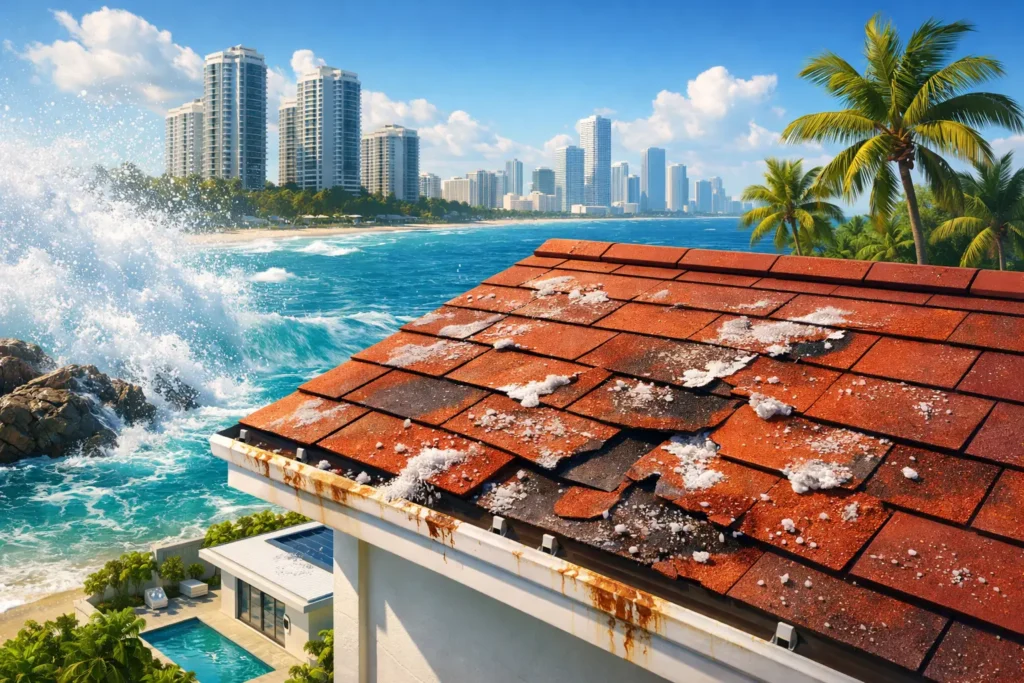
This is especially important near the coast. Salt air can accelerate corrosion in exposed metal components. Strong sun can shorten the life of unsuitable sealants and coatings. A lower-priced material may be appropriate for some buildings, but only if it fits the roof design and expected service conditions.
Ask whether the proposed materials are compatible with your existing system. Mixing products or applying a coating over a roof with trapped moisture can create a problem that looks good briefly and fails when the next rainy season arrives.
4. The contractor promises a repair without inspecting the cause
A ceiling stain is a symptom, not a diagnosis. Water can enter at a cracked vent boot, open flashing, loose fastener, failed seam, damaged tile, clogged drain, or a penetration several feet away from where the stain appears inside.
Be cautious when a roofer gives a firm repair price after a quick glance from the driveway or after viewing a few phone photos. Photos are useful, and they should be part of the documentation, but they are not a substitute for inspecting the roof surface, transitions, drainage paths, and vulnerable areas.
The right repair is not always the cheapest repair. A small, isolated leak may need a targeted fix. Repeated leaks across an aging roof may point to a larger failure. An honest contractor should explain that difference without pressuring you into a replacement that the roof does not yet need.
5. The price is dramatically lower than every other quote
Nobody wants to overpay. But a quote that comes in far below the others should be reviewed line by line, not accepted on price alone. The low number may exclude tear-off, permit costs, disposal, flashing work, deck repairs, proper underlayment, insurance coverage, or cleanup.
It can also reflect a shortcut that is hard to see at first: too few fasteners, thin materials, reused flashings, rushed sealant work, or untrained labor. In South Florida, those shortcuts often reveal themselves during the first serious storm.
Compare scopes, not totals. If one quote includes a complete system with documented materials and another has only a single price, they are not competing offers. They are different jobs on paper, even if both say “roof replacement.”
6. Licensing and insurance are treated like an inconvenience
A contractor should be ready to provide license and insurance information without acting offended by the question. This protects the property owner, the workers, and the project. It also signals whether the company takes accountability seriously.
Do not rely on a yard sign, a truck logo, or a social media profile as proof. Verify that the business information matches the company giving you the estimate. Ask who will perform the work and who supervises the crew. For commercial properties, confirm the contractor understands access requirements, tenant safety, drainage concerns, and the need to minimize disruption.
A roof is too critical to hand over to someone who cannot show basic credentials. If a contractor wants cash only, refuses paperwork, or asks for a large upfront payment before materials or scheduling are confirmed, step back.
7. The warranty language is vague or sounds too good to be true
A warranty is only useful when you know what it covers. Ask whether it is a workmanship warranty, a manufacturer material warranty, or both. Ask how long it lasts, what conditions can void it, and whether maintenance is required.
Be skeptical of blanket promises such as “lifetime leak-free” with no written terms. Florida weather is hard on every roof system. A credible warranty is specific about coverage and realistic about the limits of the work.
For example, a targeted repair warranty should cover the repaired area and the work performed. It should not pretend to guarantee unrelated sections of a 20-year-old roof. Clear terms are more valuable than a big promise that disappears when you need service.
What a Clear Miami Roofing Estimate Should Include
A strong quote gives you enough detail to make a confident decision without burying you in jargon. You should be able to see the proposed scope, material specifications, permit responsibility, projected timeline, payment schedule, warranty terms, and how unforeseen conditions will be approved.
It should also reflect the realities of your property. A flat commercial roof may need a detailed drainage review and moisture assessment. A tile roof may require careful removal and replacement procedures to avoid breakage. A coastal property may need extra attention to corrosion-resistant components. The right solution depends on the roof system, its age, its condition, and how water moves across it.
Photo documentation is another sign of a contractor who is prepared to stand behind the diagnosis. Before-and-after photos can show damaged areas, failed details, completed repairs, and the condition of critical roof components. They give homeowners and property managers proof of what was found and what was done.
Questions Worth Asking Before You Sign
Ask the contractor to explain the root cause of the issue in plain language. Ask what materials they will use, whether permits are included, what happens if damaged decking is discovered, and who handles cleanup. If the answer changes depending on who you speak with, get it in writing before work begins.
You should also ask what the contractor would do if this were their own property. That question often cuts through sales talk. A dependable roofer will tell you when a repair makes sense, when restoration may extend the roof’s life, and when replacement is the smarter long-term investment.
The best quote is not necessarily the lowest or the longest. It is the one that shows the contractor understands your roof, your building, and the weather it has to survive. Flash Roofing & Sheet Metal believes the job should be explained clearly, priced honestly, and built to hold up when Miami weather puts it to the test.