
A commercial roof can look fine from the ground while water is already working its way beneath the membrane, around a curb, or into an aging drain connection. This commercial roof maintenance checklist helps Miami property managers and building owners catch those issues before a heavy afternoon storm, hurricane season, or months of relentless sun turn a small repair into interior damage and business disruption.
Commercial roofing in South Florida takes more punishment than most systems. UV exposure dries and weakens materials, standing water stresses seams, salt air attacks metal components, and hurricane-force winds test every edge detail. Maintenance is not about putting a bucket under a leak. It is about finding the reason water got in and correcting it properly.
Why Commercial Roof Maintenance Matters in Miami
A commercial roof protects more than the building itself. It protects tenants, inventory, equipment, electrical systems, and daily operations. A leak above a retail floor, office suite, warehouse, or restaurant kitchen can create safety concerns and costly downtime fast.
Routine maintenance also gives owners a clearer record of roof condition. Photo documentation, inspection notes, and repair history can help with budgeting, lease responsibilities, warranty questions, and insurance conversations after storm damage. Just as important, regular inspections make it easier to separate normal aging from an active failure that needs immediate attention.
The schedule depends on the roof system, building use, nearby trees, drainage layout, and the roof’s age. A newer single-ply membrane roof may need less corrective work than a 15-year-old modified bitumen roof, but neither should be ignored. In Miami-Dade, a professional inspection before hurricane season and another after major weather is a practical baseline.
Commercial Roof Maintenance Checklist
Property staff can handle basic visual observations from a safe access point. Roof repairs, membrane work, and close-up inspections should be performed by trained, licensed professionals. Walking carelessly on a commercial roof can damage the surface, disturb seams, or create a fall hazard.
Use the following checklist during scheduled inspections and after severe weather:
- Check drains, scuppers, gutters, and downspouts. Remove leaves, branches, trash, and other debris that blocks water flow. On low-slope roofs, clogged drainage is one of the fastest ways to create ponding water and premature membrane wear.
- Look for standing water and drainage patterns. Puddles that remain more than 48 hours after rainfall deserve attention. The cause may be blocked drainage, poor slope, compressed insulation, or a structural low area. Simply coating over the ponding area will not solve the underlying problem.
- Inspect seams, laps, and flashing transitions. On TPO, PVC, EPDM, modified bitumen, and other membrane systems, seams are critical. Watch for lifting edges, open laps, cracking, shrinkage, punctures, and loose flashing around walls, pipes, skylights, curbs, and rooftop units.
- Examine roof penetrations and equipment supports. HVAC curbs, vents, exhaust fans, conduit, solar mounts, satellite equipment, and pipe boots are common leak points. Check for deteriorated sealant, loose metal, damaged boots, and unauthorized penetrations made by other trades.
- Inspect perimeter edges and metal details. Wind damage often begins at coping, edge metal, termination bars, and corner areas. Look for lifted sections, corrosion, missing fasteners, or loose components. Salt exposure makes this especially important near Biscayne Bay and coastal areas.
- Check the roof surface for physical damage. Note blisters, cracks, exposed reinforcement, worn coating, punctures, foot-traffic paths, and areas where the surface looks thin or brittle. Heavy service activity around HVAC equipment may require designated walk pads.
- Inspect interior ceilings and exterior walls. Water stains, peeling paint, mold odor, damp insulation, rusted deck areas, or stained wall surfaces can point to a roof issue. Keep in mind that water can travel far from the actual entry point, so the stain location is not always the source.
- Trim vegetation and remove debris. Overhanging branches can scrape roof surfaces during wind events and drop enough organic material to block drains. Vegetation growing at drains, seams, or parapet walls is a maintenance problem, not a cosmetic one.
- Review previous repairs. Temporary patches, mastic-heavy repairs, and repeated sealant applications can hide a larger failure. If the same area keeps leaking, the repair approach needs to change.
- Document everything with photos and dates. Take wide shots and close-ups, identify roof zones, and record what was found and what was repaired. Good documentation prevents guesswork when a property owner needs to make a repair or replacement decision.
What to Check After a Hurricane or Severe Storm
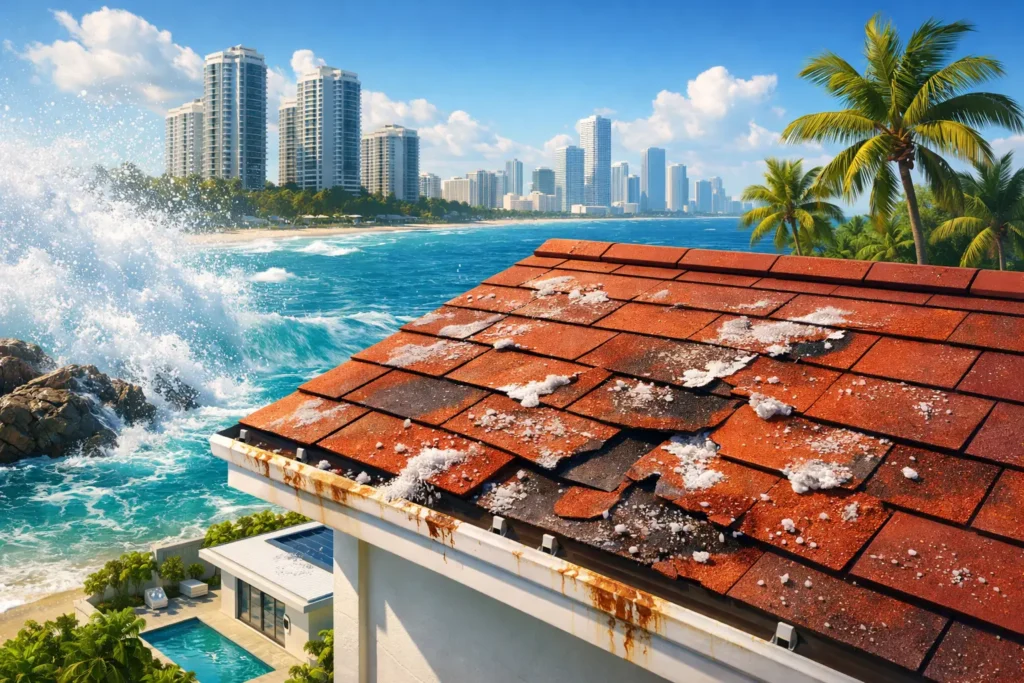
Do not wait for a ceiling stain to appear after a major storm. Once conditions are safe and access is approved, arrange a roof inspection. High winds can loosen edge metal, pull at flashing, tear membrane seams, and drive water beneath components that still look intact from a distance.
Start with the perimeter and rooftop equipment. Wind pressure is strongest at corners and edges, where small openings can quickly become larger failures. Inspect for displaced coping, damaged gutters, missing fasteners, bent metal, torn membrane, and debris impacts.
Next, check drainage. A storm may leave branches, roofing fragments, and trash around scuppers and drains. If water cannot leave the roof, it can expose existing weak spots that were not leaking before the storm.
Take clear photos before cleanup or repairs when possible. That record may be useful for insurance documentation. Still, do not leave a damaged roof exposed while waiting on a claim decision. Emergency stabilization can prevent a manageable loss from spreading into insulation, deck, ceilings, and tenant spaces.
Maintenance Needs by Commercial Roof Type
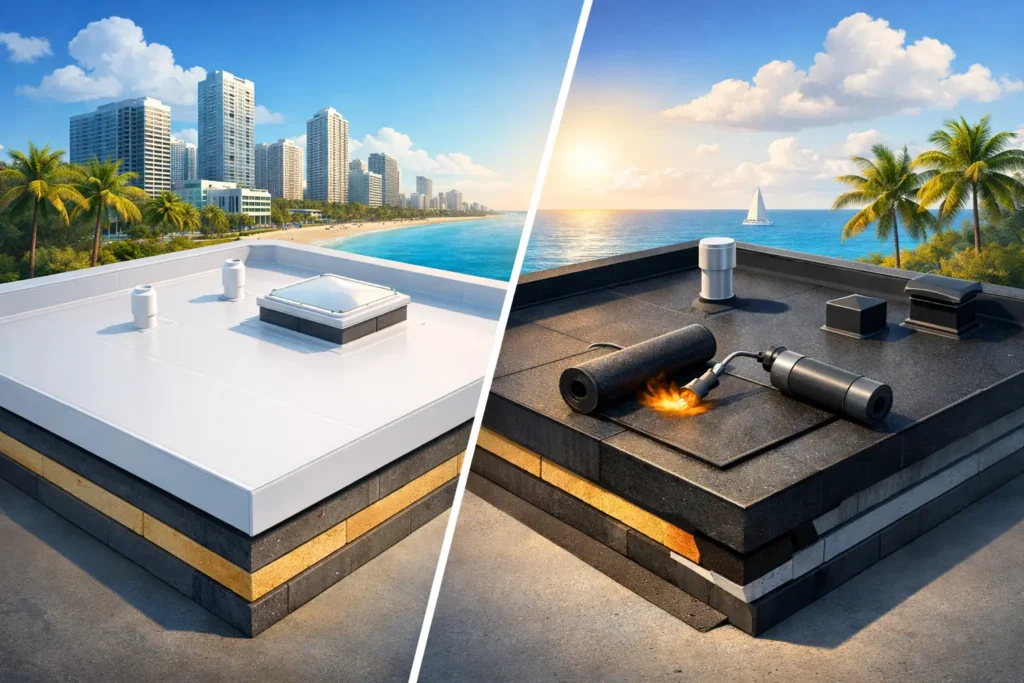
The maintenance priorities change with the roofing system. A flat or low-slope membrane roof needs close attention at seams, drains, flashing, and penetrations. TPO and PVC roofs can perform well in the Miami sun, but punctures, failed welds, and poorly detailed repairs can shorten their service life.
Modified bitumen and built-up roofs need inspection for splits, blisters, granule loss, and deterioration around flashing. These systems can be durable, but trapped moisture beneath the surface is a serious concern. A repair should address wet materials when present, not just seal the top layer.
Metal commercial roofs require a different focus. Fasteners, panel laps, sealants, flashings, and corrosion should be checked regularly. In South Florida, salt air can accelerate corrosion around cut edges and exposed hardware. Recoating may be a smart option for an aging metal roof, but only after the roof is cleaned, repaired, and evaluated for rust or movement.
Roof coatings can extend service life and improve reflectivity when the underlying roof is dry, stable, and properly prepared. They are not a cure for saturated insulation, failing seams, widespread membrane damage, or drainage problems. The right answer depends on the roof’s actual condition, not the lowest upfront price.
Build a Schedule That Prevents Surprise Repairs
For most commercial properties, plan a professional roof inspection at least twice a year, plus an inspection after hurricanes, tropical storms, or any event that produces visible damage. Many facilities also benefit from monthly drain checks, especially during the rainy season and on buildings surrounded by trees.
Keep a simple maintenance file with inspection reports, photos, invoices, roof plans, warranty information, and records of tenant leak complaints. When a leak is reported, note the date, weather conditions, room location, and whether the issue happens only during wind-driven rain. Those details help identify the source faster.
A maintenance plan should also establish who is allowed on the roof. Uncontrolled foot traffic and work by other contractors can create punctures and unsealed penetrations. Require approval before anyone installs equipment, runs conduit, or opens the roof surface. That small rule can prevent expensive avoidable repairs.
If your building has recurring leaks, ponding water, loose edge metal, or visible membrane wear, do not accept another surface patch without a clear diagnosis. Flash Roofing & Sheet Metal can inspect the roof, document what is happening, and explain the repair options without mystery fees. A documented inspection now gives you a better chance of scheduling the right work before Miami weather makes the decision for you.