Flat roof waterproofing in Miami-Dade costs $3.50 to $7.00 per square foot. Getting it right is the difference between a roof that lasts 25 years and one that fails in 5. After waterproofing hundreds of flat roofs across Miami-Dade and the Keys, we know where each system holds up and where it breaks down. Every flat roof failure traces back to a waterproofing membrane that was wrong for the substrate, applied in bad conditions, or skipped altogether.
If your flat roof is showing signs of ponding, bubbling, or interior water stains, before rainy season hits. A 20-minute inspection now prevents $10,000 in damage later.
This guide covers why Miami’s climate punishes flat roofs harder than anywhere else in Florida, which waterproofing methods hold up in our conditions, the professional process from inspection to final coat, and the mistakes that lead to early failure.
Why Do Flat Roofs in Miami Need Special Waterproofing?
Flat roofs in Miami face a combination of rain volume, salt air, UV intensity, and humidity that no other metro area in the continental U.S. matches. A waterproofing membrane for roof deck surfaces here must handle all four threats simultaneously, every day, for years.
A pitched roof sheds water in seconds. A flat roof holds it. That distinction matters when your city averages 62 inches of rain per year, with 70% falling between May and October.
How Do Miami's Rain Patterns Affect Flat Roofs?
Miami’s rainy season delivers 8 to 10 inches per month from June through September. Those are not gentle afternoon showers. They are 2-inch-per-hour downpours that dump 40,000+ gallons on a 2,000 square foot roof in a single storm.
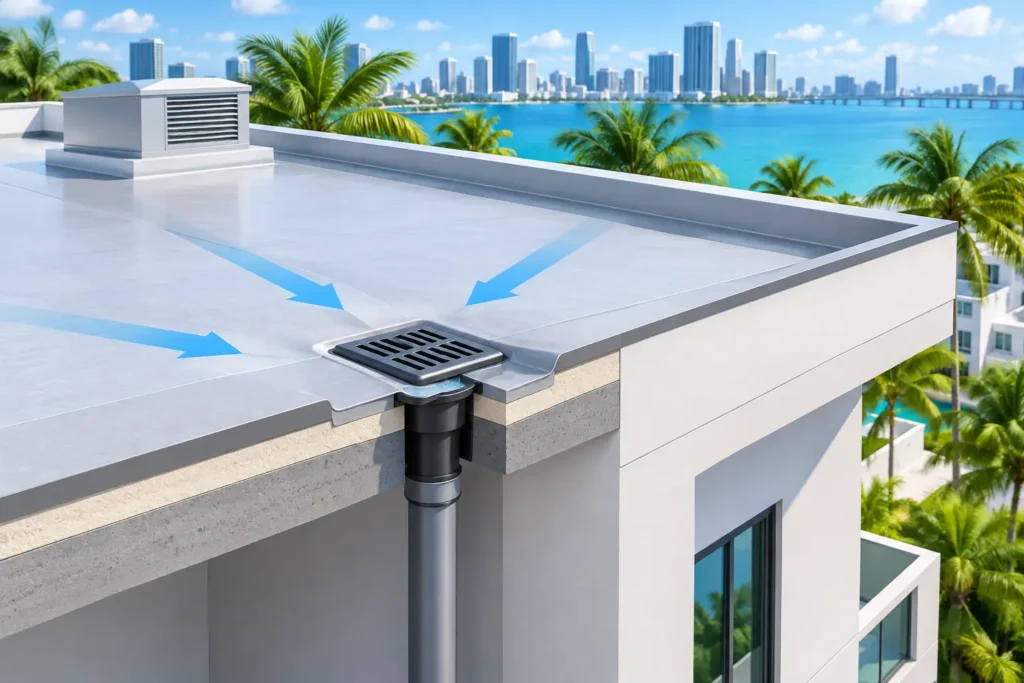
Flat roofs drain through internal scuppers and roof drains. When those drains clog, water pools. Per the National Roofing Contractors Association, water sitting for 48+ hours qualifies as ponding and accelerates membrane breakdown.
We see ponding on about 40% of the flat roofs we inspect in Miami-Dade. Most owners do not know until they see a water stain on the ceiling below.
How Do Salt Air, UV, and Humidity Damage Flat Roofs?
These three forces work together to age a flat roof 30% to 40% faster than the same roof inland.
Salt air corrodes metal flashings, fasteners, and edge details. Properties within 3 miles of the coast in Aventura, Miami Beach, and Key West need corrosion-resistant fasteners and coatings rated for saltwater environments.
UV radiation hits Miami at an index of 10+ for six months straight. Uncoated membranes lose flexibility and crack. A waterproofing membrane for roof deck protection needs UV-stable topcoats to survive here.
Humidity averages 75% year-round. This slows coating cure times, traps moisture in the roof assembly, and feeds mold growth under compromised membranes. Last year we cut into a flat roof on a warehouse in [Hialeah](/roofing-hialeah/) and found 3 inches of saturated insulation growing mold for two years. The owner had no idea.
What Waterproofing Methods Actually Work in South Florida?
Not every waterproofing system performs equally in Miami’s conditions. Is roofing felt waterproof enough for a flat roof here? No. Traditional roofing felt is water-resistant, not waterproof, and it breaks down under UV exposure and ponding water within months on a flat surface. You need a system engineered for standing water, UV, and hurricane wind loads.
Here is what we install and recommend based on 30 years of watching these systems age in our climate.
Are Elastomeric Coatings the Right Choice?
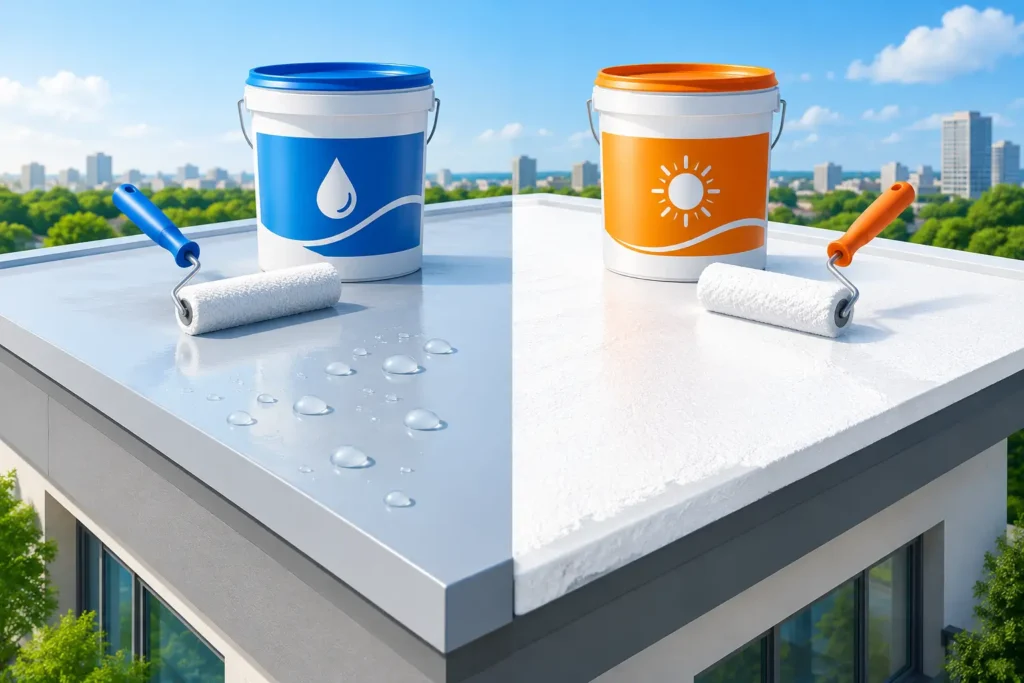
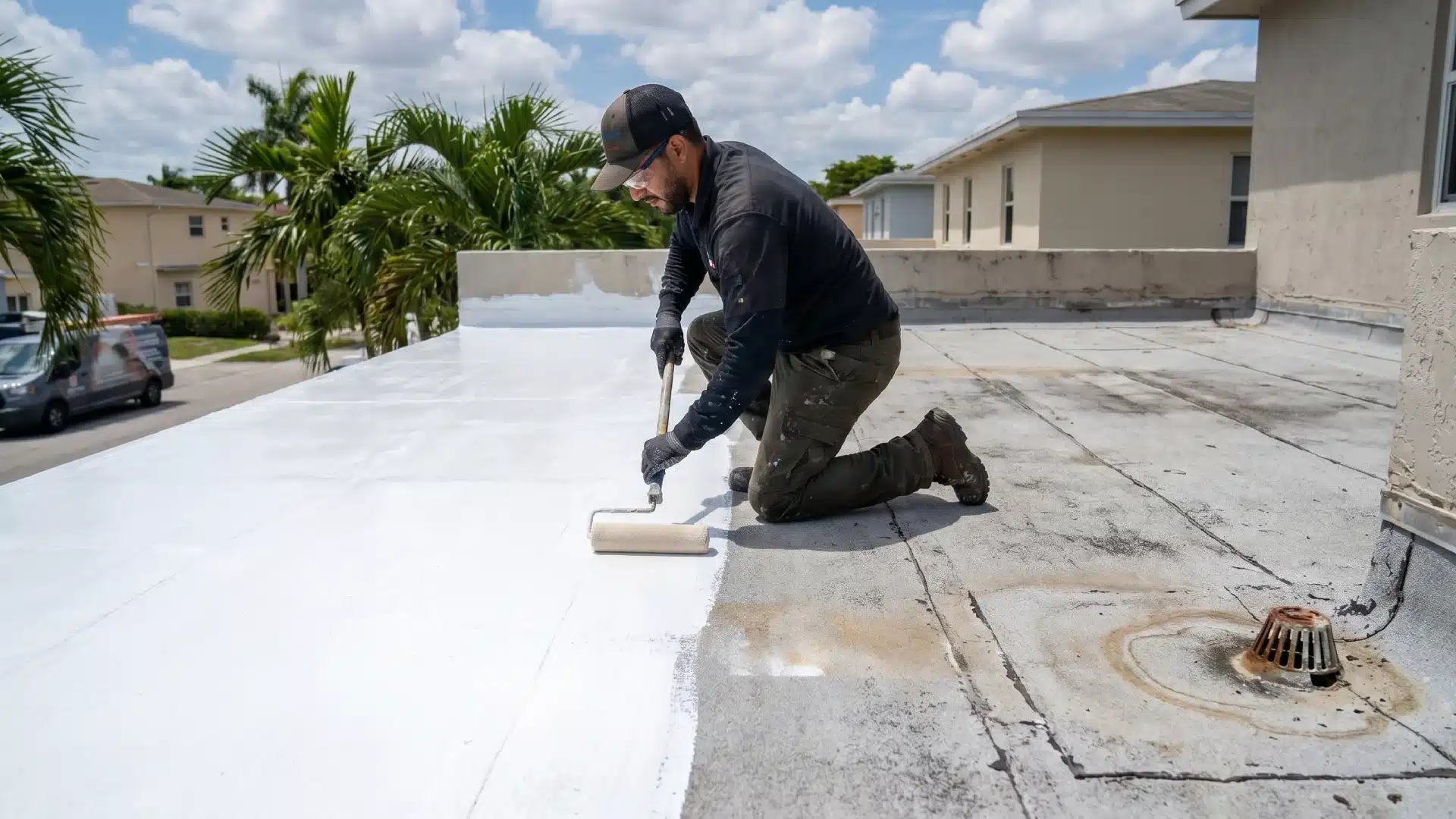
Elastomeric silicone coatings are our go-to for existing flat roofs in solid structural condition. The coating goes on as a liquid, cures to a seamless membrane, and reflects 85%+ of solar radiation. That reflectivity cuts rooftop temperatures by 50 to 70 degrees on a July afternoon.
Pros: Lowest cost ($2.50 to $4.50 per square foot), seamless, recoatable without tear-off, handles ponding water (silicone only).
Cons: No insulation value. Acrylic versions break down in standing water. Requires clean, dry substrate.
We coated a 4,000 square foot warehouse roof in Doral last October. The owner’s FPL bill dropped by $340 per month that first summer. The coating paid for itself in 14 months.
How Do Modified Bitumen Membranes Perform?
Modified bitumen is the workhorse of commercial flat roofing in Miami. These are multi-layer asphalt-based sheets applied either torch-down or peel-and-stick
Pros: Proven track record (40+ years in South Florida), redundant layers, handles foot traffic, $3.00 to $5.00 per square foot.
Cons: Seams are the weak point. Torch application carries fire risk. Does not reflect UV without an additional coating.
Peel-and-stick modified bitumen has become our default over torch-down. The adhesion is comparable, the fire risk drops to zero, and the labor is faster. The industry is shifting away from torch-down on all but spec-required commercial jobs.
What About TPO and EPDM Single-Ply Membranes?
TPO (thermoplastic polyolefin) and EPDM (rubber) are single-ply membranes popular on commercial and industrial buildings. TPO seams are heat-welded, creating a bond stronger than the membrane itself.
TPO pros: White reflective surface, heat-welded seams, good chemical resistance. $3.50 to $6.00 per square foot.
EPDM pros: Excellent flexibility in temperature extremes, low maintenance, 30+ year track record. $3.50 to $5.50 per square foot.
For commercial roof replace projects on large flat structures, TPO is our most-installed system. We put TPO on a 12,000 square foot retail building in Kendall where the old built-up roof had failed after 18 years. The heat-welded seams solved the leak problems the previous system could not.
What Does the Professional Waterproofing Process Look Like?
Why Is Inspection and Surface Prep the Most Important Step?
Surface preparation accounts for 40% of the total job time on most projects. Rush this step, and the waterproofing fails regardless of which system you choose.
We pressure wash the entire surface, then scan for trapped moisture using an infrared camera. Moisture under a new coating causes blistering and delamination within months. If we find wet areas, those sections get cut out and the deck gets dried before anything goes on top.
We also check every drain, scupper, and edge detail. A clogged drain turns a successful waterproofing job into a ponding disaster.
How Do Humidity and Weather Affect Application and Curing?
What Happens After Application?
Post-application inspection checks coating thickness at 12+ points, verifies seam integrity, confirms drainage flow, and documents everything with photos. We re-inspect at 30 days and 6 months.
What Mistakes Ruin a Flat Roof Waterproofing Job?
What Happens When You Skip the Primer?
Primer creates the chemical bond between the coating and the substrate. Without it, the coating sits on top of the surface instead of bonding to it. Wind uplift, thermal expansion, and foot traffic peel it off within 12 to 18 months.
We repaired a condo building in Coral Gables where the previous contractor skipped primer on a silicone coating job. The entire coating peeled off the north side of the roof during a tropical storm. The building spent $8,500 the first time and $14,000 to do it right.
Why Is Applying During Rain or High Humidity a Problem?
Moisture contamination during application is the most common cause of coating failure in South Florida. When humidity exceeds 85%, coatings trap moisture as they cure. The result is a membrane full of micro-bubbles that crack and peel within the first rainy season.
Property managers who push for a “just get it done” timeline during summer create this problem.
Can the Wrong Membrane Ruin the Job?
Frequently Asked Questions About Flat Roof Waterproofing
What are the main waterproofing methods for flat roofs?
What is the best waterproofing material for Miami's climate?
How frequently should you reapply flat roof waterproofing?
Is roofing felt waterproof enough for a flat roof?
Protect Your Flat Roof Before Miami's Rainy Season
Miami’s rainy season runs May through October. Every week of delay adds risk. A flat roof with compromised waterproofing does not just leak. It traps moisture in the deck, grows mold behind walls, and drives up your FPL bill as saturated insulation loses its thermal value.
From single-family homes in Kendall to 20,000 square foot warehouses in Hialeah we have waterproofed hundreds of flat roofs across Miami-Dade and the Keys. Whether your building needs a silicone coating, SPF, or a we start with an honest assessment of what your roof needs.
30 years of roofing experience. 59 five-star Google reviews. Licensed for HVHZ work in Miami-Dade. Hablamos Espanol.
Disclaimer: All pricing provided is for informational purposes only. Actual costs will vary based on specific project requirements and property conditions. Reach out to us for a free, personalized estimate.