Emergency roof repair Miami calls peak between 8 PM and 2 AM during named storms. The dispatcher’s first question is always the same. Is water coming into your home right now? The answer to that question decides whether the crew rolls tonight, tomorrow morning, or after the wind drops below the safe threshold.
This is a calm walkthrough of when emergency roof repair Miami service makes sense, when it does not, and what happens after you make the call. Save the number before you need it. The window between a small problem and a destroyed ceiling is shorter than most homeowners think.
What Counts as a Roof Emergency in Miami
Not every roof issue is an emergency roof repair Miami event. The test is whether the damage is causing or about to cause water intrusion or structural risk. Three quick checks cover most situations.
The Active Leak Test
Water visibly entering your home. Drip from a ceiling. Stain spreading on drywall. Wet insulation in the attic. Any of these triggers a roof leak emergency response. Active water moves fast. A dime-sized drip becomes a foot-wide ceiling collapse in four hours of steady rain.
The Visible Damage Test
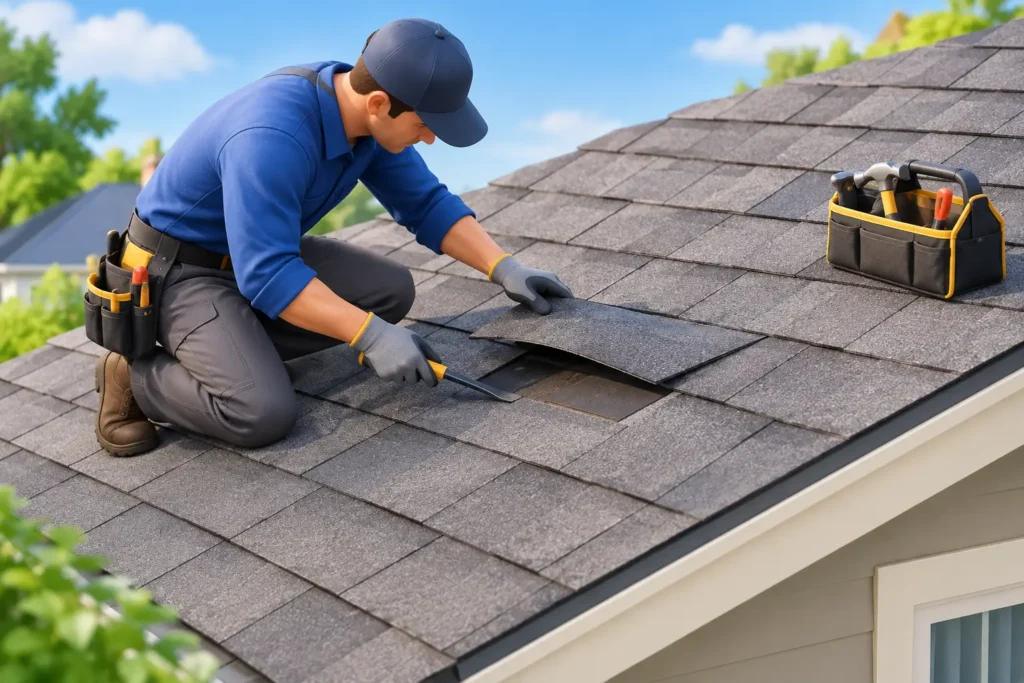
You can see damage from the ground. A missing section of shingle. A lifted ridge cap. A tarp-sized hole. A vent stack pulled away. Visible damage means the underlayment is exposed to the next rainfall. Storm damage repair roof timing matters here. Call within 24 hours, even if you do not see water inside yet.
The "It Can Wait Until Monday" Test
This is where homeowners get into trouble. A small lifted shingle on a clear Tuesday in March can wait. The same lifted shingle on a Friday with a tropical depression forming cannot. Wait timing is about weather forecast, not the size of the damage. When a named storm is on the radar inside 72 hours, no roof issue waits.
Decision Tree: Call Now, Call Tomorrow, or Schedule
Branch 1: Water Is Coming Into Your Home Right Now
Branch 2: You See Visible Damage but No Active Leak
Call within 24 hours. This is after hours roof repair territory if the damage appeared at 9 PM, or a next-morning call if it can wait for daylight. Visible damage without active intrusion is still urgent. The next rainfall turns it into Branch 1.
A 24 hour roof repair dispatch usually means temporary tarping, photo documentation for your insurer, and a follow-up estimate for the permanent fix once the storm sequence passes.
Branch 3: You Suspect Damage but Cannot See It
Schedule an inspection within the week. This is the most common post-storm call we take. You heard something hit the roof. You saw a tile or two in the yard. The ceiling looks fine but you want eyes on the roof.
This is not an emergency call. Schedule a proper inspection during business hours when crews can take the time to walk the field, photograph the underside in the attic, and write up findings.
Branch 4: A Major Storm Just Passed Your Neighborhood
Call within 48 hours even if you see nothing. Sustained 90 mph wind does damage you cannot see from the ground. Ridge cap displacement is the most common silent failure. So is a lifted shingle course on the leeward face you cannot see from your driveway.
Storm damage roof contractors near you book solid the week after any named event. The homeowners who called early get appointments. The ones who waited two weeks join a queue stretching into next month.
What Happens When You Call During or Right After a Storm
The dispatch experience during an active event is different from a calm Tuesday. Knowing the protocol helps you understand the response window.
Dispatch Triage During an Event
Calls stack up. Our dispatcher sorts by interior water (top priority), exposed structural damage (second), and protective tarping needs (third). Schedule inquiries get a callback later. We never roll a crew into 60 mph sustained wind. Crew safety governs every decision in active conditions.
When Crews Can Go Up on the Roof
OSHA guidance and our own internal cutoff put 25 to 35 mph sustained wind as the line for safe rooftop access. Above that line, no crew climbs. We can stage materials, prep the truck, and dispatch the moment conditions allow. Telling a homeowner the truth about timing builds trust the next time they call.
Temporary Tarping: Right Way vs. Skip
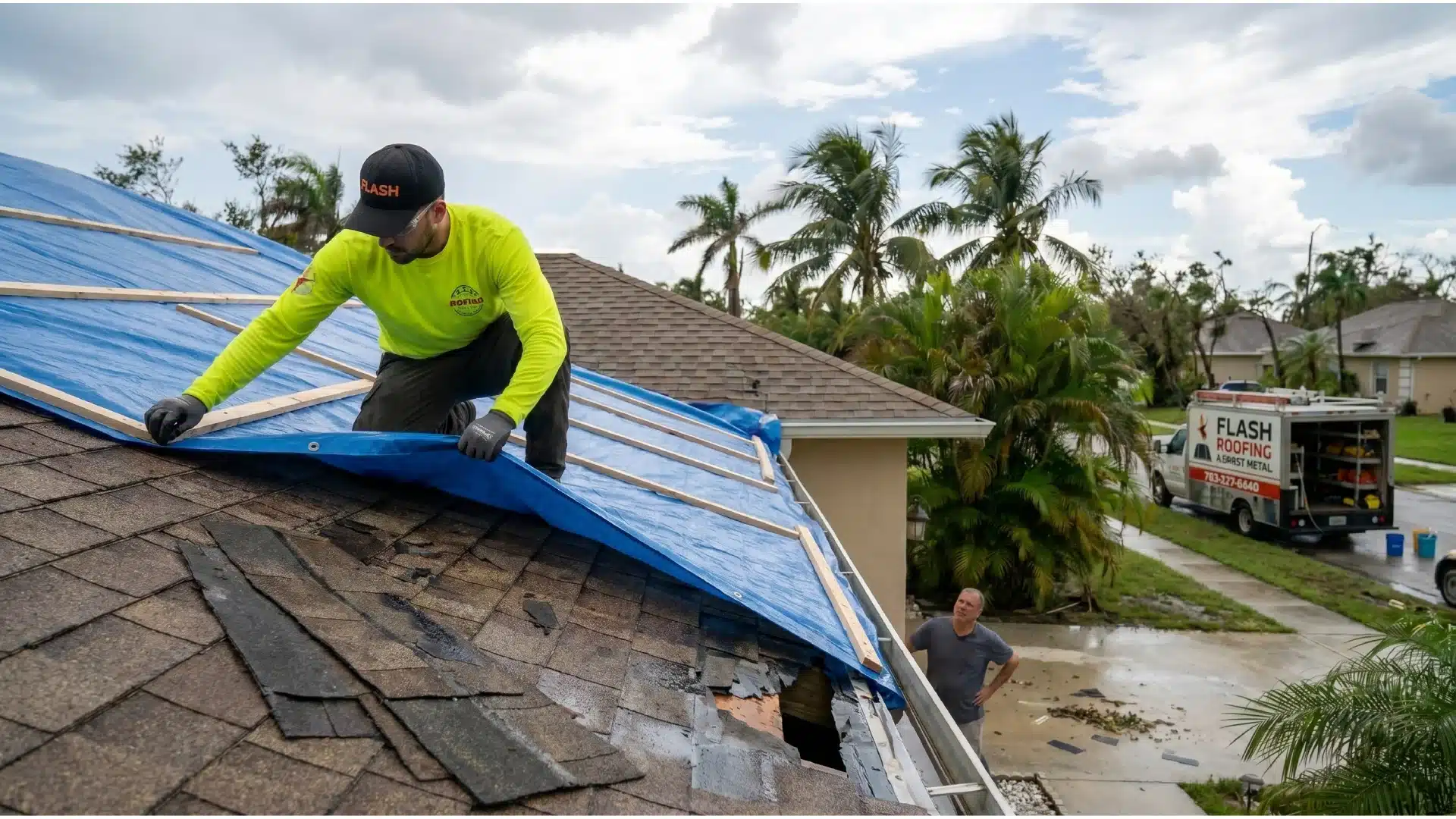
A proper emergency tarp roof installation uses a heavy-mil reinforced tarp, wood furring strips along the perimeter, screws into the deck (not nails), and overlap that runs uphill to shed water. A blue plastic tarp held down with tires does not count. The wrong tarp fails in the next squall and adds drainage damage to the original roof issue.
Safe Things to Do Before the Roofer Arrives
Move Belongings, Catch Water, Take Photos
Pull furniture out from under any active drip. Lay towels and put buckets under the worst spots. Time-stamped phone photos of every affected room become your insurance reference once an adjuster gets involved. Photograph the exterior of the house from all four sides from the ground.
Shut Off Power to Affected Rooms
If a ceiling is bulging or water is pooling near a light fixture, shut the breaker for that room. Wet electrical fixtures are a fire risk. Your insurer expects you to mitigate this kind of secondary damage.
What Not to Do
Do not climb your roof. Not during the storm, not in the calm immediately after. Wet decking and adrenaline are how Miami homeowners get hurt every year. Do not pull loose tile or shingle pieces off the field. The remaining seal might be the only thing holding the next course down. And do not improvise a tarp from inside. That is the crew’s job.
After the Emergency: From Tarp to Permanent Fix
A tarp is a 30-day solution at most. Miami sun degrades reinforced tarp material faster than the cooler climates the manufacturer tested. Plan the permanent repair before the tarp fails.
Why a Tarp Is a 30-Day Solution
UV breakdown, wind flap fatigue, and pooling water at any low spot all shorten tarp life. We have replaced second tarps on homes where the first was left up for six weeks. Each replacement adds wear to the deck underneath. The permanent fix should follow the tarp inside one month.
Coordinating With Your Insurance Adjuster
Most claims start with the temporary tarp in place. Your adjuster wants photos of the original damage, the tarp install, and an itemized estimate from a licensed Miami-Dade contractor. We provide the assessment language adjusters expect. We do not negotiate your claim. That stays between you and your carrier.
Documenting Between Temporary and Permanent
Take a fresh photo every five to seven days. Note interior conditions. If new water comes through the tarp, document it. This builds the timeline that supports your claim and helps establish what was original storm damage versus what happened during the wait.
How to Pick an Emergency Roofer Before You Need One
The right time to find an emergency roofer is in May, not at 11 PM in October.
Verifying 24/7 Availability Before the Storm
Call the number in May during business hours. Then call it again on a Saturday evening. A real 24/7 line answers both times. Voicemail or an answering service that promises a callback is not 24/7 dispatch.
Local Crews vs Storm Chasers
After every major Atlantic storm, out-of-state crews flood Miami-Dade. They offer immediate work, take a deposit, and leave town when permits get complicated. Local storm damage roof contractors with a Miami-Dade license, insurance, and a permanent address handle the warranty and the follow-up.
Why the Number You Save Today Matters at 11 PM in October
Save 786-237-9440 in your phone right now. Add Flash Roofing as the contact name. The first emergency call you make should not be a Google search at the moment your living room is filling with water. Choose your roofer in May. Use them when you need to.
Expert Insight
With over 30 years of dispatch experience in Miami-Dade, the calls follow a pattern. Pre-season, homeowners call about prep. Active season, they call about active leaks. Post-storm, they call about damage they finally saw in daylight.
The homeowners who handle storms best are the ones who saved our number before June 1, photographed their roof in clear weather, and pulled their insurance policy onto their phone so they can find it in the dark. That preparation is what turns an emergency roof repair Miami call from chaos into a simple dispatch ticket.
Frequently Asked Questions
What counts as an emergency roof repair in Miami?
How fast can a Miami roofer respond during hurricane season?
Will my insurance cover emergency tarping after a storm?
How long is a tarp safe to leave on a roof in Miami?
Should I climb on my roof to check damage during a storm?
Save the Number Before You Need It
Emergency roof repair Miami service works best when you have already chosen your roofer. The first call you make at 11 PM during a tropical storm should not be a Google search.
We answer 24/7. The dispatcher who picks up at midnight during Hurricane Irma was the same dispatcher who picked up at 2 PM the Tuesday before. Local crews, local trucks, local materials. We document the damage in language your adjuster recognizes and we handle the temporary fix so you do not have to climb anything.
For 24/7 emergency roof repair Miami service, call Flash Roofing at 786-237-9440. Licensed, insured, locally owned. Working Miami-Dade emergency roof repair Miami dispatch since before Hurricane Andrew. 59 five-star Google reviews from your neighbors. Save the number now, before you need it.
Disclaimer: All pricing provided is for informational purposes only. Actual costs will vary based on specific project requirements and property conditions. Reach out to us for a free, personalized estimate.