
A leak above a retail floor, office suite, warehouse, or multifamily hallway is rarely a one-day problem. In Miami, it is usually the result of months of sun exposure, standing water, loose flashing, salt corrosion, or small storm damage left unchecked. A commercial roof maintenance plan gives property owners a clear way to find those issues early, document them properly, and repair the cause before it turns into interior damage and business disruption.
For commercial properties, maintenance is not about spending money on work that may not be needed. It is about protecting a major building asset with scheduled inspections, clear records, and repairs that make sense for the roof system and local conditions. Do it once, do it right.
Why Miami Commercial Roofs Need Regular Attention
South Florida roofs work harder than roofs in many other parts of the country. Intense UV exposure can dry and weaken membranes, sealants, and coatings. Heavy rain can expose drainage problems quickly. Humidity keeps moisture around longer, while salt air can corrode metal components, fasteners, edge details, and rooftop equipment supports.
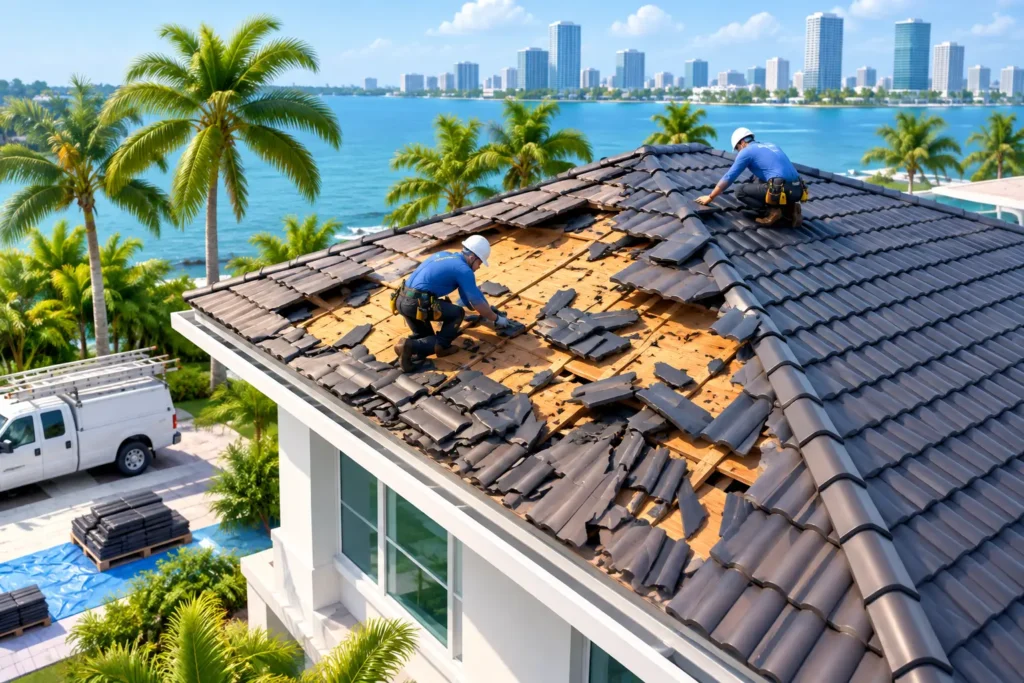
Then there is hurricane season. High winds can lift flashing, loosen termination bars, move unsecured equipment, and turn a small opening into a major water entry point. Even when a roof looks fine from the ground, wind-driven rain may have found weak seams or penetrations around drains, curbs, vents, skylights, and HVAC units.
A maintenance plan does not make a roof hurricane-proof. No honest contractor should promise that. It does put the roof in better condition before severe weather arrives and gives the owner a documented baseline if a storm causes damage.
What a Commercial Roof Maintenance Plan Should Include
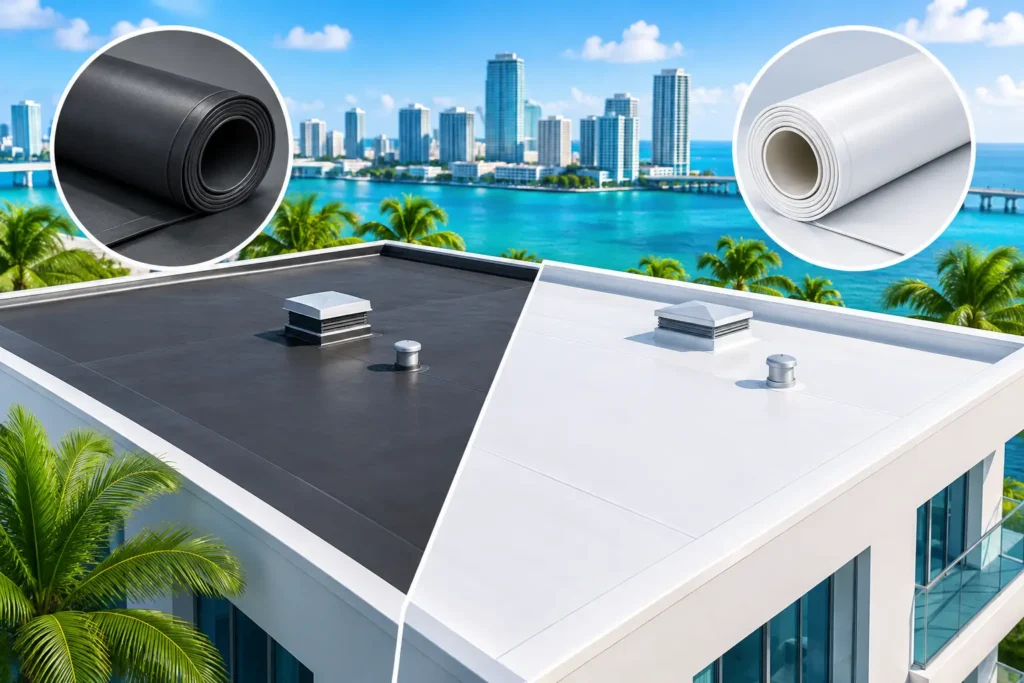
The right commercial roof maintenance plan is specific to the building, roof type, age, traffic level, and known trouble spots. A newer TPO or PVC membrane roof needs different attention than an aging modified bitumen system, metal roof, built-up roof, or low-slope coated roof.
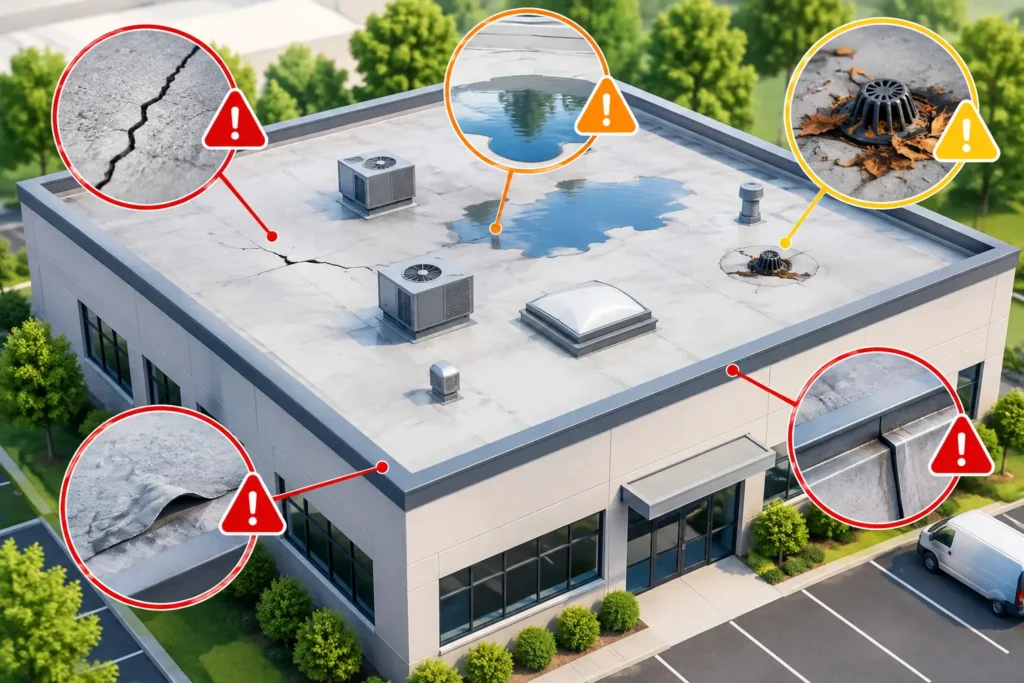
At a minimum, the plan should begin with a full roof assessment. This establishes the roof’s current condition, identifies active and potential leaks, notes previous repairs, and documents drainage, flashing, seams, penetrations, and perimeter edges. Photos matter here. They show what was found, where it was found, and whether the condition changes over time.
The plan should also set an inspection schedule. For most Miami commercial properties, twice-yearly inspections are a sensible starting point: one before hurricane season and another after the most severe weather has passed. Buildings with older roofs, frequent rooftop traffic, persistent drainage issues, restaurants with rooftop exhaust, or high-value interior operations may need quarterly checks.
A thorough visit typically addresses the following areas:
- Membrane seams, laps, blisters, cracks, punctures, and open edges
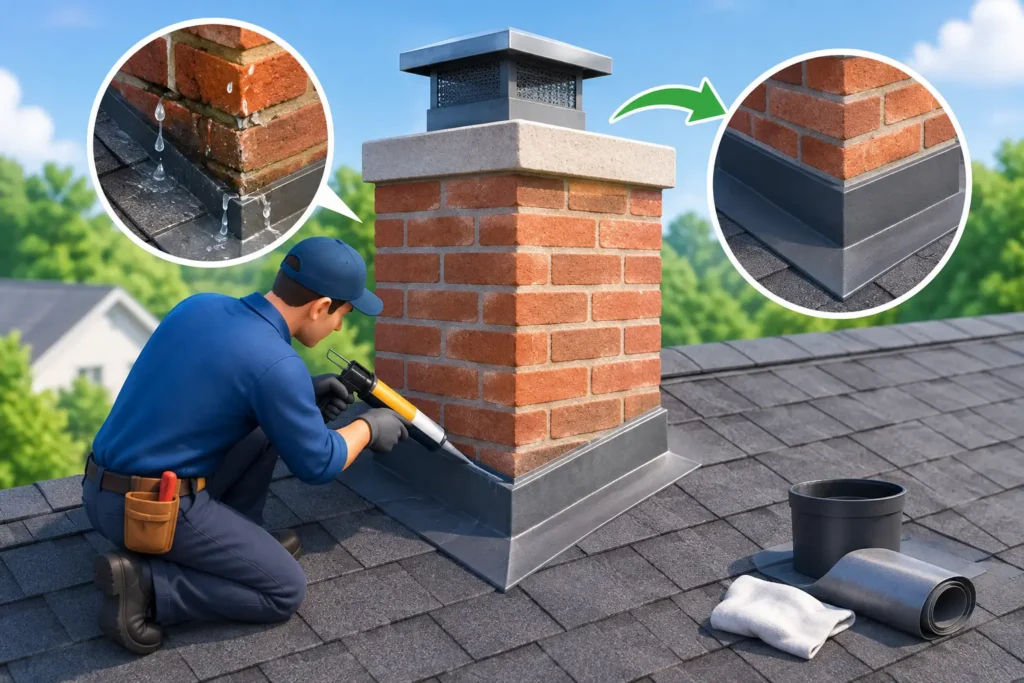
- Flashing at walls, curbs, pipes, drains, vents, and rooftop equipment
- Drain bowls, scuppers, gutters, downspouts, and signs of ponding water
- Metal coping, fasteners, rust, corrosion, and wind-related movement
- Sealants that have shrunk, split, separated, or lost adhesion
- Damage caused by foot traffic, service vendors, fallen debris, or equipment work
The inspection is only part of the job. The useful part is the report that follows. Property managers and owners should receive clear findings, photos, recommended repairs, and an honest priority level. There is a difference between a repair that needs immediate action and a condition that should be watched and budgeted for later. A good contractor explains that difference without pressure.
Maintenance Is More Than Cleaning Drains
Drain cleaning is necessary, but it is not a complete maintenance program. A clear drain cannot solve a failed seam, a deteriorated pipe boot, or loose edge metal. At the same time, a roof can have sound materials and still leak if water has nowhere to go.
On low-slope commercial roofs, standing water deserves close attention. A small amount of water after a heavy Miami rain may evaporate. Water that remains for days can speed up surface deterioration, add unnecessary weight, encourage debris buildup, and point to a drainage or slope issue. The fix may be as simple as clearing a blocked drain, or it may require correcting a damaged drain component, improving drainage, or addressing low areas during restoration or replacement work.
Maintenance should also account for other trades. HVAC technicians, satellite installers, plumbers, and electrical contractors often access commercial roofs. Their work can leave behind punctures, unsealed penetrations, loose panels, displaced pavers, or debris around drains. A roof access policy and a post-service roof check can prevent a small oversight from becoming a leak during the next storm.
Build a Schedule Around Risk, Not Guesswork
There is no single schedule that fits every commercial building. A newer roof with limited foot traffic may need routine semiannual service. An older roof nearing the end of its useful life may need more frequent monitoring while the owner plans for restoration or replacement.
For Miami-Dade properties, the timing matters as much as the frequency. A pre-season inspection should focus on wind resistance, loose flashing, drains, rooftop debris, sealants, and exposed details. This is the time to correct known weak points before tropical weather tests them.
After a major storm, schedule a professional inspection even if there is no visible interior leak. Wind damage can be subtle, and water may travel under a membrane or through a wall assembly before it shows up indoors. Early documentation also helps establish what condition existed before and after the event, which can be valuable when evaluating insurance-related damage.
Monthly visual checks by onsite staff can help between professional inspections. They should look for ceiling stains, dripping, blocked drains, obvious debris, damaged edge metal, or water that remains on the roof too long. Staff should not attempt repairs or walk on fragile areas without training. That often creates more damage and makes the original issue harder to diagnose.
Repair Root Causes Before They Spread
The cheapest repair is not always the lowest-cost decision. Repeatedly applying mastic over the same leak point may temporarily stop water, but it can hide a failing flashing detail, deteriorated substrate, or drainage issue underneath. Those patch-after-patch repairs add up, especially when they lead to wet insulation, damaged ceilings, mold concerns, tenant complaints, or interrupted operations.
A maintenance contractor should investigate where water is entering and why. On a membrane roof, that may mean checking seams, transitions, penetrations, and the condition of the membrane around ponding water. On metal roofing, the issue may involve corroded fasteners, failed washers, open laps, or movement at panels and flashing. On a coated roof, the contractor should check adhesion, thickness, cracks, and whether the underlying roof is still a sound candidate for coating.
Not every problem calls for replacement. Targeted repairs can be the right answer when the roof system is generally in good shape. Restoration or coating may make financial sense when the roof has aged but remains dry and structurally sound. Full replacement becomes the honest recommendation when repairs are no longer holding, moisture has spread beneath the surface, or the system has reached the end of its serviceable life.
Keep Records That Help You Make Better Decisions
A commercial roof should have a simple service history. Keep inspection reports, photos, repair invoices, warranty information, dates of leaks, and notes about storms or rooftop equipment work. Over time, that record reveals patterns: the same drain backing up, one HVAC curb needing repeated sealing, a section exposed to heavy foot traffic, or repairs becoming more frequent and costly.
This information makes budgeting easier. Instead of being surprised by a major roofing expense, building owners can plan repairs, restoration, or replacement based on actual roof condition. It also gives managers a clear record to share with ownership, tenants, insurers, and future buyers.
Flash Roofing & Sheet Metal approaches maintenance with that same standard: documented conditions, straightforward recommendations, and repairs based on the actual cause of the problem. No mystery fees and no superficial patch sold as a long-term solution.
When to Call for Service Between Inspections
Do not wait for the next scheduled visit if you see active leaks, new ceiling stains, loose or missing metal, water pooling for more than 48 hours after rain, cracked sealant around roof penetrations, or debris blocking drains. Call promptly after a major storm if the building experienced high winds, flying debris, or unusual water intrusion.
Quick action does not always mean a major repair. Sometimes the problem is localized and manageable when addressed early. Waiting gives water time to move through insulation, decking, walls, and interior finishes, where the cost and disruption grow fast.
A roof maintenance plan works best when it becomes part of normal property care, not an emergency response after water reaches the floor. Set the inspection dates, keep the records, address real problems early, and use a Miami roofing professional who understands what heat, salt, moisture, and hurricane weather do to commercial systems. That is how a roof stays dependable when your building needs it most.