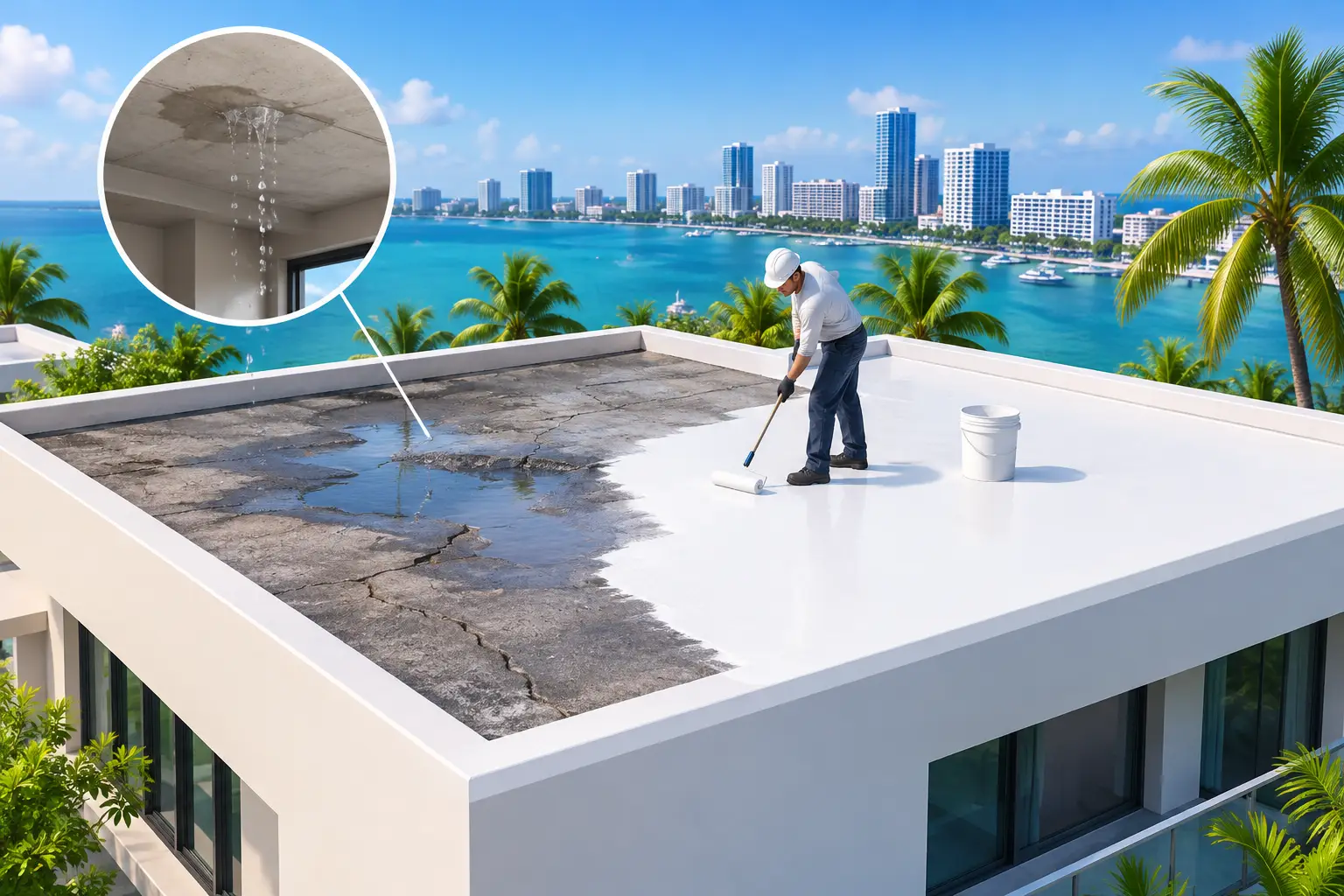
A flat roof can look fine from the ground and still let water into a ceiling after a hard Miami rain. That is why homeowners and property managers often ask, can roof coatings stop leaks? The honest answer is yes, but only when the roof is a good candidate and the source of the leak has been properly repaired first.
A quality coating can create a continuous, water-resistant surface over an aging roof. It can help seal minor weathering, protect against intense UV exposure, and extend the useful life of certain roof systems. But coating over wet insulation, open seams, cracked flashing, or storm damage is not a repair. It is a temporary cover-up that can trap moisture and make the real problem harder to find later.
In South Florida, roofs take a beating from heat, humidity, wind-driven rain, salt air, and hurricane-season storms. The right answer starts with an inspection, not a bucket of coating.
When Can Roof Coatings Stop Leaks?
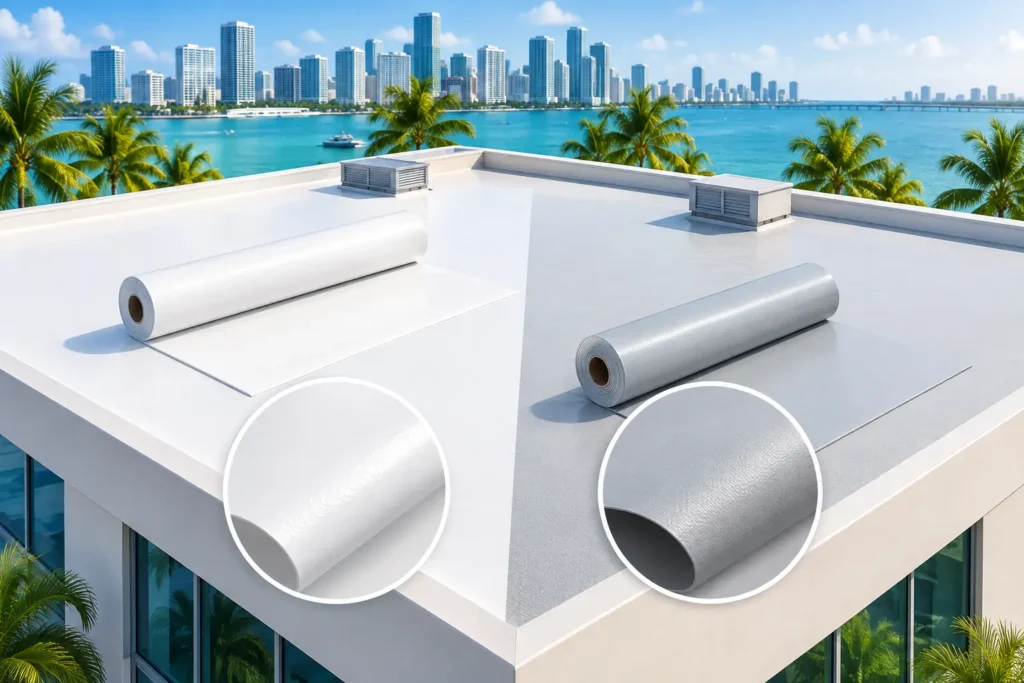
Roof coatings work best on roofs that are structurally sound but showing surface-level wear. This is common on low-slope commercial roofs, residential flat roofs, metal roofs, and some membrane systems. A properly selected and installed coating can close small surface cracks, reinforce vulnerable areas, and create a more uniform barrier against standing water and rainfall.
For example, an aging modified bitumen or membrane roof may have lost some flexibility after years of Miami sun. If the membrane is still attached, the insulation below is dry, and the seams and flashings can be repaired, a coating system may be a smart restoration option. It can reduce heat absorption, improve water shedding, and delay the need for a full replacement.
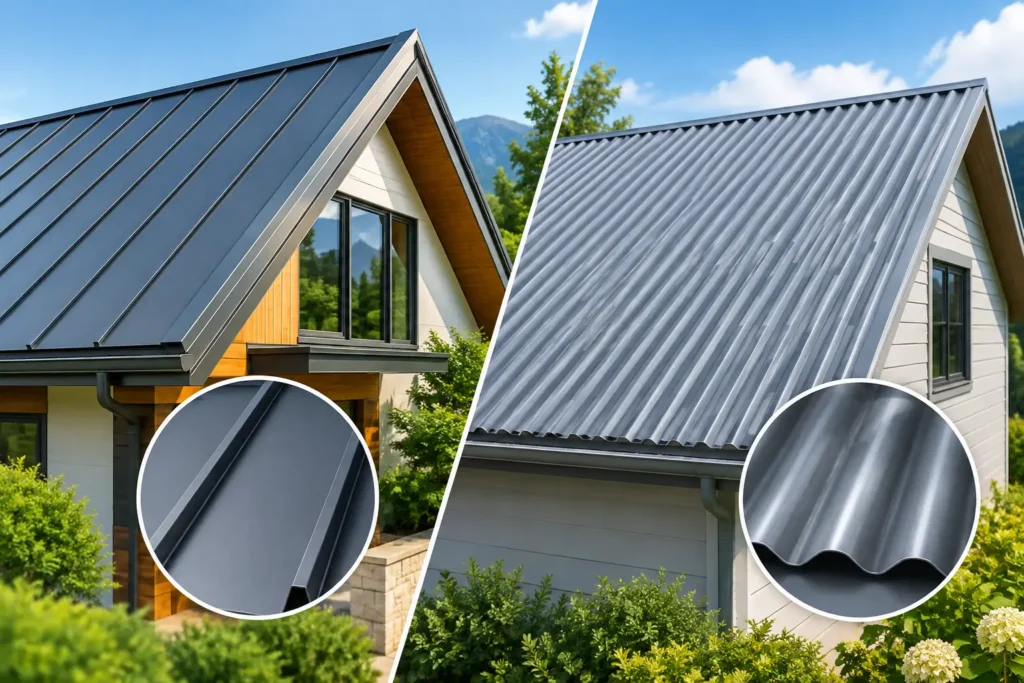
Metal roofs can also benefit when corrosion is limited and the panels remain sound. After rust treatment, fastener repairs, seam sealing, and proper preparation, a coating may help protect the metal from further UV and moisture exposure. Near the coast, that added protection matters because salt air accelerates corrosion.
The key word is preparation. Coatings do not magically find and solve every leak. The roof must be cleaned, dried, repaired, and primed when the system calls for it. Skipping those steps is how a coating job fails early.
When a Coating Will Not Fix the Problem
A roof coating is not the right answer when water has already caused deeper damage. If insulation is soaked, decking is rotted, membrane seams are separating across large areas, or hurricane winds have compromised the roof assembly, the damaged materials need to be addressed first.
Water often travels before it appears inside the building. A ceiling stain may be several feet away from the actual roof opening. The leak could be at a drain, parapet wall, vent penetration, skylight, flashing detail, or a seam hidden beneath ponding water. Applying coating over the visible area without tracing the water path can leave the leak active underneath.
Coatings are also not a substitute for correcting drainage problems. Standing water puts added stress on many roofing systems. Some coating products are designed to handle ponding water better than others, but no coating should be used as an excuse to ignore clogged drains, poor slope, or drainage components that are not doing their job.
On tile and shingle roofs, broad coating applications are usually not the standard leak repair. These roofs depend on properly installed materials, underlayment, flashings, fasteners, and drainage paths. A targeted repair or replacement of failing components is often the more reliable solution.
The Miami Conditions That Change the Decision
Miami roofing is not generic roofing. A product or repair method that performs well in a mild, dry climate may not hold up the same way under year-round UV, tropical moisture, and wind-driven rain.
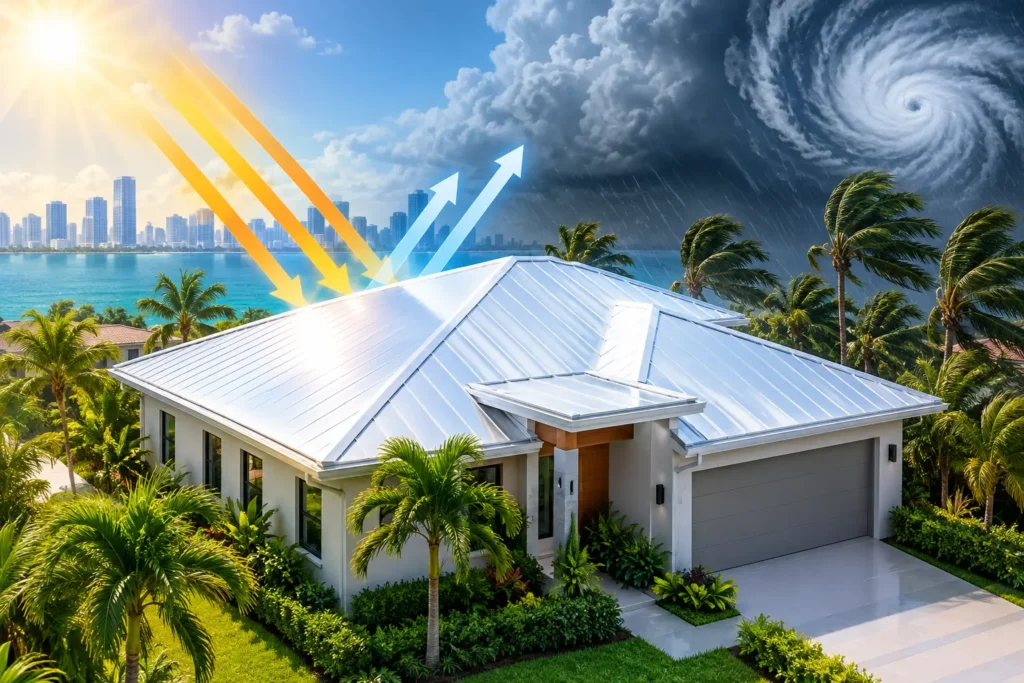
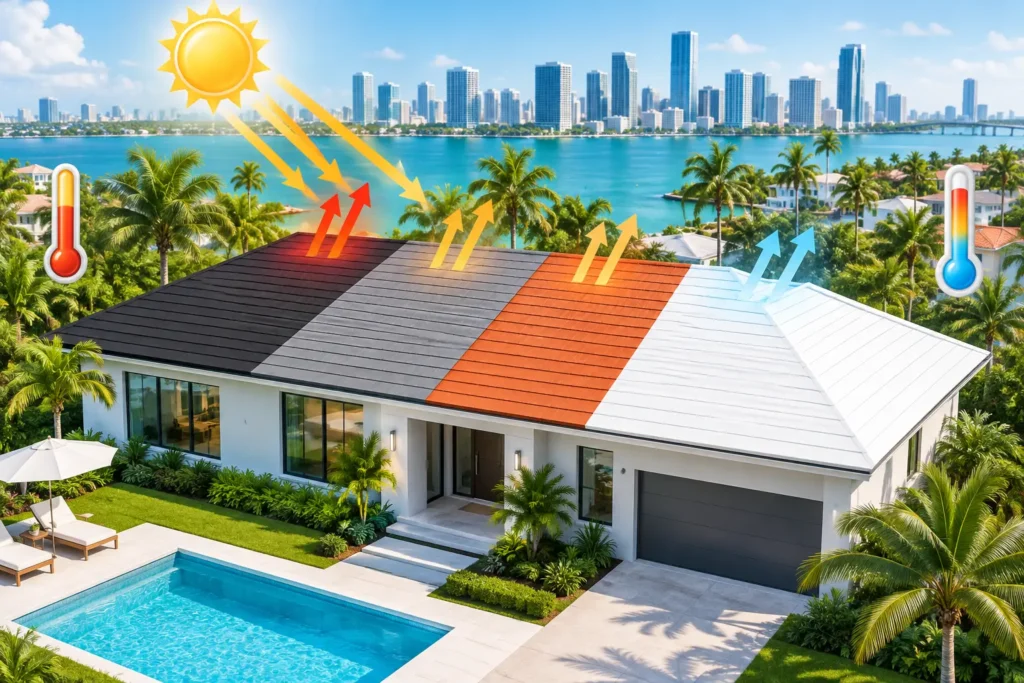
Sun exposure is a major factor. High UV levels can dry out roof surfaces, weaken older sealants, and speed up deterioration. Reflective roof coatings can lower surface temperatures and reduce thermal movement, which may help preserve a suitable roof system. That can be especially valuable on large commercial flat roofs that absorb heat all day.
Humidity is another concern. A coating must be applied to a properly dry surface and within the manufacturer’s weather requirements. If moisture is trapped beneath the coating, adhesion can suffer. Blisters, peeling, and recurring leaks may follow.
Then there is wind. During severe weather, water does not simply fall straight down. It is pushed sideways and upward into transitions, wall flashings, curbs, vents, and roof edges. Those details need careful repair and reinforcement before coating work begins. A smooth-looking field of coating means very little if the roof perimeter and penetrations are still vulnerable.
What a Proper Roof Coating Repair Looks Like
A dependable coating project begins with proof, not guesswork. A contractor should inspect the entire roof, identify active and potential leak points, and check for signs of moisture below the surface. Photo documentation helps property owners see what is happening and understand why a coating is, or is not, being recommended.
The roof is then cleaned thoroughly. Dirt, chalking residue, loose material, algae, and debris can prevent proper adhesion. Damaged areas are repaired first, including seams, cracks, fasteners, flashing details, drains, and penetrations. On some systems, reinforcing fabric is embedded in coating around seams and transitions for extra strength.
After repairs are complete and the roof is dry, the appropriate primer and coating are applied at the required thickness. This is not the place to stretch material or rush application. Coverage rates, cure times, and compatibility with the existing roof all matter. The finished system should be consistent, with no thin spots, missed details, or exposed problem areas.
That process costs more than a quick patch, but it is also far more likely to last. Do it once, do it right.
Coating, Repair, or Replacement: How to Choose
The right choice depends on the roof’s condition, not just its age. A roof nearing the end of its expected service life may still be a strong restoration candidate if the underlying materials are dry and stable. On the other hand, a newer roof with poor workmanship, storm damage, or bad flashing may need targeted repairs instead of a full coating system.
Replacement becomes the better investment when damage is widespread or the roof assembly has failed beneath the surface. Replacing a roof is a bigger project, but repeatedly coating over serious defects can cost more over time. It can also put the property at risk every time heavy rain moves through Miami-Dade.
For commercial owners and property managers, timing matters as well. A planned restoration can reduce disruption and extend a roof’s service life. Waiting until recurring leaks damage ceilings, inventory, electrical systems, or tenant spaces removes that flexibility.
Questions to Ask Before Approving a Roof Coating
Before accepting a coating proposal, ask what is causing the leak and how the contractor confirmed it. Ask whether the roof insulation and deck were checked for moisture, which coating system is being used, and what repairs are included before coating begins.
You should also receive a clear explanation of surface preparation, drainage concerns, warranty terms, and any areas that may require separate repair. Honest quotes should spell out the scope of work. No mystery fees, no vague promises that a coating will fix everything.
Flash Roofing & Sheet Metal approaches coating work the same way it approaches every repair: find the root cause, document the condition, and recommend the solution that makes sense for the roof in front of us. Sometimes that is a restoration coating. Sometimes it is a focused repair. Sometimes the honest answer is replacement.
If your roof is leaking, act before the next storm turns a manageable repair into interior damage. A professional inspection can tell you whether a coating is a practical long-term option or whether your roof needs a different fix.