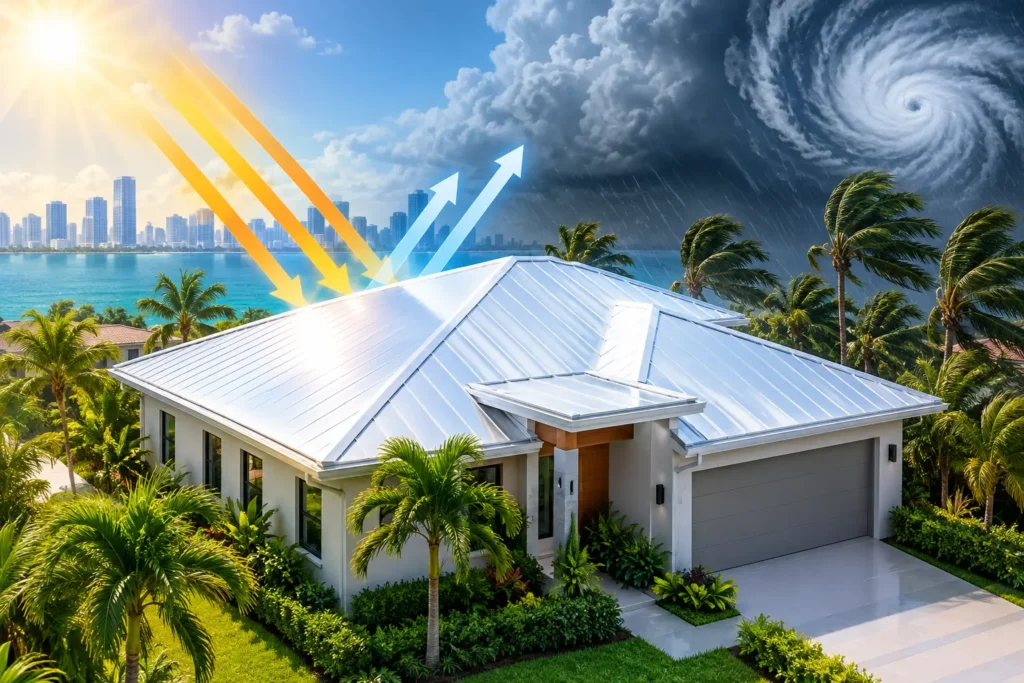
A roof rarely fails in one dramatic moment. In Miami, water usually finds a small opening first: a lifted edge, loose flashing, cracked sealant, backed-out fastener, or deteriorated tile attachment. Then hurricane-force wind turns that weak point into a larger problem. Hurricane resistant roofing is not one material or one upgrade. It is a complete system designed, installed, and maintained to stay connected when South Florida weather puts every detail to the test.
For homeowners, property managers, and commercial owners, the goal is simple: reduce the chance that wind gets under the roof covering, reduce water intrusion if it does, and make sure the roof performs as one connected assembly. That takes more than a quick patch after the forecast changes.
What Makes a Roof Hurricane Resistant?
A hurricane-ready roof starts with the deck and works outward. The roof deck must be sound and properly attached to the structure. The underlayment must provide a dependable secondary layer of water protection. Flashings, fasteners, roof edges, vents, skylights, drains, and penetrations must all be secured for the type of roof and the wind exposure of the building.
The edge of the roof deserves special attention. Wind pressure is often strongest at corners and perimeters, where it can grab a loose drip edge, metal coping, tile, shingle, or membrane. Once wind gets beneath the covering, it can peel back a much larger section. Good workmanship at these transition points is not a cosmetic detail. It is where storm performance is won or lost.
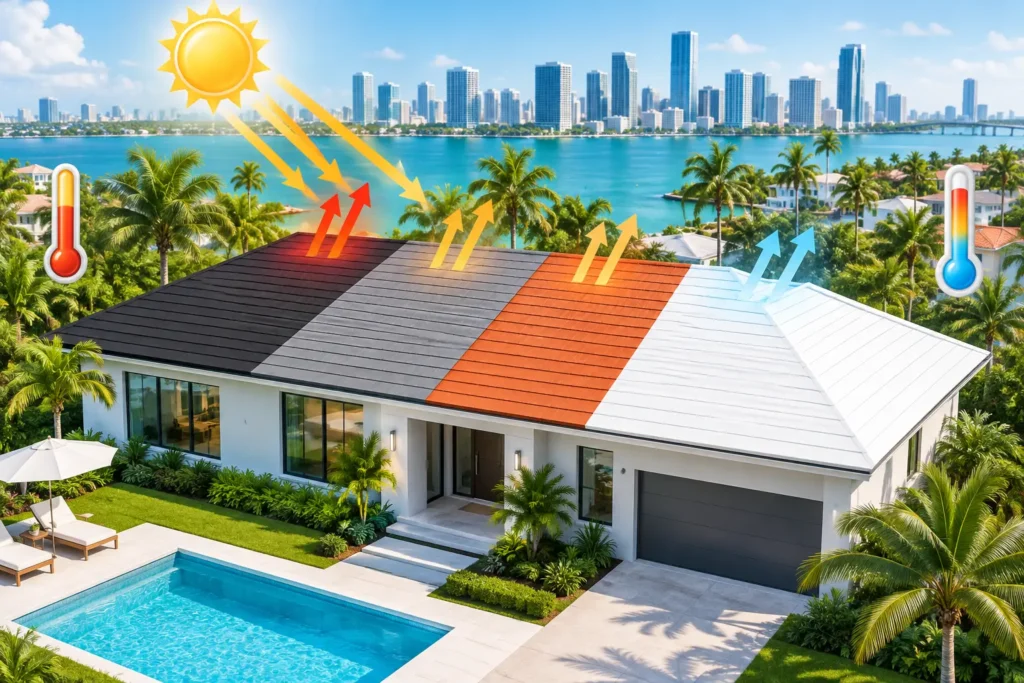
Miami-Dade properties also deal with year-round punishment that weakens a roof before a named storm arrives. Intense UV exposure dries and cracks materials. Humidity encourages moisture problems. Salt air can corrode exposed metal and fasteners, especially closer to the coast. Heavy rain tests every seam and drainage path. A roof that looks acceptable from the ground may still have conditions that make it vulnerable in high wind.
The Right Roofing System Depends on the Building
There is no single best material for every property. The right hurricane resistant roofing system depends on roof slope, building use, existing structure, drainage, local code requirements, and the condition of the current roof.
Tile roofs need attachment, not just good-looking tiles
Concrete and clay tile roofs are common throughout South Florida, and they can perform well when the system below them is in good condition. The concern is not only whether individual tiles are cracked. Tile attachment, underlayment age, flashing condition, and perimeter detailing matter just as much.
A tile roof may hold up visually while the underlayment beneath it has reached the end of its useful life. In that case, replacing a few broken tiles will not solve the root problem. If water is entering through deteriorated underlayment or failed flashing, a surface repair can delay a proper repair while damage continues below.
Shingle roofs require correct nailing and sealed edges
Shingles can be a practical option for many homes, but wind resistance depends heavily on installation. Proper nail placement, the correct number of fasteners, sealed tabs, starter strips, underlayment, and edge metal all work together. A low price does not mean much if the shingles were installed with shortcuts that show up during the first major storm.
Shingles also need regular inspection in Miami’s heat. Granule loss, curling, cracking, exposed nail heads, and lifted tabs are warning signs. Some of these issues can be repaired when caught early. Others indicate the roof is aging beyond the point where spot work makes financial sense.
Metal roofing offers strength, with details that still matter
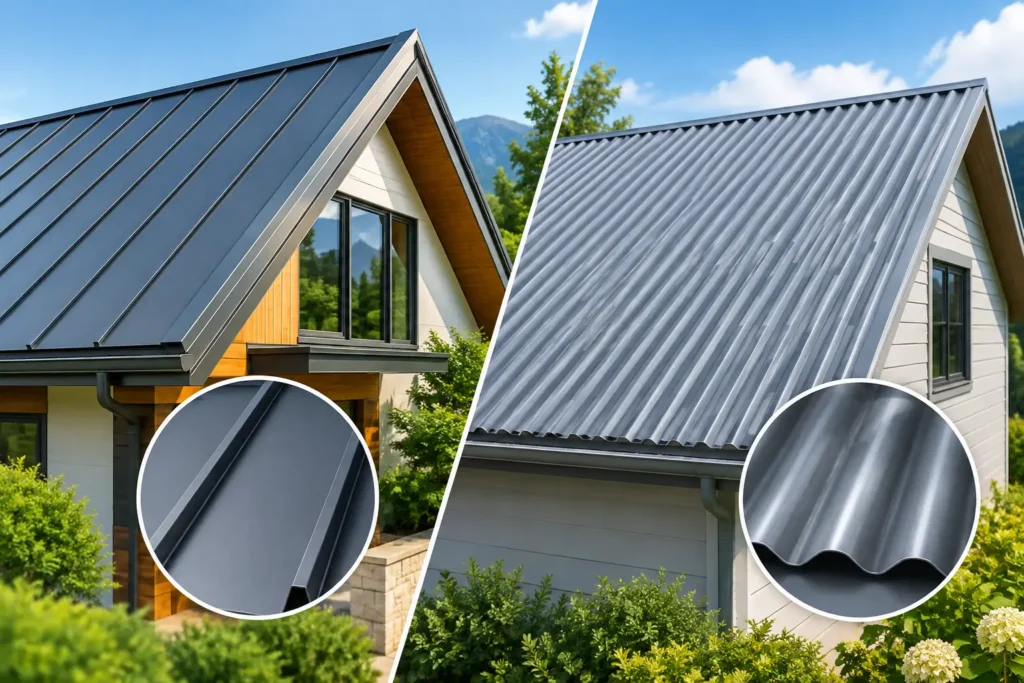
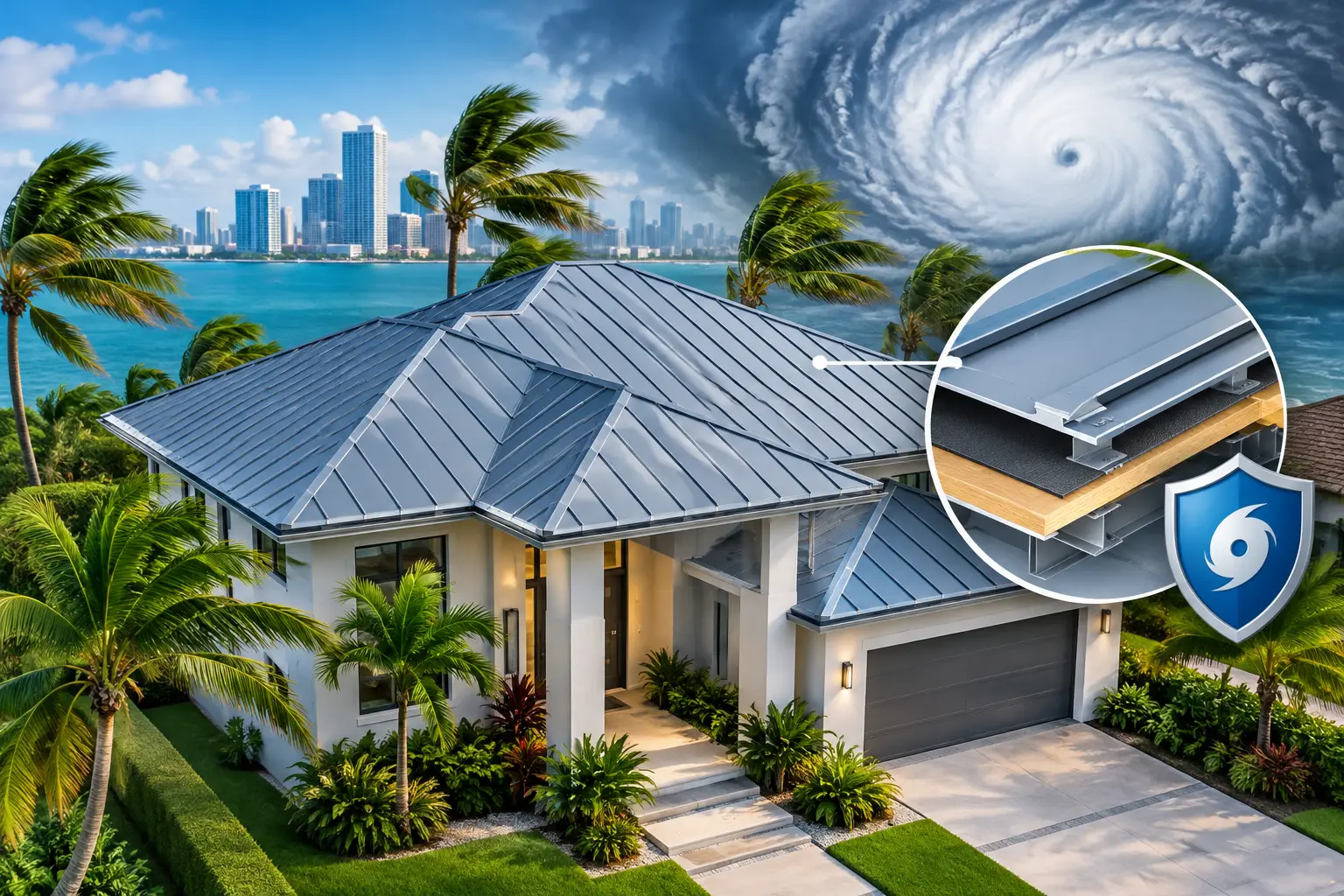
Metal roofing is known for durability and wind performance, but it is not automatically hurricane-proof. Panel type, gauge, clip or fastener system, seam design, edge treatment, and corrosion resistance all matter. On coastal and near-coastal properties, the wrong metal components or neglected fasteners can create problems long before the panels themselves wear out.
A correctly designed metal roof can be an excellent long-term choice. It may cost more upfront than some alternatives, and the installation must be precise. Penetrations, transitions, and connections are where experienced installation makes the difference.
Flat and low-slope roofs need a complete membrane strategy
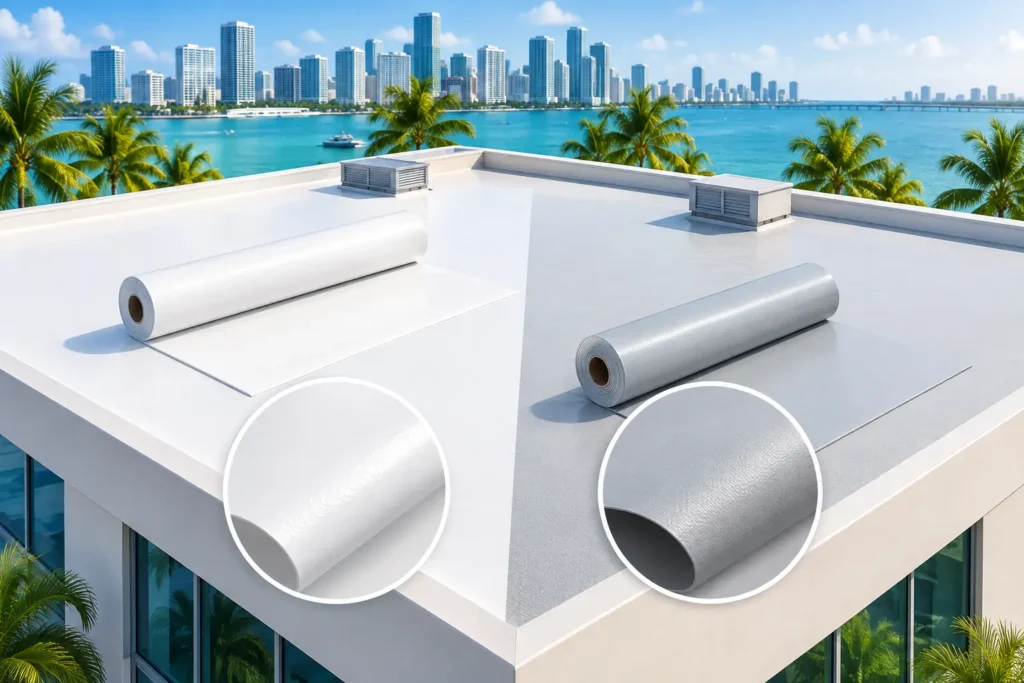
Commercial buildings, multifamily properties, and many Miami additions have flat or low-slope roofs. These systems rely on membranes, seams, flashings, drains, scuppers, and terminations rather than overlapping shingles or tiles. Wind can lift a membrane if its attachment system is inadequate, while ponding water can expose weak seams and blocked drainage.
TPO, modified bitumen, PVC, and other membrane systems each have different strengths. The right choice depends on the building, insulation, drainage, foot traffic, exposure, and budget. Coatings can extend service life in the right situation, but they are not a cure for wet insulation, failed seams, structural issues, or an aging roof that needs replacement.
Signs Your Roof May Be Vulnerable Before Hurricane Season
The best time to find a roof problem is before wind and rain make it an emergency. A professional inspection can identify conditions that are not obvious from the driveway, including loose perimeter metal, deteriorated sealant, open flashing laps, membrane shrinkage, soft decking, and weak points around equipment or roof penetrations.
Pay attention to interior stains, musty smells, peeling paint near ceilings, and water around windows after driving rain. These are not always caused by the roof, but they should be investigated instead of painted over. On the exterior, look for missing or sliding tiles, loose shingles, rusted fasteners, cracked pipe boots, damaged fascia, and debris blocking drains or gutters.
For commercial properties, maintenance records matter. Repeated leaks in the same area are often a sign that previous repairs treated the symptom, not the cause. Photo documentation from inspections and repairs gives owners a clear record of what was found, what was corrected, and what may need planning later.
Repairs, Restoration, or Replacement: Make the Call on Facts
Not every roof needs replacement after a storm or before hurricane season. A targeted repair can be the right answer when the issue is isolated and the surrounding roof system is still in good shape. Replacing failed flashing, repairing a small membrane section, securing loose components, or correcting a drainage problem can protect the roof and control costs.
Restoration or coating may make sense for certain flat or metal roofing systems that are structurally sound and dry. The surface preparation has to be thorough, and the coating must be compatible with the existing roof. Applying a coating over active leaks, trapped moisture, or deteriorated details is a temporary cover, not a reliable repair.
Replacement is usually the more honest recommendation when the roof has widespread material failure, recurring leaks, compromised decking, exhausted underlayment, or storm damage across multiple areas. A full replacement creates the opportunity to address the entire assembly: deck condition, code-required fastening, water protection, ventilation where applicable, and edge details. It costs more than patching, but repeated patches on a failing roof can cost more over time and still leave the property exposed.
Why Local Installation Knowledge Matters
South Florida roofs are built in a high-wind environment, and local code requirements are not suggestions. A contractor should understand the roof system being installed, the wind-zone demands on the property, manufacturer requirements, and how Miami heat, moisture, and salt exposure affect the materials selected.
Ask for a clear explanation of the work, not vague promises. You should know what is being repaired or replaced, why it failed, what materials will be used, and how the work will be documented. Licensed and insured workmanship, written scope details, and photos before, during, and after the job help remove the mystery from a major property decision.
At Flash Roofing & Sheet Metal, the standard is to identify the actual weak point, explain the options clearly, and do the work correctly the first time. No pressure and no mystery fees – just practical roofing work built for Miami conditions.
A Roof Is Stronger When Small Problems Are Handled Early
You cannot control the next storm track, but you can control whether known roof issues are left exposed. Schedule inspections before hurricane season, keep roof drains and gutters clear, address loose or damaged materials promptly, and save documentation of completed work. If your roof has been leaking, lifting, or repeatedly patched, do not wait for the next high-wind warning to find out how much that small problem has grown.